
US and Iran Engage in Indirect Ceasefire Negotiations in Islamabad
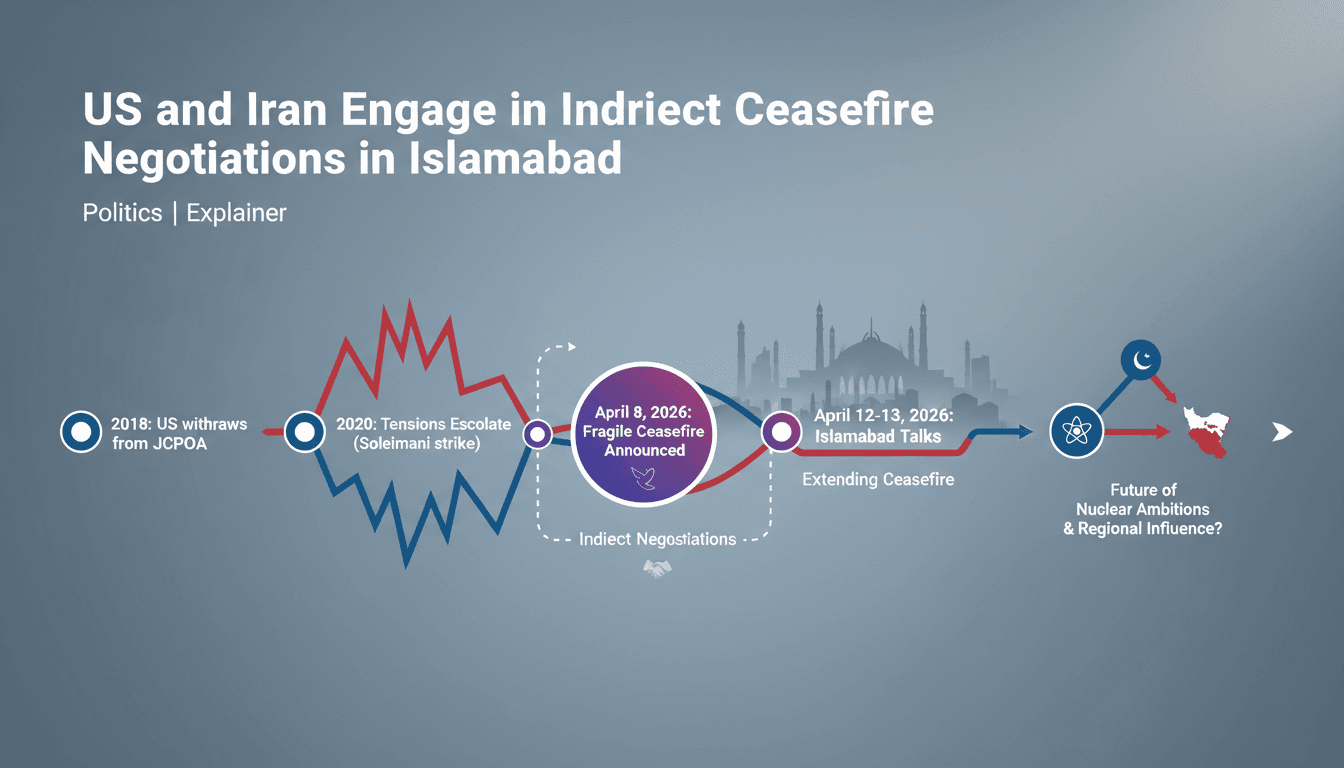
Here's what it means for you.
The outcome of these negotiations could reshape economic stability and security in the Gulf region, impacting global markets.
Why it matters
The US-Iran ceasefire talks are critical in determining the future of regional stability and economic conditions, particularly for oil markets.
What happened (in 30 seconds)
- Negotiations are set: The US and Iran will engage in indirect talks in Islamabad on April 12-13, 2026, mediated by Pakistan.
- Ceasefire in place: A ceasefire was announced on April 8, 2026, following intense military pressure, but violations have been reported.
- Cautious optimism: Both sides express hope for progress despite significant disagreements over key issues like nuclear ambitions and regional conflicts.
The context you actually need
- Ongoing conflict: The 2026 Iran War began on February 28, 2026, after failed negotiations led to Israeli strikes on Iran, escalating US involvement.
- Previous talks faltered: Indirect discussions in Geneva and Oman earlier in February did not yield a resolution, exacerbating tensions.
- Market reactions: Following the ceasefire announcement, Gulf stock markets surged, indicating investor relief and potential economic stabilization.
What's really happening
The upcoming US-Iran talks in Islamabad represent a crucial juncture in a protracted conflict that has significant implications for the Middle East and global markets. The backdrop of the 2026 Iran War, which erupted following an Israeli offensive and subsequent US involvement, has created a volatile environment. The fragile ceasefire, announced on April 8, 2026, was a direct result of US military pressure and the need for a diplomatic solution to prevent further escalation.
Pakistan's role as a mediator is pivotal, as it seeks to stabilize the region while managing its own security concerns. The discussions will focus on several contentious issues, including Iran's nuclear program, missile capabilities, and its support for regional proxies. The US has described Iran as "humiliated," reflecting the deep-seated animosities and the complexities of negotiating from a position of perceived weakness.
Despite the ceasefire, violations have been reported, raising questions about the sincerity of both parties in adhering to the truce. The US has emphasized the need for a comprehensive approach to regional security, while Iran has countered with demands that include recognition of its self-defense rights and a broader de-escalation of tensions across the region.
The economic implications of these talks are significant. The Dubai Financial Market General Index surged by 6.9% following the ceasefire announcement, indicating a positive market reaction and a potential stabilization of oil prices. This surge reflects investor confidence that a resolution could mitigate inflationary pressures and improve economic conditions in the Gulf. However, the path to a lasting agreement remains fraught with challenges, as both sides must navigate their domestic pressures and the influence of external actors, including Israel and Gulf states.
Who feels it first (and how)
- Investors: Increased market volatility and potential for profit or loss based on geopolitical developments.
- Oil producers: Fluctuations in oil prices directly impact revenue and economic stability.
- Regional governments: Security concerns and economic ties to both the US and Iran will influence their responses.
- Pakistani officials: As mediators, they face pressure to ensure a successful outcome while managing their own security issues.
What to watch next
- Compliance with the ceasefire: Monitoring any violations or escalations will indicate the seriousness of both parties in pursuing peace.
- Market reactions: Continued fluctuations in Gulf stock markets and oil prices will signal investor sentiment regarding the negotiations.
- Statements from key officials: Comments from US and Iranian leaders will provide insight into the progress and challenges of the talks.
The US and Iran are engaged in indirect negotiations mediated by Pakistan.
Continued tensions and disagreements over key issues will persist, impacting the negotiation process.
The long-term sustainability of the ceasefire and its implications for regional stability remain uncertain.
Frequently Asked Questions
- Why it matters?
- The US-Iran ceasefire talks are critical in determining the future of regional stability and economic conditions, particularly for oil markets.
- What happened (in 30 seconds)?
- Negotiations are set: The US and Iran will engage in indirect talks in Islamabad on April 12-13, 2026, mediated by Pakistan. Ceasefire in place: A ceasefire was announced on April 8, 2026, following intense military pressure, but violations have been reported. Cautious optimism: Both sides express hope for progress despite significant disagreements over key issues like nuclear ambitions and regional conflicts.
- What's really happening?
- The upcoming US-Iran talks in Islamabad represent a crucial juncture in a protracted conflict that has significant implications for the Middle East and global markets. The backdrop of the 2026 Iran War, which erupted following an Israeli offensive and subsequent US involvement, has created a volatile environment. The fragile ceasefire, announced on April 8, 2026, was a direct result of US military pressure and the need for a diplomatic solution to prevent further escalation. Pakistan's role as
- Who feels it first (and how)?
- Investors: Increased market volatility and potential for profit or loss based on geopolitical developments. Oil producers: Fluctuations in oil prices directly impact revenue and economic stability. Regional governments: Security concerns and economic ties to both the US and Iran will influence their responses. Pakistani officials: As mediators, they face pressure to ensure a successful outcome while managing their own security issues.
- What to watch next?
- Compliance with the ceasefire: Monitoring any violations or escalations will indicate the seriousness of both parties in pursuing peace. Market reactions: Continued fluctuations in Gulf stock markets and oil prices will signal investor sentiment regarding the negotiations. Statements from key officials: Comments from US and Iranian leaders will provide insight into the progress and challenges of the talks.
Arabic-language UAE newspaper coverage focused on domestic affairs, public institutions, business, society, and regional developments.
"Al Khaleej coverage generally reflects a mainstream UAE editorial lens with strong attention to public affairs, institutions, and regional developments."
— A47 Editor
هل تستطيع أمريكا وإيران تجاوز خلافاتهما خلال المحادثات؟
The United States and Iran are set to hold peace talks in Pakistan, which is acting as a mediator, although significant disagreements remain between the two nations.
Comprehensive coverage of Middle Eastern and global issues.
"Al Jazeera is a prominent voice from the Global South, especially the Middle East, with an emphasis on underreported stories."
— A47 Editor
US-Iran talks in Pakistan: Who’s attending, what’s on the agenda?
The United States and Iran are engaged in negotiations in Islamabad, Pakistan, following a recently brokered two-week ceasefire aimed at de-escalating tensions in the region. The talks are part of ongoing efforts to find a diplomatic off-ramp amid de...
UAE-based newspaper covering Gulf politics, society, and international developments.
"Gulf News is one of the UAE’s most prominent English-language publications."
— A47 Editor
Pakistan ramps up security ahead of US-Iran talks in Islamabad
Pakistan has heightened security measures in Islamabad ahead of high-stakes talks between the United States and Iran, scheduled for Friday. This diplomatic engagement follows a two-week ceasefire agreement facilitated by Pakistan, aimed at addressing...