
Trump Commits U.S. Aid for Lebanon Reconstruction After Ceasefire with Israel
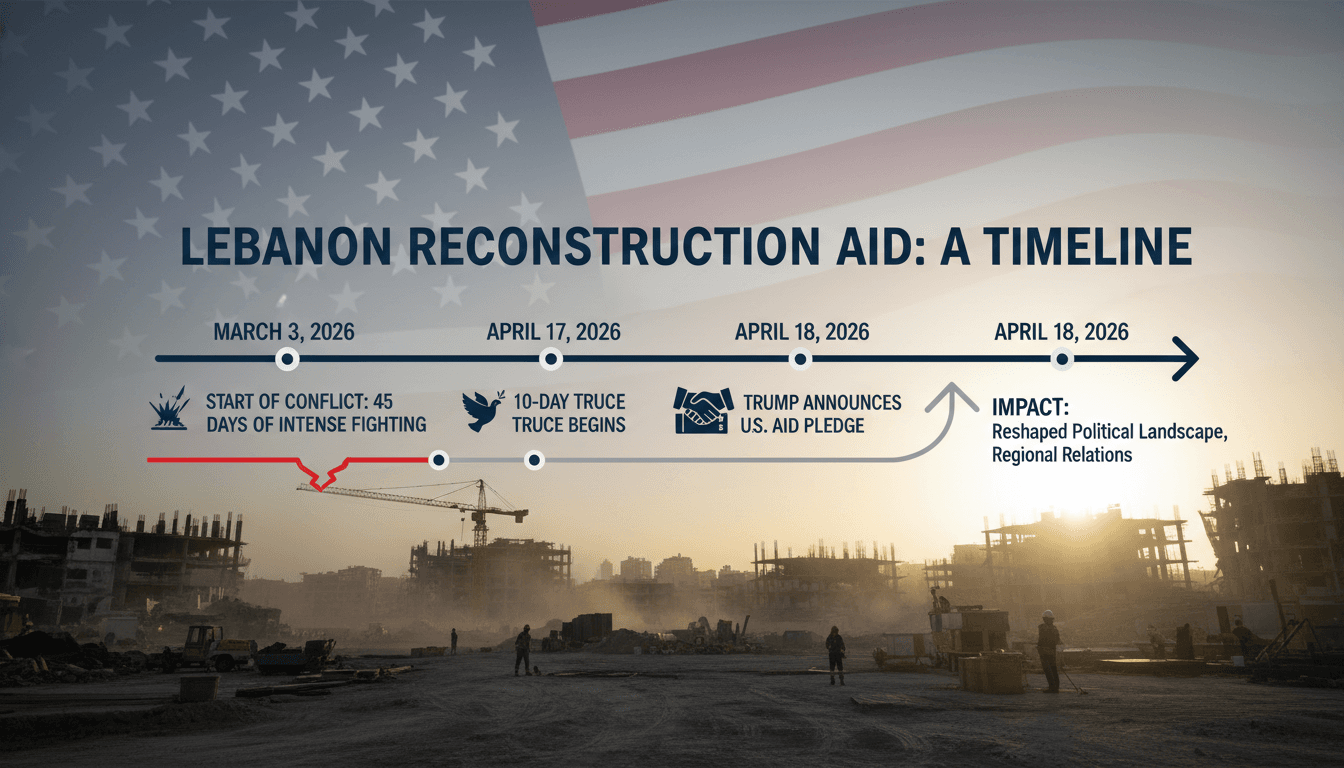
Here's what it means for you.
If you have ties to Lebanon or are involved in Middle Eastern markets, the U.S. commitment to aid could reshape economic opportunities and stability in the region.
Why it matters
This pledge signals a potential shift in U.S. foreign policy that could stabilize a historically volatile region, impacting global markets and diaspora communities.
What happened (in 30 seconds)
- On April 18, 2026, President Donald Trump announced U.S. support for Lebanon's reconstruction following a 10-day ceasefire with Israel.
- The ceasefire, effective April 17, marked the first halt in hostilities in 78 years, following 45 days of intense conflict resulting in over 2,000 deaths.
- Lebanon's government welcomed the aid pledge, while regional markets showed signs of stability amid ongoing geopolitical tensions.
The context you actually need
- The 2026 Lebanon War began on March 2, escalating tensions between Israel and Hezbollah, leading to significant casualties and infrastructure damage.
- Lebanon's economy was already fragile, with the war displacing one million people and causing extensive destruction to vital infrastructure.
- U.S. diplomatic efforts were crucial in brokering the ceasefire, which is linked to broader negotiations involving Iran, indicating a complex geopolitical landscape.
What's really happening
The U.S. pledge for reconstruction aid to Lebanon comes at a critical juncture following the 2026 Lebanon War, which has left the country in dire need of support. The war, which began on March 2, 2026, saw Israeli airstrikes targeting Hezbollah positions, resulting in 2,196 fatalities and over one million displaced individuals. The humanitarian crisis has exacerbated Lebanon's already fragile economy, which has been struggling with high inflation and unemployment rates.
The ceasefire, brokered by U.S. diplomats, represents a significant diplomatic achievement, marking the first cessation of hostilities in 78 years. Trump's announcement aboard Air Force One highlights a strategic pivot in U.S. foreign policy, emphasizing the importance of rebuilding Lebanon as a stable partner in the region. By framing the aid as a pathway for Lebanon to "become a country again," Trump is signaling a commitment to long-term stability, which could have ripple effects across the Middle East.
The U.S. aid pledge is not just about immediate reconstruction; it also aims to address the underlying issues that have fueled conflict in Lebanon. The focus on disarming Hezbollah and fostering a stable government in Beirut aligns with broader U.S. interests in countering Iranian influence in the region. This dual approach—supporting reconstruction while promoting disarmament—could reshape Lebanon's political landscape and its relations with neighboring countries.
Moreover, the economic implications of this aid are significant. For the Lebanese diaspora, particularly in places like Dubai, the ceasefire and potential reconstruction efforts could lead to increased remittances and investment opportunities. The expatriate Lebanese community, numbering around 250,000 in Dubai, may find renewed confidence in returning to Lebanon or investing in its recovery. This could stabilize local economies and enhance contributions from the diaspora, which are crucial for Lebanon's recovery.
However, the implementation of the aid pledge remains uncertain. While the Lebanese government has welcomed the support, the actual flow of funds and resources will depend on various factors, including political stability and the effectiveness of governance in Lebanon. The U.S. has yet to announce a specific aid package, leaving many questions about the scale and timing of the support.
In summary, the U.S. commitment to aid Lebanon is a multifaceted strategy aimed at fostering stability in a historically volatile region. It reflects a broader geopolitical context that intertwines U.S. interests with the urgent needs of the Lebanese people, setting the stage for potential economic recovery and political transformation.
Who feels it first (and how)
- Lebanese Government: Will need to manage the reconstruction process and ensure effective governance.
- Lebanese Diaspora: Those living abroad may experience renewed opportunities for investment and family reunification.
- Local Businesses: Companies in Lebanon could benefit from reconstruction contracts and increased economic activity.
- International Aid Organizations: They may see increased funding and involvement in reconstruction efforts.
What to watch next
- Implementation of Aid: Monitor announcements regarding the specifics of U.S. aid packages and their timelines, as this will directly impact Lebanon's recovery.
- Political Stability in Lebanon: Watch for developments in the Lebanese government’s ability to maintain order and effectively utilize aid, which will influence investor confidence.
- Regional Diplomatic Relations: Keep an eye on how this U.S. pledge affects Lebanon's relationships with Israel and Iran, as shifts could lead to further geopolitical changes.
The U.S. has pledged reconstruction aid to Lebanon following a ceasefire.
The aid will be tied to political reforms and disarmament of Hezbollah.
The timeline and specifics of the aid implementation remain uncertain.
Frequently Asked Questions
- Why it matters?
- This pledge signals a potential shift in U.S. foreign policy that could stabilize a historically volatile region, impacting global markets and diaspora communities.
- What happened (in 30 seconds)?
- On April 18, 2026, President Donald Trump announced U.S. support for Lebanon's reconstruction following a 10-day ceasefire with Israel. The ceasefire, effective April 17, marked the first halt in hostilities in 78 years, following 45 days of intense conflict resulting in over 2,000 deaths. Lebanon's government welcomed the aid pledge, while regional markets showed signs of stability amid ongoing geopolitical tensions.
- What's really happening?
- The U.S. pledge for reconstruction aid to Lebanon comes at a critical juncture following the 2026 Lebanon War, which has left the country in dire need of support. The war, which began on March 2, 2026, saw Israeli airstrikes targeting Hezbollah positions, resulting in 2,196 fatalities and over one million displaced individuals. The humanitarian crisis has exacerbated Lebanon's already fragile economy, which has been struggling with high inflation and unemployment rates. The ceasefire, brokered
- Who feels it first (and how)?
- Lebanese Government: Will need to manage the reconstruction process and ensure effective governance. Lebanese Diaspora: Those living abroad may experience renewed opportunities for investment and family reunification. Local Businesses: Companies in Lebanon could benefit from reconstruction contracts and increased economic activity. International Aid Organizations: They may see increased funding and involvement in reconstruction efforts.
- What to watch next?
- Implementation of Aid: Monitor announcements regarding the specifics of U.S. aid packages and their timelines, as this will directly impact Lebanon's recovery. Political Stability in Lebanon: Watch for developments in the Lebanese government’s ability to maintain order and effectively utilize aid, which will influence investor confidence. Regional Diplomatic Relations: Keep an eye on how this U.S. pledge affects Lebanon's relationships with Israel and Iran, as shifts could lead to further geopol
Arabic-language coverage of international news and geopolitics.
"RT Arabic is a Russian state-funded outlet often criticized for promoting Kremlin-aligned narratives."
— A47 Editor
ترامب: سنساعد لبنان ليصبح دولة من جديد
On Saturday, U.S. President Donald Trump pledged to assist Lebanon in its reconstruction efforts, highlighting that Washington has 'good partners' in Beirut. This commitment comes amid ongoing challenges faced by Lebanon, emphasizing the U.S. interes...
Arabic-language coverage of political affairs and current events.
"Okaz political coverage typically follows mainstream Saudi framing on national and regional affairs."
— A47 Editor
ترمب: يمكننا أن نجعل لبنان بلداً عظيماً
In a recent speech, U.S. President Donald Trump expressed ambitious visions for Lebanon, suggesting that the country could become a great nation again. He highlighted the United States' role in ending conflicts related to Iran and Lebanon, indicating...
Jordanian news and regional updates.
"Roya News is a Jordanian outlet focused on breaking news and local affairs."
— A47 Editor
ترمب: سنستحوذ على كافة المواد النووية الإيرانية.. واتفاق لبنان هو الأول منذ 78 عاماً
U.S. President Donald Trump announced the imminent resolution of the Iranian nuclear file, asserting that the United States will take control of all Iranian nuclear materials. Additionally, he highlighted a significant agreement concerning Lebanon, m...