
US and Iran Agree to Two-Week Ceasefire Amid Ongoing Regional Tensions
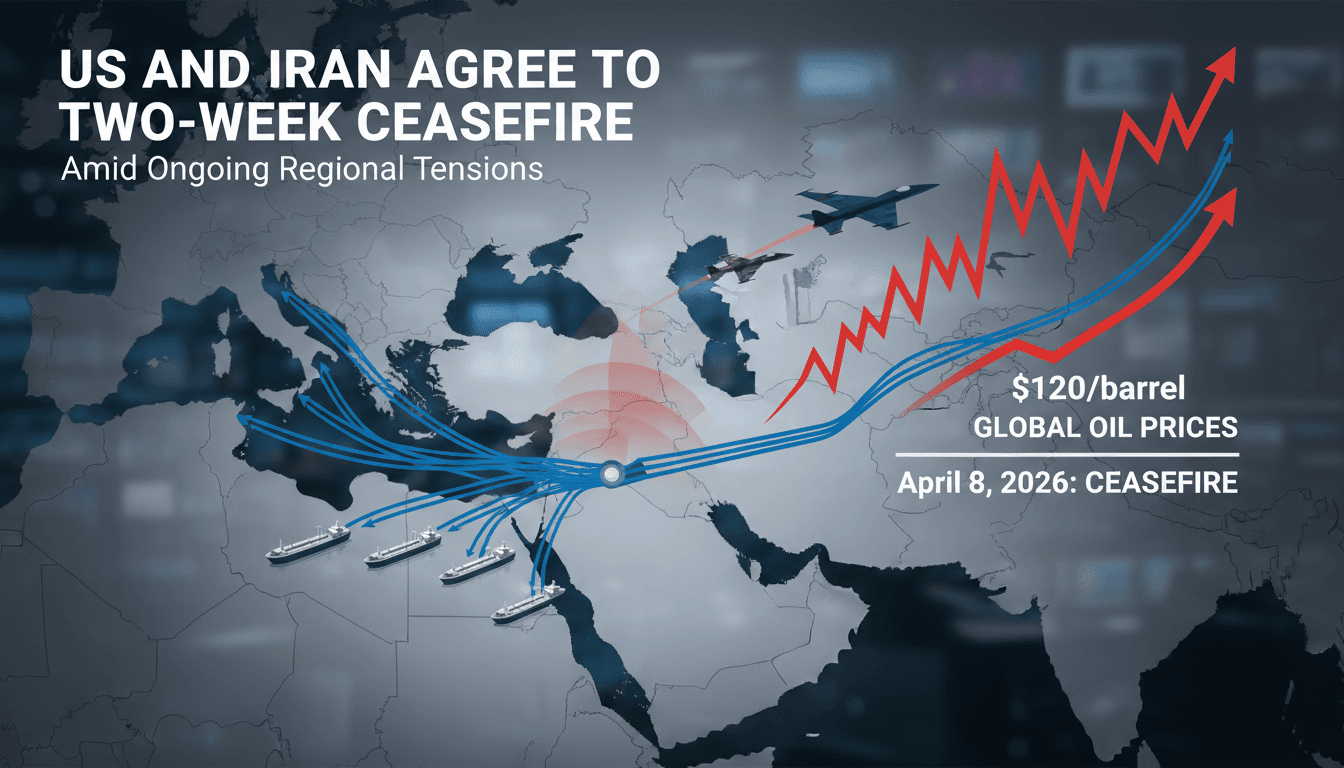
Here's what it means for you.
The temporary ceasefire between the US and Iran could impact global oil prices and regional trade dynamics, affecting your business costs and travel plans.
Why it matters
This ceasefire is a critical step toward stabilizing a region that influences global oil markets and international relations.
What happened (in 30 seconds)
- United States and Iran announced a two-week ceasefire on April 8, 2026, mediated by Pakistan, to halt direct hostilities.
- The agreement includes Iranian oversight of safe passage through the Strait of Hormuz but allows ongoing Israeli strikes against Hezbollah in Lebanon.
- Global oil prices initially plunged but rebounded amid renewed military actions, indicating ongoing volatility in the region.
The context you actually need
- Escalating conflict: The ceasefire follows a month-and-a-half of intense military exchanges, including US and Israeli strikes on Iranian targets and Iranian retaliation.
- Strait of Hormuz significance: This waterway is crucial for global oil transit, with 20% of the world's oil passing through it.
- Pakistan's mediation: The ceasefire was facilitated by Pakistan, which proposed a two-stage peace plan to prevent broader war amid nuclear and proxy threats.
What's really happening
The announcement of the ceasefire on April 8, 2026, marks a pivotal moment in a protracted conflict that has seen escalating tensions between the US, Iran, and their respective allies. The ceasefire, while temporary, reflects a fragile attempt to de-escalate military hostilities that have disrupted the Strait of Hormuz, a vital artery for global oil transport. The agreement was brokered by Pakistan, which has positioned itself as a mediator in a region fraught with geopolitical complexities.
The ceasefire incorporates elements from Iran's 10-point proposal, which includes guarantees against aggression and the reopening of the Strait of Hormuz under Iranian oversight. This is significant because it allows for a controlled flow of oil, which is essential for the global economy. However, the agreement's allowance for Israeli strikes against Hezbollah complicates the situation, as it raises questions about the ceasefire's sustainability and the potential for renewed conflict.
The immediate aftermath saw a stark reduction in vessel transits through the Strait of Hormuz, with only four vessels passing through on the day of the ceasefire announcement compared to a pre-war average of 140 daily. This sharp decline indicates that while the ceasefire may have temporarily halted direct hostilities, the underlying tensions remain unresolved, and the threat of renewed conflict looms large.
Moreover, the ceasefire's impact on global oil prices has been immediate and volatile. Initially, prices plunged in response to the announcement, providing some economic relief to oil-dependent economies like the UAE. However, reports of continued Israeli operations in Lebanon and Iranian threats to energy infrastructure in the region have caused prices to rebound, with crude futures exceeding $100 per barrel. This volatility not only affects oil markets but also has broader implications for regional trade confidence and economic stability.
As the ceasefire holds, albeit tenuously, the upcoming Islamabad summit involving US and Iranian officials will be crucial in determining the next steps toward a more permanent resolution. The stakes are high, as failure to achieve lasting peace could lead to a resurgence of hostilities, further destabilizing the region and impacting global markets.
Who feels it first (and how)
- Oil traders: Fluctuations in oil prices directly impact their trading strategies and profit margins.
- Businesses in the UAE and Saudi Arabia: Economic stability is threatened by rising oil prices, affecting operational costs.
- Travel and tourism sectors: Increased oil prices can lead to higher travel costs, impacting consumer behavior and travel plans.
What to watch next
- Upcoming Islamabad summit: This meeting will be critical for assessing the potential for a more permanent ceasefire and broader peace negotiations.
- Israeli military operations: Continued strikes against Hezbollah could destabilize the ceasefire and lead to renewed conflict.
- Oil price trends: Watch for fluctuations in crude prices as geopolitical tensions evolve, which will affect global markets and local economies.
The ceasefire is temporary and fragile, with ongoing military actions testing its limits.
Economic volatility in oil markets will continue as tensions persist in the region.
The long-term effectiveness of the ceasefire and the potential for a permanent resolution remain uncertain.
Frequently Asked Questions
- Why it matters?
- This ceasefire is a critical step toward stabilizing a region that influences global oil markets and international relations.
- What happened (in 30 seconds)?
- United States and Iran announced a two-week ceasefire on April 8, 2026, mediated by Pakistan, to halt direct hostilities. The agreement includes Iranian oversight of safe passage through the Strait of Hormuz but allows ongoing Israeli strikes against Hezbollah in Lebanon. Global oil prices initially plunged but rebounded amid renewed military actions, indicating ongoing volatility in the region.
- What's really happening?
- The announcement of the ceasefire on April 8, 2026, marks a pivotal moment in a protracted conflict that has seen escalating tensions between the US, Iran, and their respective allies. The ceasefire, while temporary, reflects a fragile attempt to de-escalate military hostilities that have disrupted the Strait of Hormuz, a vital artery for global oil transport. The agreement was brokered by Pakistan, which has positioned itself as a mediator in a region fraught with geopolitical complexities. Th
- Who feels it first (and how)?
- Oil traders: Fluctuations in oil prices directly impact their trading strategies and profit margins. Businesses in the UAE and Saudi Arabia: Economic stability is threatened by rising oil prices, affecting operational costs. Travel and tourism sectors: Increased oil prices can lead to higher travel costs, impacting consumer behavior and travel plans.
- What to watch next?
- Upcoming Islamabad summit: This meeting will be critical for assessing the potential for a more permanent ceasefire and broader peace negotiations. Israeli military operations: Continued strikes against Hezbollah could destabilize the ceasefire and lead to renewed conflict. Oil price trends: Watch for fluctuations in crude prices as geopolitical tensions evolve, which will affect global markets and local economies.
Global news coverage with extensive reporting on Middle Eastern conflicts and geopolitics.
"Al Jazeera is a Qatar-based broadcaster known for wide regional coverage and alternative perspectives."
— A47 Editor
Does a US-Iran ceasefire mean the end of the war?
The United States and Iran have agreed to a two-week ceasefire, announced by President Trump, following a month of escalating military actions. This truce aims to reduce hostilities and includes Iran's commitment to reopen the strategically vital Str...
Comprehensive coverage of Middle Eastern and global issues.
"Al Jazeera is a prominent voice from the Global South, especially the Middle East, with an emphasis on underreported stories."
— A47 Editor
Does a US-Iran ceasefire mean the end of the war?
The United States and Iran have agreed to a two-week ceasefire, announced by President Trump, following a month of escalating military actions. This truce aims to reduce hostilities and includes Iran's commitment to reopen the strategically vital Str...
European coverage of Middle East politics and security issues.
"France 24 offers international reporting with a European editorial perspective."
— A47 Editor
'Trump abandoned us': Ceasefire sparks anger, fear, division among Iranians
A two-week ceasefire has been announced between the United States and Iran, following five weeks of armed conflict that has left many Iranians feeling abandoned and divided. The ceasefire, facilitated by Pakistan, has elicited mixed reactions among t...
Coverage of current events and conflicts in the Middle East.
"France 24 is viewed as a globally focused outlet with balanced coverage and a European perspective."
— A47 Editor
'Trump abandoned us': Ceasefire sparks anger, fear, division among Iranians
A two-week ceasefire has been announced between the United States and Iran, following five weeks of armed conflict that has left many Iranians feeling abandoned and divided. The ceasefire, facilitated by Pakistan, has elicited mixed reactions among t...