
Pro-Russian Rumen Radev's Progressive Bulgaria Projected to Secure Absolute Majority in Parliamentary Elections
Here's what it means for you.
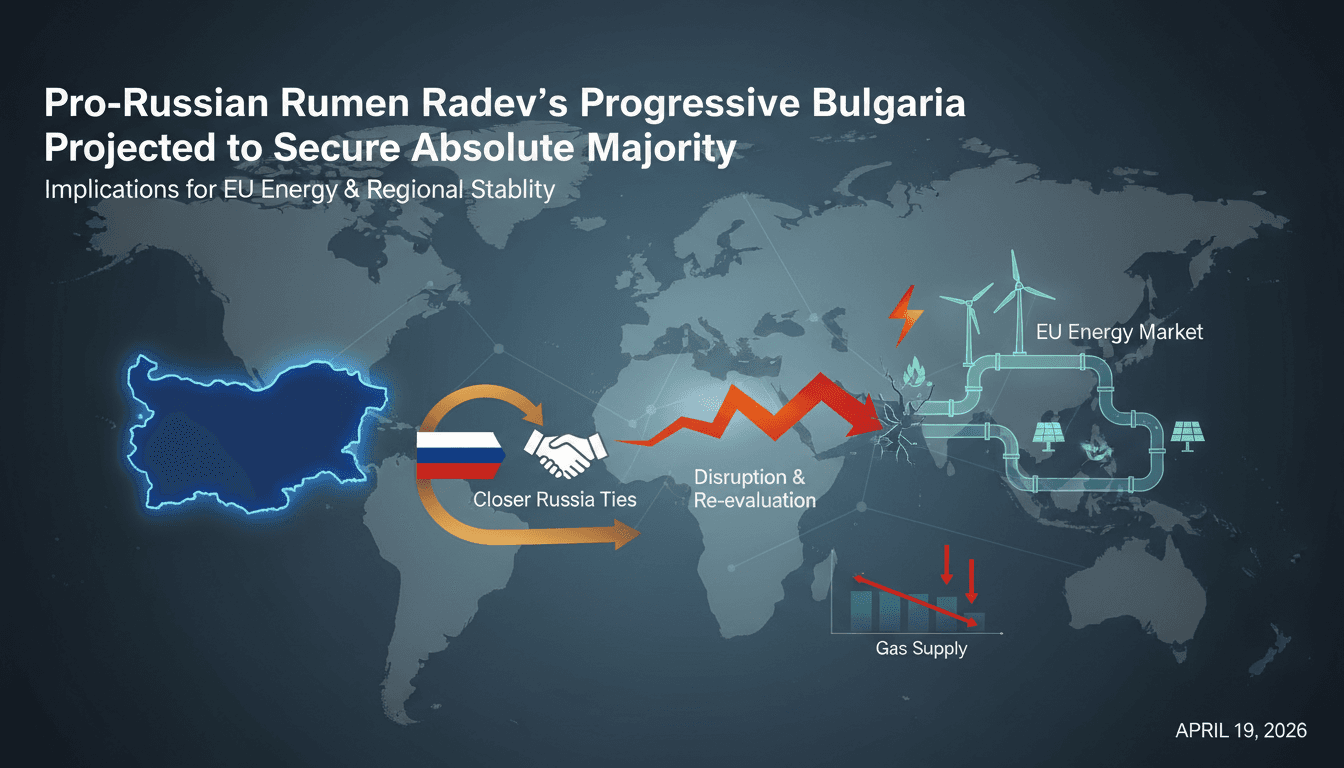
As Bulgaria's political landscape shifts, potential changes in EU energy policies and trade routes could indirectly affect global markets.
Why it matters
Radev's pro-Russian stance may influence Bulgaria's role in EU energy dynamics and regional stability.
What happened (in 30 seconds)
- Exit polls on April 19, 2026, projected Rumen Radev's Progressive Bulgaria to secure 44% of the vote, achieving an absolute majority in parliament.
- Voter turnout exceeded 50%, the highest since 2021, reflecting increased public engagement amid ongoing political crises.
- Radev's campaign focused on anti-corruption and a shift towards renewed ties with Russia, contrasting with previous pro-EU policies.
The context you actually need
- Political instability in Bulgaria has persisted since 2021, marked by anti-corruption protests and frequent snap elections.
- Radev's Progressive Bulgaria emerged as a response to public disillusionment with existing political structures, advocating for systemic change.
- EU relations are at a crossroads, with Radev's election potentially altering Bulgaria's alignment within the bloc, especially regarding military aid and energy policies.
What's really happening
Bulgaria's political landscape has been tumultuous, characterized by a series of snap elections and shifting coalitions since 2021. The recent election on April 19, 2026, marks the eighth parliamentary vote in five years, driven by a persistent political deadlock and widespread anti-corruption protests. Rumen Radev, a former president and air force general, capitalized on public discontent by forming Progressive Bulgaria, a centre-left party that promises to dismantle oligarchic structures and address corruption.
Radev's campaign resonated with voters who are increasingly frustrated with the status quo. His platform criticized the European Union's approach to Ukraine, advocating for a more pragmatic relationship with Russia. This stance is particularly significant given Bulgaria's geographical and historical ties to Russia, which may influence its foreign policy direction within the EU. The election results, with Progressive Bulgaria projected to secure 44% of the vote, indicate a decisive shift towards a party that prioritizes national interests over EU alignment.
The implications of Radev's victory extend beyond Bulgaria. As a member of the EU, Bulgaria's foreign policy decisions can impact regional stability and energy dynamics, especially in the context of ongoing tensions between the EU and Russia. If Radev's government pursues closer ties with Moscow, it could lead to a reevaluation of energy policies within the EU, particularly concerning gas supplies and trade routes through the Black Sea.
Moreover, the election's high voter turnout, exceeding 50%, suggests a renewed public interest in political engagement, which could lead to further demands for transparency and accountability from the new government. Radev's declaration of an "unequivocal victory of hope over distrust" reflects a broader desire for systemic change among the electorate, which may pressure the new administration to deliver on its anti-corruption promises.
In summary, Radev's election signals a potential pivot in Bulgaria's political and foreign policy landscape, with implications that could resonate throughout the EU and beyond, particularly in energy markets and regional alliances.
Who feels it first (and how)
- Voters in Bulgaria: Expect changes in governance and anti-corruption measures.
- EU policymakers: Will monitor Bulgaria's alignment and its impact on EU unity and energy strategies.
- Energy sector stakeholders: May face shifts in trade routes and supply chains depending on Bulgaria's foreign policy direction.
What to watch next
- Official election results: Final tallies from the Central Election Commission will clarify the extent of Radev's majority and potential coalition dynamics.
- Policy announcements: Watch for initial statements from Radev regarding foreign policy, particularly concerning Russia and the EU.
- Public response: Monitor ongoing public sentiment and protests, which could influence Radev's governance and reform agenda.
Radev's Progressive Bulgaria is projected to secure an absolute majority in parliament.
Shifts in Bulgaria's foreign policy towards Russia and potential impacts on EU energy strategies.
The long-term stability of Radev's government and its ability to implement promised reforms.
Frequently Asked Questions
- Why it matters?
- Radev's pro-Russian stance may influence Bulgaria's role in EU energy dynamics and regional stability.
- What happened (in 30 seconds)?
- Exit polls on April 19, 2026, projected Rumen Radev's Progressive Bulgaria to secure 44% of the vote, achieving an absolute majority in parliament. Voter turnout exceeded 50%, the highest since 2021, reflecting increased public engagement amid ongoing political crises. Radev's campaign focused on anti-corruption and a shift towards renewed ties with Russia, contrasting with previous pro-EU policies.
- What's really happening?
- Bulgaria's political landscape has been tumultuous, characterized by a series of snap elections and shifting coalitions since 2021. The recent election on April 19, 2026, marks the eighth parliamentary vote in five years, driven by a persistent political deadlock and widespread anti-corruption protests. Rumen Radev, a former president and air force general, capitalized on public discontent by forming Progressive Bulgaria, a centre-left party that promises to dismantle oligarchic structures and a
- Who feels it first (and how)?
- Voters in Bulgaria: Expect changes in governance and anti-corruption measures. EU policymakers: Will monitor Bulgaria's alignment and its impact on EU unity and energy strategies. Energy sector stakeholders: May face shifts in trade routes and supply chains depending on Bulgaria's foreign policy direction.
- What to watch next?
- Official election results: Final tallies from the Central Election Commission will clarify the extent of Radev's majority and potential coalition dynamics. Policy announcements: Watch for initial statements from Radev regarding foreign policy, particularly concerning Russia and the EU. Public response: Monitor ongoing public sentiment and protests, which could influence Radev's governance and reform agenda.
International coverage from The Guardian's global desks.
"The Guardian is known for its progressive editorial stance and in-depth analysis."
— A47 Editor
Moscow-friendly Rumen Radev wins absolute majority in Bulgarian elections
Rumen Radev, the former president of Bulgaria and leader of the Progressive Bulgaria party, has won an absolute majority in the recent parliamentary elections, securing approximately 44.6% of the vote, which translates to an estimated 131 seats in th...
Editor-curated FT homepage stories spanning markets, business, world, and opinion.
"The Financial Times is a globally respected business publication with a centrist/center-left tone and strong markets focus."
— A47 Editor
Pro-Russia ex-president on course to win Bulgaria’s elections
Rumen Radev, the pro-Russia ex-president of Bulgaria, is positioned to win the upcoming elections, according to analysts. His anti-Europe stance raises concerns about the potential for a stable coalition government in the country.
International news coverage curated for readers in the UAE and Gulf region.
"Emirates 24|7 world coverage presents global developments through a UAE-facing and Gulf-relevant editorial lens."
— A47 Editor
Bulgarians head to polls to elect new parliament Bulgarians head to polls to elect new parliament
Bulgarians participated in their eighth parliamentary election in five years, with pro-Russian former President Rumen Radev emerging as the frontrunner. Radev, who resigned from the presidency to contest the election, aims to address the political in...
European current affairs, EU politics, and regional developments.
"France 24 is viewed as a globally focused outlet with balanced coverage and a European perspective."
— A47 Editor
Former president Radev's coalition leads in Bulgarian elections, early results show
In the recent Bulgarian parliamentary elections, former president Rumen Radev's party, Progressive Bulgaria, has emerged as the frontrunner, securing approximately 44.7% of the votes according to early results. This election follows a period of polit...