
Iran War Causes Jet Fuel Prices to Surge and Aviation Capacity Cuts Globally
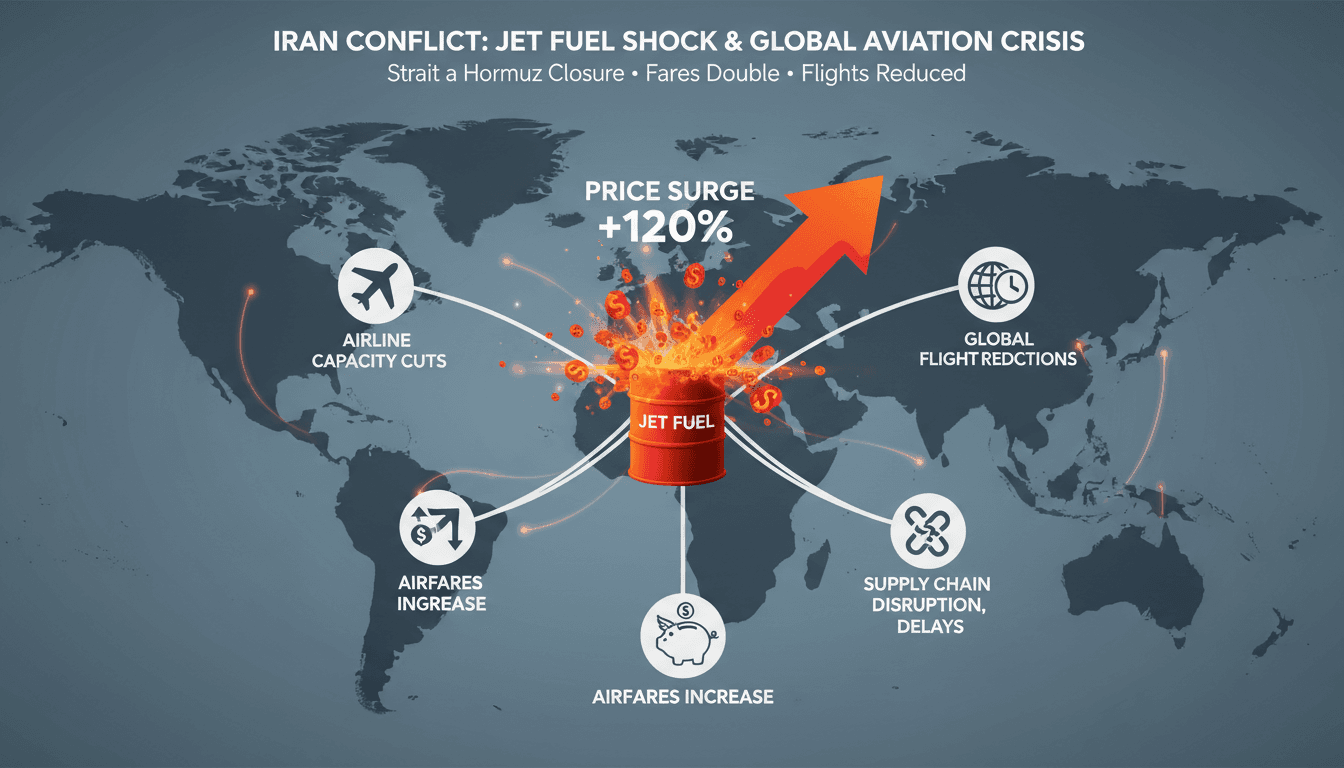
Here's what it means for you.
If you travel frequently, expect significantly higher airfares and reduced flight options in the coming months.
Why it matters
The ongoing conflict has disrupted global aviation supply chains, leading to unprecedented cost pressures on airlines and travelers alike.
What happened (in 30 seconds)
- On February 28, 2026, U.S. and Israeli strikes initiated the 2026 Iran War, leading to Iran's restriction of the Strait of Hormuz.
- By early April, global jet fuel prices surged to over $190 per barrel, more than double pre-war levels, causing airlines to raise fares and cut capacity.
- A temporary ceasefire on April 8, 2026, has not alleviated supply constraints, with ongoing high costs and limited flight availability.
The context you actually need
- The Strait of Hormuz is a critical chokepoint for 20% of global oil and significant jet fuel supplies, making its closure impactful on aviation.
- Airlines globally are facing severe cost pressures, leading to fare increases and capacity reductions, particularly affecting routes in Europe, Asia, and the Middle East.
- UAE authorities have implemented restrictions on foreign airlines and announced economic support measures, reflecting the conflict's local impact.
What's really happening
The 2026 Iran War has triggered a complex chain reaction in global aviation markets, primarily due to the effective closure of the Strait of Hormuz, a vital shipping lane for oil and jet fuel. Following the U.S. and Israeli strikes on Iranian targets, Iran retaliated by restricting access to this critical chokepoint, which accounts for approximately 20% of the world's oil supply. This disruption has led to a dramatic increase in jet fuel prices, which soared from pre-war levels of around $88 per barrel to over $190 by early April 2026.
The International Air Transport Association (IATA) reported a global average jet fuel price of $197.83 per barrel for the week ending April 13, 2026, indicating a severe strain on airline operations. Airlines have responded by implementing fare hikes and cutting routes, particularly in regions heavily reliant on jet fuel imports. For instance, U.S. carriers like Delta and United have raised baggage fees and trimmed their Asia routes, while Qantas has announced capacity cuts and delayed buybacks.
The temporary ceasefire declared on April 8 has provided little relief, as refinery bottlenecks and supply chain disruptions persist. Airlines for Europe have petitioned the EU for emergency measures, including joint kerosene procurement and aviation tax suspensions, highlighting the urgency of the situation. Meanwhile, the UAE has restricted foreign airlines to one daily flight into Dubai until May 31, 2026, further complicating travel options for passengers.
The economic implications are significant, with fare surges of 2.7% reported in March and projections of potential European jet fuel shortages by June if import diversification does not occur. The aviation sector is grappling with the dual challenges of rising operational costs and reduced capacity, which will likely continue to affect air travel for the foreseeable future.
Who feels it first (and how)
- Frequent travelers: Facing skyrocketing airfares and limited flight options.
- Airlines: Experiencing increased operational costs and reduced capacity, leading to fare hikes.
- Travel agencies: Struggling to manage customer expectations amid fluctuating prices and cancellations.
- Businesses reliant on travel: Facing higher costs for employee travel, impacting budgets and operations.
- UAE residents: Encountering fare increases up to sixfold on major routes, affecting local travel dynamics.
What to watch next
- Airfare trends: Monitor fare increases and capacity reductions as airlines adjust to ongoing fuel price pressures.
- Geopolitical developments: Keep an eye on the Iran War and any potential escalations that could further disrupt supply chains.
- Economic support measures: Watch for government interventions in the aviation sector, particularly in Europe and the UAE, which could influence market stability.
Jet fuel prices have more than doubled since the onset of the Iran War.
Airlines will continue to raise fares and cut capacity in response to sustained high fuel costs.
The long-term impact of the conflict on global aviation and travel demand remains uncertain.
Frequently Asked Questions
- Why it matters?
- The ongoing conflict has disrupted global aviation supply chains, leading to unprecedented cost pressures on airlines and travelers alike.
- What happened (in 30 seconds)?
- On February 28, 2026, U.S. and Israeli strikes initiated the 2026 Iran War, leading to Iran's restriction of the Strait of Hormuz. By early April, global jet fuel prices surged to over $190 per barrel, more than double pre-war levels, causing airlines to raise fares and cut capacity. A temporary ceasefire on April 8, 2026, has not alleviated supply constraints, with ongoing high costs and limited flight availability.
- What's really happening?
- The 2026 Iran War has triggered a complex chain reaction in global aviation markets, primarily due to the effective closure of the Strait of Hormuz, a vital shipping lane for oil and jet fuel. Following the U.S. and Israeli strikes on Iranian targets, Iran retaliated by restricting access to this critical chokepoint, which accounts for approximately 20% of the world's oil supply. This disruption has led to a dramatic increase in jet fuel prices, which soared from pre-war levels of around $88 per
- Who feels it first (and how)?
- Frequent travelers: Facing skyrocketing airfares and limited flight options. Airlines: Experiencing increased operational costs and reduced capacity, leading to fare hikes. Travel agencies: Struggling to manage customer expectations amid fluctuating prices and cancellations. Businesses reliant on travel: Facing higher costs for employee travel, impacting budgets and operations. UAE residents: Encountering fare increases up to sixfold on major routes, affecting local travel dynamics.
- What to watch next?
- Airfare trends: Monitor fare increases and capacity reductions as airlines adjust to ongoing fuel price pressures. Geopolitical developments: Keep an eye on the Iran War and any potential escalations that could further disrupt supply chains. Economic support measures: Watch for government interventions in the aviation sector, particularly in Europe and the UAE, which could influence market stability.
Global business headlines with AI angles.
"General business outlet that frequently covers AI."
— A47 Editor
Jet Fuel Shock From Iran War Sends Airline Costs Soaring, Triggers Global Travel Crunch
The ongoing conflict in Iran has led to a significant surge in jet fuel prices, causing airlines across Europe, Asia, and Australia to face heightened financial pressures and operational challenges. This situation is expected to persist as the war co...
Coverage of national news and events from across the United States.
"HuffPost is known for its progressive editorial stance, offering opinionated yet comprehensive coverage on social, political, and cultural topics."
— A47 Editor
U.S. Wholesale Prices Surged 4% Last Month After The War In Iran Sent Energy Prices Soaring
U.S. wholesale prices surged by 4% last month, driven by soaring energy costs linked to the ongoing conflict in Iran. This increase complicates the Federal Reserve's efforts to manage inflation, especially amid external pressures to lower interest ra...
Global coverage of politics, crises, and international affairs.
"HuffPost provides progressive-oriented reporting on international developments, often focusing on humanitarian and social justice issues."
— A47 Editor
U.S. Wholesale Prices Surged 4% Last Month After The War In Iran Sent Energy Prices Soaring
U.S. wholesale prices surged by 4% last month, primarily driven by a significant increase in energy prices following the escalation of conflict in Iran. This surge complicates the Federal Reserve's efforts to manage inflation amid ongoing pressure fr...
Markets desk coverage, trading insights, and investor updates.
"WSJ’s markets reporting provides in-depth analysis and context for investors."
— A47 Editor
U.S. Economy Remains Resilient in Face of Iran War, Banks Say
The U.S. economy continues to show resilience despite the ongoing war in Iran, as reported by major banks. Higher energy prices are beginning to impact consumers, but overall economic indicators remain stable.
Pan-Arab news coverage spanning politics, business, sports, and regional affairs.
"Asharq Al-Awsat reflects a broad Arab editorial perspective with strong attention to regional geopolitics."
— A47 Editor
تضخم المنتجين الأميركيين يقفز 4 % في أكبر زيادة سنوية منذ 3 سنوات
Producer price inflation in the United States surged by 4% last month, marking the largest annual increase in three years, driven primarily by rising energy costs linked to developments in the conflict with Iran.
Social/economic commentary and analysis relevant to business and markets.
"WSJ blends data-driven economic insight with commentary on policy and society."
— A47 Editor
Producer-Price Index Climbed in March
The Producer-Price Index rose significantly in March, marking the highest annual wholesale inflation rate in three years, as reported by the Labor Department. This increase is primarily attributed to the oil shock stemming from the ongoing conflict i...
Editor-curated FT homepage stories spanning markets, business, world, and opinion.
"The Financial Times is a globally respected business publication with a centrist/center-left tone and strong markets focus."
— A47 Editor
Why time is on Iran’s side
The ongoing conflict in Iran is exacerbating a global energy crisis, with rising oil prices and disruptions in supply chains affecting various industries. Political instability is anticipated to escalate as the situation unfolds, leading to increased...
Global markets, investing, and macroeconomics from a premier financial newsroom.
"Bloomberg is respected for in-depth financial reporting and data-driven analysis."
— A47 Editor
India’s Inflation Picks Up as Iran War Lifts Energy Costs
India's inflation rose in March 2026, driven by increased crude oil prices and gas supply constraints due to the ongoing conflict in Iran. This situation has led to heightened costs for key industries, impacting the overall economic landscape.
Global markets, investing, and macroeconomics from a premier financial newsroom.
"Bloomberg is respected for in-depth financial reporting and data-driven analysis."
— A47 Editor
Wary Investors Eye Another Escalation in Iran War
The failure of recent peace talks between the United States and Iran has raised concerns about a potential escalation in the ongoing conflict, which could lead to increased volatility in global markets. Investors are particularly wary as a fragile ce...
Global markets, investing, and macroeconomics from a premier financial newsroom.
"Bloomberg is respected for in-depth financial reporting and data-driven analysis."
— A47 Editor
Bond Traders Snap Back to Inflation as Higher-for-Longer Sets In
The bond market's focus has shifted back to inflation as a fragile ceasefire between the US and Iran raises concerns about prolonged higher interest rates. This situation is compounded by the anticipation of critical US Consumer Price Index (CPI) dat...
Capitol Hill news, legislation, and policy insight.
"The Hill specializes in U.S. politics and policy, with a focus on Capitol Hill developments and a reputation for insider reporting."
— A47 Editor
'Warflation' will hit more than just gas prices
The ongoing conflict in Iran continues to impact the U.S. economy, with inflation rising to 3.3% in March, the highest increase in nearly four years, primarily driven by escalating energy costs linked to the war. This inflation spike reflects the bro...
Editor-curated FT homepage stories spanning markets, business, world, and opinion.
"The Financial Times is a globally respected business publication with a centrist/center-left tone and strong markets focus."
— A47 Editor
Global economic outlook darkens as policymakers count cost of Iran war
Central bankers and economists are gathering in Washington to assess the economic damage caused by the ongoing conflict in Iran, which has led to rising inflation and declining consumer sentiment in the U.S. The situation is prompting concerns about ...
Corporate news, economic trends, and markets with UK and global scope.
"BBC News is widely regarded as reputable and impartial, with a public service mandate."
— A47 Editor
How the Iran war affects your money and bills
The ongoing conflict in Iran has significantly impacted global markets, leading to increased costs for petrol, household energy bills, and food prices. The Food and Agriculture Organization (FAO) reported a 2.4% rise in global food prices in March, a...
United Kingdom-focused news including local politics, business, and social issues.
"BBC News is widely regarded as a reputable international news organization, known for its impartial tone and public service mandate."
— A47 Editor
How the Iran war may affect your money and bills
The ongoing war in Iran is expected to significantly impact global economies, leading to increased costs for petrol, household energy bills, and food prices. The conflict has already resulted in substantial military expenditures and casualties, with ...