
UK Government Proposes Electricity Price Reforms to Decouple from Gas Markets
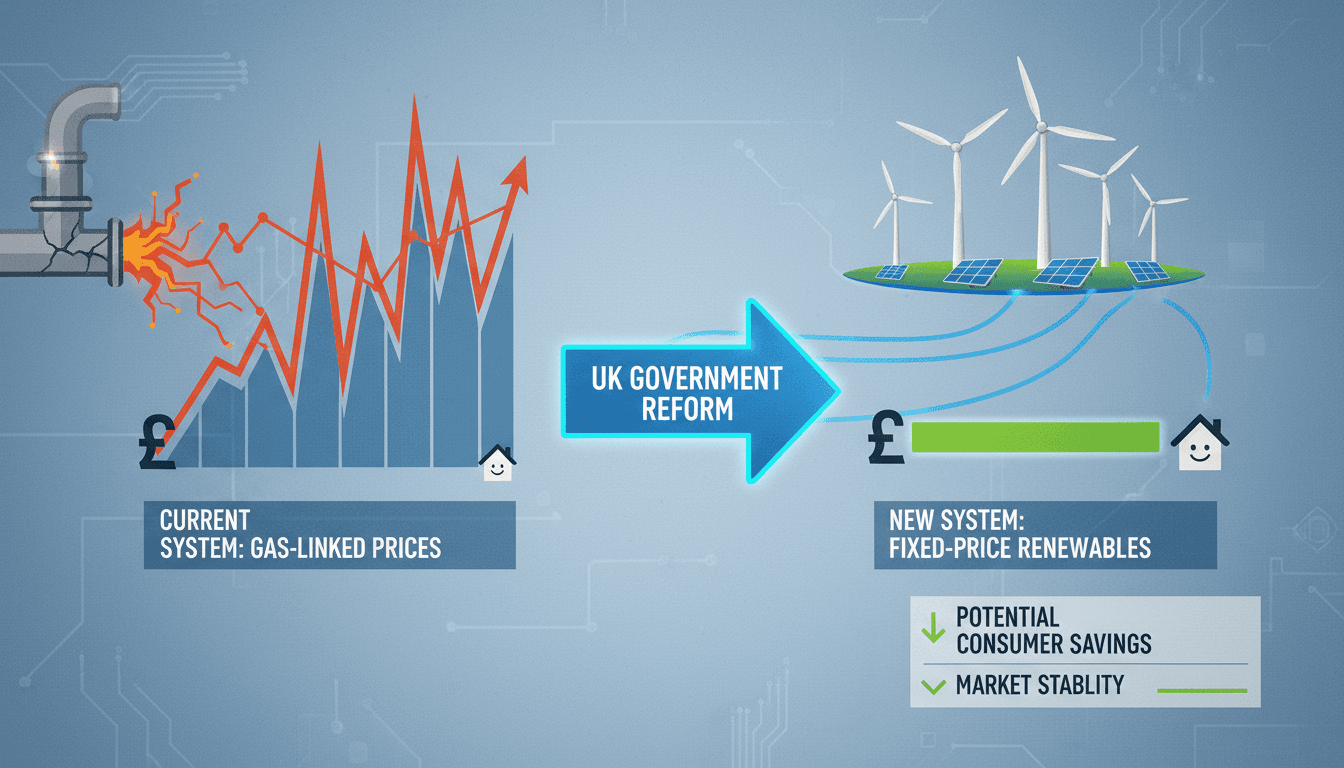
Here's what it means for you.
If you rely on electricity in the UK, these reforms could stabilize your bills amid global energy volatility.
Why it matters
This reform aims to protect consumers from fluctuating fossil fuel prices while accelerating the transition to clean energy.
What happened (in 30 seconds)
- On April 21, 2026, the UK government proposed transitioning older renewable energy generators to fixed-price contracts.
- Chancellor Rachel Reeves and Energy Secretary Ed Miliband announced the initiative, targeting one-third of Britain's electricity generation.
- Implementation is expected within a year, following public consultation, to shield consumers from international fossil fuel shocks.
The context you actually need
- Current pricing structure: Britain's electricity prices are set by the most expensive generation unit, often gas, which has led to spikes during crises.
- Recent energy crises: The 2022 energy crisis, exacerbated by geopolitical tensions, highlighted the vulnerability of relying on gas for electricity pricing.
- Government's strategic shift: The proposal is part of a broader strategy to enhance energy security and fulfill election pledges for cheaper clean power.
What's really happening
The UK government's proposal to decouple electricity prices from gas markets is a significant shift in energy policy, driven by the need to protect consumers from volatile fossil fuel prices. Currently, the electricity wholesale market operates on a marginal pricing system, where the cost of the most expensive generation unit—typically gas—determines the price for all electricity. This structure has led to consumer bill spikes, particularly during the 2022 energy crisis triggered by Russia's invasion of Ukraine.
Chancellor Rachel Reeves' recent remarks in Washington and the subsequent announcement on April 21 signal a proactive approach to energy security amid ongoing geopolitical tensions, particularly in the Middle East. The proposed reforms target approximately one-third of Britain's electricity generation from older renewable projects, transitioning them to fixed-price Contracts for Difference (CfD). This move aims to insulate consumers from the shocks of international fossil fuel markets, which have been increasingly unstable due to conflicts and supply chain disruptions.
The government is also considering additional measures, such as increasing renewable energy generation on public land and streamlining planning for electric vehicle chargers and solar installations. These initiatives are designed to bolster the UK's clean energy capacity while reducing reliance on gas. However, the proposal has faced criticism from various political factions, with concerns about potential tax increases and the pace of implementation.
The transition to fixed-price contracts for older renewable generators is not just a financial maneuver; it represents a broader commitment to clean energy and sustainability. By reducing the link between electricity prices and gas, the government is attempting to create a more stable and predictable energy market. This could lead to lower bills for consumers in the long run, although the immediate effects may vary depending on the consultation outcomes and market responses.
Who feels it first (and how)
- Consumers: Households relying on electricity will experience potential stabilization in their bills.
- Energy producers: Older renewable energy generators may face new financial structures impacting their revenue.
- Investors: Stakeholders in the energy sector will need to adjust to the new pricing mechanisms and potential tax implications.
What to watch next
- Public consultation outcomes: The feedback from stakeholders will shape the final implementation of the reforms, influencing market dynamics.
- Market reactions: Watch for shifts in energy prices and consumer sentiment as the reforms are rolled out.
- Geopolitical developments: Ongoing tensions in the Middle East could impact fossil fuel prices, affecting the urgency and effectiveness of these reforms.
The UK government has proposed reforms to decouple electricity prices from gas markets.
Implementation will follow public consultation, potentially leading to more stable electricity prices for consumers.
The full impact on energy markets and consumer bills will depend on various factors, including geopolitical developments and market responses.
Frequently Asked Questions
- Why it matters?
- This reform aims to protect consumers from fluctuating fossil fuel prices while accelerating the transition to clean energy.
- What happened (in 30 seconds)?
- On April 21, 2026, the UK government proposed transitioning older renewable energy generators to fixed-price contracts. Chancellor Rachel Reeves and Energy Secretary Ed Miliband announced the initiative, targeting one-third of Britain's electricity generation. Implementation is expected within a year, following public consultation, to shield consumers from international fossil fuel shocks.
- What's really happening?
- The UK government's proposal to decouple electricity prices from gas markets is a significant shift in energy policy, driven by the need to protect consumers from volatile fossil fuel prices. Currently, the electricity wholesale market operates on a marginal pricing system, where the cost of the most expensive generation unit—typically gas—determines the price for all electricity. This structure has led to consumer bill spikes, particularly during the 2022 energy crisis triggered by Russia's inv
- Who feels it first (and how)?
- Consumers: Households relying on electricity will experience potential stabilization in their bills. Energy producers: Older renewable energy generators may face new financial structures impacting their revenue. Investors: Stakeholders in the energy sector will need to adjust to the new pricing mechanisms and potential tax implications.
- What to watch next?
- Public consultation outcomes: The feedback from stakeholders will shape the final implementation of the reforms, influencing market dynamics. Market reactions: Watch for shifts in energy prices and consumer sentiment as the reforms are rolled out. Geopolitical developments: Ongoing tensions in the Middle East could impact fossil fuel prices, affecting the urgency and effectiveness of these reforms.
Corporate news, economic trends, and markets with UK and global scope.
"BBC News is widely regarded as reputable and impartial, with a public service mandate."
— A47 Editor
Electricity bills targeted in planned shakeup to energy pricing
The ongoing conflict in the Middle East has prompted the UK government to consider a significant overhaul of energy pricing, particularly targeting electricity bills, as rising energy costs become a pressing issue for households.
Reports on climate change, environmental science, sustainability, and nature.
"BBC News is widely regarded as a reputable international news organization, known for its impartial tone and public service mandate."
— A47 Editor
Electricity bills targeted in planned shakeup to energy pricing
The ongoing conflict in the Middle East has prompted the UK government to consider a significant overhaul of energy pricing, particularly targeting electricity bills, as rising energy costs become a pressing issue for households.
Political developments, policy debates, elections, and government affairs in the UK.
"BBC News is widely regarded as a reputable international news organization, known for its impartial tone and public service mandate."
— A47 Editor
Electricity bills targeted in planned shakeup to energy pricing
The ongoing conflict in the Middle East has prompted the UK government to consider a significant overhaul of energy pricing, particularly targeting electricity bills, as rising energy costs become a pressing issue for households.
UK and international business news, economics, and corporate coverage.
"The Guardian’s business section covers finance and markets with a progressive editorial tone."
— A47 Editor
UK shifts older wind and solar farms to fixed-price deals to reduce price shocks
The UK government has announced a significant policy shift, moving older wind and solar farms to fixed-price contracts to mitigate the impact of rising wholesale gas prices on electricity costs. This initiative aims to protect households and business...