
UK Halts Chagos Islands Sovereignty Transfer to Mauritius Amid U.S. Opposition
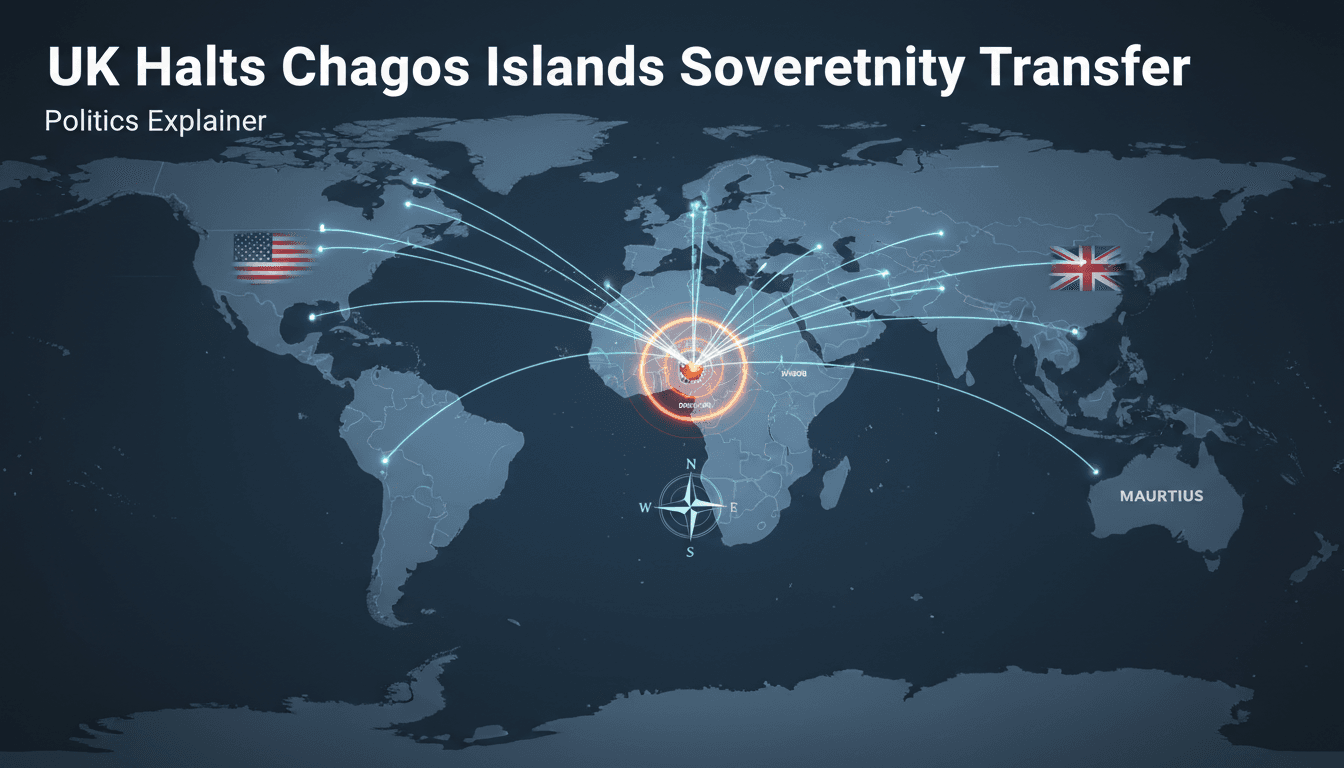
Here's what it means for you.
If you engage in international trade or geopolitical strategy, this development could affect security dynamics in the Indian Ocean, impacting global shipping routes.
Why it matters
The suspension of the Chagos Islands sovereignty transfer highlights the fragility of international agreements and the influence of major powers on smaller nations.
What happened (in 30 seconds)
- On April 10, 2026, the UK government withdrew a bill to transfer sovereignty of the Chagos Islands to Mauritius due to U.S. opposition.
- U.S. President Donald Trump criticized the deal, calling it an "act of great stupidity," emphasizing the strategic importance of the Diego Garcia military base.
- The original agreement, signed in May 2025, required formal U.S. backing to proceed, which has now been withdrawn.
The context you actually need
- The Chagos Archipelago has been administered by the UK since the 1960s and hosts the Diego Garcia military base, crucial for UK-U.S. military operations.
- International Court of Justice advisory opinions in 2019 deemed UK sovereignty unlawful, prompting negotiations with Mauritius for a sovereignty transfer.
- The May 2025 agreement aimed to cede sovereignty while securing a 99-year lease on Diego Garcia, with annual payments averaging £101 million to Mauritius.
What's really happening
The decision to shelve the sovereignty transfer legislation is rooted in a complex interplay of geopolitical strategy, national security, and international diplomacy. The Chagos Islands, particularly Diego Garcia, serve as a pivotal military base for both the UK and the U.S., facilitating operations across the Indian Ocean, the Middle East, and Asia. The U.S. military's presence there is vital for monitoring regional threats, including those from China and Iran, which have been increasingly assertive in their maritime activities.
The original agreement signed in May 2025 was seen as a compromise to address longstanding disputes over the islands, following years of advocacy from Mauritius and the Chagossian people. However, the sudden reversal by Trump in early 2026, labeling the deal as "total weakness," underscores the significant influence the U.S. holds over UK foreign policy, especially concerning military interests. The lack of U.S. support has effectively halted the transfer, revealing the precarious nature of international negotiations that hinge on the backing of powerful allies.
The UK government, led by Prime Minister Keir Starmer, is now faced with the challenge of balancing its commitments to Mauritius against the strategic necessity of maintaining the military base. The Conservative Party's leader, Kemi Badenoch, has framed the shelving of the bill as a victory, claiming it prevents a £35 billion "surrender" of British interests. This rhetoric reflects a broader political narrative that prioritizes national security over diplomatic agreements.
Moreover, the implications extend beyond the immediate parties involved. The suspension may affect the UK’s reputation in international diplomacy, particularly in its dealings with former colonies and smaller nations. The Chagossians, who have long sought the right to return to their homeland, are left in a state of uncertainty, with mixed reactions to the shelving of the bill. Some view it as a betrayal, while others are relieved that the deal has not proceeded without adequate protections for their rights.
As the UK continues to engage with both the U.S. and Mauritius, the future of the Chagos Islands remains uncertain, with the potential for ongoing negotiations or further diplomatic fallout.
Who feels it first (and how)
- Chagossians: Mixed feelings about the deal; some see it as a betrayal of their rights.
- UK Military: Concern over the stability of Diego Garcia as a military asset.
- Mauritius Government: Faces diplomatic pressure and potential economic implications from the stalled agreement.
- International Traders: Shipping routes through the Indian Ocean may experience increased scrutiny and security concerns.
What to watch next
- U.S.-UK Diplomatic Engagements: Continued discussions between the U.S. and UK regarding military strategy in the Indian Ocean could signal future shifts in policy.
- Mauritius Government Response: How Mauritius reacts to the shelving of the bill will be critical, particularly regarding its domestic political landscape and international relations.
- Chagossian Advocacy Movements: Increased activism from Chagossians could influence future negotiations or public sentiment regarding their rights and return.
The UK has shelved the legislation for the sovereignty transfer of the Chagos Islands.
Ongoing diplomatic discussions between the UK, U.S., and Mauritius will continue, focusing on military and economic interests.
The long-term implications for Chagossian rights and the potential for future sovereignty negotiations remain uncertain.
Frequently Asked Questions
- Why it matters?
- The suspension of the Chagos Islands sovereignty transfer highlights the fragility of international agreements and the influence of major powers on smaller nations.
- What happened (in 30 seconds)?
- On April 10, 2026, the UK government withdrew a bill to transfer sovereignty of the Chagos Islands to Mauritius due to U.S. opposition. U.S. President Donald Trump criticized the deal, calling it an "act of great stupidity," emphasizing the strategic importance of the Diego Garcia military base. The original agreement, signed in May 2025, required formal U.S. backing to proceed, which has now been withdrawn.
- What's really happening?
- The decision to shelve the sovereignty transfer legislation is rooted in a complex interplay of geopolitical strategy, national security, and international diplomacy. The Chagos Islands, particularly Diego Garcia, serve as a pivotal military base for both the UK and the U.S., facilitating operations across the Indian Ocean, the Middle East, and Asia. The U.S. military's presence there is vital for monitoring regional threats, including those from China and Iran, which have been increasingly asse
- Who feels it first (and how)?
- Chagossians: Mixed feelings about the deal; some see it as a betrayal of their rights. UK Military: Concern over the stability of Diego Garcia as a military asset. Mauritius Government: Faces diplomatic pressure and potential economic implications from the stalled agreement. International Traders: Shipping routes through the Indian Ocean may experience increased scrutiny and security concerns.
- What to watch next?
- U.S.-UK Diplomatic Engagements: Continued discussions between the U.S. and UK regarding military strategy in the Indian Ocean could signal future shifts in policy. Mauritius Government Response: How Mauritius reacts to the shelving of the bill will be critical, particularly regarding its domestic political landscape and international relations. Chagossian Advocacy Movements: Increased activism from Chagossians could influence future negotiations or public sentiment regarding their rights and
Arabic-language digital news outlet covering UAE, regional, and international developments with broad general-news coverage.
"Al Ain News coverage typically blends UAE-focused reporting with wider Arab regional and international news."
— A47 Editor
«لا اتفاق بدون دعم أمريكي».. بريطانيا تعلق التنازل عن جزر تشاغوس
The British government announced on Saturday that it has suspended its agreement to cede sovereignty over the Chagos Islands, which include the joint US-British Diego Garcia airbase. This decision follows criticism from former US President Donald Tru...
Pan-Arab news coverage spanning politics, business, sports, and regional affairs.
"Asharq Al-Awsat reflects a broad Arab editorial perspective with strong attention to regional geopolitics."
— A47 Editor
بريطانيا ستتخلى عن خطتها لتسليم جزر تشاغوس بعد معارضة ترمب
The United Kingdom has decided to abandon its plan to hand over the Chagos Islands following opposition from former President Trump, who withdrew his support, coupled with the expiration of the legislative time frame necessary for ratifying the agree...