
Trump Demands NATO Commitments for Strait of Hormuz Security
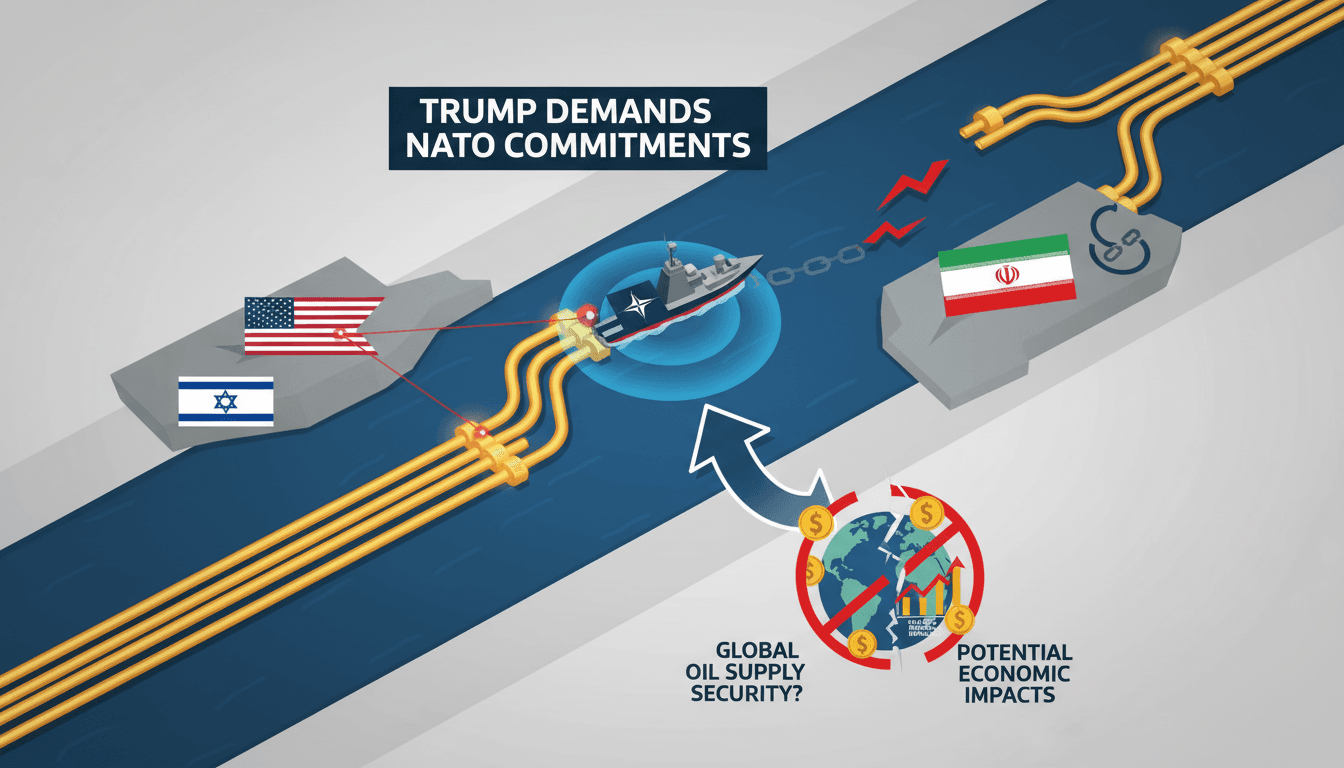
Here's what it means for you.
If you rely on global oil markets, the security of the Strait of Hormuz directly impacts your costs and economic stability.
Why it matters
The Strait of Hormuz is a critical chokepoint for global oil supplies, and any disruptions can lead to significant economic repercussions worldwide.
What happened (in 30 seconds)
- On April 10, 2026, NATO confirmed President Trump's demands for concrete commitments from allies to secure the Strait of Hormuz amid rising tensions with Iran.
- This followed U.S.-Israeli strikes on Iranian sites, which prompted Iran to disrupt navigation in the strait, affecting 20% of global oil transit.
- NATO allies are currently planning conditional support, contingent on a durable ceasefire between the U.S. and Iran.
The context you actually need
- The Strait of Hormuz is a narrow waterway that facilitates approximately 20% of the world's crude oil transit, making it vital for global energy security.
- In early 2026, U.S.-Israeli military actions against Iran escalated tensions, leading to Iranian retaliation that partially closed the strait and spiked oil prices.
- Trump's demands for NATO involvement echo past criticisms of alliance members not contributing adequately during crises, raising questions about burden-sharing among allies.
What's really happening
The recent diplomatic push by President Trump for NATO commitments to secure the Strait of Hormuz stems from a complex interplay of geopolitical tensions, economic interests, and alliance dynamics. The strait is not just a strategic military point; it is a critical artery for global oil supply, with about 20% of the world's crude oil passing through daily. The U.S.-Israeli strikes on Iranian nuclear and missile sites, executed without prior consultation with NATO allies, have significantly escalated tensions in the region. In response, Iran has employed drones, missiles, and mines, which have partially closed the strait, leading to increased oil prices and heightened global economic uncertainty.
Trump's call for NATO to share the burden of securing the strait reflects a broader strategy to compel allies to take a more active role in collective security, particularly in regions where U.S. interests are at stake. This demand is not merely about military presence; it is about ensuring that NATO allies contribute to the financial and logistical aspects of security operations in the region. The backdrop of this situation includes Trump's long-standing criticism of NATO members for not meeting defense spending commitments, which he believes undermines the alliance's effectiveness.
The implications of this situation are multifaceted. For NATO, it presents a test of unity and resolve, as member states must navigate their own national interests while responding to U.S. demands. The potential for a collective NATO response to secure the Strait of Hormuz could either strengthen the alliance or expose rifts among member states, particularly if some countries are reluctant to engage militarily in a conflict with Iran.
Moreover, the economic ramifications are significant. The spike in oil prices—over 80% year-to-date—affects not just energy markets but also consumer prices globally. Countries that rely heavily on oil imports, such as those in the Gulf Cooperation Council (GCC), face inflationary pressures that could lead to broader economic instability. As the UAE and other GCC nations monitor the situation closely, the risk of a recession looms, especially if alternative export routes cannot compensate for disruptions in the strait.
Who feels it first (and how)
- Oil and gas companies: Increased operational costs and fluctuating prices directly impact profitability.
- Consumers: Higher fuel prices translate to increased transportation and grocery costs.
- Middle Eastern economies: Nations reliant on oil exports face inflation and potential recession.
- Global markets: Investors may react to volatility in oil prices, affecting stock markets and commodities.
What to watch next
- NATO's response timeline: The speed and nature of commitments from NATO allies will indicate the alliance's cohesion and readiness to act.
- Oil price fluctuations: Monitoring Brent crude prices will provide insights into market reactions to geopolitical developments in the region.
- U.S.-Iran negotiations: Progress towards a durable ceasefire will be crucial in determining the stability of the Strait of Hormuz and the broader Middle East.
The Strait of Hormuz is critical for global oil transit, with 20% of crude oil passing through it.
NATO allies will develop plans for security in the strait, but support will depend on a lasting ceasefire with Iran.
The long-term implications of U.S. unilateralism on NATO relations and global oil markets remain uncertain.
Frequently Asked Questions
- Why it matters?
- The Strait of Hormuz is a critical chokepoint for global oil supplies, and any disruptions can lead to significant economic repercussions worldwide.
- What happened (in 30 seconds)?
- On April 10, 2026, NATO confirmed President Trump's demands for concrete commitments from allies to secure the Strait of Hormuz amid rising tensions with Iran. This followed U.S.-Israeli strikes on Iranian sites, which prompted Iran to disrupt navigation in the strait, affecting 20% of global oil transit. NATO allies are currently planning conditional support, contingent on a durable ceasefire between the U.S. and Iran.
- What's really happening?
- The recent diplomatic push by President Trump for NATO commitments to secure the Strait of Hormuz stems from a complex interplay of geopolitical tensions, economic interests, and alliance dynamics. The strait is not just a strategic military point; it is a critical artery for global oil supply, with about 20% of the world's crude oil passing through daily. The U.S.-Israeli strikes on Iranian nuclear and missile sites, executed without prior consultation with NATO allies, have significantly escal
- Who feels it first (and how)?
- Oil and gas companies: Increased operational costs and fluctuating prices directly impact profitability. Consumers: Higher fuel prices translate to increased transportation and grocery costs. Middle Eastern economies: Nations reliant on oil exports face inflation and potential recession. Global markets: Investors may react to volatility in oil prices, affecting stock markets and commodities.
- What to watch next?
- NATO's response timeline: The speed and nature of commitments from NATO allies will indicate the alliance's cohesion and readiness to act. Oil price fluctuations: Monitoring Brent crude prices will provide insights into market reactions to geopolitical developments in the region. U.S.-Iran negotiations: Progress towards a durable ceasefire will be crucial in determining the stability of the Strait of Hormuz and the broader Middle East.
Egyptian politics, economy, and society coverage.
"Al Masry Al Youm is a major Egyptian newspaper with broad national coverage."
— A47 Editor
«الناتو» أمام اختبار جديد.. ترامب يطالب بخطوات عملية في مضيق هرمز
NATO spokesperson Allison Hart confirmed that U.S. President Donald Trump expects tangible commitments from NATO allies to help secure the Strait of Hormuz. This request comes amid ongoing geopolitical tensions in the region, highlighting the strateg...
Arabic-language coverage of international news and geopolitics.
"RT Arabic is a Russian state-funded outlet often criticized for promoting Kremlin-aligned narratives."
— A47 Editor
"سي إن إن": ترامب يصر على التزامات ملموسة من الناتو لتأمين الملاحة في مضيق هرمز
CNN reported that U.S. President Donald Trump insisted during a meeting with NATO Secretary General Mark Rutte that NATO member countries take concrete actions to help secure the Strait of Hormuz.
Pan-Arab news coverage spanning politics, business, sports, and regional affairs.
"Asharq Al-Awsat reflects a broad Arab editorial perspective with strong attention to regional geopolitics."
— A47 Editor
«ناتو»: ترمب ينتظر من الحلفاء تعهدات «ملموسة» بشأن «هرمز»
A spokesperson for NATO stated that U.S. President Donald Trump expects tangible commitments from NATO allies to contribute to the security of the Strait of Hormuz. This expectation highlights the ongoing geopolitical significance of the strait, a cr...
Arabic-language coverage of political affairs and current events.
"Okaz political coverage typically follows mainstream Saudi framing on national and regional affairs."
— A47 Editor
أمريكا تطالب «الناتو» بتعهدات محددة لتأمين «هرمز»
The United States has demanded specific commitments from its European allies regarding their assistance in securing navigation through the Strait of Hormuz. This request was made during discussions between U.S. officials and NATO representatives at t...