
U.S. Proposes $20 Billion Asset Release to Iran for Enriched Uranium Exchange
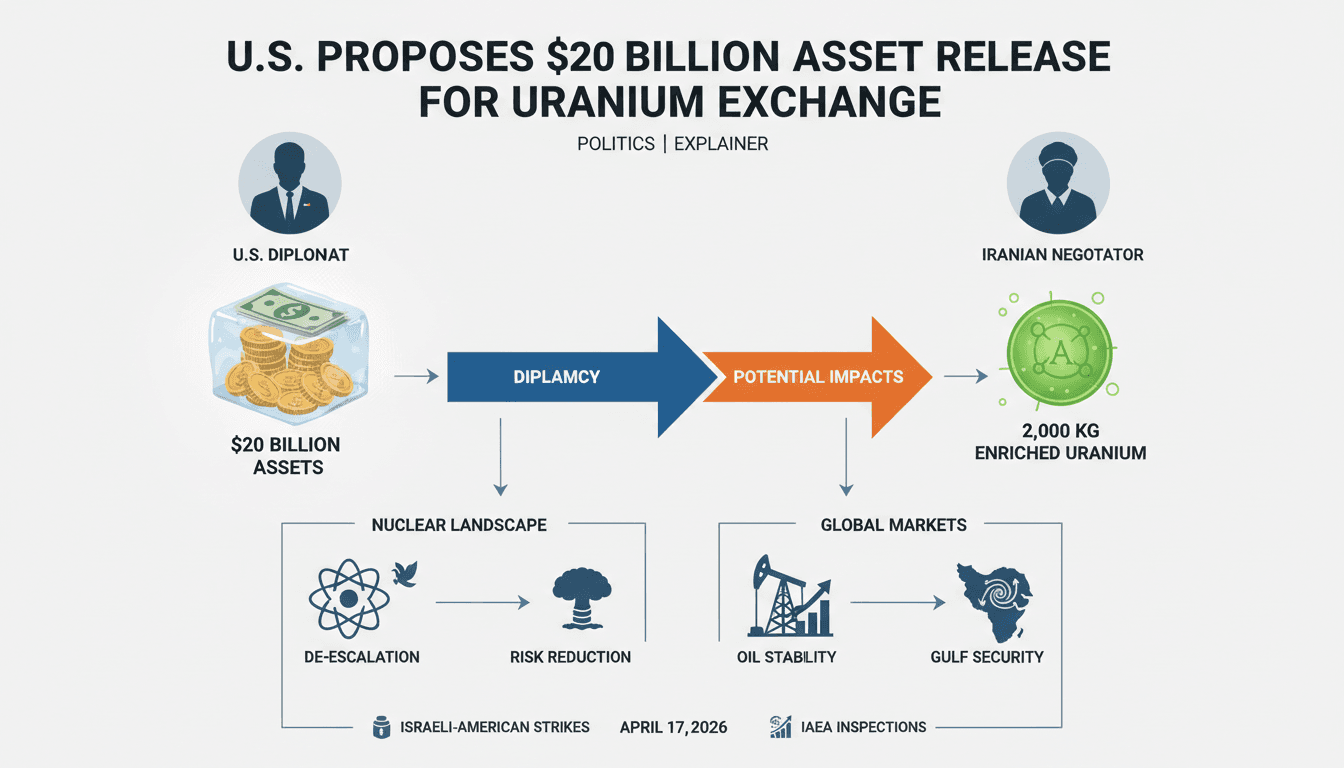
Here's what it means for you.
The outcome of these negotiations could reshape energy markets and geopolitical stability, impacting global trade routes.
Why it matters
The proposed asset exchange could significantly influence oil prices and regional security dynamics.
What happened (in 30 seconds)
- Leaks on April 17, 2026, revealed U.S. discussions to release $20 billion in frozen Iranian assets in exchange for Iran's enriched uranium stockpile.
- Negotiations involve indirect talks between the Trump administration and Tehran, with both sides denying key terms.
- The proposal aims to de-escalate tensions following Israeli-American strikes on Iran, which have disrupted IAEA inspections and heightened regional conflict.
The context you actually need
- Tensions escalated after Israeli-American military actions in 2025 and 2026, damaging Iranian nuclear facilities and halting international inspections.
- Iran's enriched uranium stockpile is estimated at 2,000 kilograms, with a significant portion near weapons-grade, raising concerns about nuclear proliferation.
- Frozen Iranian assets total around $100 billion globally, providing leverage for negotiations amid a volatile regional landscape affecting oil markets.
What's really happening
The U.S.-Iran negotiations represent a complex interplay of diplomacy, security, and economic interests. The proposal to exchange $20 billion in frozen assets for Iran's enriched uranium stockpile is not merely a financial transaction; it reflects a strategic effort to mitigate nuclear threats while addressing the broader implications of regional instability.
The backdrop of these discussions is critical. Following the Israeli-American strikes under Operation Roaring Lion, Iran's nuclear capabilities have come under intense scrutiny. The strikes not only damaged key facilities but also halted inspections by the International Atomic Energy Agency (IAEA), leading to a murky understanding of Iran's nuclear stockpile. U.S. and Israeli intelligence estimates suggest that Iran possesses approximately 1,200 kilograms of enriched uranium at 20% enrichment, a significant increase from pre-war figures of 180 kilograms. This escalation has heightened fears of nuclear proliferation, prompting the U.S. to seek a diplomatic resolution.
The proposed asset release is seen as a potential pathway to de-escalation. By offering access to $20 billion in frozen assets, the U.S. aims to incentivize Iran to relinquish its enriched uranium stockpile. However, the negotiations are fraught with challenges. The Trump administration has publicly denied any financial exchange, asserting that uranium security would be achieved without payment. Conversely, Iranian officials have rejected the notion of transferring uranium, emphasizing their sovereignty and the sanctity of their soil.
The negotiations are further complicated by the broader geopolitical landscape. The ongoing conflict has implications for oil markets, with prices remaining volatile in response to news of ceasefires and escalations. A successful negotiation could stabilize the Strait of Hormuz, a critical shipping route for oil, thereby impacting global energy prices and trade dynamics. Conversely, failure to reach an agreement could exacerbate tensions, leading to further military actions and economic repercussions.
In essence, these negotiations are not just about nuclear stockpiles or frozen assets; they are about the future of regional stability, energy security, and the delicate balance of power in the Middle East.
Who feels it first (and how)
- Energy sector professionals: Fluctuations in oil prices directly affect their operations and profitability.
- Geopolitical analysts: Changes in U.S.-Iran relations will influence regional security assessments and strategic planning.
- Investors in Gulf economies: Stability in the region can impact investment decisions and economic forecasts.
- Tourism and logistics sectors in Dubai: A stable Strait of Hormuz is crucial for trade routes, affecting tourism and logistics operations.
What to watch next
- Iran's response to negotiations: How Iran reacts to the proposal will indicate its willingness to engage in further diplomatic talks.
- Oil price fluctuations: Monitor how oil prices respond to news from the negotiations, as they can signal market confidence or instability.
- Regional military activities: Increased military actions or rhetoric from either side could derail negotiations and escalate tensions.
The U.S. is negotiating with Iran regarding frozen assets and enriched uranium.
Iran will continue to assert its sovereignty and reject any terms perceived as unfavorable.
The long-term implications of these negotiations on regional stability and global oil markets remain uncertain.
Frequently Asked Questions
- Why it matters?
- The proposed asset exchange could significantly influence oil prices and regional security dynamics.
- What happened (in 30 seconds)?
- Leaks on April 17, 2026, revealed U.S. discussions to release $20 billion in frozen Iranian assets in exchange for Iran's enriched uranium stockpile. Negotiations involve indirect talks between the Trump administration and Tehran, with both sides denying key terms. The proposal aims to de-escalate tensions following Israeli-American strikes on Iran, which have disrupted IAEA inspections and heightened regional conflict.
- What's really happening?
- The U.S.-Iran negotiations represent a complex interplay of diplomacy, security, and economic interests. The proposal to exchange $20 billion in frozen assets for Iran's enriched uranium stockpile is not merely a financial transaction; it reflects a strategic effort to mitigate nuclear threats while addressing the broader implications of regional instability. The backdrop of these discussions is critical. Following the Israeli-American strikes under Operation Roaring Lion, Iran's nuclear capabi
- Who feels it first (and how)?
- Energy sector professionals: Fluctuations in oil prices directly affect their operations and profitability. Geopolitical analysts: Changes in U.S.-Iran relations will influence regional security assessments and strategic planning. Investors in Gulf economies: Stability in the region can impact investment decisions and economic forecasts. Tourism and logistics sectors in Dubai: A stable Strait of Hormuz is crucial for trade routes, affecting tourism and logistics operations.
- What to watch next?
- Iran's response to negotiations: How Iran reacts to the proposal will indicate its willingness to engage in further diplomatic talks. Oil price fluctuations: Monitor how oil prices respond to news from the negotiations, as they can signal market confidence or instability. Regional military activities: Increased military actions or rhetoric from either side could derail negotiations and escalate tensions.
Arabic-language coverage of political affairs and current events.
"Okaz political coverage typically follows mainstream Saudi framing on national and regional affairs."
— A47 Editor
تسريبات عن «صفقة» بين واشنطن وطهران.. 20 مليار دولار مقابل اليورانيوم المخصب
Axios reported ongoing negotiations between the United States and Iran regarding a plan to end hostilities, which includes a proposal for the U.S. to release $20 billion of Iran's frozen assets in exchange for Tehran's stockpile of enriched uranium. ...
Pan-Arab news coverage spanning politics, business, sports, and regional affairs.
"Asharq Al-Awsat reflects a broad Arab editorial perspective with strong attention to regional geopolitics."
— A47 Editor
واشنطن تدرس الإفراج عن 20 مليار دولار من أموال إيران المجمدة مقابل تسليم اليورانيوم
Axios reported that negotiations are underway between the United States and Iran regarding a three-page plan aimed at ending hostilities between the two nations, which includes the potential release of $20 billion in frozen Iranian assets in exchange...
Algerian and regional news coverage.
"Echorouk is a major Algerian outlet with broad national reporting."
— A47 Editor
20 مليار دولار مقابل اليورانيوم.. كواليس صفقة مرتقبة بين واشنطن وطهران
Axios reports that Washington is negotiating with Tehran on a plan to release $20 billion of frozen Iranian funds in exchange for Iran relinquishing its enriched uranium stockpile. The discussions involve a three-page plan aimed at ending the ongoing...