
Japanese Journalist Shinnosuke Kawashima Released on Bail in Iran Amid Tensions
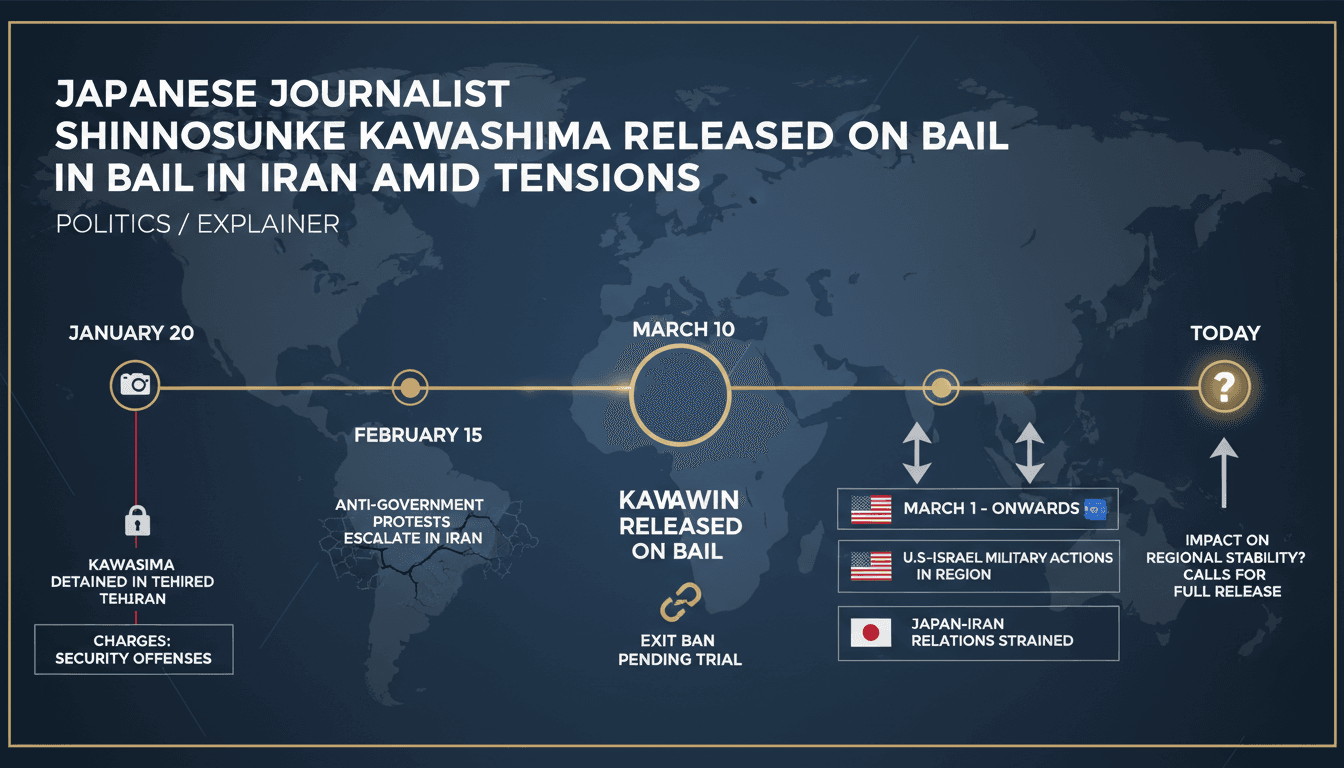
Here's what it means for you.
As geopolitical tensions rise in the Middle East, your business operations and investments in the region may face increased volatility and risk.
Why it matters
The ongoing instability in Iran and its implications for regional security can directly affect global markets and supply chains.
What happened (in 30 seconds)
- Shinnosuke Kawashima, NHK's Tehran bureau chief, was released on bail after being detained since January 20, 2026.
- Iran has imposed an exit ban on Kawashima pending trial on security-related charges amid escalating tensions.
- Japan is actively seeking the full release of Kawashima, reflecting strained diplomatic relations due to recent events.
The context you actually need
- Kawashima's arrest occurred during a violent crackdown on anti-government protests in Iran, resulting in over 6,000 deaths according to human rights groups.
- Japan-Iran relations have deteriorated, influenced by reduced oil imports from Iran and the detention of Japanese nationals, raising concerns over the safety of foreign citizens.
- Regional tensions have escalated following U.S.-Israeli military actions, including airstrikes that resulted in the death of Iran's Supreme Leader, further complicating diplomatic efforts.
What's really happening
Shinnosuke Kawashima's release on bail is a pivotal moment amid a backdrop of heightened tensions in Iran, primarily stemming from the government's violent response to widespread protests that erupted in early January 2026. The Iranian authorities have faced severe backlash for their crackdown, which reportedly resulted in over 6,000 deaths, according to human rights organizations. This crackdown not only highlights the internal strife within Iran but also signals the government's increasing sensitivity to foreign scrutiny and media coverage.
Kawashima's detention was part of a broader pattern of targeting foreign journalists and nationals, particularly as Iran grapples with a precarious political landscape. The Islamic Revolutionary Guard Corps (IRGC), which arrested Kawashima, is known for its hardline stance and control over security matters in the country. His conditional release, coupled with an exit ban, underscores the Iranian regime's strategy to maintain a grip on narratives while avoiding further international condemnation.
The implications of this situation extend beyond Kawashima and Japan. The Iranian government is likely using his case as a warning to other foreign entities, signaling that any perceived interference in domestic affairs will be met with severe repercussions. This creates a chilling effect on foreign media and businesses operating in or reporting on Iran, potentially leading to increased self-censorship and reduced foreign investment.
Moreover, the geopolitical landscape is further complicated by the recent U.S.-Israeli military actions, which have escalated tensions in the region. The death of Iran's Supreme Leader, Ayatollah Ali Khamenei, during these operations has left a power vacuum and increased uncertainty regarding Iran's future leadership and policies. This instability can have ripple effects across the Middle East, impacting oil prices and security dynamics that are crucial for global markets.
As Japan seeks to navigate this complex situation, the response from the Iranian government will be critical. The Japanese government has already expressed its demands for Kawashima's full release, indicating a strong diplomatic stance. However, the Iranian authorities have historically been resistant to external pressures, which could lead to a prolonged standoff.
In summary, Kawashima's release is not merely a personal victory; it reflects broader geopolitical tensions that could have significant implications for international relations, market stability, and the safety of foreign nationals in Iran.
Who feels it first (and how)
- Journalists and media organizations: Increased risks and potential restrictions on reporting in Iran.
- Foreign businesses: Heightened operational risks and potential disruptions in supply chains due to regional instability.
- Investors: Volatility in markets, particularly in oil and energy sectors, affecting investment strategies.
What to watch next
- Iran's diplomatic response: Monitor how Iran reacts to Japan's demands for Kawashima's full release, as this could indicate the regime's willingness to engage with foreign governments.
- Market volatility: Watch for fluctuations in oil prices and stock markets in the Gulf region, which could signal broader economic impacts from ongoing tensions.
- Regional security developments: Keep an eye on military actions and political changes in Iran, as these will influence the stability of the entire Middle East.
Kawashima was detained amid rising tensions in Iran and has been released on bail but is subject to an exit ban.
Diplomatic negotiations between Japan and Iran will continue, with potential implications for foreign nationals in the region.
The long-term impact of these tensions on Iran's internal stability and its relations with other countries remains uncertain.
Frequently Asked Questions
- Why it matters?
- The ongoing instability in Iran and its implications for regional security can directly affect global markets and supply chains.
- What happened (in 30 seconds)?
- Shinnosuke Kawashima, NHK's Tehran bureau chief, was released on bail after being detained since January 20, 2026. Iran has imposed an exit ban on Kawashima pending trial on security-related charges amid escalating tensions. Japan is actively seeking the full release of Kawashima, reflecting strained diplomatic relations due to recent events.
- What's really happening?
- Shinnosuke Kawashima's release on bail is a pivotal moment amid a backdrop of heightened tensions in Iran, primarily stemming from the government's violent response to widespread protests that erupted in early January 2026. The Iranian authorities have faced severe backlash for their crackdown, which reportedly resulted in over 6,000 deaths, according to human rights organizations. This crackdown not only highlights the internal strife within Iran but also signals the government's increasing sen
- Who feels it first (and how)?
- Journalists and media organizations: Increased risks and potential restrictions on reporting in Iran. Foreign businesses: Heightened operational risks and potential disruptions in supply chains due to regional instability. Investors: Volatility in markets, particularly in oil and energy sectors, affecting investment strategies.
- What to watch next?
- Iran's diplomatic response: Monitor how Iran reacts to Japan's demands for Kawashima's full release, as this could indicate the regime's willingness to engage with foreign governments. Market volatility: Watch for fluctuations in oil prices and stock markets in the Gulf region, which could signal broader economic impacts from ongoing tensions. Regional security developments: Keep an eye on military actions and political changes in Iran, as these will influence the stability of the entire Middle
Global news coverage with extensive reporting on Middle Eastern conflicts and geopolitics.
"Al Jazeera is a Qatar-based broadcaster known for wide regional coverage and alternative perspectives."
— A47 Editor
Iran releases on bail Japan national jailed amid antigovernment protests
Iran has released Shinnosuke Kawashima, the Tehran bureau chief for Japanese broadcaster NHK, on bail after he was jailed amid antigovernment protests. This decision marks a significant development in the case of a foreign national caught in the poli...
Comprehensive coverage of Middle Eastern and global issues.
"Al Jazeera is a prominent voice from the Global South, especially the Middle East, with an emphasis on underreported stories."
— A47 Editor
Iran releases on bail Japan national jailed amid antigovernment protests
Iran has released Shinnosuke Kawashima, the Tehran bureau chief for Japanese broadcaster NHK, on bail after he was jailed amid antigovernment protests. This decision marks a significant development in the case of a foreign national caught in the poli...
Regional coverage and analysis focused on politics, diplomacy, and business across the Middle East.
"Al-Monitor is known for analytical reporting on Middle East politics and policy developments."
— A47 Editor
Japanese freed in Iran not allowed to leave country: report
A Japanese national, reportedly the Tehran bureau chief for NHK, has been released by Iranian authorities after being detained since January 20. The Japanese government confirmed the release, which occurred on April 6, but noted that the individual i...
Regional and international reporting focused on Middle Eastern politics, diplomacy, and economics.
"Asharq Al-Awsat is a Saudi-owned international newspaper reflecting mainstream Gulf political perspectives."
— A47 Editor
Japanese National Detained in Iran in January Released on Bail
A Japanese national who was detained in Iran in January has been released on bail, according to reports from Asharq Al-Awsat. The circumstances surrounding the detention and the reasons for the bail release have not been disclosed in detail.