
Cochrane Review Finds Anti-Amyloid Alzheimer's Drugs Ineffective for Cognitive Decline
Here's what it means for you.
If you or a loved one is considering anti-amyloid treatments for Alzheimer's, this new evidence could reshape your healthcare decisions.
Why it matters
The findings challenge the value of high-cost Alzheimer's therapies, impacting patient access and healthcare budgets globally.
What happened (in 30 seconds)
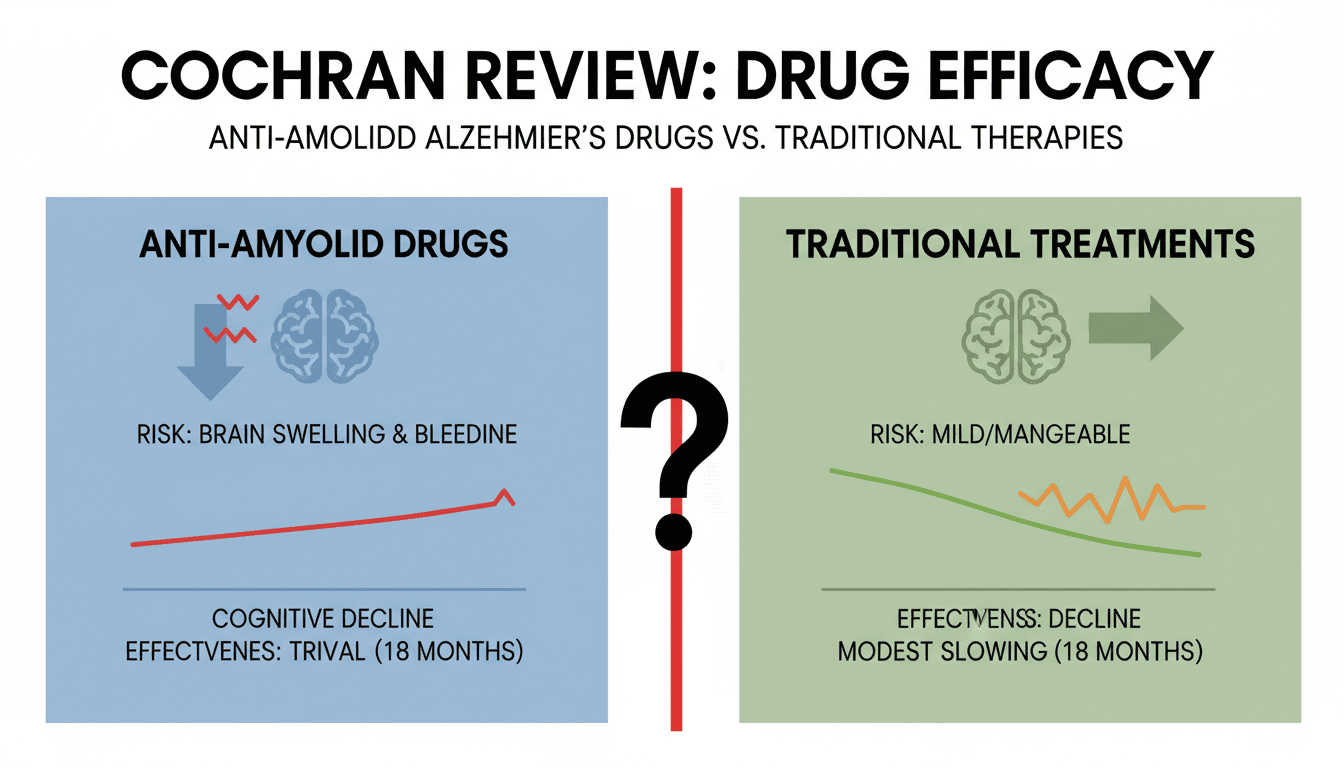
- Cochrane Collaboration published a review on April 16, 2026, concluding that anti-amyloid drugs show trivial effects on cognitive decline.
- The review analyzed 17 trials involving over 20,000 patients, revealing increased risks of brain swelling and bleeding without meaningful clinical benefits.
- This assessment questions the efficacy of recently approved drugs like lecanemab and donanemab, stirring debate among experts and stakeholders.
The context you actually need
- The amyloid hypothesis suggests that amyloid-beta protein accumulation drives Alzheimer's, leading to the development of monoclonal antibodies aimed at clearing these deposits.
- Recent approvals of lecanemab and donanemab generated optimism despite their high costs (up to £90,000 per course) and side effects, including amyloid-related imaging abnormalities (ARIA).
- The Cochrane review synthesizes evidence from trials conducted over two decades, highlighting the need for a reevaluation of treatment strategies amid regulatory scrutiny.
What's really happening
The Cochrane systematic review, led by researchers including Edo Richard and Francesco Nonino, pooled data from 17 randomized controlled trials conducted between 1999 and 2025, involving 20,342 participants with mild cognitive impairment or early dementia. The review aimed to assess the clinical meaningfulness of anti-amyloid therapies, which are designed to reduce amyloid-beta levels in the brain through infusions administered every two to four weeks.
Despite confirming a reduction in amyloid levels via brain imaging, the review found that the cognitive function and dementia severity outcomes measured at 18 months were below the minimal clinically important differences. This means that while the drugs may reduce amyloid accumulation, they do not translate into significant improvements in patients' cognitive abilities or overall quality of life.
Moreover, the review highlighted increased risks associated with these therapies, specifically amyloid-related imaging abnormalities (ARIA), which include brain swelling and bleeding. These side effects raise concerns about the safety of these treatments, especially given the lack of corresponding clinical benefits.
The implications of this review are profound, particularly as it comes at a time when the healthcare community is grappling with the rising costs of Alzheimer's treatments. The approval of lecanemab by the FDA in 2023 and donanemab in 2024 had sparked hope for patients and families, but the Cochrane findings challenge the narrative of these therapies as effective solutions. As healthcare systems worldwide face budget constraints, the review's conclusions may lead to increased scrutiny of the cost-effectiveness of these drugs, potentially impacting funding decisions and patient access.
In the UAE, where dementia prevalence is rising amid an aging population and expatriate demographics, the review's findings could prompt a reevaluation of the anti-amyloid drug market. The UAE Alzheimer's drugs market, valued at $77 million in 2022, may see shifts in demand as patients and healthcare providers reassess the value of high-cost infusions in light of the negligible benefits reported.
Who feels it first (and how)
- Patients and families: Those considering or currently undergoing treatment may face difficult decisions regarding the value of these therapies.
- Healthcare providers: Physicians may need to adjust treatment recommendations based on new evidence, impacting patient care strategies.
- Insurance companies: Payers may reevaluate coverage policies for anti-amyloid drugs, affecting patient access and affordability.
- Pharmaceutical companies: Manufacturers of these drugs may experience pressure to justify pricing and efficacy, influencing future research and development.
What to watch next
- Regulatory responses: Watch for potential changes in guidelines or recommendations from health authorities regarding anti-amyloid therapies.
- Market shifts: Monitor how the review impacts the pricing and availability of Alzheimer's drugs in various regions, particularly in high-cost markets like the UAE.
- Patient advocacy movements: Keep an eye on how patient organizations respond to the review, as they may push for more transparency and better treatment options.
The Cochrane review concludes that anti-amyloid drugs show trivial effects on cognitive decline and increased risks of ARIA.
There will be increased scrutiny and debate over the cost-effectiveness of these therapies in healthcare systems.
The long-term implications for patient access and pharmaceutical market dynamics remain to be seen.
Frequently Asked Questions
- Why it matters?
- The findings challenge the value of high-cost Alzheimer's therapies, impacting patient access and healthcare budgets globally.
- What happened (in 30 seconds)?
- Cochrane Collaboration published a review on April 16, 2026, concluding that anti-amyloid drugs show trivial effects on cognitive decline. The review analyzed 17 trials involving over 20,000 patients, revealing increased risks of brain swelling and bleeding without meaningful clinical benefits. This assessment questions the efficacy of recently approved drugs like lecanemab and donanemab, stirring debate among experts and stakeholders.
- What's really happening?
- The Cochrane systematic review, led by researchers including Edo Richard and Francesco Nonino, pooled data from 17 randomized controlled trials conducted between 1999 and 2025, involving 20,342 participants with mild cognitive impairment or early dementia. The review aimed to assess the clinical meaningfulness of anti-amyloid therapies, which are designed to reduce amyloid-beta levels in the brain through infusions administered every two to four weeks. Despite confirming a reduction in amyloid
- Who feels it first (and how)?
- Patients and families: Those considering or currently undergoing treatment may face difficult decisions regarding the value of these therapies. Healthcare providers: Physicians may need to adjust treatment recommendations based on new evidence, impacting patient care strategies. Insurance companies: Payers may reevaluate coverage policies for anti-amyloid drugs, affecting patient access and affordability. Pharmaceutical companies: Manufacturers of these drugs may experience pressure to justify p
- What to watch next?
- Regulatory responses: Watch for potential changes in guidelines or recommendations from health authorities regarding anti-amyloid therapies. Market shifts: Monitor how the review impacts the pricing and availability of Alzheimer's drugs in various regions, particularly in high-cost markets like the UAE. Patient advocacy movements: Keep an eye on how patient organizations respond to the review, as they may push for more transparency and better treatment options.
Arabic-language sports reporting covering UAE competitions and major international events.
"Emarat Al Youm sports coverage is mainstream and accessible, with strong emphasis on UAE and regional sport."
— A47 Editor
دراسة: أدوية الزهايمر «لا تُحدث فرقاً يُذكر لدى المرضى» دراسة: أدوية الزهايمر «لا تُحدث فرقاً يُذكر لدى المرضى»
A recent review has revealed that medications purported to slow the progression of Alzheimer's disease do not make a significant difference for patients. This finding raises concerns about the effectiveness of current treatments available for this de...
Pan-Arab news coverage spanning politics, business, sports, and regional affairs.
"Asharq Al-Awsat reflects a broad Arab editorial perspective with strong attention to regional geopolitics."
— A47 Editor
أدوية ألزهايمر «لا تُحدِث فرقاً يُذكر لدى المرضى»!
Recent findings indicate that medications marketed to slow the progression of Alzheimer's disease do not significantly impact patients, raising concerns about their efficacy. Additionally, these drugs may increase the risk of brain swelling and bleed...
Regional and international reporting focused on Middle Eastern politics, diplomacy, and economics.
"Asharq Al-Awsat is a Saudi-owned international newspaper reflecting mainstream Gulf political perspectives."
— A47 Editor
Much-hyped Alzheimer's Drugs Do Not Help Patients, Review Finds
A recent review has found that Alzheimer's drugs, which have been heavily promoted, do not provide significant benefits to patients, raising serious questions about their effectiveness. The findings indicate that these medications fail to slow the pr...