
Complete Halt of Iranian Gas Supplies to Iraq Following US-Israel Strikes on South Pars Field
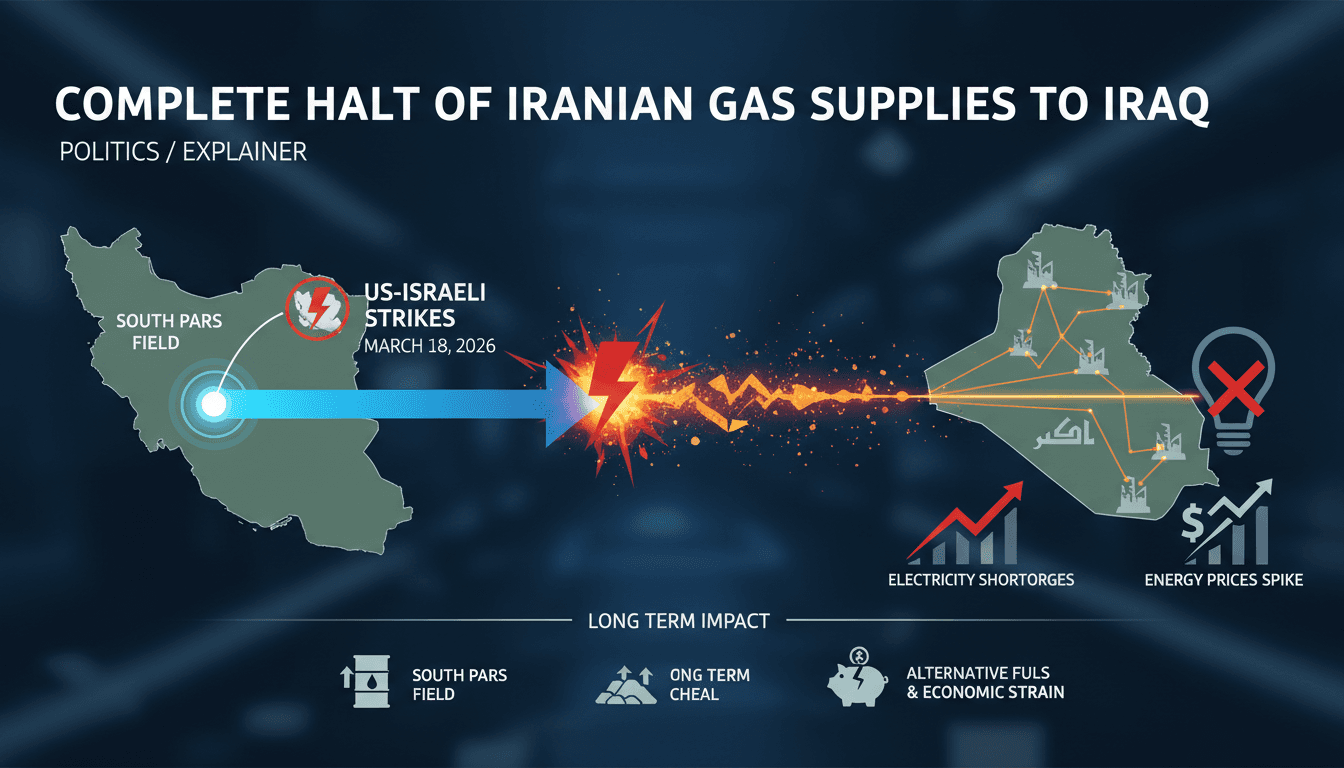
Here's what it means for you.
If you rely on energy imports or are invested in regional markets, the fallout from this disruption could impact energy prices and availability.
Why it matters
This gas supply disruption exacerbates Iraq's chronic electricity shortages and could ripple through regional energy markets.
What happened (in 30 seconds)
- Iraq's gas imports from Iran ceased on March 18, 2026, following US-Israeli strikes on Iranian energy facilities.
- Iraq faces a loss of 3,100 megawatts of power generation capacity, worsening existing electricity shortages.
- The conflict escalated after the US-Israel war against Iran began on February 28, 2026, leading to retaliatory actions and infrastructure attacks.
The context you actually need
- Iraq relies heavily on Iranian gas, accounting for about one-third of its consumption, despite having significant domestic reserves.
- Corruption and infrastructure decay have hindered Iraq's ability to fully utilize its own energy resources, making it vulnerable to external shocks.
- The US-Israel conflict has broader implications, including rising energy prices and potential supply risks across the region, affecting countries like the UAE.
What's really happening
The recent halt of Iranian gas supplies to Iraq is a direct consequence of escalating military tensions between the US-Israel coalition and Iran. On February 28, 2026, US-Israeli forces initiated strikes on Iranian facilities, marking a significant escalation in hostilities. Iran's response included closing the Strait of Hormuz, a critical chokepoint for global oil shipments, which drastically reduced Iraq's oil exports from 3.5 million barrels per day to just 250,000. This closure not only impacted Iraq's revenue but also its energy security, as the country relies on Iranian gas to fuel its power plants.
The strikes on the South Pars gas field, a shared resource between Iran and Qatar, were particularly damaging. Following these attacks, Iran ceased all gas flows to Iraq, resulting in a projected loss of 3,100 megawatts of power generation capacity. This disruption is set against a backdrop of chronic electricity shortages in Iraq, where the government has struggled to meet demand due to aging infrastructure and mismanagement.
As Iraq's Electricity Ministry scrambles to mitigate the fallout, they are deploying alternative fuels and tapping into domestic gas reserves. However, these measures may not be sufficient to offset the immediate impacts of the gas supply halt. The Iraqi population, already accustomed to power outages, is likely to face increased blackouts, further straining households that increasingly rely on private generators.
The regional implications are equally concerning. The UAE and other neighboring countries have condemned the strikes on Iranian facilities, fearing that the conflict could escalate further. The ongoing military actions have already led to Iranian drone and missile strikes targeting energy infrastructure in the UAE, including incidents at the Shah gas field and disruptions at the Fujairah terminal. This has heightened regional energy prices and introduced supply risks that could affect consumers in Dubai and beyond.
In summary, the interplay of military conflict, energy dependency, and infrastructural challenges has created a precarious situation for Iraq, with potential ripple effects across the Middle East.
Who feels it first (and how)
- Iraqi households: Increased reliance on private generators due to power shortages.
- Energy sector workers: Job instability as companies face operational challenges.
- Regional consumers: Higher energy prices and potential supply disruptions in the UAE and surrounding areas.
- Government officials: Pressure to stabilize the grid and manage public dissatisfaction over power outages.
What to watch next
- Energy prices: Monitor fluctuations in regional energy prices as the conflict evolves; higher prices could strain household budgets.
- Iraqi government responses: Watch for policy changes or emergency measures aimed at addressing the power crisis; these could impact local economies.
- Regional military developments: Keep an eye on further military actions or retaliations that could escalate tensions and affect energy supplies.
Iraq's gas imports from Iran have halted, leading to immediate power generation losses.
Increased blackouts and reliance on alternative energy sources in Iraq.
The long-term geopolitical ramifications of the US-Israel-Iran conflict on regional energy security.
Frequently Asked Questions
- Why it matters?
- This gas supply disruption exacerbates Iraq's chronic electricity shortages and could ripple through regional energy markets.
- What happened (in 30 seconds)?
- Iraq's gas imports from Iran ceased on March 18, 2026, following US-Israeli strikes on Iranian energy facilities. Iraq faces a loss of 3,100 megawatts of power generation capacity, worsening existing electricity shortages. The conflict escalated after the US-Israel war against Iran began on February 28, 2026, leading to retaliatory actions and infrastructure attacks.
- What's really happening?
- The recent halt of Iranian gas supplies to Iraq is a direct consequence of escalating military tensions between the US-Israel coalition and Iran. On February 28, 2026, US-Israeli forces initiated strikes on Iranian facilities, marking a significant escalation in hostilities. Iran's response included closing the Strait of Hormuz, a critical chokepoint for global oil shipments, which drastically reduced Iraq's oil exports from 3.5 million barrels per day to just 250,000. This closure not only impa
- Who feels it first (and how)?
- Iraqi households: Increased reliance on private generators due to power shortages. Energy sector workers: Job instability as companies face operational challenges. Regional consumers: Higher energy prices and potential supply disruptions in the UAE and surrounding areas. Government officials: Pressure to stabilize the grid and manage public dissatisfaction over power outages.
- What to watch next?
- Energy prices: Monitor fluctuations in regional energy prices as the conflict evolves; higher prices could strain household budgets. Iraqi government responses: Watch for policy changes or emergency measures aimed at addressing the power crisis; these could impact local economies. Regional military developments: Keep an eye on further military actions or retaliations that could escalate tensions and affect energy supplies.
Regional and international reporting focused on Middle Eastern politics, diplomacy, and economics.
"Asharq Al-Awsat is a Saudi-owned international newspaper reflecting mainstream Gulf political perspectives."
— A47 Editor
Iraq’s Gas Imports from Iran Halted Due to War
Iraq has halted its gas imports from Iran due to ongoing military conflicts, particularly following an Israeli airstrike on Iran's South Pars gas field, which has disrupted gas flows and exacerbated Iraq's energy crisis.
UAE-based English-language newspaper covering regional politics, economics, and global affairs.
"The National reflects Emirati policy perspectives while maintaining international editorial standards."
— A47 Editor
Iraq suffers major power capacity loss as Iran halts gas flows after South Pars strike
Iraq is experiencing a significant loss in power capacity as Iran has halted gas flows following an Israeli airstrike on Iran's South Pars gas field. This disruption is exacerbating Iraq's ongoing energy crisis, which is already strained by the regio...
UAE-based English-language newspaper covering regional politics, economics, and global affairs.
"The National reflects Emirati policy perspectives while maintaining international editorial standards."
— A47 Editor
Iraq faces polycrisis as Iran war grinds its oil exports to a halt
Iraq is currently facing a severe polycrisis as the ongoing war in Iran has led to a complete halt of its oil exports, significantly impacting its economy and energy security. The conflict has disrupted supply chains and raised concerns about inflati...