
Russian Military Conducts Largest Drone Assault on Ukraine in 24 Hours
Here's what it means for you.
The recent surge in drone warfare in Ukraine could indirectly affect global energy prices and supply chains.
Why it matters
This escalation in military tactics signals a potential shift in the conflict's dynamics, impacting energy markets and geopolitical stability.
What happened (in 30 seconds)
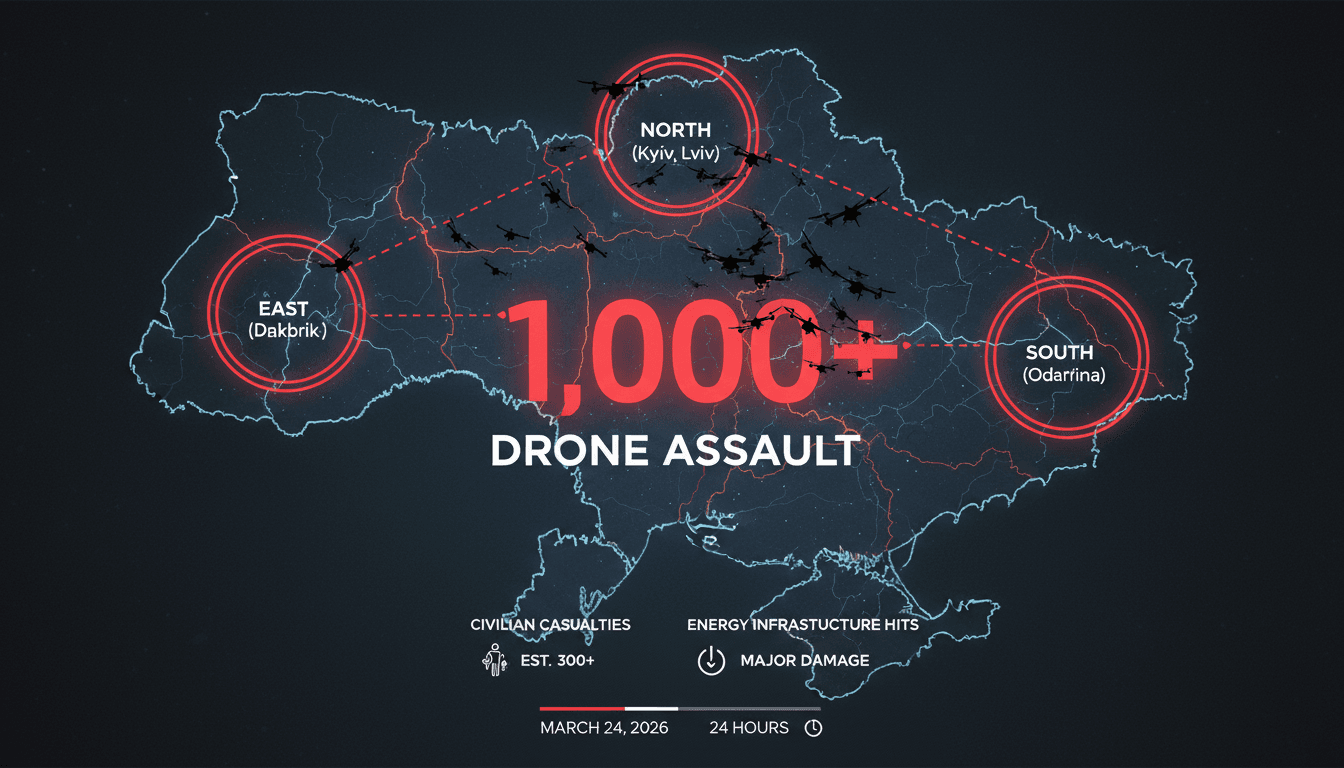
- On March 24, 2026, Russian forces launched nearly 1,000 drones at Ukraine, marking one of the war's largest aerial assaults.
- The attacks resulted in at least eight deaths and dozens of injuries, targeting civilian areas and critical infrastructure across multiple regions.
- Ukrainian air defenses managed to intercept 906 out of 948 drones, showcasing both the scale of the assault and the ongoing challenges faced by Ukraine.
The context you actually need
- The assault is part of Russia's ongoing invasion of Ukraine, which began in February 2022, and reflects an escalation in military operations as spring approaches.
- Ukraine has been facing shortages of Western-supplied air defense systems, which are being diverted to other conflicts, particularly in the Middle East.
- The geopolitical landscape is shifting, with Ukraine seeking additional support from Gulf states for anti-drone capabilities amid increasing tensions.
What's really happening
The drone assault on March 24, 2026, represents a significant escalation in the ongoing conflict between Russia and Ukraine, characterized by a shift toward more aggressive aerial tactics. This attack, which involved nearly 1,000 drones, is unprecedented in scale and highlights the evolving nature of warfare in the region.
The use of drones allows for a more extensive reach and the ability to strike multiple targets simultaneously, which is particularly effective in targeting civilian infrastructure. The choice of targets—including residential areas, hospitals, and energy facilities—indicates a strategy aimed at instilling fear and undermining public morale in Ukraine. The attack's timing coincides with Russia's broader spring offensive, where it seeks to capitalize on perceived weaknesses in Ukrainian defenses.
Ukraine's air defense systems, primarily bolstered by Western support, are currently under strain due to competing demands from other global conflicts, notably the situation in the Middle East. This diversion of resources has left Ukraine vulnerable, as evidenced by the high number of drones launched in this recent assault. Despite intercepting a significant portion of the drones, the sheer volume of the attack has overwhelmed defenses, leading to tragic civilian casualties.
The aftermath of this assault is likely to exacerbate existing tensions in the region. Ukrainian President Volodymyr Zelenskyy has condemned the attacks, vowing retaliation, which could lead to further escalations in military actions on both sides. Additionally, the strikes on energy infrastructure raise concerns about the stability of power supplies not only in Ukraine but also in neighboring countries like Moldova, which has declared an energy emergency following damage to its power lines.
As the conflict continues, the implications extend beyond the immediate battlefield. Energy markets are likely to react to the instability caused by these attacks, particularly if they disrupt supplies or raise fears of broader regional conflicts. The interconnectedness of global energy markets means that any significant disruptions in Ukraine could lead to fluctuations in prices and supply chains, impacting consumers and businesses worldwide.
Who feels it first (and how)
- Ukrainian civilians: Directly affected by casualties and destruction of infrastructure.
- Energy sector professionals: May face volatility in energy prices and supply chain disruptions.
- Governments in Europe: Likely to experience increased pressure to respond to the conflict and manage energy security.
- Defense contractors: Could see increased demand for air defense systems and military support in response to the conflict's escalation.
What to watch next
- Ukrainian military responses: Observing how Ukraine retaliates could provide insights into the conflict's trajectory and potential escalations.
- Western support levels: Monitoring the flow of military aid and air defense systems from Western nations to Ukraine will indicate the sustainability of its defense capabilities.
- Energy market reactions: Keeping an eye on fluctuations in energy prices and supply chain stability will reveal the broader economic impacts of the conflict.
The drone assault resulted in civilian casualties and significant damage to infrastructure.
Ukraine will intensify military operations against Russian targets in response to the drone attacks.
The long-term effects on global energy markets and supply chains remain uncertain as the conflict evolves.
Frequently Asked Questions
- Why it matters?
- This escalation in military tactics signals a potential shift in the conflict's dynamics, impacting energy markets and geopolitical stability.
- What happened (in 30 seconds)?
- On March 24, 2026, Russian forces launched nearly 1,000 drones at Ukraine, marking one of the war's largest aerial assaults. The attacks resulted in at least eight deaths and dozens of injuries, targeting civilian areas and critical infrastructure across multiple regions. Ukrainian air defenses managed to intercept 906 out of 948 drones, showcasing both the scale of the assault and the ongoing challenges faced by Ukraine.
- What's really happening?
- The drone assault on March 24, 2026, represents a significant escalation in the ongoing conflict between Russia and Ukraine, characterized by a shift toward more aggressive aerial tactics. This attack, which involved nearly 1,000 drones, is unprecedented in scale and highlights the evolving nature of warfare in the region. The use of drones allows for a more extensive reach and the ability to strike multiple targets simultaneously, which is particularly effective in targeting civilian infrastr
- Who feels it first (and how)?
- Ukrainian civilians: Directly affected by casualties and destruction of infrastructure. Energy sector professionals: May face volatility in energy prices and supply chain disruptions. Governments in Europe: Likely to experience increased pressure to respond to the conflict and manage energy security. Defense contractors: Could see increased demand for air defense systems and military support in response to the conflict's escalation.
- What to watch next?
- Ukrainian military responses: Observing how Ukraine retaliates could provide insights into the conflict's trajectory and potential escalations. Western support levels: Monitoring the flow of military aid and air defense systems from Western nations to Ukraine will indicate the sustainability of its defense capabilities. Energy market reactions: Keeping an eye on fluctuations in energy prices and supply chain stability will reveal the broader economic impacts of the conflict.
24/7 international news from a French perspective in multiple languages.
"France 24 is viewed as a globally focused outlet with balanced coverage and a European perspective."
— A47 Editor
Russia fires nearly 1,000 drones at Ukraine in 24 hours, killing at least eight
In a significant escalation of hostilities, Russia launched nearly 1,000 drones at various locations in Ukraine within a 24-hour period, resulting in at least eight fatalities and damage to a UNESCO World Heritage site in Lviv. Ukrainian President Vo...
News and current affairs from across Europe.
"The Guardian is known for its progressive editorial stance and in-depth analysis."
— A47 Editor
Russian drone hits Unesco world heritage site in Lviv – video
A Russian drone struck the 16-century Bernardine monastery in Lviv's UNESCO-listed medieval center, causing significant damage and injuring at least two individuals. This attack is part of a larger wave of nearly 1,000 drones launched by Russia again...
English-language reporting on Saudi politics, policy, and society.
"Saudi Gazette reflects mainstream Saudi institutional perspectives."
— A47 Editor
At least five killed in massive wave of Russian strikes across Ukraine
A massive wave of Russian aerial bombardments across Ukraine resulted in at least five fatalities, with significant damage reported in 11 regions, including Kharkiv, Zaporizhzhia, and Kherson. The attacks, which involved missiles and drones, also imp...