
FAA and Pentagon Authorize High-Energy Laser System to Counter Drone Threats at U.S.-Mexico Border
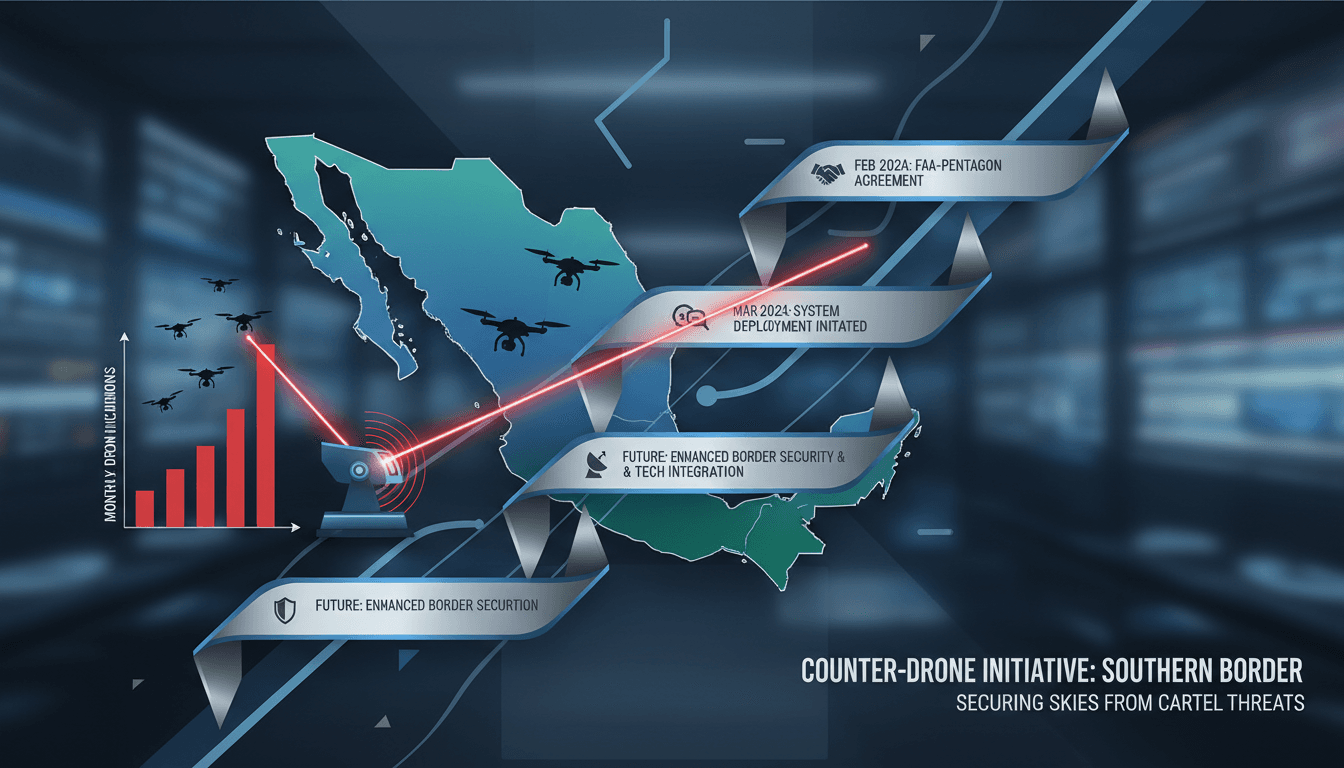
Here's what it means for you.
If you operate in sectors affected by drone technology or border security, this agreement could reshape operational protocols and risk assessments.
Why it matters
This initiative highlights the escalating need for advanced security measures in response to increasing drone incursions linked to criminal activities.
What happened (in 30 seconds)
- On April 10, 2026, the FAA and Pentagon signed an agreement allowing the deployment of a high-energy laser counter-drone system along the U.S.-Mexico border.
- Over 1,000 drone incursions per month have been recorded, primarily linked to Mexican cartels conducting surveillance and smuggling operations.
- Safety protocols were validated through joint testing in New Mexico, ensuring no elevated risks to civil aviation.
The context you actually need
- Escalating drone activity: Unauthorized drone incursions have surged, with cartels using drones for scouting and smuggling, prompting urgent security measures.
- Interagency tensions: Prior uncoordinated laser deployments led to airspace closures and a friendly-fire incident, highlighting the risks of unregulated drone countermeasures.
- Safety validation: The FAA and Pentagon's joint testing established necessary safety parameters, enabling the formal agreement for laser deployment.
What's really happening
The agreement between the FAA and the Pentagon to deploy high-energy laser systems along the U.S.-Mexico border is a direct response to the alarming rise in drone incursions linked to Mexican cartels. With over 1,000 incursions reported monthly, these unmanned aerial vehicles (UAVs) are primarily used for surveillance and transporting illicit goods. The situation escalated to a point where uncoordinated actions by different agencies led to significant safety risks, including the temporary closure of airspace around El Paso International Airport due to a friendly-fire incident involving a U.S. government drone.
The interagency agreement marks a critical step in addressing these challenges. It follows extensive safety testing conducted in March 2026, which validated the operational parameters for the high-energy laser system. This system is designed to neutralize unauthorized drones without posing a risk to manned aircraft, a concern that had previously stalled deployment efforts. FAA Administrator Bryan Bedford emphasized that the agreement confirms the safety of the system under the established controls, which is crucial for maintaining the integrity of civil aviation.
The deployment will focus on key areas, particularly around Fort Hancock, Texas, where drone activity has been notably disruptive. The Pentagon's involvement underscores the military's role in border security, particularly in combating organized crime that leverages technology for illicit activities. This agreement not only enhances border security but also reflects a broader trend of integrating advanced technologies into law enforcement and national defense strategies.
However, the implications extend beyond immediate security concerns. The deployment of high-energy lasers raises questions about the future of drone regulation, civil liberties, and the potential for increased militarization of border security. As agencies adapt to this new technology, the balance between effective law enforcement and the protection of civil aviation will be closely monitored.
Who feels it first (and how)
- Border security agencies: Enhanced capabilities to counter drone threats will directly impact operational strategies.
- Commercial aviation: Airlines and airports near the deployment zones may experience changes in flight operations and safety protocols.
- Mexican cartels: The effectiveness of this system could disrupt their operations, leading to shifts in trafficking methods.
- Local communities: Residents near the border may see increased military presence and changes in air traffic patterns.
What to watch next
- Regulatory developments: Monitor any new regulations or guidelines from the FAA regarding drone operations and countermeasures, as they will shape industry standards.
- Incursion statistics: Keep an eye on monthly drone incursion reports to assess the effectiveness of the laser deployment in reducing unauthorized activities.
- Interagency coordination: Watch for improvements or setbacks in collaboration between the FAA, Pentagon, and DHS, as this will influence future security measures.
The agreement allows for the deployment of high-energy laser systems to counter drone incursions.
Increased scrutiny and regulation of drone operations in border areas will follow.
The long-term effectiveness of the laser systems in reducing cartel activities and the potential for unintended consequences.
Frequently Asked Questions
- Why it matters?
- This initiative highlights the escalating need for advanced security measures in response to increasing drone incursions linked to criminal activities.
- What happened (in 30 seconds)?
- On April 10, 2026, the FAA and Pentagon signed an agreement allowing the deployment of a high-energy laser counter-drone system along the U.S.-Mexico border. Over 1,000 drone incursions per month have been recorded, primarily linked to Mexican cartels conducting surveillance and smuggling operations. Safety protocols were validated through joint testing in New Mexico, ensuring no elevated risks to civil aviation.
- What's really happening?
- The agreement between the FAA and the Pentagon to deploy high-energy laser systems along the U.S.-Mexico border is a direct response to the alarming rise in drone incursions linked to Mexican cartels. With over 1,000 incursions reported monthly, these unmanned aerial vehicles (UAVs) are primarily used for surveillance and transporting illicit goods. The situation escalated to a point where uncoordinated actions by different agencies led to significant safety risks, including the temporary closur
- Who feels it first (and how)?
- Border security agencies: Enhanced capabilities to counter drone threats will directly impact operational strategies. Commercial aviation: Airlines and airports near the deployment zones may experience changes in flight operations and safety protocols. Mexican cartels: The effectiveness of this system could disrupt their operations, leading to shifts in trafficking methods. Local communities: Residents near the border may see increased military presence and changes in air traffic patterns.
- What to watch next?
- Regulatory developments: Monitor any new regulations or guidelines from the FAA regarding drone operations and countermeasures, as they will shape industry standards. Incursion statistics: Keep an eye on monthly drone incursion reports to assess the effectiveness of the laser deployment in reducing unauthorized activities. Interagency coordination: Watch for improvements or setbacks in collaboration between the FAA, Pentagon, and DHS, as this will influence future security measures.
Market-moving headlines impacting equities, bonds, and related risk assets.
"Real-time catalysts and volatility drivers across indices and sectors."
— A47 Editor
FAA, Pentagon sign agreement on anti-drone laser system near Mexico
The Federal Aviation Administration (FAA) and the Pentagon have signed an agreement to deploy an anti-drone laser system near the Mexico border, aiming to enhance security measures against unauthorized drone activities. This initiative follows recent...
Conservative-leaning political and national coverage.
"The Washington Times is a conservative-leaning newspaper known for its political coverage and advocacy of right-of-center viewpoints."
— A47 Editor
Pentagon, FAA sign agreement on using anti-drone lasers along southern border
The Pentagon has received approval to deploy a high-energy laser counter-drone system along the southern U.S. border after reaching a safety agreement with the Federal Aviation Administration (FAA). This development was confirmed by military official...