
UN Security Council Rejects Bahrain's Resolution for Strait of Hormuz Shipping Protection
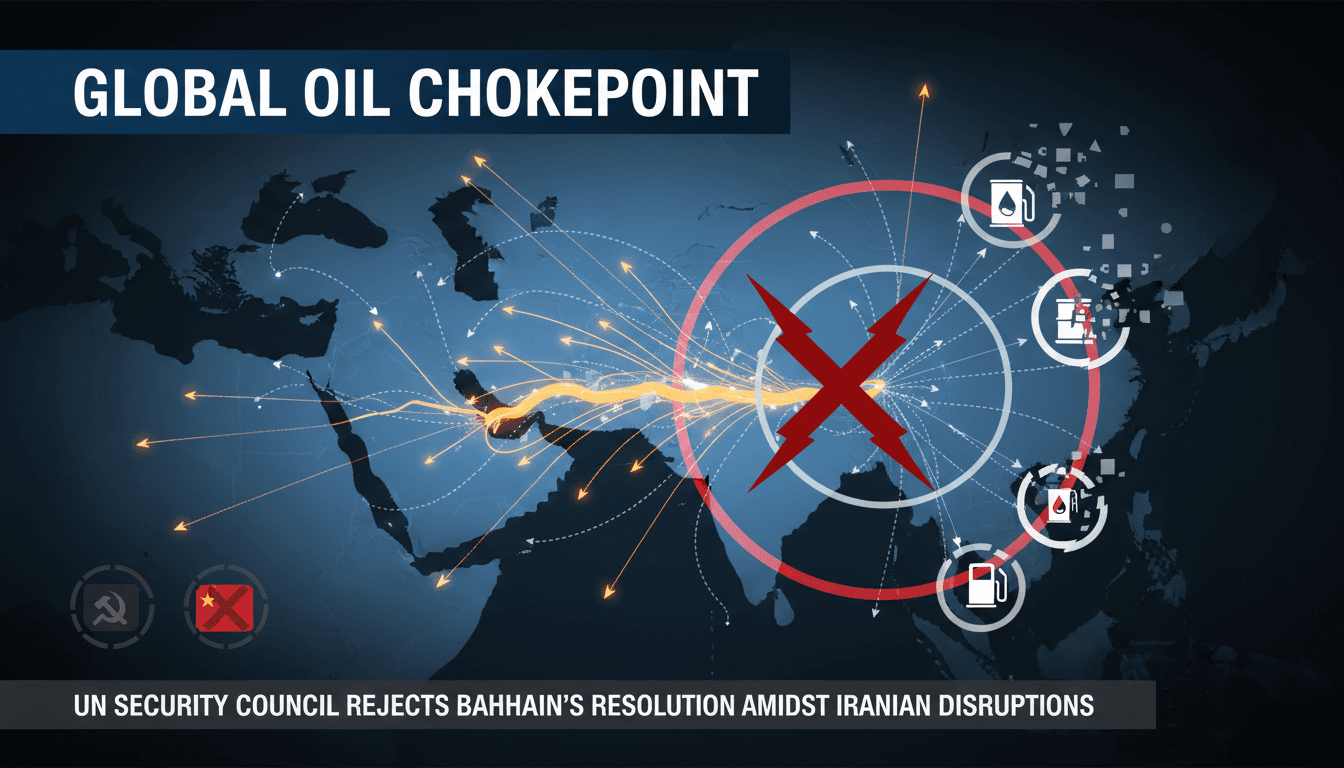
Here's what it means for you.
Rising energy costs and supply chain disruptions are likely to impact your daily expenses and business operations.
Why it matters
The failure to secure shipping protection in the Strait of Hormuz could exacerbate global energy shortages and inflationary pressures.
What happened (in 30 seconds)
- The UN Security Council voted on April 7, 2026, on a resolution proposed by Bahrain to protect shipping in the Strait of Hormuz, which was vetoed by Russia and China.
- The resolution aimed to address Iranian disruptions that have halted nearly all maritime traffic through the strait, impacting 20% of global oil shipments.
- The vote outcome was 11 in favor, 2 against, and 2 abstentions, reflecting deep divisions among member states and leading to heightened tensions in the region.
The context you actually need
- The Strait of Hormuz is a critical chokepoint, with approximately 20% of global petroleum liquids transiting through it, making its security vital for global energy markets.
- Iran's military actions have intensified since February 2026, following U.S. and Israeli strikes, leading to the declaration of the strait's closure and confirmed attacks on merchant vessels.
- Bahrain's resolution faced significant dilution from its original draft, which sought to authorize defensive force, ultimately shifting to a call for coordinated defensive measures.
What's really happening
The recent UN Security Council vote reflects a complex interplay of geopolitical interests, particularly in the context of the ongoing crisis in the Strait of Hormuz. Following U.S. and Israeli military actions against Iran in February 2026, Iranian forces responded with aggressive tactics, including the closure of the strait and attacks on merchant vessels. This escalation has severely disrupted maritime traffic, halting approximately 20% of global oil shipments and triggering a surge in energy prices.
Bahrain, holding the presidency of the UN Security Council, initially proposed a resolution that included authorization for defensive measures. However, the proposal faced immediate opposition from Russia and China, leading to a series of revisions that diluted the resolution's strength. By the time the vote was held, the text had shifted from a robust defense authorization to a more cautious call for coordinated defensive measures, reflecting the intense diplomatic maneuvering required to garner support from other member states.
The vetoes by Russia and China highlight their strategic alignment with Iran and their opposition to U.S. influence in the region. This division not only underscores the geopolitical tensions but also raises questions about the effectiveness of international institutions in addressing security threats. The failure of the resolution has left Gulf states, including Bahrain, in a precarious position, as they grapple with the implications of Iranian aggression and the lack of a unified international response.
As a result of this diplomatic setback, energy markets are likely to remain volatile, with Brent crude hovering above $100 per barrel. The U.S. has accused Russia and China of enabling Iranian intimidation, while Iran has praised the vetoes as a victory against Western pressure. This situation creates a ripple effect that impacts global energy prices, supply chains, and ultimately, consumer costs.
In Dubai, residents are already feeling the strain, with heightened fuel costs and import delays as UAE oil exports decline by 2.6%. The local crude index has suspended nominations for shipments transiting through the Strait of Hormuz since early March, leading to inflated living expenses and strained supply chains. The ongoing crisis thus not only affects geopolitical dynamics but also has tangible consequences for everyday life in the region.
Who feels it first (and how)
- Energy consumers: Higher fuel prices and increased living costs due to supply chain disruptions.
- Businesses reliant on oil: Increased operational costs and potential supply shortages affecting logistics and production.
- Gulf states: Economic instability and heightened security concerns impacting regional trade and investment.
What to watch next
- Energy price fluctuations: Monitor Brent crude prices as they may indicate the market's response to ongoing tensions in the Strait of Hormuz.
- Diplomatic developments: Watch for any new proposals or negotiations aimed at securing maritime safety in the region, particularly from Gulf states.
- Iranian military activities: Keep an eye on Iranian actions in the Strait, as further escalations could lead to more significant disruptions in global oil supply.
The Strait of Hormuz is critical for global oil supply, with 20% of petroleum liquids transiting through it.
Energy prices will remain volatile as geopolitical tensions persist and supply chain disruptions continue.
The long-term effectiveness of diplomatic efforts to secure maritime safety in the region remains uncertain.
Frequently Asked Questions
- Why it matters?
- The failure to secure shipping protection in the Strait of Hormuz could exacerbate global energy shortages and inflationary pressures.
- What happened (in 30 seconds)?
- The UN Security Council voted on April 7, 2026, on a resolution proposed by Bahrain to protect shipping in the Strait of Hormuz, which was vetoed by Russia and China. The resolution aimed to address Iranian disruptions that have halted nearly all maritime traffic through the strait, impacting 20% of global oil shipments. The vote outcome was 11 in favor, 2 against, and 2 abstentions, reflecting deep divisions among member states and leading to heightened tensions in the region.
- What's really happening?
- The recent UN Security Council vote reflects a complex interplay of geopolitical interests, particularly in the context of the ongoing crisis in the Strait of Hormuz. Following U.S. and Israeli military actions against Iran in February 2026, Iranian forces responded with aggressive tactics, including the closure of the strait and attacks on merchant vessels. This escalation has severely disrupted maritime traffic, halting approximately 20% of global oil shipments and triggering a surge in energy
- Who feels it first (and how)?
- Energy consumers: Higher fuel prices and increased living costs due to supply chain disruptions. Businesses reliant on oil: Increased operational costs and potential supply shortages affecting logistics and production. Gulf states: Economic instability and heightened security concerns impacting regional trade and investment.
- What to watch next?
- Energy price fluctuations: Monitor Brent crude prices as they may indicate the market's response to ongoing tensions in the Strait of Hormuz. Diplomatic developments: Watch for any new proposals or negotiations aimed at securing maritime safety in the region, particularly from Gulf states. Iranian military activities: Keep an eye on Iranian actions in the Strait, as further escalations could lead to more significant disruptions in global oil supply.
Pan-Arab news coverage spanning politics, business, sports, and regional affairs.
"Asharq Al-Awsat reflects a broad Arab editorial perspective with strong attention to regional geopolitics."
— A47 Editor
مجلس الأمن يصوت اليوم على مشروع قرار مخفف بشأن «هرمز»
The United Nations Security Council is set to vote today on a revised resolution aimed at reopening the Strait of Hormuz, following a second round of amendments due to opposition from Russia and China.
Arabic-language UAE newspaper coverage focused on domestic affairs, public institutions, business, society, and regional developments.
"Al Khaleej coverage generally reflects a mainstream UAE editorial lens with strong attention to public affairs, institutions, and regional developments."
— A47 Editor
قبل ساعات من انتهاء مهلة ترامب.. مجلس الأمن يصوّت على قرار لتأمين الملاحة في هرمز
The United Nations Security Council is set to vote on a significantly softened resolution aimed at securing navigation in the Strait of Hormuz, following multiple delays. This comes as hopes diminish for a U.S.-Iran agreement before the deadline set ...
Arabic-language UAE newspaper coverage focused on domestic affairs, public institutions, business, society, and regional developments.
"Al Khaleej coverage generally reflects a mainstream UAE editorial lens with strong attention to public affairs, institutions, and regional developments."
— A47 Editor
الأمم المتحدة تصوت اليوم على قرار مخفف بشأن مضيق هرمز
The United Nations Security Council is expected to vote today on a significantly softened resolution aimed at protecting commercial shipping in the Strait of Hormuz, following opposition from China, which holds veto power and has resisted the use of ...