
GCC Secretary General Confirms Resilience of Gulf Supply Chains in Meeting with Indian Commerce Minister
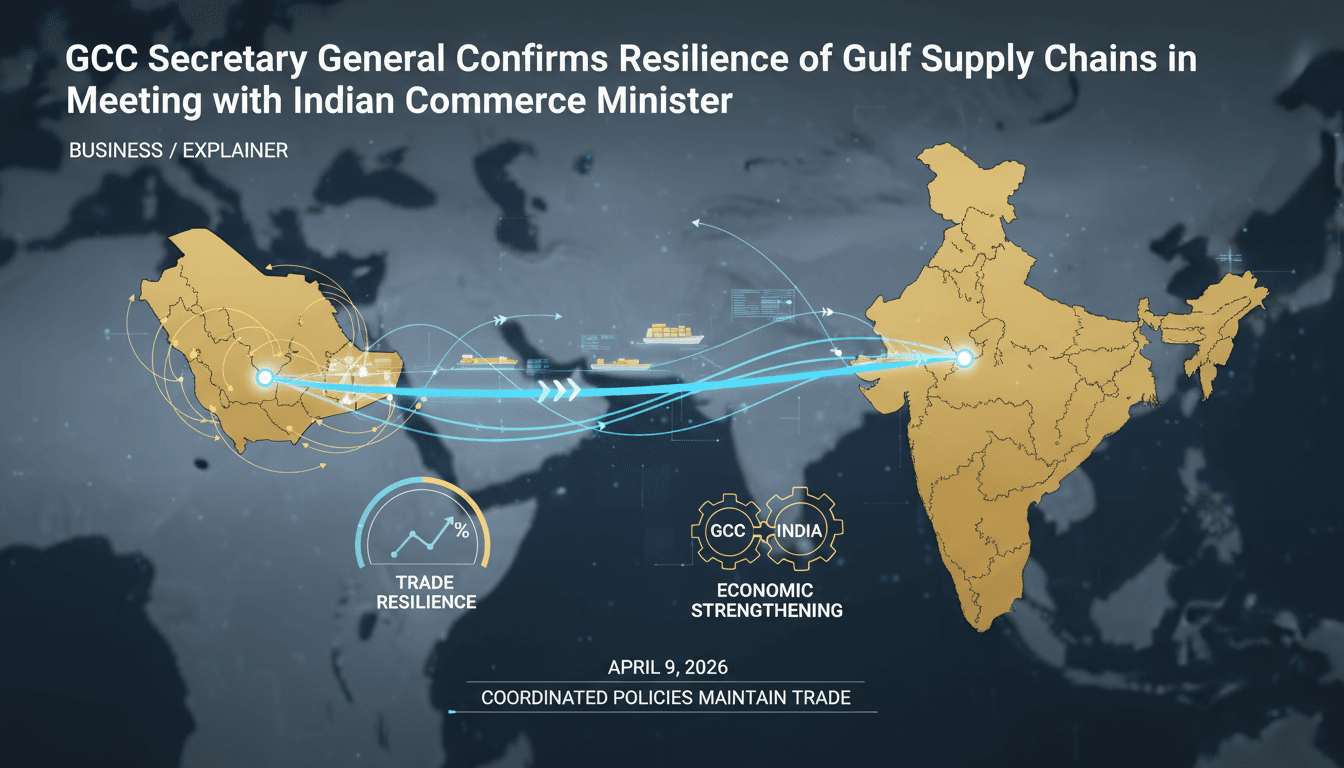
Here's what it means for you.
The efficiency of Gulf supply chains can directly impact your business operations and trade opportunities in the region.
Why it matters
The GCC's ability to maintain robust supply chains amid geopolitical tensions is crucial for global trade stability.
What happened (in 30 seconds)
- Jassem Mohammed Al-Badiwi, Secretary General of the GCC, confirmed the resilience of Gulf supply chains during a virtual meeting with India's Commerce Minister, Piyush Goyal.
- Coordinated policies among GCC states have ensured an uninterrupted flow of goods and services despite regional crises.
- Ongoing discussions aim to enhance bilateral trade ties between GCC countries and India amidst global economic pressures.
The context you actually need
- Geopolitical tensions in the region, particularly threats to the Strait of Hormuz, have raised concerns about supply chain vulnerabilities.
- Previous meetings among GCC transport ministers emphasized the importance of institutional readiness to handle disruptions.
- The UAE's logistics sector is projected to contribute AED 200 billion to the economy by 2032, showcasing the GCC's commitment to resilient supply chains.
What's really happening
The recent virtual meeting between Jassem Mohammed Al-Badiwi and Piyush Goyal highlights a significant moment in GCC-India relations, particularly in the context of global economic challenges. Al-Badiwi's affirmation of the efficiency and resilience of Gulf supply chains is not just a statement of confidence; it reflects a well-coordinated strategy among GCC member states to navigate complex geopolitical landscapes.
The GCC has faced various pressures, including regional crises that threaten supply lines. However, through strategic policy coordination and inter-state cooperation, these nations have managed to maintain a steady flow of goods and services. This resilience is crucial not only for the GCC economies but also for their trading partners, like India, which relies on these supply chains for essential imports.
The discussion centered on enhancing bilateral trade exchanges is particularly timely. As global economic pressures mount, countries are looking for reliable partners to ensure the continuity of trade. The GCC's logistical capabilities, especially through hubs like Dubai, position it as a critical player in this landscape. The UAE's logistics sector, for example, is expected to contribute AED 200 billion to the economy by 2032, underscoring the region's commitment to maintaining robust supply chains.
Moreover, the GCC's proactive approach in addressing potential disruptions has created a sense of security for trading partners. The high level of coordination among member states means that they can respond swiftly to any challenges that arise, ensuring that trade routes remain open and efficient. This is particularly important for India, which is looking to deepen its trade ties with the GCC amid its own economic aspirations.
As the GCC continues to strengthen its supply chain resilience, businesses in the region and beyond can expect more stable trade conditions. This could lead to increased investment opportunities and a more reliable flow of goods, ultimately benefiting consumers and businesses alike.
Who feels it first (and how)
- Logistics companies: Enhanced operations and potential growth in trade volume.
- Import/export businesses: Increased opportunities for trade with GCC countries.
- Consumers: More stable prices and availability of goods due to uninterrupted supply chains.
- Investors: Potential for growth in sectors related to logistics and trade.
What to watch next
- Trade agreements: Monitor any new agreements between GCC states and India that could further enhance trade.
- Geopolitical developments: Keep an eye on regional tensions that could impact supply chain operations.
- Economic indicators: Watch for changes in trade volumes and logistics sector performance as a measure of GCC resilience.
GCC states have demonstrated resilience in their supply chains amid regional challenges.
Enhanced trade ties between GCC countries and India will lead to increased economic collaboration.
The long-term impact of geopolitical tensions on supply chain stability remains uncertain.
Frequently Asked Questions
- Why it matters?
- The GCC's ability to maintain robust supply chains amid geopolitical tensions is crucial for global trade stability.
- What happened (in 30 seconds)?
- Jassem Mohammed Al-Badiwi, Secretary General of the GCC, confirmed the resilience of Gulf supply chains during a virtual meeting with India's Commerce Minister, Piyush Goyal. Coordinated policies among GCC states have ensured an uninterrupted flow of goods and services despite regional crises. Ongoing discussions aim to enhance bilateral trade ties between GCC countries and India amidst global economic pressures.
- What's really happening?
- The recent virtual meeting between Jassem Mohammed Al-Badiwi and Piyush Goyal highlights a significant moment in GCC-India relations, particularly in the context of global economic challenges. Al-Badiwi's affirmation of the efficiency and resilience of Gulf supply chains is not just a statement of confidence; it reflects a well-coordinated strategy among GCC member states to navigate complex geopolitical landscapes. The GCC has faced various pressures, including regional crises that threaten s
- Who feels it first (and how)?
- Logistics companies: Enhanced operations and potential growth in trade volume. Import/export businesses: Increased opportunities for trade with GCC countries. Consumers: More stable prices and availability of goods due to uninterrupted supply chains. Investors: Potential for growth in sectors related to logistics and trade.
- What to watch next?
- Trade agreements: Monitor any new agreements between GCC states and India that could further enhance trade. Geopolitical developments: Keep an eye on regional tensions that could impact supply chain operations. Economic indicators: Watch for changes in trade volumes and logistics sector performance as a measure of GCC resilience.
Arabic-language coverage of Saudi, regional, and international affairs.
"Al Bilad offers mainstream Saudi newspaper coverage across domestic and broader Arab topics."
— A47 Editor
البديوي يؤكد كفاءة سلاسل الإمداد
Jassim Mohammed Al-Budaiwi, the Secretary-General of the Gulf Cooperation Council (GCC), affirmed that the member states successfully navigated the impacts of the crisis through effective supply chain management policies, ensuring the continuous flow...
Sports reporting with a focus on Saudi and regional competitions.
"Okaz sports coverage is broad and audience-friendly, with strong attention to Saudi teams and leagues."
— A47 Editor
تعزيز التعاون والتبادل التجاري بين الهند ومجلس التعاون
The Secretary-General of the Gulf Cooperation Council, Jassim Al-Budaiwi, held a virtual meeting with India's Minister of Commerce and Industry, Piyush Goyal, to discuss opportunities for enhancing trade cooperation amid global economic challenges. B...
Arabic-language coverage of political affairs and current events.
"Okaz political coverage typically follows mainstream Saudi framing on national and regional affairs."
— A47 Editor
البديوي: عدم إقرار المشروع يشجع إيران على اعتداءاتها الآثمة
Jassim Al-Budaiwi, the Secretary-General of the Gulf Cooperation Council, condemned the failure of the United Nations Security Council to adopt a resolution aimed at immediately halting threats to international navigation in the Strait of Hormuz. He ...
Arabic-language UAE newspaper coverage focused on domestic affairs, public institutions, business, society, and regional developments.
"Al Khaleej coverage generally reflects a mainstream UAE editorial lens with strong attention to public affairs, institutions, and regional developments."
— A47 Editor
«التعاون الخليجي»: التحديات اختبار حقيقي لقدرتنا على حماية مكتسباتنا
Jassim Mohammed Al-Budaiwi, the Secretary-General of the Gulf Cooperation Council (GCC), emphasized that the escalating challenges faced by member states serve as a true test of their ability to safeguard their achievements.