
Samsung Electronics Projects Record Q1 2026 Profit Driven by AI Chip Demand
Here's what it means for you.
If you're in the tech sector or a consumer of electronics, Samsung's profit surge signals a potential rise in prices and availability of AI-enabled devices.
Why it matters
Samsung's extraordinary profit growth underscores the escalating demand for AI technologies, reshaping the semiconductor market and consumer electronics landscape.
What happened (in 30 seconds)
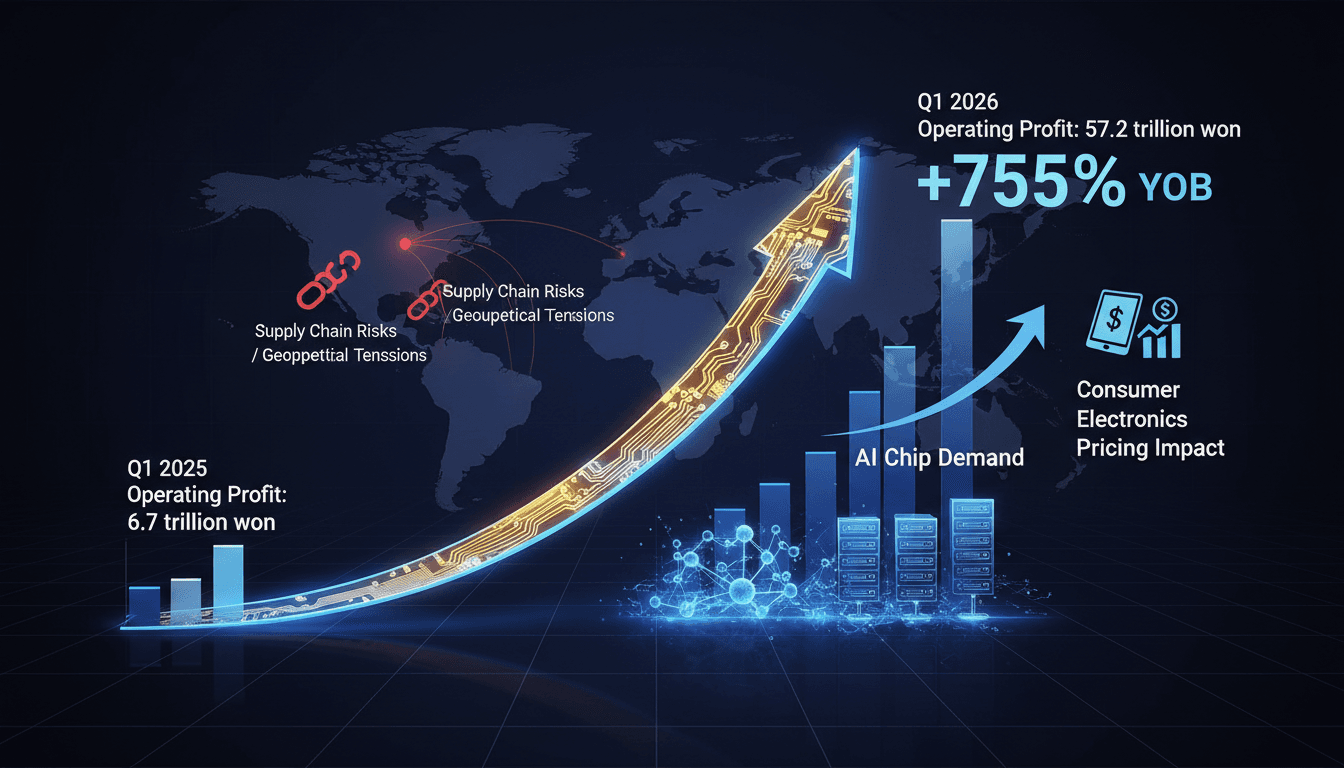
- Samsung Electronics announced a preliminary Q1 2026 operating profit of 57.2 trillion won ($37.9 billion), marking a 755% year-over-year increase.
- The Device Solutions division led this surge, driven by high demand for AI-related memory chips, particularly for data centers.
- Shares rose nearly 5% in Seoul trading following the announcement, reflecting strong investor confidence in ongoing AI demand.
The context you actually need
- AI boom recovery: The semiconductor cycle has rebounded due to increased global demand for AI infrastructure, particularly starting in late 2025.
- Competitive landscape: Samsung's strategic investments in advanced chip production have positioned it favorably against rivals like SK Hynix and TSMC.
- Supply chain risks: Geopolitical tensions, especially in the Middle East, pose risks to semiconductor supply chains, particularly for materials like helium, essential for chip manufacturing.
What's really happening
Samsung Electronics' forecast of a record operating profit for Q1 2026 is a direct outcome of the surging demand for AI-related memory chips. This demand has been fueled by the rapid expansion of AI technologies across various sectors, leading to a significant uptick in the need for high-bandwidth memory (HBM) used in data centers and AI accelerators. The company's Device Solutions division has been a key player in this growth, capitalizing on the shortages in memory chips that have plagued the market in recent quarters.
In Q4 2025, Samsung reported an operating profit of 20.1 trillion won, which was already a record at the time. The company’s ability to exceed this figure by a staggering margin in Q1 2026 indicates not only the resilience of its business model but also the effectiveness of its strategic investments in advanced chip production. These investments have allowed Samsung to maintain a competitive edge in a market that is increasingly driven by AI technology.
The semiconductor industry is currently experiencing a cyclical recovery, with rising prices for DRAM and NAND memory chips. This trend is expected to continue as demand from AI applications remains robust. Samsung's proactive measures to enhance production capabilities have positioned it well to meet this demand, particularly as competitors struggle to keep pace.
However, the backdrop of geopolitical tensions, especially in the Middle East, introduces significant risks to supply chains. Conflicts in this region have raised concerns about the availability of critical materials, such as helium, which is vital for semiconductor manufacturing. This uncertainty could impact not only Samsung's operations but also the broader electronics market, potentially leading to increased prices and reduced availability of consumer electronics.
As Samsung continues to dominate the semiconductor space, its performance will have ripple effects across the tech industry, influencing everything from pricing strategies to product availability for consumers and businesses alike.
Who feels it first (and how)
- Tech companies: Increased costs for AI-related components may lead to higher prices for products.
- Consumers: Prices for AI-enabled devices could rise, affecting affordability and access.
- Investors: Positive sentiment around Samsung may boost stock prices in the tech sector.
- Supply chain managers: Increased scrutiny on sourcing materials like helium due to geopolitical risks.
What to watch next
- Q2 2026 earnings: Analysts expect Q2 profits to potentially reach 75 trillion won, indicating sustained demand for AI chips.
- Geopolitical developments: Monitor Middle East tensions that could disrupt semiconductor supply chains and affect pricing.
- Competitor responses: Watch how rivals like SK Hynix and TSMC adapt to Samsung's market dominance and pricing strategies.
Samsung's Q1 2026 operating profit is projected at 57.2 trillion won, a significant increase from previous quarters.
Continued demand for AI technologies will sustain high prices for memory chips in the near future.
The long-term impact of geopolitical tensions on semiconductor supply chains remains uncertain.
Frequently Asked Questions
- Why it matters?
- Samsung's extraordinary profit growth underscores the escalating demand for AI technologies, reshaping the semiconductor market and consumer electronics landscape.
- What happened (in 30 seconds)?
- Samsung Electronics announced a preliminary Q1 2026 operating profit of 57.2 trillion won ($37.9 billion), marking a 755% year-over-year increase. The Device Solutions division led this surge, driven by high demand for AI-related memory chips, particularly for data centers. Shares rose nearly 5% in Seoul trading following the announcement, reflecting strong investor confidence in ongoing AI demand.
- What's really happening?
- Samsung Electronics' forecast of a record operating profit for Q1 2026 is a direct outcome of the surging demand for AI-related memory chips. This demand has been fueled by the rapid expansion of AI technologies across various sectors, leading to a significant uptick in the need for high-bandwidth memory (HBM) used in data centers and AI accelerators. The company's Device Solutions division has been a key player in this growth, capitalizing on the shortages in memory chips that have plagued the
- Who feels it first (and how)?
- Tech companies: Increased costs for AI-related components may lead to higher prices for products. Consumers: Prices for AI-enabled devices could rise, affecting affordability and access. Investors: Positive sentiment around Samsung may boost stock prices in the tech sector. Supply chain managers: Increased scrutiny on sourcing materials like helium due to geopolitical risks.
- What to watch next?
- Q2 2026 earnings: Analysts expect Q2 profits to potentially reach 75 trillion won, indicating sustained demand for AI chips. Geopolitical developments: Monitor Middle East tensions that could disrupt semiconductor supply chains and affect pricing. Competitor responses: Watch how rivals like SK Hynix and TSMC adapt to Samsung's market dominance and pricing strategies.
Regional and international reporting focused on Middle Eastern politics, diplomacy, and economics.
"Asharq Al-Awsat is a Saudi-owned international newspaper reflecting mainstream Gulf political perspectives."
— A47 Editor
Samsung Electronics Expects Record Quarterly Profit on AI Boom
Samsung Electronics has announced expectations for record quarterly profits, driven by a surge in demand for artificial intelligence (AI) technologies. This growth reflects the company's strategic positioning within the rapidly evolving AI landscape.
Market-moving headlines impacting equities, bonds, and related risk assets.
"Real-time catalysts and volatility drivers across indices and sectors."
— A47 Editor
Samsung sees eightfold increase in Q1 profit on soaring AI chip demand
Samsung has reported an eightfold increase in its Q1 profit, attributed to a surge in demand for AI chips, which has significantly driven up prices in the semiconductor market. This remarkable growth underscores the company's strong positioning in th...
Curated tech headlines including AI stories.
"Influential aggregator surfacing the day’s top tech/AI links."
— A47 Editor
Samsung reports preliminary Q1 operating profit of ~$38B, up more than 8x YoY and above ~$27B est., a record, and revenue up 68% YoY to ~$88B (Hyunjoo Jin/Reuters)
Samsung Electronics reported a preliminary operating profit of approximately $38 billion for Q1 2026, marking an increase of more than eight times year-over-year and exceeding estimates of around $27 billion. Revenue surged 68% year-over-year to abou...