
Péter Magyar's Tisza Party Wins Supermajority in Hungarian Election Ending Fidesz Rule
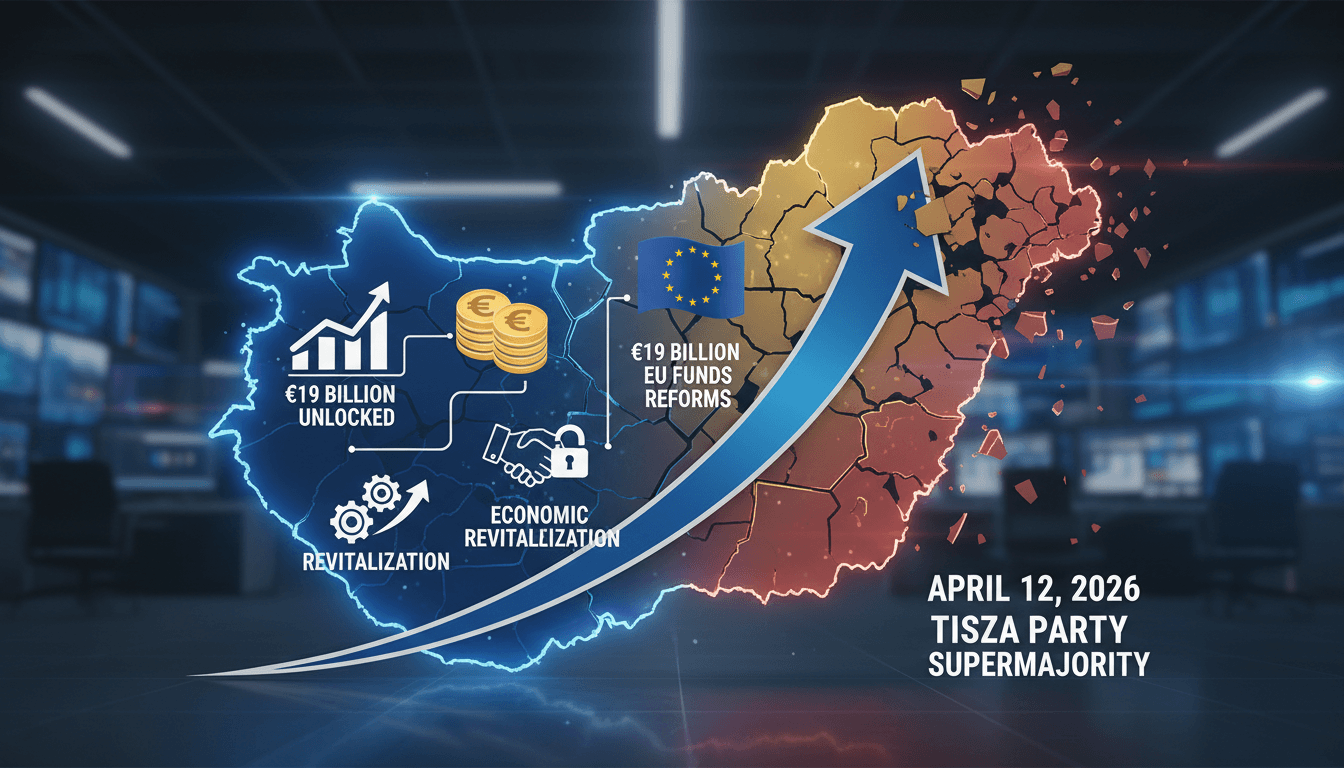
Here's what it means for you.
The shift in Hungary's political landscape could influence economic ties and investment flows across Europe, including in the UAE.
Why it matters
This election signals a potential pivot in Hungary's economic policies and EU relations, impacting regional stability and investment opportunities.
What happened (in 30 seconds)
- Péter Magyar's Tisza Party won a supermajority in Hungary's parliamentary election on April 12, 2026, ending Viktor Orbán's 16-year rule.
- Record voter turnout of 79.5% reflected widespread dissatisfaction with the economy and governance.
- Magyar's agenda includes judicial reforms and anti-corruption measures aimed at unlocking €19 billion in frozen EU funds.
The context you actually need
- Viktor Orbán's Fidesz party had dominated Hungarian politics since 2010, implementing policies that centralized power and led to EU disputes over rule-of-law violations.
- Economic stagnation characterized Hungary's recent years, with growth at just 0.3% and a budget deficit of 5-5.5%.
- Magyar's rise as a credible challenger was fueled by grassroots campaigns exposing corruption and mobilizing anti-Fidesz sentiment.
What's really happening
Péter Magyar's victory represents a significant shift in Hungary's political and economic landscape. After 16 years of Viktor Orbán's Fidesz party, which implemented a series of "illiberal democracy" reforms, Magyar's Tisza Party has emerged as a beacon of change. The election results, with Tisza securing 138 seats in the 199-seat National Assembly, indicate a strong mandate for reform. This shift is not merely a change in leadership; it reflects a broader public demand for accountability and transparency in governance.
The backdrop of this election is critical. Hungary has faced economic challenges, including a stagnant growth rate of 0.3% and a budget deficit hovering between 5% and 5.5%. These issues have been exacerbated by persistent corruption scandals and strained relations with the European Union, resulting in €19 billion in frozen cohesion funds—equivalent to 8.8% of Hungary's GDP. Magyar's platform promises to address these issues head-on, with a focus on judicial reforms and anti-corruption measures that could unlock these vital funds.
The implications of Magyar's victory extend beyond Hungary's borders. His commitment to normalizing ties with the EU could lead to a reintegration of Hungary into the European economic framework, potentially revitalizing investment flows and economic growth. The EU has already indicated its willingness to engage with Magyar, linking the release of funds to adherence to rule-of-law conditions. This could signal a new era of cooperation, not just for Hungary but for the EU's approach to member states facing similar governance challenges.
Moreover, Magyar's election could influence Hungary's foreign relations, particularly with countries like the UAE, where Orbán had fostered strong ties through investments in defense and high-tech sectors. As Magyar pivots towards a more EU-aligned stance, the dynamics of these relationships may shift, impacting bilateral trade and investment flows.
In summary, Magyar's victory is a pivotal moment for Hungary, with the potential to reshape its economic policies, restore EU relations, and address long-standing issues of corruption and governance. The coming months will be crucial as Magyar's government begins to implement its reform agenda and navigate the complexities of both domestic and international politics.
Who feels it first (and how)
- Hungarian citizens: Expect immediate changes in governance and potential economic relief through reforms.
- Investors: Those with stakes in Hungary will monitor the release of frozen EU funds and market reactions.
- EU officials: They will be keenly observing Hungary's compliance with rule-of-law conditions to unlock financial support.
- UAE businesses: Companies engaged in trade with Hungary may reassess their strategies based on the new government's policies.
What to watch next
- Implementation of reforms: Monitor how quickly and effectively Magyar's government enacts judicial and anti-corruption reforms, as this will determine the release of EU funds.
- Market reactions: Watch for fluctuations in the Budapest Stock Exchange and the forint's performance against the euro, which will indicate investor confidence.
- EU engagement: Keep an eye on the EU's response to Hungary's policy changes, particularly regarding the release of the €19 billion in frozen funds.
Magyar's Tisza Party won a supermajority, signaling a shift in governance.
Economic reforms will be prioritized to unlock EU funds and restore investor confidence.
The long-term impact on Hungary's foreign relations, particularly with non-EU countries like the UAE.
Frequently Asked Questions
- Why it matters?
- This election signals a potential pivot in Hungary's economic policies and EU relations, impacting regional stability and investment opportunities.
- What happened (in 30 seconds)?
- Péter Magyar's Tisza Party won a supermajority in Hungary's parliamentary election on April 12, 2026, ending Viktor Orbán's 16-year rule. Record voter turnout of 79.5% reflected widespread dissatisfaction with the economy and governance. Magyar's agenda includes judicial reforms and anti-corruption measures aimed at unlocking €19 billion in frozen EU funds.
- What's really happening?
- Péter Magyar's victory represents a significant shift in Hungary's political and economic landscape. After 16 years of Viktor Orbán's Fidesz party, which implemented a series of "illiberal democracy" reforms, Magyar's Tisza Party has emerged as a beacon of change. The election results, with Tisza securing 138 seats in the 199-seat National Assembly, indicate a strong mandate for reform. This shift is not merely a change in leadership; it reflects a broader public demand for accountability and tr
- Who feels it first (and how)?
- Hungarian citizens: Expect immediate changes in governance and potential economic relief through reforms. Investors: Those with stakes in Hungary will monitor the release of frozen EU funds and market reactions. EU officials: They will be keenly observing Hungary's compliance with rule-of-law conditions to unlock financial support. UAE businesses: Companies engaged in trade with Hungary may reassess their strategies based on the new government's policies.
- What to watch next?
- Implementation of reforms: Monitor how quickly and effectively Magyar's government enacts judicial and anti-corruption reforms, as this will determine the release of EU funds. Market reactions: Watch for fluctuations in the Budapest Stock Exchange and the forint's performance against the euro, which will indicate investor confidence. EU engagement: Keep an eye on the EU's response to Hungary's policy changes, particularly regarding the release of the €19 billion in frozen funds.
Global business, markets, and technology policy/industry coverage.
"France 24 provides balanced international coverage with a European perspective."
— A47 Editor
What Magyar's election win means for Hungary's economy and Europe
Hungary's political landscape has shifted dramatically following the recent parliamentary elections, where Péter Magyar's Tisza party secured a landslide victory over Viktor Orban's Fidesz party, marking the end of Orban's 16-year rule. Magyar aims t...
International coverage from The Guardian's global desks.
"The Guardian is known for its progressive editorial stance and in-depth analysis."
— A47 Editor
Orbán’s defeat threatens to halt Hungarian support of populist right
Viktor Orbán, the Prime Minister of Hungary, has conceded defeat in the recent parliamentary elections, marking the end of his 16-year rule. The opposition Tisza Party, led by Péter Magyar, won decisively, reflecting a significant shift in Hungary's ...
Global markets, investing, and macroeconomics from a premier financial newsroom.
"Bloomberg is respected for in-depth financial reporting and data-driven analysis."
— A47 Editor
Orban’s Defeat Ignites Euro Convergence Trade in Hungary
Prime Minister Viktor Orban's recent election defeat has triggered a significant rally in Hungary's bond market, as his successor, Péter Magyar, hints at the potential adoption of the euro, marking a pivotal shift in the country's economic direction.
Policy, elections, and government reporting.
"NPR is an American public media organization known for thoughtful reporting and a slightly left-leaning editorial tone."
— A47 Editor
What Orban's loss means for far right movements around the world
Hungarian Prime Minister Viktor Orbán conceded defeat in the recent parliamentary elections, ending his 16-year rule. The opposition party, led by Péter Magyar, secured over 52% of the vote, reflecting a significant shift in Hungary's political lands...
International coverage from The Guardian's global desks.
"The Guardian is known for its progressive editorial stance and in-depth analysis."
— A47 Editor
Does Viktor Orbán’s defeat signal a wider backlash against ‘the forces of darkness’?
Péter Magyar's Tisza party achieved a decisive victory in Hungary's parliamentary elections on April 12, 2026, ending Viktor Orbán's 16-year rule. This election marked a significant political shift, as Magyar's win was celebrated by thousands across ...
International coverage from The Guardian's global desks.
"The Guardian is known for its progressive editorial stance and in-depth analysis."
— A47 Editor
Hungary’s voters shunned Orbán – but it may be too early to celebrate end of Europe’s far right
In a significant political shift, Hungarian Prime Minister Viktor Orbán has conceded defeat after 16 years in power, as Péter Magyar's center-right Tisza party secured a decisive victory in the recent parliamentary elections. This outcome has been in...
Arabic political reporting and analysis.
"Arabic Post is a digital outlet focused on politics and regional affairs."
— A47 Editor
ماذا تعني خسارة فيكتور أوربان لليمين المتطرف في أوروبا؟
Viktor Orbán's loss in the Hungarian elections marks a significant political shift, resembling a political earthquake that extends beyond Budapest, impacting decision-making in Brussels, Moscow, and the Middle East. After 16 years of shaping a unique...