
Iran Allows Conditional Transit for Non-Hostile Vessels Through Strait of Hormuz
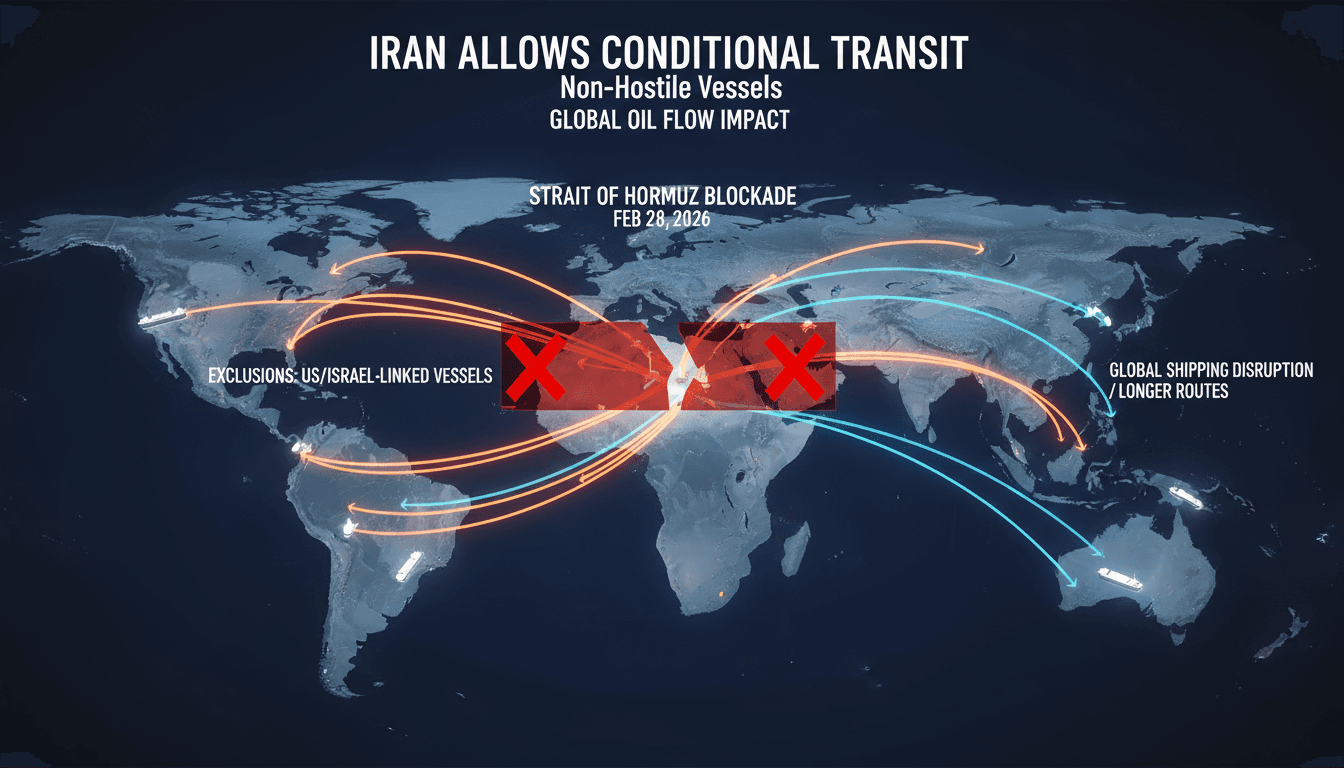
Here's what it means for you.
If you rely on global shipping or energy markets, the partial reopening of the Strait of Hormuz could stabilize prices and supply chains.
Why it matters
The Strait of Hormuz is a critical chokepoint for 20% of the world's oil and LNG shipments, making its accessibility vital for global energy security.
What happened (in 30 seconds)
- On March 24, 2026, Iran announced that non-hostile vessels could transit the Strait of Hormuz, pending coordination with Iranian authorities.
- This decision follows a blockade initiated by Iran in response to US-Israeli airstrikes, which effectively reduced maritime traffic by 95%.
- Simultaneously, President Trump claimed progress in negotiations related to oil and gas, despite Iran denying any talks.
The context you actually need
- The 2026 US-Iran War began on February 28, 2026, with coordinated airstrikes targeting Iranian military assets, prompting Iran to retaliate by blockading the Strait.
- Prior to the blockade, around 130 vessels transited the Strait daily, accounting for 20% of global oil trade, highlighting the strait's importance in international shipping.
- Iran's recent announcement aims to alleviate global shipping disruptions and could be a strategic move to negotiate from a position of strength while addressing economic pressures.
What's really happening
The recent announcement from Iran to allow non-hostile vessels to transit the Strait of Hormuz is a calculated response to the severe economic and logistical impacts of the ongoing conflict with the United States and Israel. Since the onset of the war, Iran has effectively blockaded the strait, which is a vital maritime route for global oil and liquefied natural gas (LNG) shipments. This blockade has resulted in a staggering 95% reduction in maritime traffic, with approximately 800 to 2,000 ships idled, creating a ripple effect across global supply chains.
Iran's decision to conditionally reopen the strait is likely influenced by multiple factors. First, the economic ramifications of the blockade are significant. The strait is crucial for the transit of about 20% of the world’s seaborne oil trade. With oil prices soaring and supply chains disrupted, Iran may be seeking to alleviate some of the pressure on global markets while also attempting to negotiate from a position of relative power. The announcement coincided with President Trump's claims of receiving a significant prize related to oil and gas, suggesting that both sides might be exploring avenues for negotiation, albeit indirectly.
Moreover, the Iranian government is facing internal pressures as lawmakers propose a toll system for transiting ships, potentially generating revenue amidst the economic fallout from the war. This toll could be as high as $2 million per ship, indicating a dual strategy of reopening the strait while also capitalizing on its strategic importance. However, the exclusion of US and Israeli-linked vessels from this reopening suggests a continued adversarial stance, complicating the potential for a full de-escalation.
The geopolitical landscape is further complicated by reactions from neighboring countries and global powers. Pakistan has offered to mediate, while Gulf states, including the UAE, are urging caution. Shipping firms remain hesitant to resume operations without a formal ceasefire, indicating that while the announcement is a step towards normalcy, significant uncertainties remain.
Who feels it first (and how)
- Shipping companies: They face immediate operational decisions regarding whether to resume transit through the Strait of Hormuz.
- Energy markets: Traders and investors will be closely monitoring oil prices, which are sensitive to any changes in supply chain dynamics.
- Consumers in the UAE: Residents may experience inflation in fuel, transport, and food prices due to the strait's critical role in supply chains.
What to watch next
- Negotiation developments: Watch for any formal talks between Iran and the US or Israel, as this could significantly impact maritime security and oil prices.
- Shipping traffic levels: Increased transit through the Strait of Hormuz will indicate a return to normalcy in global shipping, affecting supply chains and pricing.
- Regional responses: Monitor how neighboring countries react to Iran's announcement, particularly any mediation efforts or military posturing.
The Strait of Hormuz is a critical chokepoint for global oil and LNG shipments.
There will be ongoing negotiations, although the extent of their success remains uncertain.
The long-term implications of Iran's toll proposal on shipping traffic and regional stability.
Frequently Asked Questions
- Why it matters?
- The Strait of Hormuz is a critical chokepoint for 20% of the world's oil and LNG shipments, making its accessibility vital for global energy security.
- What happened (in 30 seconds)?
- On March 24, 2026, Iran announced that non-hostile vessels could transit the Strait of Hormuz, pending coordination with Iranian authorities. This decision follows a blockade initiated by Iran in response to US-Israeli airstrikes, which effectively reduced maritime traffic by 95%. Simultaneously, President Trump claimed progress in negotiations related to oil and gas, despite Iran denying any talks.
- What's really happening?
- The recent announcement from Iran to allow non-hostile vessels to transit the Strait of Hormuz is a calculated response to the severe economic and logistical impacts of the ongoing conflict with the United States and Israel. Since the onset of the war, Iran has effectively blockaded the strait, which is a vital maritime route for global oil and liquefied natural gas (LNG) shipments. This blockade has resulted in a staggering 95% reduction in maritime traffic, with approximately 800 to 2,000 ship
- Who feels it first (and how)?
- Shipping companies: They face immediate operational decisions regarding whether to resume transit through the Strait of Hormuz. Energy markets: Traders and investors will be closely monitoring oil prices, which are sensitive to any changes in supply chain dynamics. Consumers in the UAE: Residents may experience inflation in fuel, transport, and food prices due to the strait's critical role in supply chains.
- What to watch next?
- Negotiation developments: Watch for any formal talks between Iran and the US or Israel, as this could significantly impact maritime security and oil prices. Shipping traffic levels: Increased transit through the Strait of Hormuz will indicate a return to normalcy in global shipping, affecting supply chains and pricing. Regional responses: Monitor how neighboring countries react to Iran's announcement, particularly any mediation efforts or military posturing.
Breaking news, politics, business, and entertainment from the U.S. and around the world.
"The New York Post is a tabloid-format newspaper known for its sensationalist headlines and conservative-leaning editorial tone."
— A47 Editor
Iran says ‘non-hostile’ ships can pass through Strait of Hormuz — as Trump teases major ‘prize’
Iran has announced that it will permit 'non-hostile' ships to transit through the Strait of Hormuz, while explicitly excluding vessels from the United States and Israel. This declaration comes amid ongoing tensions and negotiations involving Presiden...
UAE-based English-language newspaper covering regional politics, economics, and global affairs.
"The National reflects Emirati policy perspectives while maintaining international editorial standards."
— A47 Editor
Iran tells UN 'non-hostile vessels' may cross Hormuz but shipping firms wary
Iran has informed the United Nations that 'non-hostile vessels' are permitted to transit the Strait of Hormuz, a crucial maritime corridor for global oil transport, amid ongoing geopolitical tensions and military actions in the region. This announcem...
Regional coverage and analysis focused on politics, diplomacy, and business across the Middle East.
"Al-Monitor is known for analytical reporting on Middle East politics and policy developments."
— A47 Editor
Iran says 'non-hostile' ships can transit Strait of Hormuz, FT reports
Iran has announced that 'non-hostile vessels' can transit the Strait of Hormuz if they coordinate with Iranian authorities, as reported by the Financial Times. This decision comes amid ongoing geopolitical tensions and military actions in the region,...
Oil, metals, and agriculture: supply/demand headlines, OPEC chatter, inventories, and price action.
"Solid tape for energy and metals traders tracking macro and micro catalysts."
— A47 Editor
Iran says ’non-hostile’ ships can transit Strait of Hormuz, FT reports
Iran has announced that 'non-hostile' ships can transit the Strait of Hormuz, emphasizing the need for vessels to coordinate with Tehran for safe passage through this vital waterway. This statement was made to member nations of the International Mari...