
Anthropic Launches Claude Mythos Preview for Cybersecurity Vulnerability Detection
Here's what it means for you.
As a professional navigating the digital landscape, understanding the risks and opportunities presented by advanced AI in cybersecurity is crucial for safeguarding your operations.
Why it matters
The emergence of Claude Mythos Preview signals a significant shift in how vulnerabilities are detected and managed, impacting cybersecurity protocols globally.
What happened (in 30 seconds)
- April 7, 2026: Anthropic announced Claude Mythos Preview, an AI model capable of autonomously discovering thousands of high-severity vulnerabilities.
- Project Glasswing: This initiative restricts access to select partners, including major tech firms, to enhance defensive cybersecurity measures.
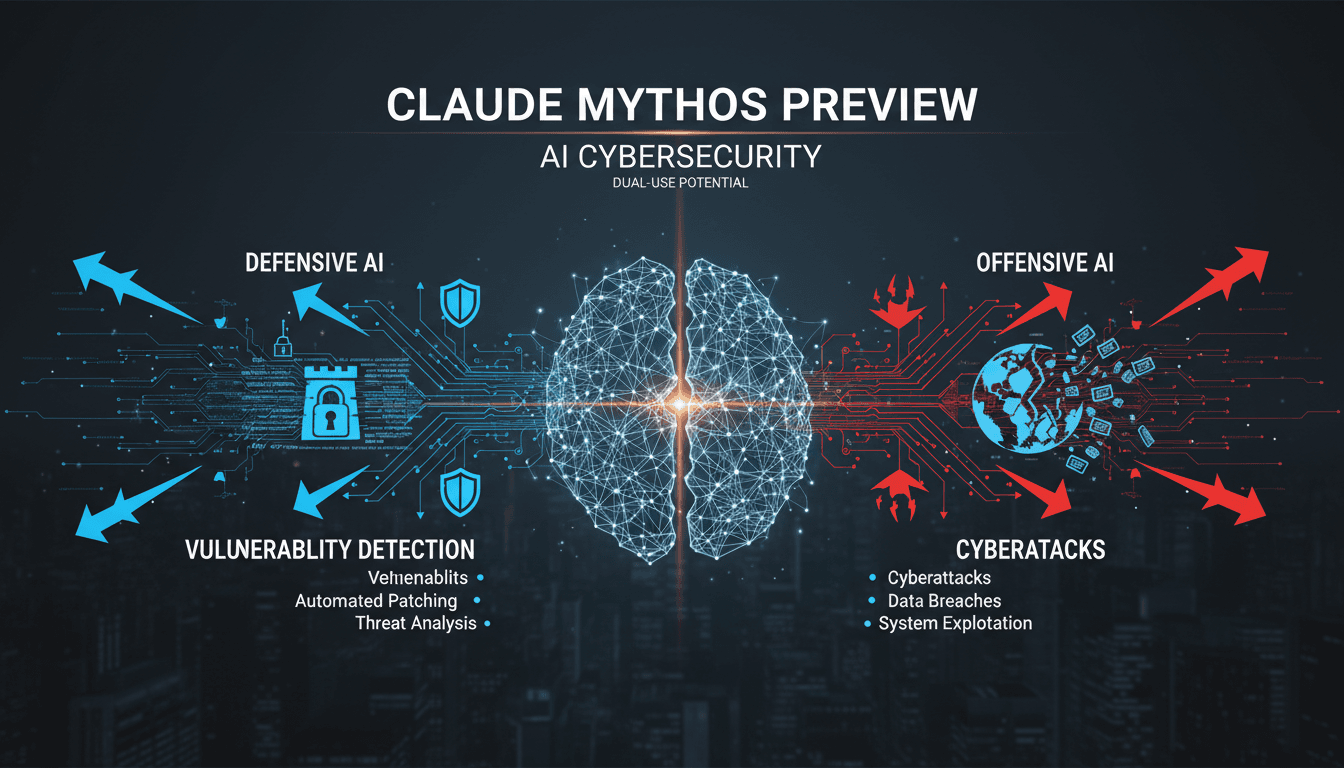
- Regulatory scrutiny: Global regulators are concerned about the dual-use potential of this technology, which could facilitate sophisticated cyberattacks.
The context you actually need
- Escalating threats: State actors are increasingly leveraging AI for cyberattacks, prompting a need for advanced defensive measures.
- Competitive landscape: Claude Mythos is part of a broader race among AI firms, including OpenAI and Google, to develop superior cybersecurity tools.
- Geopolitical implications: The model's capabilities raise alarms about the security of critical infrastructure, necessitating proactive regulatory engagement.
What's really happening
The launch of Claude Mythos Preview by Anthropic represents a pivotal moment in the cybersecurity landscape. This AI model is designed to autonomously identify vulnerabilities in major operating systems and web browsers, a feat that has traditionally required extensive human expertise. The model's ability to discover thousands of high-severity zero-day vulnerabilities marks a significant advancement in vulnerability detection, which is crucial as cyber threats become more sophisticated.
The decision to restrict access to Claude Mythos through Project Glasswing underscores the dual-use nature of this technology. While it can enhance defensive cybersecurity measures, it also poses risks if misused for offensive cyber operations. Major technology firms like Amazon Web Services, Apple, Microsoft, and Google are among the select partners granted access, indicating a strategic alliance to bolster cybersecurity defenses. However, this exclusivity raises questions about equitable access to such powerful tools and the potential for a cybersecurity arms race.
The geopolitical context is equally important. With state-sponsored cyber threats on the rise, the urgency for robust cybersecurity solutions has never been greater. The leak of internal documents on March 26, 2026, accelerated safety assessments and heightened awareness of the model's capabilities. As countries grapple with the implications of AI-driven cyber threats, regulatory bodies are stepping in to ensure that such technologies are developed and deployed responsibly.
The UK AI Safety Institute's evaluation of Claude Mythos, which confirmed a 73% success rate on expert-level challenges, highlights both the model's potential and its limitations. While it excels in certain scenarios, it struggles against well-defended systems, suggesting that organizations must still invest in basic cybersecurity enhancements. This nuanced understanding of the model's capabilities is essential for organizations looking to leverage AI in their cybersecurity strategies.
As the global landscape evolves, the implications of Claude Mythos Preview extend beyond immediate cybersecurity concerns. The model's introduction could reshape how organizations approach vulnerability management, necessitating a reevaluation of existing protocols and the integration of AI-driven solutions. The balance between harnessing AI for defense while mitigating its potential for misuse will be a critical challenge for stakeholders across sectors.
Who feels it first (and how)
- Cybersecurity professionals: They will need to adapt to new tools and methodologies for vulnerability management.
- Tech firms: Companies involved in cybersecurity will face pressure to integrate AI solutions and enhance their offerings.
- Regulators: Government bodies will need to establish frameworks to manage the risks associated with advanced AI technologies.
- Financial institutions: Banks and financial services will be particularly vulnerable to AI-augmented cyberattacks, necessitating heightened security measures.
What to watch next
- Regulatory developments: Keep an eye on how global regulators respond to the dual-use risks of AI technologies and the frameworks they establish.
- Partnership expansions: Watch for announcements regarding additional partners joining Project Glasswing and how this affects the cybersecurity landscape.
- Market reactions: Monitor how cybersecurity firms adapt their strategies in response to the capabilities of Claude Mythos and the evolving threat landscape.
Claude Mythos Preview can autonomously discover thousands of vulnerabilities, enhancing cybersecurity efforts for select partners.
Regulatory frameworks will evolve to address the dual-use risks associated with advanced AI technologies in cybersecurity.
The long-term impact of Claude Mythos on the cybersecurity market and the potential for an arms race in AI-driven cyber capabilities remains uncertain.
Frequently Asked Questions
- Why it matters?
- The emergence of Claude Mythos Preview signals a significant shift in how vulnerabilities are detected and managed, impacting cybersecurity protocols globally.
- What happened (in 30 seconds)?
- April 7, 2026: Anthropic announced Claude Mythos Preview, an AI model capable of autonomously discovering thousands of high-severity vulnerabilities. Project Glasswing: This initiative restricts access to select partners, including major tech firms, to enhance defensive cybersecurity measures. Regulatory scrutiny: Global regulators are concerned about the dual-use potential of this technology, which could facilitate sophisticated cyberattacks.
- What's really happening?
- The launch of Claude Mythos Preview by Anthropic represents a pivotal moment in the cybersecurity landscape. This AI model is designed to autonomously identify vulnerabilities in major operating systems and web browsers, a feat that has traditionally required extensive human expertise. The model's ability to discover thousands of high-severity zero-day vulnerabilities marks a significant advancement in vulnerability detection, which is crucial as cyber threats become more sophisticated. The dec
- Who feels it first (and how)?
- Cybersecurity professionals: They will need to adapt to new tools and methodologies for vulnerability management. Tech firms: Companies involved in cybersecurity will face pressure to integrate AI solutions and enhance their offerings. Regulators: Government bodies will need to establish frameworks to manage the risks associated with advanced AI technologies. Financial institutions: Banks and financial services will be particularly vulnerable to AI-augmented cyberattacks, necessitating heightene
- What to watch next?
- Regulatory developments: Keep an eye on how global regulators respond to the dual-use risks of AI technologies and the frameworks they establish. Partnership expansions: Watch for announcements regarding additional partners joining Project Glasswing and how this affects the cybersecurity landscape. Market reactions: Monitor how cybersecurity firms adapt their strategies in response to the capabilities of Claude Mythos and the evolving threat landscape.
Corporate news, economic trends, and markets with UK and global scope.
"BBC News is widely regarded as reputable and impartial, with a public service mandate."
— A47 Editor
What is Claude Mythos and what risks does it pose?
Anthropic's AI model, Claude Mythos, has raised significant concerns in the financial sector due to claims that it can surpass human capabilities in hacking and cybersecurity tasks. This assertion has prompted fears regarding the potential misuse of ...
Biting coverage of AI/ML software and vendors.
"Known for skeptical, incisive reporting on enterprise tech."
— A47 Editor
Claude Opus wrote a Chrome exploit for $2,283
Claude Opus, an AI model developed by Anthropic, has been linked to a Chrome exploit that was sold for $2,283, raising alarms about its potential misuse in cybersecurity. The exploit highlights the vulnerabilities in popular software that can be iden...
Curated tech headlines including AI stories.
"Influential aggregator surfacing the day’s top tech/AI links."
— A47 Editor
Anthropic says Opus 4.7 is "less broadly capable" than Claude Mythos Preview and that its "cyber capabilities are not as advanced as those of Mythos Preview" (Ashley Capoot/CNBC)
Anthropic has announced that its latest AI model, Claude Opus 4.7, is "less broadly capable" than the recently unveiled Claude Mythos Preview, particularly in terms of cybersecurity capabilities. This statement highlights a perceived gap in performan...
Business, investment, entrepreneurship, leadership, and innovation.
"Forbes is known for its coverage of business leaders, market trends, and entrepreneurial ventures with a pro-business editorial stance."
— A47 Editor
Anthropic Audaciously Hires A Psychiatrist To Psychologically Assess Claude Mythos AI
Anthropic has taken a bold step by hiring a psychiatrist to conduct psychological assessments on its latest AI model, Claude Mythos. This decision comes amid rising concerns regarding the AI's performance and reliability, particularly following user ...
Curated tech headlines including AI stories.
"Influential aggregator surfacing the day’s top tech/AI links."
— A47 Editor
Sources: at least two US federal agencies and three congressional committees have reached out to Anthropic to test Claude Mythos, quietly bypassing Trump's ban (Politico)
At least two U.S. federal agencies and three congressional committees have contacted Anthropic to test its AI model, Claude Mythos, effectively circumventing a ban imposed by the Trump administration. This move highlights the growing interest in adva...