
Israeli Airstrikes in Lebanon Escalate Tensions Amid US-Iran Ceasefire
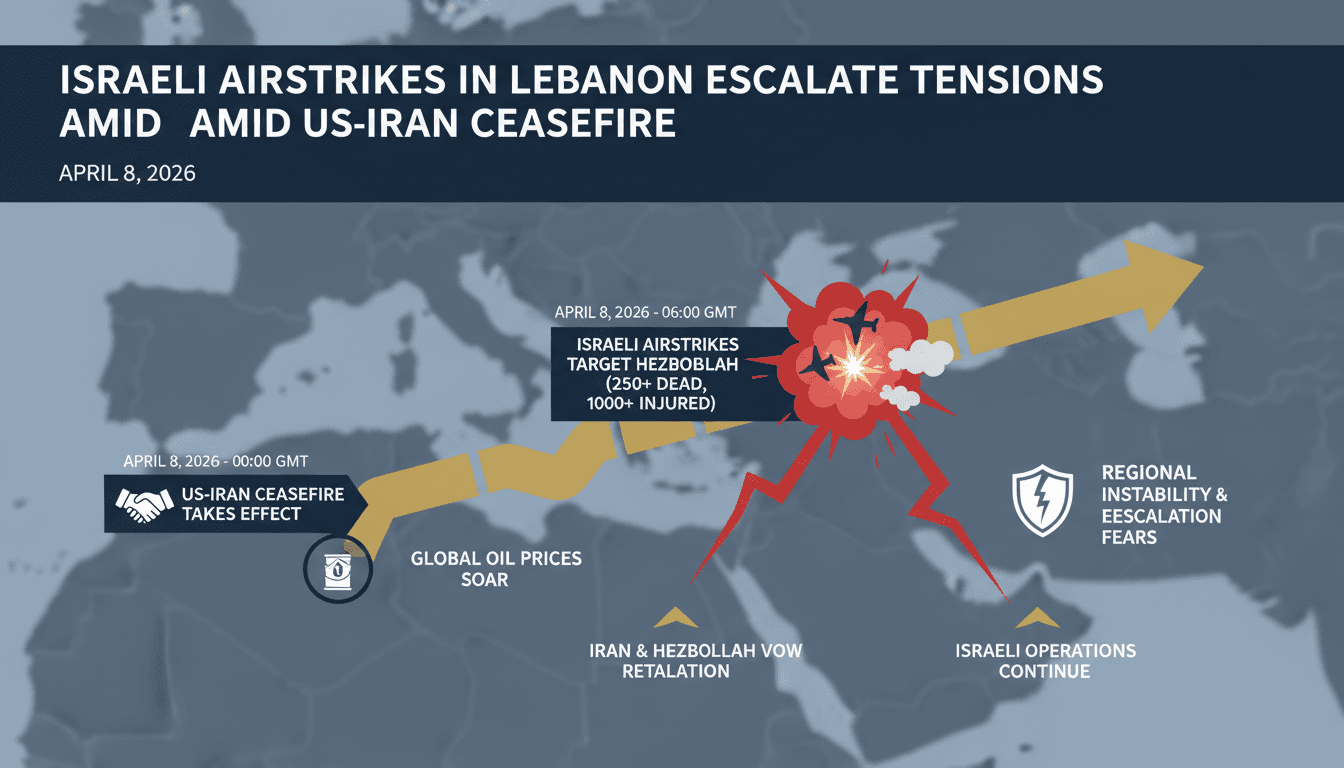
Here's what it means for you.
The escalation in the Middle East could impact global oil prices and market stability, affecting your investments and economic outlook.
Why it matters
The airstrikes threaten to unravel a fragile ceasefire, potentially destabilizing oil markets and geopolitical relations.
What happened (in 30 seconds)
- Israel launched over 100 airstrikes across Lebanon targeting Hezbollah, killing at least 250 people and wounding over 1,000.
- The strikes occurred hours after a US-brokered ceasefire between the US and Iran took effect, raising questions about its applicability to Hezbollah.
- Iran condemned the attacks as a violation of the ceasefire, threatening retaliation while Hezbollah resumed rocket fire on northern Israel.
The context you actually need
- The conflict escalated following coordinated US-Israeli attacks on Iran, which led to Iranian retaliation and increased regional tensions.
- The recent ceasefire was brokered by Pakistan, aiming to halt direct attacks and allow safe passage through the Strait of Hormuz, but excluded Israel-Hezbollah fighting.
- Oil prices surged above $118 per barrel earlier in the conflict, with the current strikes likely to exacerbate volatility in global oil markets.
What's really happening
On April 8, 2026, the United States and Iran announced a two-week ceasefire, a critical step aimed at reducing hostilities and allowing for safe navigation through the Strait of Hormuz. This ceasefire was a response to escalating tensions that began on February 28, 2026, when the US and Israel launched coordinated attacks on Iran. The Iranian response included a blockade of the Strait of Hormuz and strikes on Gulf oil facilities, which significantly impacted global oil supply and prices.
However, just hours after the ceasefire was declared, Israel executed a series of airstrikes targeting Hezbollah positions in Lebanon. This marked the deadliest single-day incident in the ongoing conflict, killing at least 250 individuals, including key military figures like Hezbollah commander Ali Yusuf Harshi. The strikes were concentrated in Beirut and southern Lebanon, areas known for their strategic significance in the Iran-Hezbollah alliance.
The immediate aftermath saw Iran condemning the airstrikes as a blatant violation of the ceasefire, asserting that it encompassed its allies within the 'Resistance Axis,' which includes Hezbollah. Iranian officials, including President Masoud Pezeshkian, threatened "strong responses," indicating a potential escalation in hostilities. Meanwhile, Hezbollah resumed rocket fire into northern Israel, signaling a breakdown in the ceasefire's effectiveness.
The geopolitical implications are substantial. The airstrikes have not only strained US-Iran relations but also raised concerns among Gulf states about Iranian accountability for prior damages. Oil prices, which had seen a slight relief rally following the ceasefire announcement, reversed course and climbed back to $98 per barrel Brent, reflecting market anxiety over the renewed conflict.
The situation remains fluid, with US President Trump warning of further escalation if Iran does not comply with the ceasefire terms. The upcoming talks scheduled for April 12 in Islamabad will be critical in determining whether this fragile truce can be salvaged or if the region will plunge deeper into conflict.
Who feels it first (and how)
- Investors in oil markets: Increased volatility could affect oil prices and investment strategies.
- Businesses reliant on stable Middle Eastern relations: Companies operating in or trading with the region may face disruptions.
- Local populations in Lebanon and Israel: Civilians are directly impacted by the violence and instability, leading to humanitarian concerns.
What to watch next
- US-Iran talks on April 12: The outcomes could either stabilize or further destabilize the region, impacting global markets.
- Hezbollah's military response: Any escalation in rocket fire or military actions could lead to wider conflict and further casualties.
- Oil price fluctuations: Watch for changes in Brent crude prices as they reflect market reactions to ongoing tensions and conflict developments.
The airstrikes have killed at least 250 people and wounded over 1,000.
Oil prices will remain volatile as markets react to the ongoing conflict and geopolitical tensions.
The long-term implications of the ceasefire's breakdown on US-Iran relations and regional stability.
Frequently Asked Questions
- Why it matters?
- The airstrikes threaten to unravel a fragile ceasefire, potentially destabilizing oil markets and geopolitical relations.
- What happened (in 30 seconds)?
- Israel launched over 100 airstrikes across Lebanon targeting Hezbollah, killing at least 250 people and wounding over 1,000. The strikes occurred hours after a US-brokered ceasefire between the US and Iran took effect, raising questions about its applicability to Hezbollah. Iran condemned the attacks as a violation of the ceasefire, threatening retaliation while Hezbollah resumed rocket fire on northern Israel.
- What's really happening?
- On April 8, 2026, the United States and Iran announced a two-week ceasefire, a critical step aimed at reducing hostilities and allowing for safe navigation through the Strait of Hormuz. This ceasefire was a response to escalating tensions that began on February 28, 2026, when the US and Israel launched coordinated attacks on Iran. The Iranian response included a blockade of the Strait of Hormuz and strikes on Gulf oil facilities, which significantly impacted global oil supply and prices. Howeve
- Who feels it first (and how)?
- Investors in oil markets: Increased volatility could affect oil prices and investment strategies. Businesses reliant on stable Middle Eastern relations: Companies operating in or trading with the region may face disruptions. Local populations in Lebanon and Israel: Civilians are directly impacted by the violence and instability, leading to humanitarian concerns.
- What to watch next?
- US-Iran talks on April 12: The outcomes could either stabilize or further destabilize the region, impacting global markets. Hezbollah's military response: Any escalation in rocket fire or military actions could lead to wider conflict and further casualties. Oil price fluctuations: Watch for changes in Brent crude prices as they reflect market reactions to ongoing tensions and conflict developments.
Focused political reporting and governmental affairs.
"NBC News is a mainstream media outlet known for comprehensive national and international news coverage with a centrist to slightly left-leaning editorial tone."
— A47 Editor
New Strikes in Middle East Threaten Fragile US-Iran Ceasefire
Israel has intensified its military operations against Hezbollah in Lebanon, launching powerful airstrikes that have reportedly killed at least 250 people, according to Lebanon's Ministry of Health. This escalation follows a recently declared ceasefi...
Global news coverage with extensive reporting on Middle Eastern conflicts and geopolitics.
"Al Jazeera is a Qatar-based broadcaster known for wide regional coverage and alternative perspectives."
— A47 Editor
Why Israel’s attacks on Lebanon could cripple US-Iran ceasefire
Israel has intensified its military operations in Lebanon, launching extensive airstrikes that have resulted in significant casualties and widespread panic among civilians. This escalation follows a ceasefire agreement between the United States and I...
Comprehensive coverage of Middle Eastern and global issues.
"Al Jazeera is a prominent voice from the Global South, especially the Middle East, with an emphasis on underreported stories."
— A47 Editor
Why Israel’s attacks on Lebanon could cripple US-Iran ceasefire
Israel has intensified its military operations in Lebanon, launching extensive airstrikes that have resulted in significant casualties and widespread panic among civilians. This escalation follows a ceasefire agreement between the United States and I...
English-language reporting on Saudi politics, policy, and society.
"Saudi Gazette reflects mainstream Saudi institutional perspectives."
— A47 Editor
Israel launches fresh strikes on Lebanon further straining Iran ceasefire
Israel has intensified its military operations in Lebanon, conducting airstrikes that resulted in at least 17 fatalities and numerous injuries, further complicating the fragile ceasefire between Iran and the United States. The strikes targeted variou...