
Israel Launches Major Airstrikes on Hezbollah in Lebanon Following US-Iran Ceasefire Announcement
Here's what it means for you.
Rising tensions in the Middle East could lead to increased fuel prices and economic uncertainty, impacting your cost of living.
Why it matters
The escalation of conflict in Lebanon threatens regional stability and could disrupt global oil markets.
What happened (in 30 seconds)
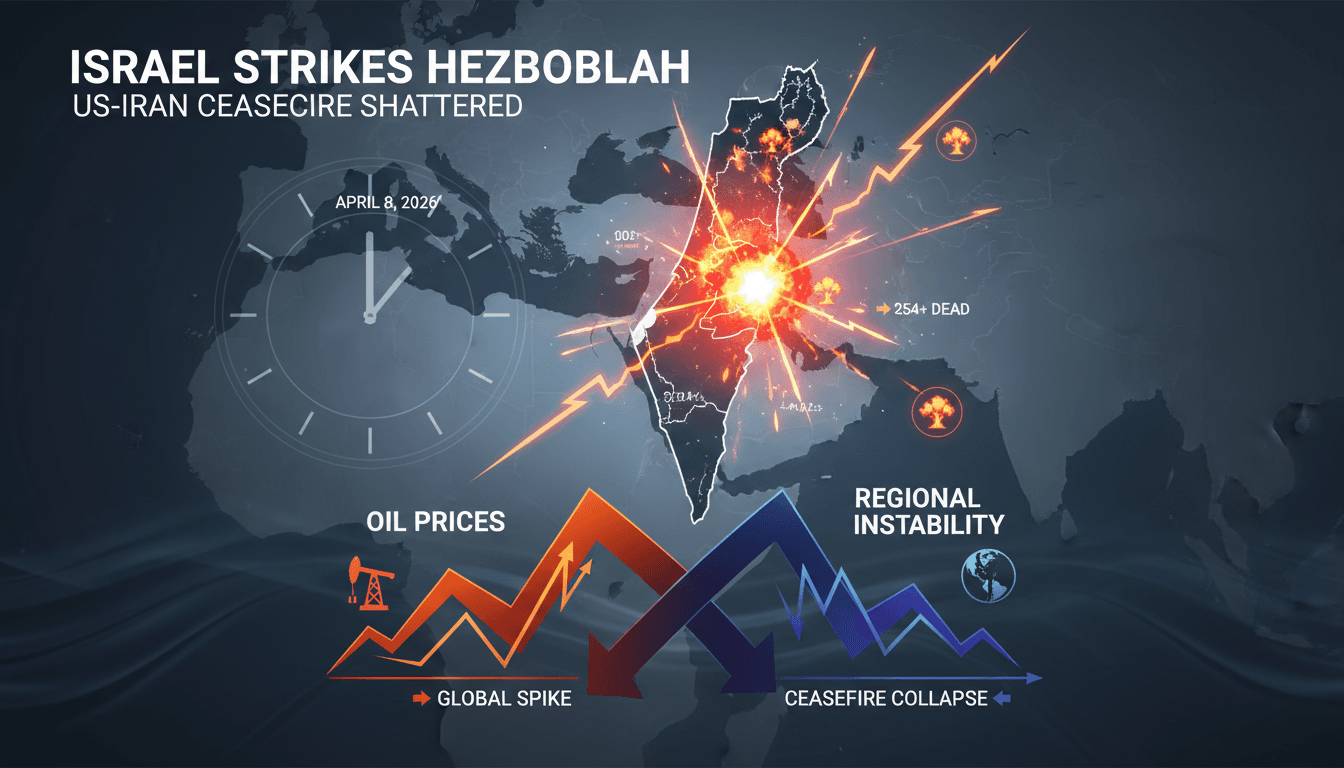
- On April 8, 2026, Israel launched over 100 airstrikes in Lebanon, targeting Hezbollah positions and resulting in at least 254 deaths.
- Critics allege that Prime Minister Netanyahu aimed to undermine a newly announced US-Iran ceasefire for political gain.
- Iran responded by partially closing the Strait of Hormuz, restricting shipping and raising concerns over global oil supply.
The context you actually need
- The 2026 Lebanon war escalated following US and Israeli strikes on Iran, including the assassination of Supreme Leader Ali Khamenei, which reignited Hezbollah's rocket attacks on Israel.
- A US-Iran ceasefire was brokered by Pakistan on the same day as the airstrikes, but Israel maintained that it did not apply to its operations against Hezbollah.
- International condemnation followed the strikes, with calls for renewed negotiations and warnings of a potential collapse of the ceasefire.
What's really happening
The airstrikes on April 8, 2026, represent a significant escalation in the ongoing Israel-Hezbollah conflict, which has roots in decades of geopolitical tensions in the region. Following the assassination of Iran's Supreme Leader, Hezbollah resumed its attacks on Israel, prompting a fierce military response from the Israeli Defense Forces (IDF). The strikes targeted over 100 locations in Lebanon, including command centers and weapon depots, which Israel claims were critical to Hezbollah's operational capabilities.
Critics, including former Israeli officials and opposition leaders, argue that Netanyahu's actions are politically motivated, aimed at bolstering his domestic standing amid rising discontent. The timing of the airstrikes—just hours after the announcement of a US-Iran ceasefire—has led to accusations of deliberate sabotage. This perception is compounded by the fact that Israel has consistently maintained that any ceasefire agreements do not apply to its conflict with Hezbollah, thereby justifying continued military operations.
The aftermath of the strikes has been severe. With 254 reported deaths, including civilians, the humanitarian impact is significant. Lebanon declared a national day of mourning, and its government is now seeking US mediation to include Lebanon in the ceasefire discussions. Meanwhile, Iran's response has been to threaten the abandonment of the truce and to impose restrictions on shipping through the Strait of Hormuz, a critical chokepoint for global oil transport. This move has already led to a spike in oil prices and heightened tensions in international markets.
The situation is further complicated by the broader geopolitical landscape, where the US, Israel, and Iran are engaged in a delicate balancing act. The potential for a complete breakdown of the ceasefire could lead to a renewed cycle of violence, not only affecting Lebanon but also impacting global oil supply chains and economic stability in oil-dependent regions like Dubai.
Who feels it first (and how)
- Residents of Dubai: Increased fuel prices and potential supply chain disruptions due to oil market volatility.
- Middle Eastern governments: Heightened security concerns and potential for increased military spending.
- Global investors: Fluctuations in oil prices could impact stock markets and investment strategies.
What to watch next
- Oil price fluctuations: Monitoring changes in oil prices will indicate the economic impact of the conflict and Iran's actions in the Strait of Hormuz.
- International diplomatic efforts: Watch for any new negotiations or interventions from global powers aimed at stabilizing the ceasefire.
- Hezbollah's military response: Any escalation in Hezbollah's retaliatory actions could further destabilize the region and impact global markets.
The airstrikes resulted in significant casualties and international condemnation.
Oil prices will continue to be volatile as tensions rise in the region.
The long-term implications for the US-Iran ceasefire and regional stability remain uncertain.
Frequently Asked Questions
- Why it matters?
- The escalation of conflict in Lebanon threatens regional stability and could disrupt global oil markets.
- What happened (in 30 seconds)?
- On April 8, 2026, Israel launched over 100 airstrikes in Lebanon, targeting Hezbollah positions and resulting in at least 254 deaths. Critics allege that Prime Minister Netanyahu aimed to undermine a newly announced US-Iran ceasefire for political gain. Iran responded by partially closing the Strait of Hormuz, restricting shipping and raising concerns over global oil supply.
- What's really happening?
- The airstrikes on April 8, 2026, represent a significant escalation in the ongoing Israel-Hezbollah conflict, which has roots in decades of geopolitical tensions in the region. Following the assassination of Iran's Supreme Leader, Hezbollah resumed its attacks on Israel, prompting a fierce military response from the Israeli Defense Forces (IDF). The strikes targeted over 100 locations in Lebanon, including command centers and weapon depots, which Israel claims were critical to Hezbollah's operat
- Who feels it first (and how)?
- Residents of Dubai: Increased fuel prices and potential supply chain disruptions due to oil market volatility. Middle Eastern governments: Heightened security concerns and potential for increased military spending. Global investors: Fluctuations in oil prices could impact stock markets and investment strategies.
- What to watch next?
- Oil price fluctuations: Monitoring changes in oil prices will indicate the economic impact of the conflict and Iran's actions in the Strait of Hormuz. International diplomatic efforts: Watch for any new negotiations or interventions from global powers aimed at stabilizing the ceasefire. Hezbollah's military response: Any escalation in Hezbollah's retaliatory actions could further destabilize the region and impact global markets.
Global news coverage with extensive reporting on Middle Eastern conflicts and geopolitics.
"Al Jazeera is a Qatar-based broadcaster known for wide regional coverage and alternative perspectives."
— A47 Editor
Israeli attacks on Lebanon aimed to undermine ceasefire, critics say
Israeli airstrikes on Lebanon have intensified following a ceasefire declaration, resulting in over 250 fatalities and significant civilian displacement. Critics argue that these attacks aim to undermine the fragile peace established between the U.S....
Comprehensive coverage of Middle Eastern and global issues.
"Al Jazeera is a prominent voice from the Global South, especially the Middle East, with an emphasis on underreported stories."
— A47 Editor
Israeli attacks on Lebanon aimed to undermine ceasefire, critics say
Israeli airstrikes on Lebanon have intensified following a ceasefire declaration, resulting in over 250 fatalities and significant civilian displacement. Critics argue that these attacks aim to undermine the fragile peace established between the U.S....
24/7 international news from a French perspective in multiple languages.
"France 24 is viewed as a globally focused outlet with balanced coverage and a European perspective."
— A47 Editor
Lebanon declares day of mourning after over 250 killed in Israeli attacks
Lebanon has declared a national day of mourning following a series of Israeli airstrikes that resulted in over 250 fatalities and more than 1,000 injuries, marking one of the deadliest days in the ongoing conflict. The attacks occurred despite a ceas...
24/7 international news from a French perspective in multiple languages.
"France 24 is viewed as a globally focused outlet with balanced coverage and a European perspective."
— A47 Editor
Israel dismisses calls to add Lebanon to US-Iran ceasefire
Israel has dismissed international calls to extend the recent US-Iran ceasefire to include Lebanon, vowing to continue military strikes against Hezbollah. The Lebanese health ministry reported at least 203 fatalities and 1,000 injuries from the lates...