
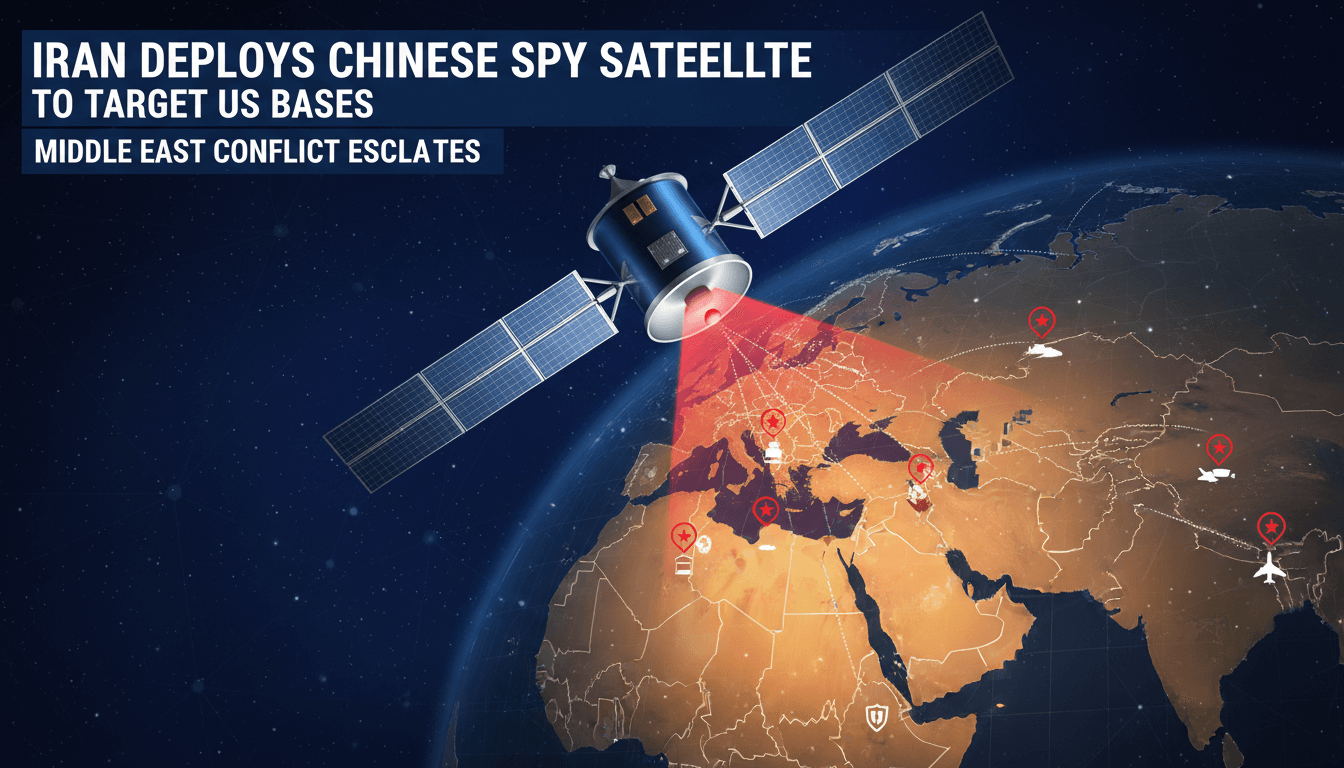
Iran Deploys Chinese Spy Satellite to Target US Bases Amid Ongoing Middle East Conflict
Here's what it means for you.
The geopolitical tensions in the Middle East could impact global energy prices and security dynamics, affecting your business and travel plans.
Why it matters
The deployment of the TEE-01B satellite by Iran signals a significant escalation in surveillance capabilities, directly threatening U.S. military operations in the region.
What happened (in 30 seconds)
- In March 2026, Iran deployed the Chinese-built TEE-01B spy satellite to monitor U.S. military bases during the ongoing Middle East war.
- Leaked documents revealed that Iran acquired the satellite in late 2024, enhancing its intelligence, surveillance, and reconnaissance (ISR) capabilities.
- The satellite captured critical imagery of U.S. bases, including Prince Sultan Air Base, during a period of heightened military activity.
The context you actually need
- Iran's military strategy has increasingly relied on advanced technology due to sanctions limiting its domestic capabilities, prompting a partnership with China.
- The 2026 Middle East war began with U.S. and Israeli strikes on Iranian targets, leading to Iranian retaliatory actions that have escalated regional tensions.
- The TEE-01B's capabilities include high-resolution imagery (0.5 meters), allowing Iran to identify and target U.S. military assets with precision.
What's really happening
In late 2024, the Iranian Revolutionary Guard Corps (IRGC) Aerospace Force acquired the TEE-01B satellite from China's Earth Eye Co., marking a pivotal moment in Iran's military capabilities. This acquisition was driven by the need for advanced ISR technology, as Iran faced increasing sanctions that hampered its domestic satellite development. The TEE-01B provides sub-meter resolution imagery, significantly surpassing Iran's indigenous systems, which were limited in their effectiveness.
As tensions escalated in early March 2026, the IRGC utilized the satellite to gather intelligence on U.S. military bases, including Prince Sultan Air Base in Saudi Arabia and the U.S. Fifth Fleet in Bahrain. The satellite's operational capabilities allowed for real-time surveillance, capturing pre- and post-strike imagery during Iranian missile and drone attacks. This intelligence-gathering effort was not only strategic but also tactical, enabling Iran to refine its targeting processes and enhance the effectiveness of its military operations.
The implications of this development extend beyond immediate military concerns. The partnership between Iran and China reflects a broader geopolitical shift, where nations facing Western sanctions are increasingly turning to each other for technological and military support. This relationship could embolden Iran, potentially leading to further destabilization in the region and increased risks for U.S. forces stationed there.
Moreover, the satellite's deployment has raised alarms among U.S. allies in the Gulf, prompting them to reconsider their security postures. The UAE, for instance, has already begun enhancing its air defenses in response to perceived threats from Iranian capabilities. This situation creates a ripple effect, influencing regional security dynamics and energy markets, particularly as oil prices have surged due to the ongoing conflict.
The U.S. response has been cautious, with officials declining to comment on the specifics of the satellite's deployment. However, the U.S. Treasury has warned of potential secondary sanctions on Chinese entities involved in the satellite's operation, indicating a recognition of the broader implications of this partnership.
Who feels it first (and how)
- U.S. military personnel stationed in the Middle East, facing increased risks from Iranian surveillance and potential targeting.
- Energy sector stakeholders, particularly those involved in oil production and distribution, as rising tensions could lead to price volatility.
- Regional allies of the U.S., such as Saudi Arabia and the UAE, who may need to bolster their defenses and reassess their military strategies in light of Iranian capabilities.
What to watch next
- U.S. military responses: Monitor any changes in U.S. military posture in the Middle East, including troop deployments or enhanced defensive measures.
- Energy market fluctuations: Keep an eye on Brent crude prices, which could spike further due to heightened tensions and potential disruptions in oil supply.
- Iran-China relations: Watch for developments in the Iran-China partnership, particularly any new military or technological agreements that could further enhance Iran's capabilities.
Iran acquired the TEE-01B satellite from China and deployed it for military surveillance.
The U.S. and its allies will increase military readiness in the region in response to the satellite's capabilities.
The long-term impact on U.S.-Iran relations and the potential for further escalation in the Middle East conflict.
Frequently Asked Questions
- Why it matters?
- The deployment of the TEE-01B satellite by Iran signals a significant escalation in surveillance capabilities, directly threatening U.S. military operations in the region.
- What happened (in 30 seconds)?
- In March 2026, Iran deployed the Chinese-built TEE-01B spy satellite to monitor U.S. military bases during the ongoing Middle East war. Leaked documents revealed that Iran acquired the satellite in late 2024, enhancing its intelligence, surveillance, and reconnaissance (ISR) capabilities. The satellite captured critical imagery of U.S. bases, including Prince Sultan Air Base, during a period of heightened military activity.
- What's really happening?
- In late 2024, the Iranian Revolutionary Guard Corps (IRGC) Aerospace Force acquired the TEE-01B satellite from China's Earth Eye Co., marking a pivotal moment in Iran's military capabilities. This acquisition was driven by the need for advanced ISR technology, as Iran faced increasing sanctions that hampered its domestic satellite development. The TEE-01B provides sub-meter resolution imagery, significantly surpassing Iran's indigenous systems, which were limited in their effectiveness. As tens
- Who feels it first (and how)?
- U.S. military personnel stationed in the Middle East, facing increased risks from Iranian surveillance and potential targeting. Energy sector stakeholders, particularly those involved in oil production and distribution, as rising tensions could lead to price volatility. Regional allies of the U.S., such as Saudi Arabia and the UAE, who may need to bolster their defenses and reassess their military strategies in light of Iranian capabilities.
- What to watch next?
- U.S. military responses: Monitor any changes in U.S. military posture in the Middle East, including troop deployments or enhanced defensive measures. Energy market fluctuations: Keep an eye on Brent crude prices, which could spike further due to heightened tensions and potential disruptions in oil supply. Iran-China relations: Watch for developments in the Iran-China partnership, particularly any new military or technological agreements that could further enhance Iran's capabilities.
Arabic-language UAE newspaper coverage focused on domestic affairs, public institutions, business, society, and regional developments.
"Al Khaleej coverage generally reflects a mainstream UAE editorial lens with strong attention to public affairs, institutions, and regional developments."
— A47 Editor
فاينانشيال تايمز: إيران استخدمت قمر تجسس صينياً لاستهداف قواعد أمريكية
The Financial Times reported on Wednesday that Iran has secretly utilized a Chinese spy satellite to target American military bases. This revelation raises concerns about the extent of Iranian surveillance capabilities and its implications for U.S. n...
Pan-Arab news coverage spanning politics, business, sports, and regional affairs.
"Asharq Al-Awsat reflects a broad Arab editorial perspective with strong attention to regional geopolitics."
— A47 Editor
تقرير: إيران استخدمت قمر تجسس صينياً لاستهداف قواعد أميركية
A report by the Financial Times reveals that Iran has secretly utilized a Chinese spy satellite to enhance its capabilities in targeting U.S. military bases. This development indicates a significant advancement in Iran's surveillance and military str...
Arabic-language coverage of international news and geopolitics.
"RT Arabic is a Russian state-funded outlet often criticized for promoting Kremlin-aligned narratives."
— A47 Editor
"فاينانشال تايمز": إيران استخدمت قمرا صناعيا صينيا لاستهداف القواعد الأمريكية
According to the Financial Times, Iran's Revolutionary Guard has made a significant leap in its offensive capabilities by launching a Chinese-made spy satellite, which has been used to coordinate attacks on American bases. This development highlights...
Pan-Arab political news and analysis.
"Al-Quds Al-Arabi is a London-based Arabic newspaper known for political coverage."
— A47 Editor
عاجل.. فايننشال تايمز: إيران استخدمت قمر تجسس صينيا لاستهداف قواعد أمريكية
According to the Financial Times, Iran has utilized a Chinese spy satellite to target American military bases. This development raises concerns about the increasing military cooperation between Iran and China, particularly in the realm of surveillanc...