
Double blockade by US and Iran drastically reduces commercial shipping in Strait of Hormuz
Here's what it means for you.
If you rely on global oil markets or shipping logistics, the ongoing blockade could significantly impact prices and availability.
Why it matters
The Strait of Hormuz is a critical artery for global oil trade, and disruptions here can ripple through energy markets worldwide.
What happened (in 30 seconds)
- April 14, 2026: The United States imposed a blockade on Iranian ports, compounding Iran's existing restrictions on commercial shipping.
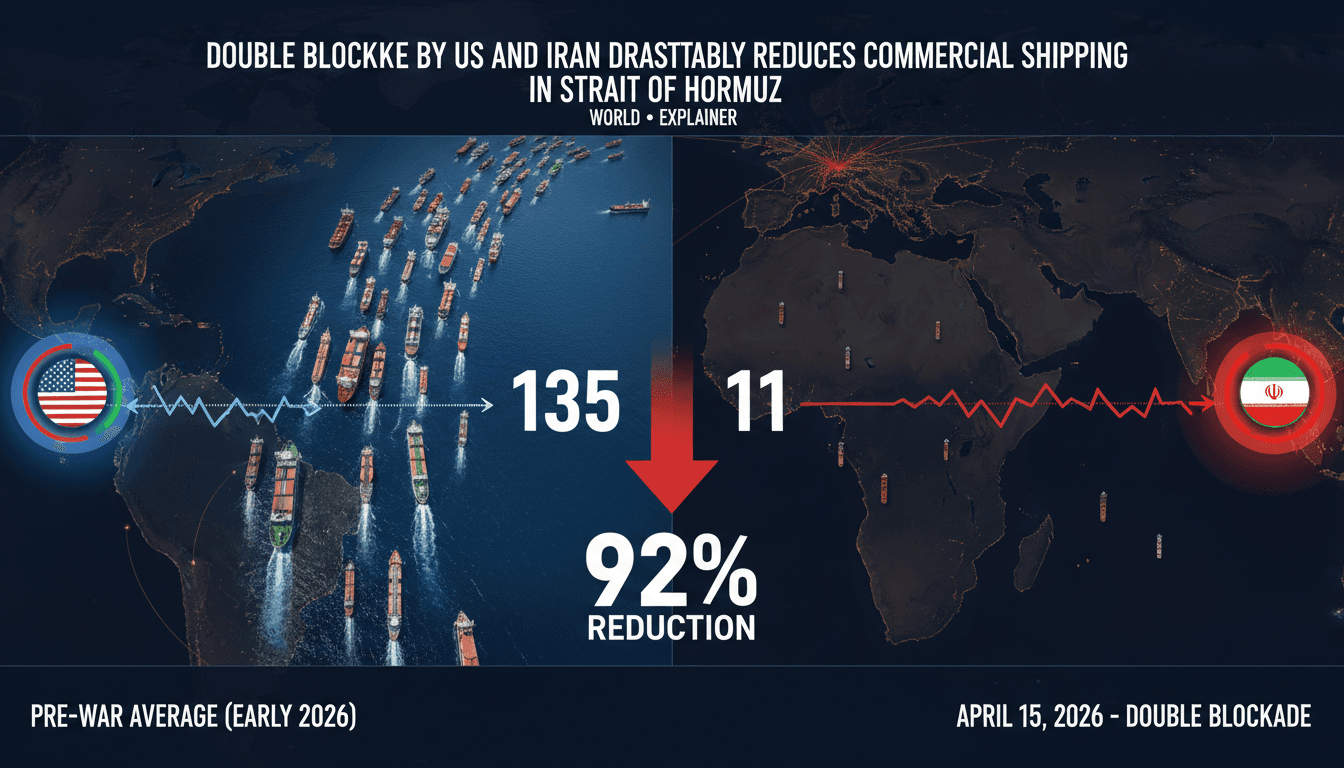
- April 15, 2026: Only 11 commercial vessels transited the strait, a stark drop from the pre-war average of 135 daily.
- Ongoing Conflict: The blockade follows a series of escalations in the US-Iran conflict that began with airstrikes on February 28, 2026.
The context you actually need
- Critical Chokepoint: The Strait of Hormuz accounts for 20% of global oil trade, making it vital for energy security.
- Escalating Tensions: The conflict escalated after the assassination of Iran's Supreme Leader, leading to Iranian military actions against shipping.
- Economic Impact: Oil prices surged by 31% since the conflict began, exacerbating global shortages and increasing costs for consumers.
What's really happening
The double blockade of the Strait of Hormuz represents a significant escalation in the ongoing US-Iran conflict, which has roots in geopolitical tensions and energy security concerns. The US initiated its blockade in response to Iran's aggressive maritime actions, which included attacks on merchant vessels and the laying of mines in the strait. This blockade is not merely a military maneuver; it is a strategic effort to exert economic pressure on Iran while simultaneously safeguarding global oil supply routes.
The Strait of Hormuz is a narrow passage that connects the Persian Gulf to the Arabian Sea, and it is the only maritime route for oil exports from several Gulf countries, including Saudi Arabia, the UAE, and Kuwait. With 20% of the world's oil passing through this chokepoint, any disruption can lead to significant fluctuations in global oil prices. The blockade has already resulted in a dramatic decrease in commercial shipping, with only 11 vessels reported transiting on April 15, compared to a pre-war average of 135. This represents a staggering 92% reduction in traffic, highlighting the blockade's immediate impact on global trade.
The economic implications are profound. As oil prices have surged by 31% since the conflict began, consumers and businesses worldwide are feeling the pinch. The UAE, in particular, faces heightened risks due to its reliance on imports for food and fertilizer, with 30% of global urea passing through the strait. Delays in shipping could threaten food security and elevate costs for consumers in the region.
Moreover, the blockade has led to increased insurance premiums for shipping firms, which are now facing high war-risk rates. This has prompted many companies to suspend operations in the region, further straining logistics and supply chains. Analysts predict that normalization of shipping traffic will only occur after diplomatic resolutions are reached, but the complexities of enforcement and spoofing issues complicate this process.
The situation remains fluid, with both the US and Iran maintaining aggressive postures. The US Navy's enforcement of the blockade aims to deter Iranian aggression while protecting commercial shipping, but it also risks further escalation. As the conflict continues, the potential for miscalculations or unintended confrontations remains high, which could lead to broader regional instability.
Who feels it first (and how)
- Shipping Companies: Facing increased operational costs and suspended routes, leading to financial strain.
- Oil Producers: Higher prices and reduced export volumes impact revenue and market stability.
- Consumers: Rising energy costs translate to higher prices for goods and services globally.
- UAE Residents: Increased food prices and potential shortages due to disrupted imports.
What to watch next
- Diplomatic Efforts: Watch for any peace talks or negotiations, particularly those involving Pakistan, as they could signal a de-escalation.
- Oil Price Trends: Monitor fluctuations in oil prices, which will indicate market reactions to the blockade and potential supply chain adjustments.
- Shipping Traffic Resumption: Look for signs of increased commercial shipping traffic through the strait, which would suggest a return to stability.
The blockade has reduced commercial shipping to 8% of pre-war levels.
Continued high oil prices and shipping disruptions will persist until a diplomatic resolution is achieved.
The long-term implications for US-Iran relations and regional stability remain uncertain.
Frequently Asked Questions
- Why it matters?
- The Strait of Hormuz is a critical artery for global oil trade, and disruptions here can ripple through energy markets worldwide.
- What happened (in 30 seconds)?
- April 14, 2026: The United States imposed a blockade on Iranian ports, compounding Iran's existing restrictions on commercial shipping. April 15, 2026: Only 11 commercial vessels transited the strait, a stark drop from the pre-war average of 135 daily. Ongoing Conflict: The blockade follows a series of escalations in the US-Iran conflict that began with airstrikes on February 28, 2026.
- What's really happening?
- The double blockade of the Strait of Hormuz represents a significant escalation in the ongoing US-Iran conflict, which has roots in geopolitical tensions and energy security concerns. The US initiated its blockade in response to Iran's aggressive maritime actions, which included attacks on merchant vessels and the laying of mines in the strait. This blockade is not merely a military maneuver; it is a strategic effort to exert economic pressure on Iran while simultaneously safeguarding global oil
- Who feels it first (and how)?
- Shipping Companies: Facing increased operational costs and suspended routes, leading to financial strain. Oil Producers: Higher prices and reduced export volumes impact revenue and market stability. Consumers: Rising energy costs translate to higher prices for goods and services globally. UAE Residents: Increased food prices and potential shortages due to disrupted imports.
- What to watch next?
- Diplomatic Efforts: Watch for any peace talks or negotiations, particularly those involving Pakistan, as they could signal a de-escalation. Oil Price Trends: Monitor fluctuations in oil prices, which will indicate market reactions to the blockade and potential supply chain adjustments. Shipping Traffic Resumption: Look for signs of increased commercial shipping traffic through the strait, which would suggest a return to stability.
Global markets, investing, and macroeconomics from a premier financial newsroom.
"Bloomberg is respected for in-depth financial reporting and data-driven analysis."
— A47 Editor
Double Blockade Keeps Hormuz Shipping at Fraction of Peace Level
Shipping through the Strait of Hormuz remains significantly below peacetime levels due to a double blockade that has severely restricted vessel movements. This blockade follows the announcement by President Donald Trump to impose restrictions on all ...
Breaking news, politics, business, and entertainment from the U.S. and around the world.
"The New York Post is a tabloid-format newspaper known for its sensationalist headlines and conservative-leaning editorial tone."
— A47 Editor
Why your upcoming cruise vacation is on the line amid Strait of Hormuz blockade
The ongoing blockade of the Strait of Hormuz, ordered by President Trump amid escalating tensions with Iran, has significantly impacted cruise ship itineraries and increased travel costs due to rising crude oil prices. This blockade follows a breakdo...
Regional coverage and analysis focused on politics, diplomacy, and business across the Middle East.
"Al-Monitor is known for analytical reporting on Middle East politics and policy developments."
— A47 Editor
US blockade of Iran ports threatens already crippled oil supply
The United States has initiated a blockade of Iranian ports in the Strait of Hormuz, effective April 13, 2026, following the collapse of peace negotiations that lasted 21 hours. This blockade is expected to significantly disrupt maritime traffic and ...