
Maine Legislature Passes First Statewide Moratorium on Large Data Centers
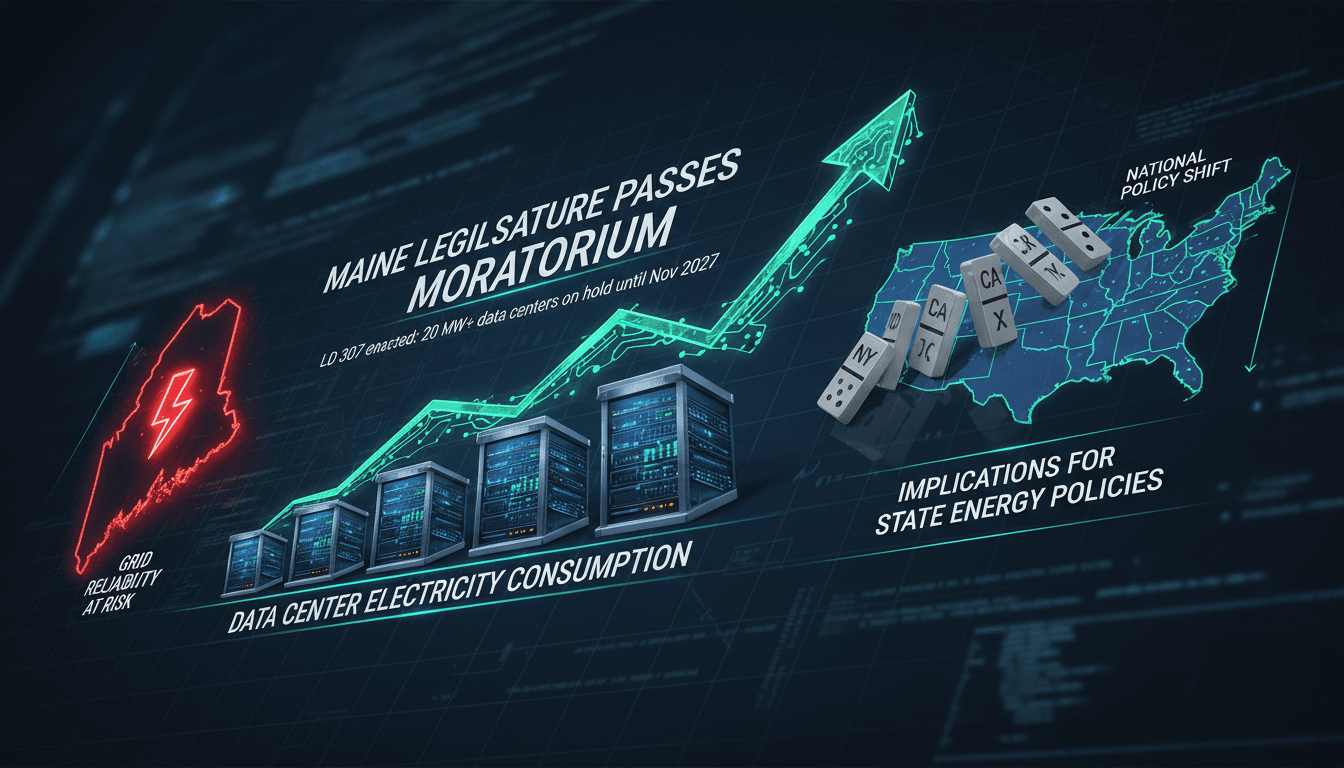
Here's what it means for you.
If you rely on data-intensive services, this moratorium could impact service availability and costs in the near future.
Why it matters
This legislation sets a precedent for how states manage the growing energy demands of data centers amid rising AI applications.
What happened (in 30 seconds)
- On April 14, 2026, Maine lawmakers passed LD 307, imposing a moratorium on new data centers requiring 20 megawatts or more of power until November 2027.
- The bill establishes a Data Center Coordination Council to assess impacts on the electric grid, utility rates, environment, and economy.
- Governor Janet Mills has expressed conditional support for the moratorium, pending exemptions for certain projects.
The context you actually need
- Data centers are projected to consume one-ninth of total U.S. electricity by 2028, raising concerns about grid reliability and utility costs.
- Maine's moratorium follows local opposition to proposed data centers in Jay and Sanford, reflecting broader national scrutiny of energy-intensive infrastructure.
- Eleven other states are considering similar restrictions as utilities plan $1.4 trillion in grid upgrades to accommodate surging demand.
What's really happening
The passage of LD 307 marks a significant shift in how states are beginning to regulate the burgeoning data center industry, particularly in light of the escalating energy demands driven by artificial intelligence applications. As AI technologies proliferate, the need for robust data infrastructure has surged, leading to increased electricity consumption that threatens grid stability. Maine's moratorium is a proactive measure aimed at addressing these challenges before they escalate further.
The legislation establishes a Data Center Coordination Council, which will include representatives from various sectors, including state agencies, utilities, labor, business, environmental groups, and Wabanaki representatives. This council is tasked with evaluating the impacts of large data centers on the electric grid, utility rates, and the environment, with recommendations due by February 2027. This collaborative approach aims to ensure that all stakeholders have a voice in shaping the future of data infrastructure in Maine.
The moratorium is particularly relevant given that data centers are projected to account for a significant share of U.S. electricity consumption in the coming years. As the demand for AI-driven services grows, so too does the pressure on existing energy resources. Maine's decision to impose a temporary freeze on large data centers reflects a growing recognition of the need for sustainable energy practices and the potential environmental risks associated with high water usage for cooling these facilities.
While proponents of the moratorium argue that it is a necessary precautionary measure against unchecked AI infrastructure, opponents warn of the potential economic fallout. The freeze could hinder job creation and tax revenue in areas that are already economically distressed, particularly in mill towns that have struggled to adapt to changing economic conditions. The debate highlights the delicate balance between fostering technological growth and ensuring environmental sustainability and economic stability.
As the bill awaits Governor Mills' signature, her conditional support for exemptions—particularly for the 82-megawatt Jay project—indicates the complexities involved in navigating this issue. The outcome will likely set a precedent for how other states approach similar challenges in the future.
Who feels it first (and how)
- Local businesses: Potential delays in infrastructure development could affect service availability and costs.
- Utility companies: Increased scrutiny on energy consumption may lead to higher operational costs and regulatory challenges.
- Environmental groups: Support for the moratorium aligns with their advocacy for sustainable energy practices.
- Residents: Households may face rising utility bills if energy demands from existing data centers continue to grow without adequate management.
What to watch next
- Governor Mills' decision: Her final stance on the moratorium will influence future data center projects and regulatory frameworks in Maine.
- Impact assessments from the Data Center Coordination Council: Recommendations could shape energy policy and infrastructure development in the state.
- Legislative actions in other states: Watch for similar moratoriums or regulations as other states respond to the challenges posed by data centers.
Maine has enacted the first statewide moratorium on large data centers in the U.S.
Other states will consider similar measures as they grapple with energy demands from data centers.
The long-term economic impact on local communities and the data center industry remains to be seen.
Frequently Asked Questions
- Why it matters?
- This legislation sets a precedent for how states manage the growing energy demands of data centers amid rising AI applications.
- What happened (in 30 seconds)?
- On April 14, 2026, Maine lawmakers passed LD 307, imposing a moratorium on new data centers requiring 20 megawatts or more of power until November 2027. The bill establishes a Data Center Coordination Council to assess impacts on the electric grid, utility rates, environment, and economy. Governor Janet Mills has expressed conditional support for the moratorium, pending exemptions for certain projects.
- What's really happening?
- The passage of LD 307 marks a significant shift in how states are beginning to regulate the burgeoning data center industry, particularly in light of the escalating energy demands driven by artificial intelligence applications. As AI technologies proliferate, the need for robust data infrastructure has surged, leading to increased electricity consumption that threatens grid stability. Maine's moratorium is a proactive measure aimed at addressing these challenges before they escalate further. Th
- Who feels it first (and how)?
- Local businesses: Potential delays in infrastructure development could affect service availability and costs. Utility companies: Increased scrutiny on energy consumption may lead to higher operational costs and regulatory challenges. Environmental groups: Support for the moratorium aligns with their advocacy for sustainable energy practices. Residents: Households may face rising utility bills if energy demands from existing data centers continue to grow without adequate management.
- What to watch next?
- Governor Mills' decision: Her final stance on the moratorium will influence future data center projects and regulatory frameworks in Maine. Impact assessments from the Data Center Coordination Council: Recommendations could shape energy policy and infrastructure development in the state. Legislative actions in other states: Watch for similar moratoriums or regulations as other states respond to the challenges posed by data centers.
Tech business coverage, major deals, product launches, and Silicon Valley trends.
"WSJ’s tech section offers authoritative reporting on the intersection of technology and business, including exclusive industry analysis."
— A47 Editor
Maine Lawmakers Pass Ban on Large Data Centers
Maine lawmakers have passed a bill that bans the establishment of large data centers consuming over 20 megawatts of power until late 2027. This legislation is now awaiting the approval of Democratic Governor Janet Mills.
Insights and news on social issues, policy, and political movements across the United States.
"The Wall Street Journal is known for its deep political coverage, especially at the intersection of policy, regulation, and social dynamics."
— A47 Editor
Maine lawmakers passed a ban on large data-center construction, making it the first state to enact such a measure as communities around the U.S. deal with fallout from the AI boom
Maine lawmakers have passed a bill that imposes a temporary ban on the construction of large data centers consuming over 20 megawatts of power, effective until late 2027. This legislation is now awaiting the approval of Democratic Governor Janet Mill...
Market-moving headlines impacting equities, bonds, and related risk assets.
"Real-time catalysts and volatility drivers across indices and sectors."
— A47 Editor
Maine legislature approves first US moratorium on big data centers
The Maine legislature has approved the first moratorium on big data centers in the United States, marking a significant regulatory step in the tech industry. This decision reflects growing concerns over the environmental and infrastructural impacts o...