
North Korea Tests Advanced Ballistic Missile and Electromagnetic Weapons
Here's what it means for you.
Increased geopolitical tensions could impact global markets and security dynamics, even if Dubai remains insulated for now.
Why it matters
These developments signal a potential escalation in military posturing that could disrupt regional stability and international trade.
What happened (in 30 seconds)
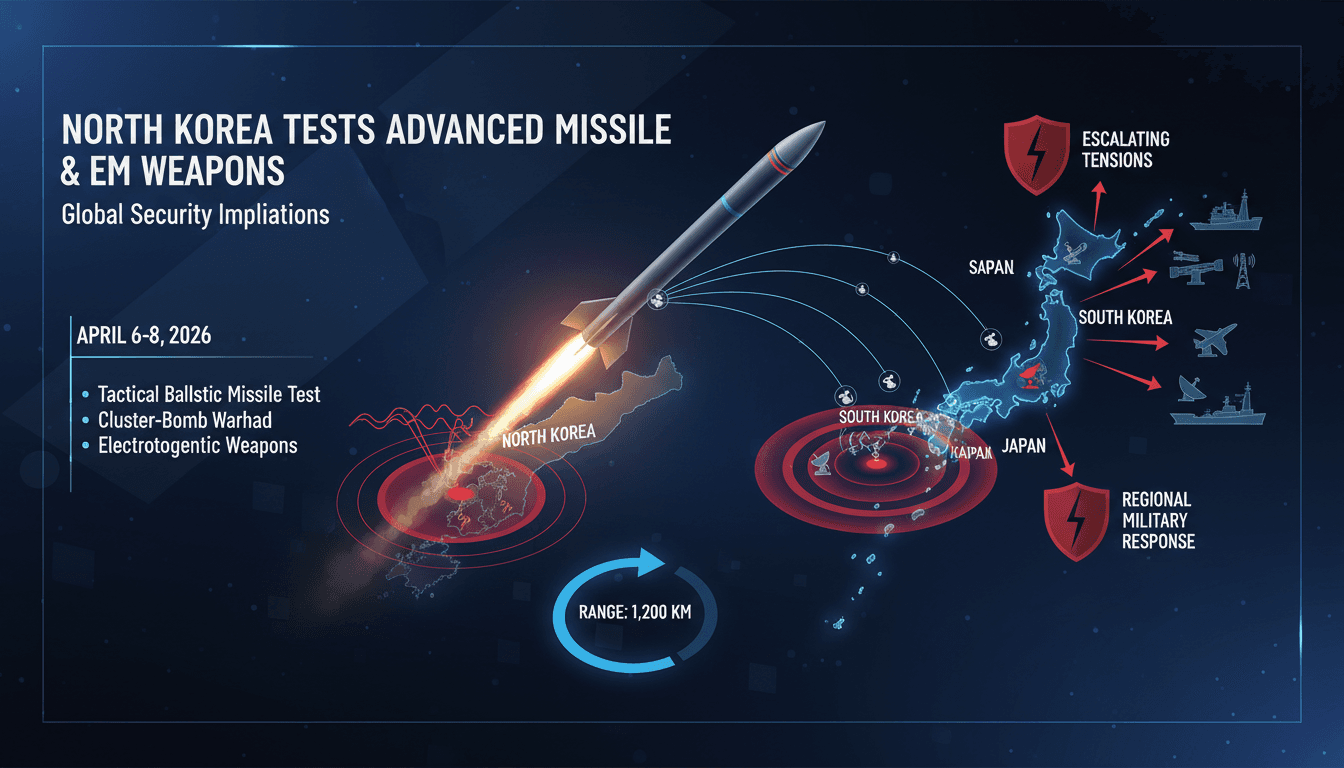
- North Korea conducted tests of a tactical ballistic missile with a cluster-bomb warhead, alongside electromagnetic weapons and anti-aircraft systems, from April 6 to 8, 2026.
- The Hwasongpho-11 Ka missile demonstrated an area of destruction of 7 hectares, showcasing North Korea's advancements in asymmetric warfare capabilities.
- South Korea confirmed the launches and vowed a robust response, emphasizing the heightened military readiness in the region.
The context you actually need
- North Korea's missile program continues to advance despite UN sanctions, reflecting its commitment to military development amid international isolation.
- Recent tensions have been exacerbated by North Korea's designation of South Korea as its 'principal enemy,' drawing tactical insights from global conflicts to enhance its military strategy.
- The tests are part of a broader trend of North Korea leveraging asymmetric warfare techniques, including electronic warfare and infrastructure disruption, to counter superior military forces.
What's really happening
From April 6 to 8, 2026, North Korea's Academy of Defense Science and Missile Administration conducted a series of weapons tests that included the Hwasongpho-11 Ka tactical ballistic missile, equipped with a cluster-bomb warhead capable of covering an area of 7 hectares. This missile is part of a larger strategy to enhance North Korea's asymmetric warfare capabilities, particularly in the face of perceived threats from South Korea and its allies.
The tests also featured an electromagnetic pulse (EMP) system designed to disable electronic devices, carbon-fiber bombs aimed at sabotaging power grids, and a mobile short-range anti-aircraft missile system. These developments are significant as they indicate North Korea's focus on creating weapons that can disrupt critical infrastructure and electronic systems, which are essential for modern military operations.
The timing of these tests is crucial; they come amid escalating tensions on the Korean Peninsula, where North Korea has increasingly viewed South Korea as its primary adversary. This shift in focus has been influenced by North Korea's analysis of recent conflicts, such as those in Ukraine and the Middle East, where asymmetric tactics have proven effective against more powerful adversaries. By adopting similar strategies, North Korea aims to level the playing field against technologically superior forces.
The implications of these advancements are profound. South Korea's Joint Chiefs of Staff confirmed the missile launches and have vowed a robust response, indicating a potential arms race in the region. Analysts have expressed concerns over the threats posed to both military and civilian infrastructure, which could lead to increased military spending and strategic recalibrations among South Korea and its allies, including the United States.
Moreover, the international community is likely to respond with renewed condemnation and potential sanctions, further isolating North Korea but also complicating diplomatic efforts aimed at denuclearization and peace on the peninsula. The tests serve as a reminder of North Korea's defiance of UN sanctions and its commitment to advancing its military capabilities regardless of international pressure.
Who feels it first (and how)
- South Korean military: Increased readiness and potential escalation in defense spending.
- U.S. military and policymakers: Heightened focus on security strategies in the Asia-Pacific region.
- Global markets: Investors may react to increased geopolitical risks, particularly in defense and energy sectors.
- Regional allies: Countries like Japan may feel compelled to enhance their own military capabilities in response.
What to watch next
- International responses: Watch for statements from the U.S. and Japan regarding military cooperation and potential sanctions against North Korea.
- Market reactions: Monitor fluctuations in global oil prices and defense stocks, which may be influenced by rising tensions.
- Military drills: Keep an eye on joint military exercises between South Korea and the U.S., which may be ramped up in response to North Korea's provocations.
North Korea successfully tested a tactical ballistic missile with a cluster-bomb warhead.
Increased military readiness and strategic adjustments from South Korea and its allies.
The immediate international response and its potential impact on diplomatic relations.
Frequently Asked Questions
- Why it matters?
- These developments signal a potential escalation in military posturing that could disrupt regional stability and international trade.
- What happened (in 30 seconds)?
- North Korea conducted tests of a tactical ballistic missile with a cluster-bomb warhead, alongside electromagnetic weapons and anti-aircraft systems, from April 6 to 8, 2026. The Hwasongpho-11 Ka missile demonstrated an area of destruction of 7 hectares, showcasing North Korea's advancements in asymmetric warfare capabilities. South Korea confirmed the launches and vowed a robust response, emphasizing the heightened military readiness in the region.
- What's really happening?
- From April 6 to 8, 2026, North Korea's Academy of Defense Science and Missile Administration conducted a series of weapons tests that included the Hwasongpho-11 Ka tactical ballistic missile, equipped with a cluster-bomb warhead capable of covering an area of 7 hectares. This missile is part of a larger strategy to enhance North Korea's asymmetric warfare capabilities, particularly in the face of perceived threats from South Korea and its allies. The tests also featured an electromagnetic puls
- Who feels it first (and how)?
- South Korean military: Increased readiness and potential escalation in defense spending. U.S. military and policymakers: Heightened focus on security strategies in the Asia-Pacific region. Global markets: Investors may react to increased geopolitical risks, particularly in defense and energy sectors. Regional allies: Countries like Japan may feel compelled to enhance their own military capabilities in response.
- What to watch next?
- International responses: Watch for statements from the U.S. and Japan regarding military cooperation and potential sanctions against North Korea. Market reactions: Monitor fluctuations in global oil prices and defense stocks, which may be influenced by rising tensions. Military drills: Keep an eye on joint military exercises between South Korea and the U.S., which may be ramped up in response to North Korea's provocations.
Arabic-language political and world news coverage for UAE readers.
"Emarat Al Youm world coverage usually presents international developments through a UAE and Arab audience lens."
— A47 Editor
كوريا الشمالية تكشف عن صاروخ بقنابل عنقودية وقدرات حرب إلكترونية كوريا الشمالية تكشف عن صاروخ بقنابل عنقودية وقدرات حرب إلكترونية
North Korea has revealed a new warhead capable of carrying cluster bombs, as reported by the Korean Central News Agency. This announcement follows recent missile tests conducted by the country this week, highlighting advancements in its military capa...
Arabic-language UAE newspaper coverage focused on domestic affairs, public institutions, business, society, and regional developments.
"Al Khaleej coverage generally reflects a mainstream UAE editorial lens with strong attention to public affairs, institutions, and regional developments."
— A47 Editor
كوريا الشمالية تستعرض قوتها بأسلحة كهرومغناطيسية وقنابل عنقودية
North Korea showcased its military capabilities this week by conducting tests involving electromagnetic weapons and cluster munitions, as reported by the Korean Central News Agency on Thursday. These developments highlight the ongoing advancements in...
Pan-Arab news coverage spanning politics, business, sports, and regional affairs.
"Asharq Al-Awsat reflects a broad Arab editorial perspective with strong attention to regional geopolitics."
— A47 Editor
كوريا الشمالية تعلن اختبار صواريخ باليستية ورؤوس حربية عنقودية
North Korea announced that a series of tests conducted this week included various new weapon systems, notably ballistic missiles equipped with cluster munitions. This development highlights the country's ongoing efforts to enhance its military capabi...