
Sudanese Armed Forces Drone Strike Results in Civilian Casualties in North Darfur
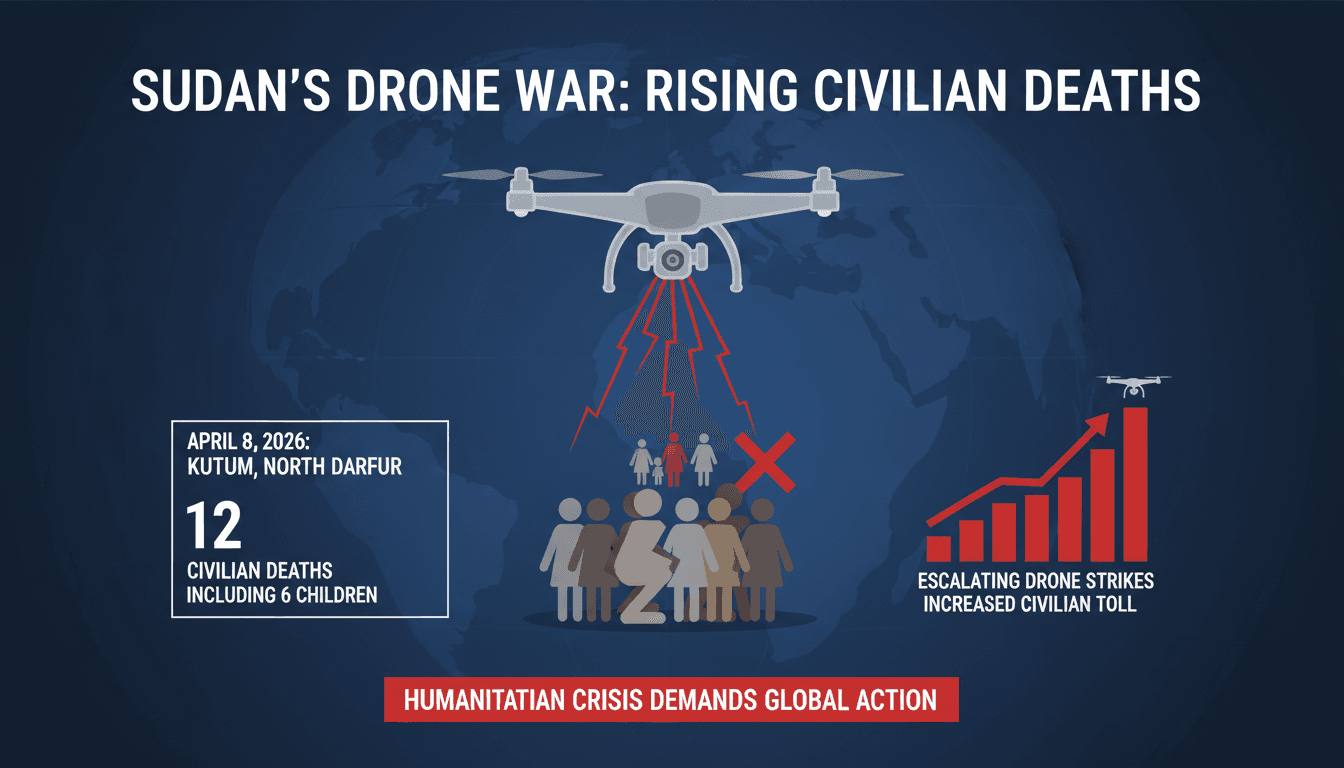
Here's what it means for you.
The ongoing conflict in Sudan and its civilian toll could impact global humanitarian aid and remittance flows.
Why it matters
The rise in drone warfare in conflict zones like Sudan raises urgent questions about civilian safety and international humanitarian standards.
What happened (in 30 seconds)
- On April 8, 2026, a drone strike by the Sudanese Armed Forces killed 12 civilians, including six children, in Kutum, North Darfur.
- The attack targeted a residential area near a girls' school during a wedding celebration, highlighting the indiscriminate nature of drone warfare.
- Local activists and medical sources reported the casualties, emphasizing the increasing civilian death toll amid ongoing conflict between the SAF and RSF.
The context you actually need
- Sudan's civil war has been ongoing since April 2023, with escalating violence between the SAF and RSF, leading to significant civilian casualties.
- Drone warfare has surged since late 2025, resulting in over 500 civilian deaths in 2026 alone, according to UN reports.
- North Darfur remains under RSF control, complicating the humanitarian landscape and increasing the risk for civilians caught in the crossfire.
What's really happening
The drone strike in Kutum is a stark reminder of the brutal realities faced by civilians in conflict zones, particularly in Sudan, where the civil war has intensified since 2023. The Sudanese Armed Forces (SAF), led by Abdel Fattah al-Burhan, and the Rapid Support Forces (RSF), commanded by Mohamed Hamdan Dagalo (Hemedti), have increasingly resorted to drone strikes as a method of warfare. This shift has not only escalated the conflict but has also led to a significant rise in civilian casualties.
The Al-Salama neighborhood, where the strike occurred, is emblematic of the dangers faced by non-combatants in such conflicts. The targeting of residential areas, especially near schools and during community events like weddings, underscores a troubling trend where military objectives overshadow the protection of civilians. Eyewitness accounts and video footage shared on social media have amplified calls for accountability, yet the SAF has not publicly responded to the incident, leaving a vacuum of information and further angering local populations.
The humanitarian implications are profound. As drone warfare becomes more prevalent, the risk to civilians increases exponentially. Humanitarian groups have raised alarms about the need for a cessation of drone strikes, emphasizing that these attacks violate international humanitarian law. The UN and various NGOs are now faced with the challenge of addressing the growing number of civilian casualties while providing aid in a volatile environment.
Moreover, the strike has implications beyond Sudan's borders. The Sudanese diaspora, particularly in places like Dubai, is reacting strongly, with over 100,000 residents expressing their outrage on social media. While there are currently no immediate economic disruptions, the heightened concerns for families back home could affect remittance flows, which are vital for many households in conflict zones.
As the conflict continues, the normalization of drone warfare poses a significant threat not only to the people of Sudan but also to global humanitarian efforts. The international community's response to such incidents will be crucial in shaping future engagements and policies regarding armed conflict and civilian protection.
Who feels it first (and how)
- Civilians in conflict zones: Directly impacted by violence and loss of life.
- Humanitarian organizations: Struggling to provide aid amid increasing risks and casualties.
- Diaspora communities: Experiencing emotional distress and potential financial strain from remittance concerns.
What to watch next
- International humanitarian response: Monitor how global organizations address the rising civilian casualties and whether they push for policy changes regarding drone warfare.
- Local activism: Watch for increased mobilization among Sudanese communities, particularly in diaspora regions, as they advocate for accountability and support for affected families.
- Conflict escalation: Keep an eye on the dynamics between SAF and RSF, as further military actions could lead to more civilian casualties and international scrutiny.
The drone strike resulted in the deaths of 12 civilians, including six children.
The international community will face pressure to respond to the rising civilian toll in Sudan.
The long-term impact on remittances from the Sudanese diaspora due to increased conflict and instability.
Frequently Asked Questions
- Why it matters?
- The rise in drone warfare in conflict zones like Sudan raises urgent questions about civilian safety and international humanitarian standards.
- What happened (in 30 seconds)?
- On April 8, 2026, a drone strike by the Sudanese Armed Forces killed 12 civilians, including six children, in Kutum, North Darfur. The attack targeted a residential area near a girls' school during a wedding celebration, highlighting the indiscriminate nature of drone warfare. Local activists and medical sources reported the casualties, emphasizing the increasing civilian death toll amid ongoing conflict between the SAF and RSF.
- What's really happening?
- The drone strike in Kutum is a stark reminder of the brutal realities faced by civilians in conflict zones, particularly in Sudan, where the civil war has intensified since 2023. The Sudanese Armed Forces (SAF), led by Abdel Fattah al-Burhan, and the Rapid Support Forces (RSF), commanded by Mohamed Hamdan Dagalo (Hemedti), have increasingly resorted to drone strikes as a method of warfare. This shift has not only escalated the conflict but has also led to a significant rise in civilian casualtie
- Who feels it first (and how)?
- Civilians in conflict zones: Directly impacted by violence and loss of life. Humanitarian organizations: Struggling to provide aid amid increasing risks and casualties. Diaspora communities: Experiencing emotional distress and potential financial strain from remittance concerns.
- What to watch next?
- International humanitarian response: Monitor how global organizations address the rising civilian casualties and whether they push for policy changes regarding drone warfare. Local activism: Watch for increased mobilization among Sudanese communities, particularly in diaspora regions, as they advocate for accountability and support for affected families. Conflict escalation: Keep an eye on the dynamics between SAF and RSF, as further military actions could lead to more civilian casualties and in
Arabic-language digital news outlet covering UAE, regional, and international developments with broad general-news coverage.
"Al Ain News coverage typically blends UAE-focused reporting with wider Arab regional and international news."
— A47 Editor
مجزرة جديدة في دارفور.. مسيرات الجيش تقتل 12 مدنيا بينهم ٦ أطفال
A recent drone strike in the city of Kutum, located in North Darfur, Sudan, has resulted in the deaths of 12 civilians, including six children. The attack is attributed to the Rapid Support Forces, who control the area. This incident highlights the o...
Regional and international reporting focused on Middle Eastern politics, diplomacy, and economics.
"Asharq Al-Awsat is a Saudi-owned international newspaper reflecting mainstream Gulf political perspectives."
— A47 Editor
Drone Strike Kills 12, Including Children, in Sudan's Darfur
A recent drone strike in Sudan's Darfur region has resulted in the deaths of 12 individuals, including children, highlighting the ongoing violence and instability in the area. This incident is part of a broader pattern of escalating airstrikes that h...