
Ceasefire in US-Iran War Faces Collapse Amid Israeli Strikes and Iranian Blockade
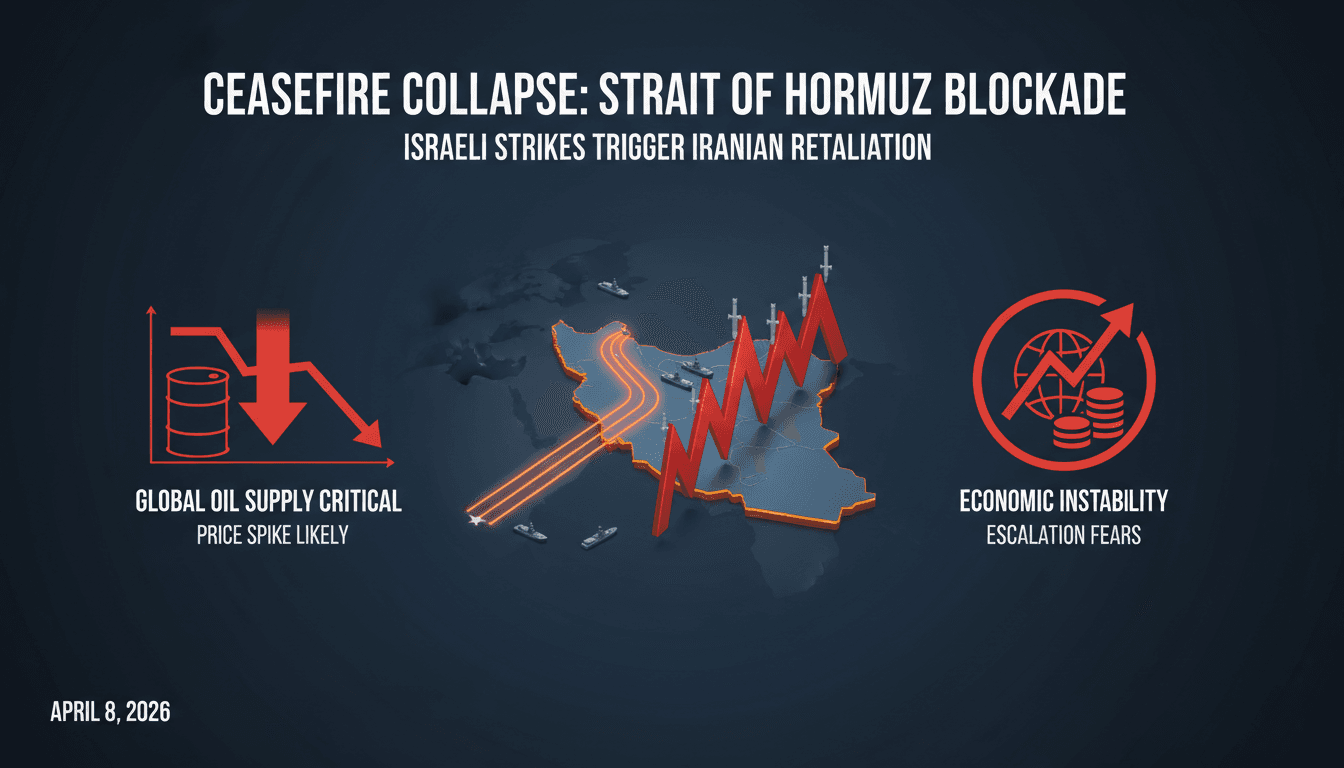
Here's what it means for you.
The escalating conflict in the Middle East could lead to increased oil prices and regional instability, impacting your daily costs and security.
Why it matters
This conflict threatens global oil supply routes and has immediate implications for energy prices and geopolitical stability.
What happened (in 30 seconds)
- On April 8, 2026, Israel launched over 100 airstrikes in Lebanon, resulting in at least 254 deaths, violating a newly brokered ceasefire.
- Iran retaliated by imposing a blockade on oil tankers in the Strait of Hormuz, demanding a $2 million toll per vessel, which has trapped hundreds of ships.
- UAE defenses intercepted multiple Iranian missiles and drones, highlighting the direct threat to regional security and escalating military tensions.
The context you actually need
- The conflict reignited on February 28, 2026, following US-Israeli strikes on Iran, leading to Iran's closure of the Strait of Hormuz.
- A ceasefire was brokered on April 7, 2026, but disputes over the terms, particularly regarding Lebanon, quickly undermined its effectiveness.
- Global markets reacted to the ceasefire with a temporary drop in oil prices, but the recent escalations may reverse this trend, increasing economic uncertainty.
What's really happening
The recent escalation in the Middle East stems from a complex web of historical grievances and strategic interests. The ceasefire, brokered by Pakistan, was intended to provide a pause in hostilities after weeks of intense conflict, primarily triggered by US-Israeli military actions against Iran. However, the fragile nature of this agreement became evident almost immediately, as Israel's Prime Minister Benjamin Netanyahu rejected the inclusion of Lebanon in the ceasefire terms, leading to a significant military response.
The Israeli airstrikes on April 8 were not just a retaliatory measure but also a strategic move to assert dominance in the region. The strikes resulted in the highest single-day casualties of the conflict, with 254 people killed, reflecting the severity of Israel's military objectives. Concurrently, Iran's blockade of the Strait of Hormuz represents a calculated response to assert its influence and retaliate against perceived aggressions. By demanding tolls on oil tankers, Iran aims to disrupt global oil supply chains, leveraging its strategic position in the Gulf to exert pressure on both regional adversaries and global markets.
The implications of these actions are profound. For the UAE and Saudi Arabia, the immediate threat of Iranian missile strikes necessitates a bolstering of defense systems, which could lead to increased military spending and regional arms races. The interceptions of 17 missiles and 35 drones by UAE defenses on the same day as the airstrikes underscore the precarious security situation in the Gulf, where civilian populations are now directly threatened by military actions.
Moreover, the economic ramifications are significant. Oil prices, which had dipped below $100 per barrel following the initial ceasefire announcement, are likely to experience volatility as the blockade and military actions disrupt supply routes. This could lead to increased fuel costs for consumers and businesses alike, creating a ripple effect across various sectors reliant on stable energy prices. As tensions escalate, the potential for broader conflict looms, raising concerns about the stability of the entire region and its impact on global markets.
Who feels it first (and how)
- Oil consumers: Higher fuel prices could impact daily commuting and transportation costs.
- Businesses in the UAE: Increased operational costs due to rising energy prices and potential supply chain disruptions.
- Military and defense sectors: Heightened demand for defense systems and military readiness in response to regional threats.
- Global investors: Increased market volatility could affect investment strategies and risk assessments.
What to watch next
- Oil price fluctuations: Watch for changes in oil prices as the situation evolves, which will directly impact global markets and consumer costs.
- Military responses: Monitor military movements and defense spending in the UAE and Saudi Arabia as they react to Iranian threats.
- Diplomatic negotiations: Keep an eye on any new diplomatic efforts or talks scheduled by Pakistan or other mediators, which could influence the conflict's trajectory.
The ceasefire is currently fragile, with ongoing military actions from both Israel and Iran.
Oil prices will remain volatile as tensions escalate, impacting global markets.
The long-term implications of the blockade on global oil supply and regional stability remain uncertain.
Frequently Asked Questions
- Why it matters?
- This conflict threatens global oil supply routes and has immediate implications for energy prices and geopolitical stability.
- What happened (in 30 seconds)?
- On April 8, 2026, Israel launched over 100 airstrikes in Lebanon, resulting in at least 254 deaths, violating a newly brokered ceasefire. Iran retaliated by imposing a blockade on oil tankers in the Strait of Hormuz, demanding a $2 million toll per vessel, which has trapped hundreds of ships. UAE defenses intercepted multiple Iranian missiles and drones, highlighting the direct threat to regional security and escalating military tensions.
- What's really happening?
- The recent escalation in the Middle East stems from a complex web of historical grievances and strategic interests. The ceasefire, brokered by Pakistan, was intended to provide a pause in hostilities after weeks of intense conflict, primarily triggered by US-Israeli military actions against Iran. However, the fragile nature of this agreement became evident almost immediately, as Israel's Prime Minister Benjamin Netanyahu rejected the inclusion of Lebanon in the ceasefire terms, leading to a sign
- Who feels it first (and how)?
- Oil consumers: Higher fuel prices could impact daily commuting and transportation costs. Businesses in the UAE: Increased operational costs due to rising energy prices and potential supply chain disruptions. Military and defense sectors: Heightened demand for defense systems and military readiness in response to regional threats. Global investors: Increased market volatility could affect investment strategies and risk assessments.
- What to watch next?
- Oil price fluctuations: Watch for changes in oil prices as the situation evolves, which will directly impact global markets and consumer costs. Military responses: Monitor military movements and defense spending in the UAE and Saudi Arabia as they react to Iranian threats. Diplomatic negotiations: Keep an eye on any new diplomatic efforts or talks scheduled by Pakistan or other mediators, which could influence the conflict's trajectory.
Top international stories selected by The Guardian editors.
"The Guardian is known for its progressive editorial stance and in-depth analysis."
— A47 Editor
Middle East ceasefire threatens to unravel as Israel assaults Lebanon and Iran blocks oil tankers
The fragile two-week ceasefire in the Iran conflict is at risk of collapse as Israel escalates its military operations in Lebanon, claiming the ceasefire does not apply to the country. Iran, which brokered the truce alongside Pakistan, asserts that L...
Regional coverage and analysis focused on politics, diplomacy, and business across the Middle East.
"Al-Monitor is known for analytical reporting on Middle East politics and policy developments."
— A47 Editor
US, Iran ceasefire sees Israel's war goals left hanging
A two-week ceasefire has been agreed upon between the United States and Iran, leaving Israel's primary war objectives, particularly the degradation of Iran's nuclear program and missile capabilities, largely unmet. Analysts describe this as a signifi...