
French Parliament Passes Law for Restitution of Colonial-Era Artifacts
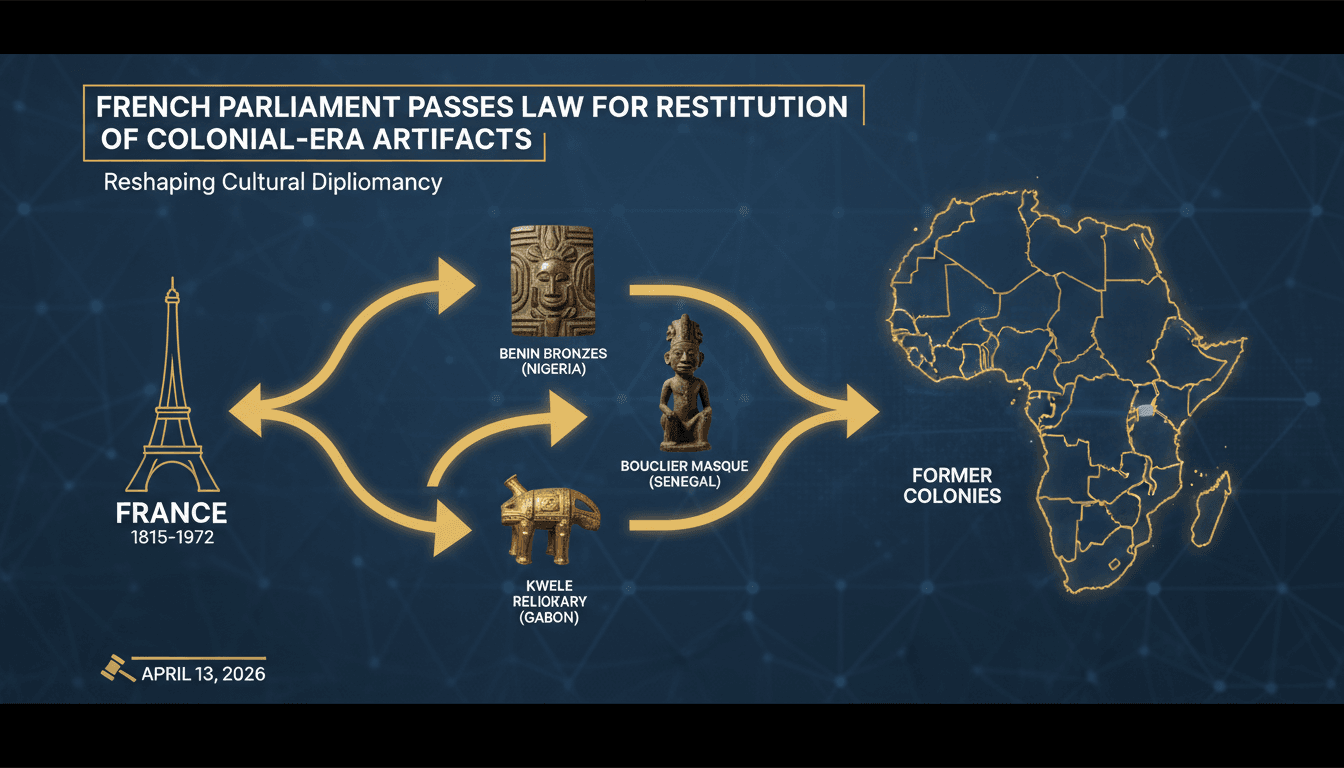
Here's what it means for you.
If you’re in the art or cultural sector, this legislation could reshape provenance discussions and influence market dynamics.
Why it matters
This law signals a significant shift in cultural diplomacy and restitution practices, impacting global art markets and heritage discussions.
What happened (in 30 seconds)
- On April 13, 2026, France's National Assembly unanimously passed a bill to simplify the restitution of colonial-era cultural artifacts.
- The law allows for the return of tens of thousands of items held in French museums, addressing demands from former colonies.
- This legislation follows a series of prior ad hoc laws and is part of a broader commitment to cultural restitution initiated by President Macron.
The context you actually need
- France holds at least 90,000 artifacts from sub-Saharan Africa, many acquired during colonial rule, raising ethical questions about ownership.
- President Macron's 2017 speech and the 2018 Sarr-Savoy report laid the groundwork for this legislative change, emphasizing the need for restitution.
- Previous limited returns have occurred, but bureaucratic hurdles have hindered broader efforts, particularly amid geopolitical tensions in the Sahel region.
What's really happening
The unanimous passage of this legislation marks a pivotal moment in France's approach to cultural restitution. The law, which derogates from the principle of inalienability of public collections, establishes a framework for the return of artifacts acquired during the colonial era. This framework includes the formation of bilateral scientific committees and the issuance of executive decrees, which streamline the process for returning items to their countries of origin.
The impetus for this change stems from a growing recognition of the historical injustices associated with colonialism. France's museums are filled with artifacts that were often taken without consent, and the new law aims to address these grievances. By facilitating the return of these items, France is not only responding to the demands of former colonies like Benin, Algeria, Mali, and Senegal but is also positioning itself as a leader in the global conversation about cultural heritage and restitution.
The law's passage follows years of advocacy and public pressure, culminating in President Macron's 2017 commitment to facilitate returns within five years. The Sarr-Savoy report of 2018 further underscored the need for a structured approach to restitution, highlighting the ethical implications of retaining such artifacts. While previous ad hoc laws allowed for limited returns, the new legislation provides a comprehensive framework that includes scientific oversight, two-year review deadlines, and annual reporting.
This shift is not without its challenges. The unanimous votes in both the National Assembly and Senate reflect a consensus on the need for restitution, but there are calls from various political factions for broader scopes and restrictions. The left-wing advocates for more expansive returns, while far-right factions express concerns about returning items to states they deem "cordial." This tension illustrates the complexities of cultural diplomacy and the balancing act required in navigating international relations.
As the law is implemented, it is expected to accelerate claims from African nations, with stakeholders eagerly anticipating the return of significant cultural artifacts. The implications extend beyond France, as this legislation could influence similar movements in other countries with colonial histories, prompting a reevaluation of cultural ownership on a global scale.
Who feels it first (and how)
- Cultural Institutions: Museums and galleries in France will need to adapt to new restitution protocols.
- Former Colonies: Countries like Benin and Algeria will likely initiate claims for significant artifacts.
- Art Market Professionals: Dealers and collectors may face increased scrutiny regarding provenance and ownership of artifacts.
What to watch next
- Increased Claims: Watch for a surge in restitution claims from African nations, which could reshape cultural exchanges.
- Market Reactions: Monitor how the art market responds to provenance scrutiny, particularly for items with colonial histories.
- International Precedents: Observe if other countries follow France's lead, potentially leading to a broader movement for restitution globally.
France's law has passed both legislative chambers and is awaiting promulgation.
Former colonies will actively pursue claims for their cultural artifacts.
The long-term impact on the art market and cultural diplomacy remains to be seen.
Frequently Asked Questions
- Why it matters?
- This law signals a significant shift in cultural diplomacy and restitution practices, impacting global art markets and heritage discussions.
- What happened (in 30 seconds)?
- On April 13, 2026, France's National Assembly unanimously passed a bill to simplify the restitution of colonial-era cultural artifacts. The law allows for the return of tens of thousands of items held in French museums, addressing demands from former colonies. This legislation follows a series of prior ad hoc laws and is part of a broader commitment to cultural restitution initiated by President Macron.
- What's really happening?
- The unanimous passage of this legislation marks a pivotal moment in France's approach to cultural restitution. The law, which derogates from the principle of inalienability of public collections, establishes a framework for the return of artifacts acquired during the colonial era. This framework includes the formation of bilateral scientific committees and the issuance of executive decrees, which streamline the process for returning items to their countries of origin. The impetus for this chang
- Who feels it first (and how)?
- Cultural Institutions: Museums and galleries in France will need to adapt to new restitution protocols. Former Colonies: Countries like Benin and Algeria will likely initiate claims for significant artifacts. Art Market Professionals: Dealers and collectors may face increased scrutiny regarding provenance and ownership of artifacts.
- What to watch next?
- Increased Claims: Watch for a surge in restitution claims from African nations, which could reshape cultural exchanges. Market Reactions: Monitor how the art market responds to provenance scrutiny, particularly for items with colonial histories. International Precedents: Observe if other countries follow France's lead, potentially leading to a broader movement for restitution globally.
Regional and international reporting focused on Middle Eastern politics, diplomacy, and economics.
"Asharq Al-Awsat is a Saudi-owned international newspaper reflecting mainstream Gulf political perspectives."
— A47 Editor
French Lawmakers Pass Bill Simplifying Return of Colonial-era Art
French lawmakers have passed a bill aimed at simplifying the return of colonial-era art, marking a significant step in addressing historical injustices related to cultural heritage. This legislation is expected to streamline processes for the restitu...
24/7 international news from a French perspective in multiple languages.
"France 24 is viewed as a globally focused outlet with balanced coverage and a European perspective."
— A47 Editor
French lawmakers to debate bill to return looted colonial-era art
French lawmakers are set to debate a bill aimed at simplifying the process for returning artworks looted during the colonial era to their countries of origin. This legislative move comes as France continues to hold tens of thousands of cultural artif...
Regional and international reporting focused on Middle Eastern politics, diplomacy, and economics.
"Asharq Al-Awsat is a Saudi-owned international newspaper reflecting mainstream Gulf political perspectives."
— A47 Editor
French Lawmakers to Debate Bill to Return Colonial-era Art
French lawmakers are set to debate a bill aimed at the return of art pieces that were acquired during the colonial era. This legislative discussion highlights ongoing efforts to address historical injustices related to cultural heritage and ownership...