
Senate Democrats Push for War Powers Resolution Vote to Limit U.S. Military Actions in Iran
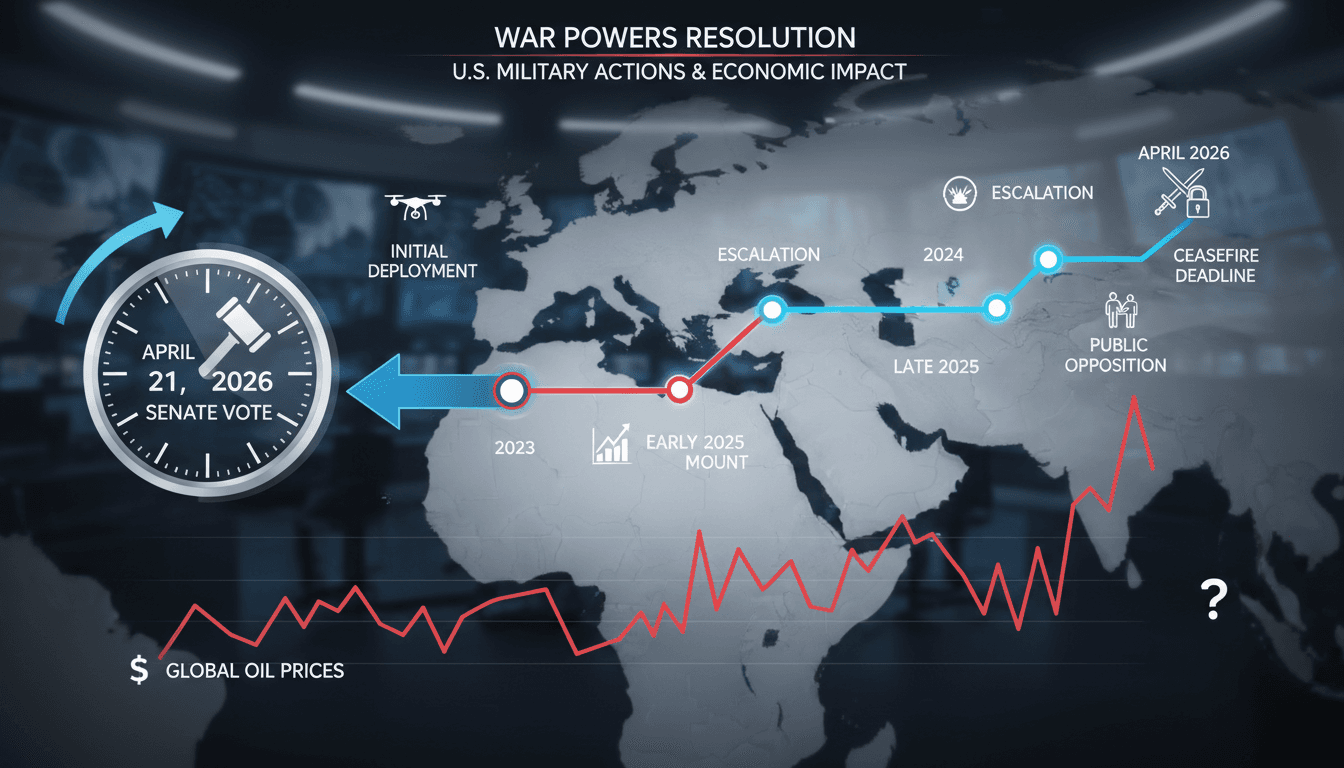
Here's what it means for you.
As geopolitical tensions escalate, your economic landscape may shift, impacting everything from fuel prices to international trade.
Why it matters
The ongoing conflict in Iran could lead to significant economic repercussions globally, particularly in energy markets.
What happened (in 30 seconds)
- Senate Democrats forced a fifth vote on a War Powers Resolution to limit U.S. military actions against Iran, amid a looming ceasefire deadline.
- President Trump initiated military actions without congressional approval, leading to rising casualties and public opposition.
- Previous votes on the resolution failed along party lines, with Democrats pledging to continue their efforts weekly.
The context you actually need
- The Iran war began on February 28, 2026, with U.S.-Israeli operations targeting Iranian military capabilities, escalating tensions in the region.
- Democrats argue that the conflict is a "war of choice," costing American lives and billions of dollars, while Republicans have consistently blocked attempts to limit military engagement.
- Public sentiment shows a significant majority (75%) viewing the war as unworthy, indicating a disconnect between government actions and voter opinions.
What's really happening
The current legislative push by Senate Democrats to limit U.S. military involvement in Iran is rooted in a broader struggle over war powers that has been a contentious issue in American politics for decades. The War Powers Resolution of 1973 was designed to ensure that Congress retains authority over military engagements, particularly those not declared as formal wars. However, President Trump's unilateral decision to initiate military actions against Iran without congressional approval has reignited debates about executive power and accountability.
The Democrats' insistence on a War Powers Resolution reflects a growing concern over the rising human and economic costs of the conflict. With 13 American servicemembers reported killed and the financial burden of military operations escalating, the urgency to reclaim congressional authority is palpable. The Democrats' strategy of forcing weekly votes aims to maintain pressure on Republicans and highlight the growing public discontent with the war.
The backdrop of this legislative battle is a fragile ceasefire that is set to expire soon, which adds urgency to the Democrats' efforts. The ceasefire, announced by Trump, was intended to provide a window for negotiations, but with tensions still high and the potential for renewed hostilities, the stakes are significant. The Republicans' consistent blocking of the resolutions indicates a party-line divide, with many viewing the resolutions as undermining U.S. interests in the region.
Moreover, the economic implications of the conflict extend beyond U.S. borders. The war has already led to disruptions in oil supply chains, with Brent crude prices surging past $95-106 per barrel due to fears of instability in the Strait of Hormuz. This has resulted in petrol price hikes in regions like Dubai, where residents are feeling the pinch of increased fuel costs. The economic strain is compounded by a slowdown in Gulf tourism and trade, as regional stability remains uncertain.
As the situation unfolds, the interplay between military actions, legislative responses, and public sentiment will shape the future of U.S. involvement in Iran and its broader implications for global markets.
Who feels it first (and how)
- U.S. servicemembers and their families, facing the direct consequences of military engagement.
- Energy sector professionals, particularly in oil and gas, who will see fluctuations in market prices and supply chain disruptions.
- Consumers in the UAE and Gulf states, experiencing increased fuel prices and potential economic slowdowns in tourism and trade.
What to watch next
- Ceasefire negotiations: The outcome of ongoing talks will determine whether hostilities will resume, impacting global oil prices and regional stability.
- Public opinion polls: Continued tracking of voter sentiment regarding the war could influence future legislative actions and party strategies.
- Legislative actions: Watch for the results of the fifth vote on the War Powers Resolution and any subsequent attempts by Democrats to limit military engagement.
The U.S. Senate is divided along party lines regarding military involvement in Iran.
Continued public opposition to the war will pressure lawmakers to reconsider their positions.
The long-term effects of the conflict on U.S. foreign policy and military strategy remain uncertain.
Frequently Asked Questions
- Why it matters?
- The ongoing conflict in Iran could lead to significant economic repercussions globally, particularly in energy markets.
- What happened (in 30 seconds)?
- Senate Democrats forced a fifth vote on a War Powers Resolution to limit U.S. military actions against Iran, amid a looming ceasefire deadline. President Trump initiated military actions without congressional approval, leading to rising casualties and public opposition. Previous votes on the resolution failed along party lines, with Democrats pledging to continue their efforts weekly.
- What's really happening?
- The current legislative push by Senate Democrats to limit U.S. military involvement in Iran is rooted in a broader struggle over war powers that has been a contentious issue in American politics for decades. The War Powers Resolution of 1973 was designed to ensure that Congress retains authority over military engagements, particularly those not declared as formal wars. However, President Trump's unilateral decision to initiate military actions against Iran without congressional approval has reig
- Who feels it first (and how)?
- U.S. servicemembers and their families, facing the direct consequences of military engagement. Energy sector professionals, particularly in oil and gas, who will see fluctuations in market prices and supply chain disruptions. Consumers in the UAE and Gulf states, experiencing increased fuel prices and potential economic slowdowns in tourism and trade.
- What to watch next?
- Ceasefire negotiations: The outcome of ongoing talks will determine whether hostilities will resume, impacting global oil prices and regional stability. Public opinion polls: Continued tracking of voter sentiment regarding the war could influence future legislative actions and party strategies. Legislative actions: Watch for the results of the fifth vote on the War Powers Resolution and any subsequent attempts by Democrats to limit military engagement.
News from the United States including domestic politics, society, and culture.
"The Guardian is known for its progressive editorial stance and in-depth analysis, often advocating for social justice, environmental issues, and liberal values."
— A47 Editor
Senate Democrats to force fifth war powers resolution as ceasefire deadline looms – live
Senate Democrats are set to introduce a fifth war powers resolution as the two-week ceasefire deadline approaches, following the failure of four previous resolutions in recent weeks. This move comes amid ongoing tensions and the need for legislative ...
International coverage from The Guardian's global desks.
"The Guardian is known for its progressive editorial stance and in-depth analysis."
— A47 Editor
Senate Democrats to force fifth war powers resolution vote on Tuesday – live
Senate Democrats are set to introduce a fifth war powers resolution as the two-week ceasefire deadline approaches, following the failure of four previous resolutions in recent weeks. This move comes amid ongoing tensions and the need for legislative ...
Pan-Arab news coverage spanning politics, business, sports, and regional affairs.
"Asharq Al-Awsat reflects a broad Arab editorial perspective with strong attention to regional geopolitics."
— A47 Editor
مدير «إف بي آي» يدّعي على مجلة «أتلانتيك» ويطلب تعويضاً 250 مليون دولار
Kash Patel, the Director of the FBI, has filed a defamation lawsuit against The Atlantic magazine, seeking $250 million in damages. This legal action highlights Patel's response to perceived harm to his reputation stemming from the magazine's reporti...
News from the United States including domestic politics, society, and culture.
"Global News is a mainstream Canadian media outlet generally considered to have a centrist editorial stance, covering news with a focus on factual reporting and national interest."
— A47 Editor
FBI Director Kash Patel files $250M defamation lawsuit against The Atlantic
FBI Director Kash Patel has filed a $250 million defamation lawsuit against The Atlantic, following a report that alleged he has a drinking problem and unexplained absences that could threaten national security. The article, authored by Sarah Fitzpat...
U.S. business news, corporate developments, and economy.
"The Wall Street Journal is respected for deep financial and economic reporting with a center-right editorial perspective."
— A47 Editor
FBI Director Kash Patel Sues the Atlantic for Defamation
FBI Director Kash Patel has filed a lawsuit against The Atlantic, seeking $250 million in damages, claiming that a recent article published by the outlet contained malicious and inaccurate allegations regarding his drinking habits and absenteeism.
Business, investment, entrepreneurship, leadership, and innovation.
"Forbes is known for its coverage of business leaders, market trends, and entrepreneurial ventures with a pro-business editorial stance."
— A47 Editor
Kash Patel Sues The Atlantic For $250M Over Drinking, Absentee Allegations
Kash Patel has initiated a lawsuit against The Atlantic for $250 million, following allegations concerning his drinking habits and absenteeism. The lawsuit comes in response to a published story that Patel claims is defamatory and damaging to his rep...
News across North, Central, and South America including politics and economics.
"France 24 is viewed as a globally focused outlet with balanced coverage and a European perspective."
— A47 Editor
Up to the job? FBI chief Kash Patel's 'questionable' conduct
FBI Director Kash Patel is facing scrutiny following a report by The Atlantic that alleges excessive drinking and erratic behavior during his tenure. Patel has dismissed these claims as 'fake news' and is threatening legal action against the publicat...