
Israel Initiates Direct Negotiations with Lebanon to Disarm Hezbollah Amid Ongoing Military Strikes
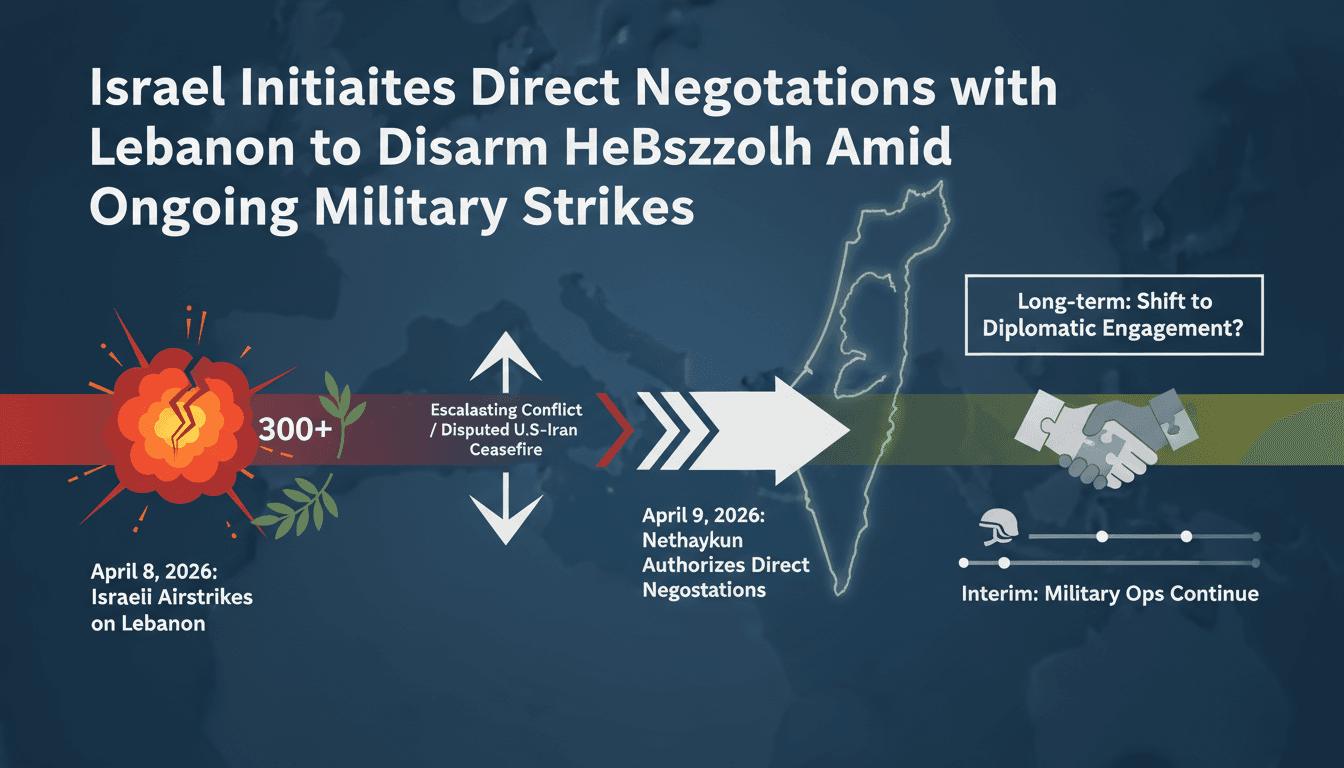
Here's what it means for you.
The outcome of these negotiations could reshape regional stability and impact global oil prices, affecting your cost of living.
Why it matters
This diplomatic effort could influence Middle Eastern geopolitics and global energy markets, directly affecting economic conditions worldwide.
What happened (in 30 seconds)
- Israel's Prime Minister Benjamin Netanyahu announced on April 9, 2026, that direct negotiations with Lebanon will begin to address Hezbollah disarmament.
- Ongoing Israeli airstrikes have resulted in over 300 deaths in Lebanon, complicating the negotiation landscape.
- The U.S. is mediating the talks, which are tentatively scheduled for next week in Washington, D.C., despite continued military operations.
The context you actually need
- The conflict escalated in late February 2026, following Hezbollah rocket fire into Israel, prompting a significant Israeli military response.
- Lebanon's President Joseph Aoun has called for direct talks and a temporary ceasefire to reinforce the state's authority over arms.
- The U.S.-Iran ceasefire announced recently is disputed by Israel, which claims it does not apply to Lebanon, creating a complex backdrop for negotiations.
What's really happening
The recent escalation in the Israel-Lebanon conflict has its roots in a long-standing power struggle involving Hezbollah, an Iran-backed militant group operating in Lebanon. The violence peaked on April 8, 2026, when Israeli airstrikes killed 303 people, marking the deadliest day of the conflict. This military action was a response to Hezbollah's rocket fire, which had been triggered by earlier incidents and perceived threats to Israeli security.
In the wake of these strikes, Netanyahu's decision to initiate direct negotiations with Lebanon signals a potential shift in strategy. The Israeli government is likely motivated by the desire to stabilize the region and mitigate the humanitarian crisis that has emerged from the ongoing conflict. By engaging in talks, Israel seeks to disarm Hezbollah, which poses a significant threat to its national security. The negotiations are seen as a way to reinforce Israel's position while also addressing international pressure to find a diplomatic solution.
However, the timing of these talks is critical. They come amidst ongoing military operations, which complicates the negotiation dynamics. Hezbollah has already rejected the idea of negotiating "under fire," indicating that the group may not be willing to engage in talks while Israeli airstrikes continue. This creates a paradox where Israel's military actions could undermine the very negotiations it seeks to advance.
The involvement of the United States as a mediator adds another layer of complexity. The U.S. has a vested interest in stabilizing the region, particularly given its strategic alliances and economic interests, including oil prices. The potential for a ceasefire or de-escalation could influence global markets, especially as tensions in the Strait of Hormuz have already begun to affect oil prices, which surged over 3% toward $100 per barrel following the strikes.
The outcome of these negotiations will not only impact Israel and Lebanon but could also have broader implications for regional stability, international relations, and global economic conditions. If successful, the talks could lead to a reduction in hostilities and a more stable environment, which would be beneficial for both countries and their neighbors.
Who feels it first (and how)
- Residents of Lebanon: Directly affected by the ongoing violence and humanitarian crisis, facing loss of life and infrastructure damage.
- Israeli citizens: Concerned about security threats from Hezbollah and the implications of military actions on their safety.
- Global oil consumers: Fluctuations in oil prices due to regional instability impact fuel costs and economic conditions worldwide.
- U.S. investors: Market reactions to the negotiations and ongoing military actions can influence stock prices and investment strategies.
What to watch next
- Progress of negotiations: The effectiveness of the talks in Washington will be crucial in determining the likelihood of a ceasefire and disarmament of Hezbollah.
- Market reactions: Watch for fluctuations in oil prices and stock markets in response to developments in the negotiations and military actions.
- Hezbollah's response: The group's willingness to engage in talks or escalate military actions will significantly impact the negotiation outcomes and regional stability.
Israel has authorized direct negotiations with Lebanon regarding Hezbollah disarmament.
Continued military operations by Israel will complicate the negotiation process and may provoke further responses from Hezbollah.
The long-term impact of these negotiations on regional stability and global oil prices remains uncertain.
Frequently Asked Questions
- Why it matters?
- This diplomatic effort could influence Middle Eastern geopolitics and global energy markets, directly affecting economic conditions worldwide.
- What happened (in 30 seconds)?
- Israel's Prime Minister Benjamin Netanyahu announced on April 9, 2026, that direct negotiations with Lebanon will begin to address Hezbollah disarmament. Ongoing Israeli airstrikes have resulted in over 300 deaths in Lebanon, complicating the negotiation landscape. The U.S. is mediating the talks, which are tentatively scheduled for next week in Washington, D.C., despite continued military operations.
- What's really happening?
- The recent escalation in the Israel-Lebanon conflict has its roots in a long-standing power struggle involving Hezbollah, an Iran-backed militant group operating in Lebanon. The violence peaked on April 8, 2026, when Israeli airstrikes killed 303 people, marking the deadliest day of the conflict. This military action was a response to Hezbollah's rocket fire, which had been triggered by earlier incidents and perceived threats to Israeli security. In the wake of these strikes, Netanyahu's decisi
- Who feels it first (and how)?
- Residents of Lebanon: Directly affected by the ongoing violence and humanitarian crisis, facing loss of life and infrastructure damage. Israeli citizens: Concerned about security threats from Hezbollah and the implications of military actions on their safety. Global oil consumers: Fluctuations in oil prices due to regional instability impact fuel costs and economic conditions worldwide. U.S. investors: Market reactions to the negotiations and ongoing military actions can influence stock pr
- What to watch next?
- Progress of negotiations: The effectiveness of the talks in Washington will be crucial in determining the likelihood of a ceasefire and disarmament of Hezbollah. Market reactions: Watch for fluctuations in oil prices and stock markets in response to developments in the negotiations and military actions. Hezbollah's response: The group's willingness to engage in talks or escalate military actions will significantly impact the negotiation outcomes and regional stability.
Global political, business, and cultural coverage from WSJ international desks.
"The Wall Street Journal offers extensive international reporting with a reputation for financial insight and a center-right editorial stance."
— A47 Editor
Israel Will Start Direct Talks With Lebanon
Israeli Prime Minister Benjamin Netanyahu announced that Israel will engage in direct talks with Lebanon, a significant step following a series of airstrikes that resulted in the deaths of 303 individuals, according to health officials. This decision...
Global markets, investing, and macroeconomics from a premier financial newsroom.
"Bloomberg is respected for in-depth financial reporting and data-driven analysis."
— A47 Editor
Israel Says Agrees to Direct Talks With Lebanon
Israeli Prime Minister Benjamin Netanyahu announced that Israel has agreed to open direct negotiations with Lebanon, responding to repeated calls from Lebanon for dialogue. These talks are expected to focus on disarming Hezbollah and establishing pea...
Regional and international reporting focused on Middle Eastern politics, diplomacy, and economics.
"Asharq Al-Awsat is a Saudi-owned international newspaper reflecting mainstream Gulf political perspectives."
— A47 Editor
Netanyahu Authorizes Direct Talks with Lebanon
Israeli Prime Minister Benjamin Netanyahu has authorized direct negotiations with Lebanon, scheduled to take place next week in Washington, amidst rising military tensions and ongoing strikes affecting both nations. This decision marks a significant ...
Arabic-language UAE newspaper coverage focused on domestic affairs, public institutions, business, society, and regional developments.
"Al Khaleej coverage generally reflects a mainstream UAE editorial lens with strong attention to public affairs, institutions, and regional developments."
— A47 Editor
نتنياهو يوجه ببدء «مفاوضات مباشرة» مع لبنان «في أقرب وقت»
Israeli Prime Minister Benjamin Netanyahu announced on Thursday that he has directed the initiation of direct negotiations with Lebanon as soon as possible. A senior Lebanese official has called for a temporary ceasefire to facilitate talks with Isra...
Arabic-language coverage of political affairs and current events.
"Okaz political coverage typically follows mainstream Saudi framing on national and regional affairs."
— A47 Editor
نتنياهو يعلن موافقته على بدء المفاوضات المباشرة مع لبنان
Israeli Prime Minister Benjamin Netanyahu announced his instructions to initiate direct negotiations with Lebanon as soon as possible, focusing on disarming Hezbollah and establishing peace between the two nations. This decision follows a phone call ...