
US Initial Jobless Claims Rise to 219000 Indicating Labor Market Stability
Here's what it means for you.
If you're navigating the job market or considering a career move, this slight increase in jobless claims signals ongoing stability, which can influence hiring trends.
Why it matters
This uptick in initial jobless claims reflects a resilient labor market, crucial for economic confidence and policy decisions.
What happened (in 30 seconds)
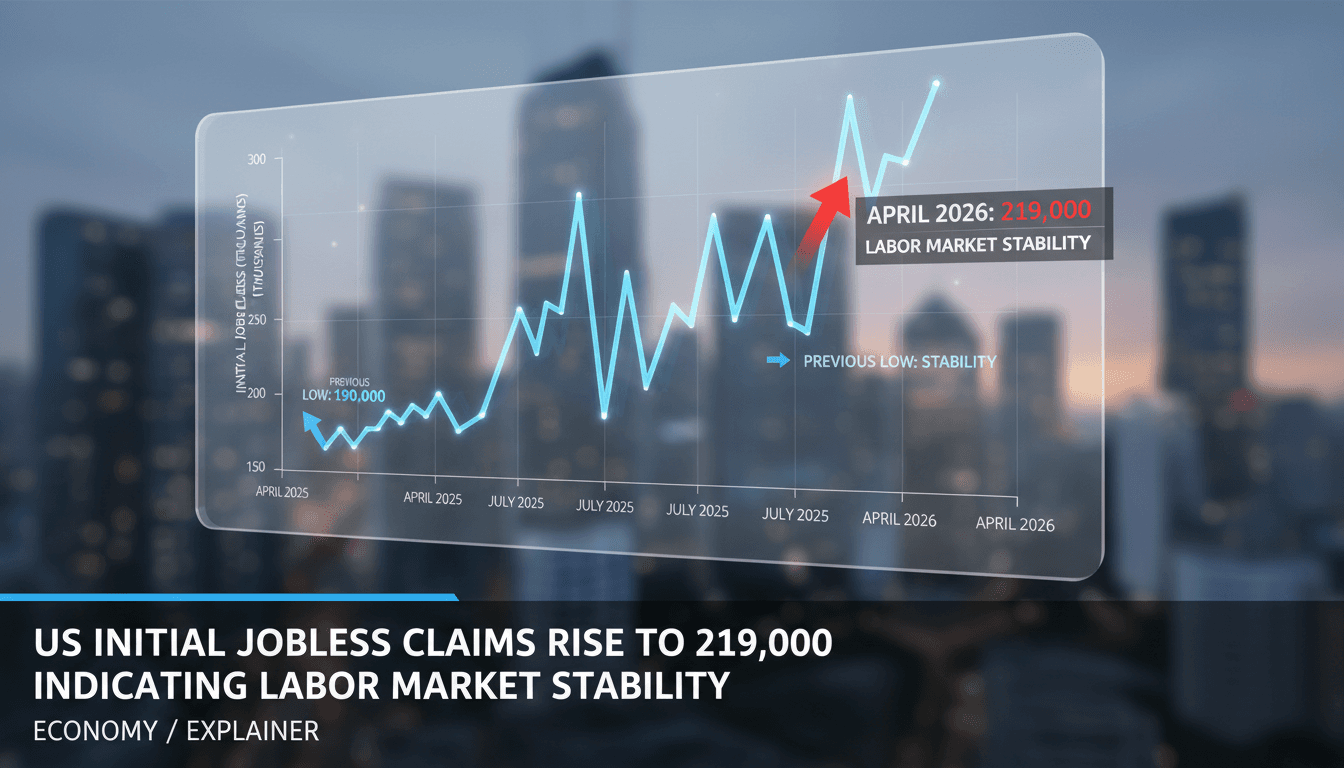
- Initial jobless claims in the U.S. rose by 16,000 to 219,000 for the week ending April 4, 2026.
- The four-week moving average increased slightly to 209,500, indicating minor fluctuations within a stable environment.
- Continuing claims fell to 1.794 million, showcasing low layoff activity amid a robust economy.
The context you actually need
- Jobless claims have remained within a range of 200,000 to 230,000 since January 2026, indicating low layoff rates.
- Economic stability persists despite geopolitical tensions and Federal Reserve policy anticipations, suggesting a resilient labor market.
- The U.S. Department of Labor's report reflects ongoing low claims, which analysts interpret as a sign of labor market strength rather than weakness.
What's really happening
The recent increase in initial jobless claims to 219,000 for the week ending April 4, 2026, marks a slight rise from the previous week's revised figure of 203,000. This fluctuation, while noteworthy, falls within a historically low range that has characterized the U.S. labor market in early 2026. The four-week moving average, now at 209,500, indicates that this rise is part of a broader pattern of minor weekly variations rather than a signal of systemic weakness.
The labor market's resilience can be attributed to several factors. First, low layoff rates have been a consistent theme, with continuing claims—those individuals still receiving unemployment benefits—falling to 1.794 million. This suggests that while some individuals are entering the unemployment system, many are finding new jobs quickly, maintaining overall employment stability.
Additionally, the broader economic context plays a significant role. Despite geopolitical tensions, particularly in the Middle East, and the anticipation of Federal Reserve policy decisions, the U.S. economy has shown remarkable stability. Analysts have noted that the labor market's performance is not only a reflection of current economic conditions but also a predictor of consumer confidence and spending, which are vital for sustained economic growth.
The slight increase in jobless claims has not prompted significant reactions in U.S. markets, as investors interpret the data as confirmation of labor market resilience. This perspective is crucial for understanding how businesses might approach hiring in the coming months. With low layoff activity and a stable economic backdrop, companies may feel more confident in expanding their workforce, which could lead to increased job opportunities.
Moreover, the implications of this data extend beyond the U.S. The stability of the U.S. labor market can influence global markets, including those in the UAE, where minimal shifts have been observed. The dirham's peg to the U.S. dollar provides a buffer against volatility, ensuring that fluctuations in U.S. jobless claims have limited direct impact on Dubai's financial landscape.
Who feels it first (and how)
- Job seekers: Those looking for new opportunities may find a stable job market encouraging.
- Employers: Businesses may adjust hiring strategies based on perceived labor market strength.
- Investors: Market analysts and investors will monitor these claims for insights into economic health and consumer behavior.
What to watch next
- Future jobless claims data: Continued monitoring of weekly claims will provide insights into labor market trends and potential shifts in employment.
- Federal Reserve policy decisions: Any changes in interest rates or monetary policy could impact hiring and economic growth.
- Geopolitical developments: Ongoing tensions in the Middle East may influence economic conditions and labor market stability.
Initial jobless claims remain low, indicating a stable labor market.
Continued low layoff rates will support hiring and economic growth.
The long-term impact of geopolitical tensions on the U.S. economy and labor market remains uncertain.
Frequently Asked Questions
- Why it matters?
- This uptick in initial jobless claims reflects a resilient labor market, crucial for economic confidence and policy decisions.
- What happened (in 30 seconds)?
- Initial jobless claims in the U.S. rose by 16,000 to 219,000 for the week ending April 4, 2026. The four-week moving average increased slightly to 209,500, indicating minor fluctuations within a stable environment. Continuing claims fell to 1.794 million, showcasing low layoff activity amid a robust economy.
- What's really happening?
- The recent increase in initial jobless claims to 219,000 for the week ending April 4, 2026, marks a slight rise from the previous week's revised figure of 203,000. This fluctuation, while noteworthy, falls within a historically low range that has characterized the U.S. labor market in early 2026. The four-week moving average, now at 209,500, indicates that this rise is part of a broader pattern of minor weekly variations rather than a signal of systemic weakness. The labor market's resilience c
- Who feels it first (and how)?
- Job seekers: Those looking for new opportunities may find a stable job market encouraging. Employers: Businesses may adjust hiring strategies based on perceived labor market strength. Investors: Market analysts and investors will monitor these claims for insights into economic health and consumer behavior.
- What to watch next?
- Future jobless claims data: Continued monitoring of weekly claims will provide insights into labor market trends and potential shifts in employment. Federal Reserve policy decisions: Any changes in interest rates or monetary policy could impact hiring and economic growth. Geopolitical developments: Ongoing tensions in the Middle East may influence economic conditions and labor market stability.
Macro commentary, policy analysis, growth/inflation themes, and global outlooks.
"Contextual macro coverage that complements day-to-day market headlines."
— A47 Editor
US labor market holds steady; inflation firmer before Iran war
The US labor market has shown stability, with recent data indicating that employment levels remain consistent. Concurrently, inflation rates appear to be firming up, suggesting a potential shift in economic conditions as tensions rise in the region s...
Pan-Arab news coverage spanning politics, business, sports, and regional affairs.
"Asharq Al-Awsat reflects a broad Arab editorial perspective with strong attention to regional geopolitics."
— A47 Editor
طلبات إعانة البطالة الأميركية ترتفع قليلاً الأسبوع الماضي
New unemployment claims in the United States saw a slight increase last week, indicating a minor shift in the labor market without showing signs of deterioration. This development reflects ongoing fluctuations in employment trends amid broader econom...