
NASA Artemis II Crew Completes Historic Lunar Flyby and Heads Back to Earth
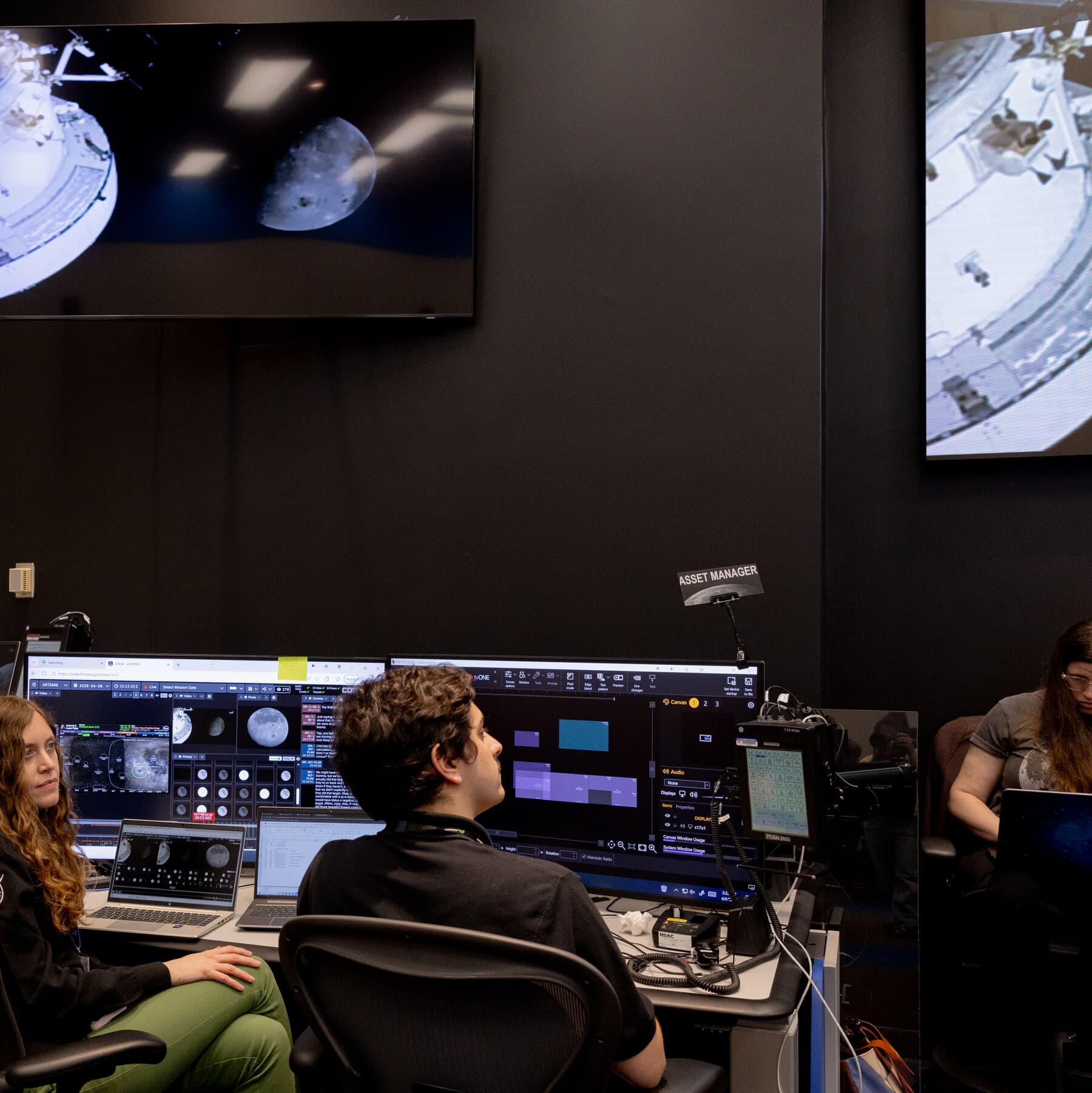
Here's what it means for you.
The Artemis II mission signals a renewed era of lunar exploration that could reshape industries and inspire future generations in STEM fields.
Why it matters
This mission enhances international collaboration in space exploration, influencing technological advancements and economic opportunities on Earth.
What happened (in 30 seconds)
- Historic flyby: NASA's Artemis II crew completed a lunar flyby on April 6, 2026, the first human mission to the Moon's vicinity in 54 years.
- Record distance: The Orion spacecraft reached a record distance of 248,655 miles from Earth, testing deep-space systems for future lunar landings.
- International collaboration: The mission involved astronauts from NASA and the Canadian Space Agency, highlighting global partnerships in space exploration.
The context you actually need
- Artemis program goals: NASA aims to establish a sustainable lunar presence and prepare for future Mars missions, with Artemis II as a critical step following the uncrewed Artemis I flight.
- Geopolitical dynamics: The mission occurs amid a renewed space race, with countries like China advancing their lunar ambitions, prompting international partnerships through the Artemis Accords.
- Technological validation: Artemis II serves as a test for the Space Launch System and Orion spacecraft, validating systems necessary for future crewed lunar landings.
What's really happening
The Artemis II mission represents a significant milestone in NASA's Artemis program, which seeks to return humans to the Moon and eventually send them to Mars. Launched on April 1, 2026, from Kennedy Space Center, the Orion spacecraft carried a diverse crew of astronauts, including NASA's Reid Wiseman, Victor Glover, Christina Koch, and Canada's Jeremy Hansen. This mission is not just a nostalgic return to lunar exploration; it is a strategic move in the ongoing global space race, emphasizing international collaboration and technological innovation.
The mission's success is pivotal for several reasons. First, it validates the capabilities of the Space Launch System (SLS) and the Orion spacecraft, which are essential for future missions, including Artemis III, planned for a lunar landing. The Artemis program aims to establish a sustainable presence on the Moon, which is seen as a stepping stone for future Mars missions. By demonstrating the ability to conduct deep-space operations, NASA is positioning itself as a leader in space exploration, countering the advances made by other nations, particularly China, which has been aggressively pursuing its lunar ambitions.
Moreover, the Artemis II mission serves as a catalyst for economic opportunities in the aerospace sector. As NASA collaborates with private companies and international partners, there will be an increase in demand for skilled labor in engineering, technology, and science fields. This could lead to a surge in STEM education initiatives, inspiring a new generation of scientists and engineers. The mission's success also enhances the credibility of public-private partnerships in space exploration, encouraging investment and innovation in the industry.
The mission's implications extend beyond the immediate technical achievements. It fosters a sense of global unity in the pursuit of knowledge and exploration. As countries collaborate on projects like the Artemis Accords, they share resources, expertise, and technology, creating a more interconnected global community. This collaboration not only benefits space exploration but also has the potential to address pressing challenges on Earth, such as climate change and resource management, through shared technological advancements.
In summary, Artemis II is more than just a flyby; it is a strategic maneuver in the broader context of space exploration, international collaboration, and economic opportunity. The mission sets the stage for future lunar landings and Mars exploration, while also inspiring a new generation to engage in STEM fields.
Who feels it first (and how)
- Aerospace engineers: Increased demand for skilled professionals in the aerospace sector as new projects emerge.
- STEM educators: Opportunities to inspire students through enhanced interest in space exploration and technology.
- International partners: Countries involved in the Artemis Accords may see collaborative projects and shared technological advancements.
What to watch next
- Artemis III preparations: Monitor developments regarding the planned lunar landing mission, as it will set the stage for sustained lunar exploration.
- International partnerships: Watch for new collaborations and agreements among countries in the space sector, which could influence future missions.
- Technological advancements: Keep an eye on innovations stemming from the Artemis program that may have applications in other industries.
The Artemis II mission successfully completed a lunar flyby and validated key systems for future missions.
Increased investment in STEM education and aerospace industries as a result of heightened interest in space exploration.
The long-term geopolitical implications of the renewed space race and how it will affect international relations.
Frequently Asked Questions
- Why it matters?
- This mission enhances international collaboration in space exploration, influencing technological advancements and economic opportunities on Earth.
- What happened (in 30 seconds)?
- Historic flyby: NASA's Artemis II crew completed a lunar flyby on April 6, 2026, the first human mission to the Moon's vicinity in 54 years. Record distance: The Orion spacecraft reached a record distance of 248,655 miles from Earth, testing deep-space systems for future lunar landings. International collaboration: The mission involved astronauts from NASA and the Canadian Space Agency, highlighting global partnerships in space exploration.
- What's really happening?
- The Artemis II mission represents a significant milestone in NASA's Artemis program, which seeks to return humans to the Moon and eventually send them to Mars. Launched on April 1, 2026, from Kennedy Space Center, the Orion spacecraft carried a diverse crew of astronauts, including NASA's Reid Wiseman, Victor Glover, Christina Koch, and Canada's Jeremy Hansen. This mission is not just a nostalgic return to lunar exploration; it is a strategic move in the ongoing global space race, emphasizing in
- Who feels it first (and how)?
- Aerospace engineers: Increased demand for skilled professionals in the aerospace sector as new projects emerge. STEM educators: Opportunities to inspire students through enhanced interest in space exploration and technology. International partners: Countries involved in the Artemis Accords may see collaborative projects and shared technological advancements.
- What to watch next?
- Artemis III preparations: Monitor developments regarding the planned lunar landing mission, as it will set the stage for sustained lunar exploration. International partnerships: Watch for new collaborations and agreements among countries in the space sector, which could influence future missions. Technological advancements: Keep an eye on innovations stemming from the Artemis program that may have applications in other industries.
Reports on climate change, environmental science, sustainability, and nature.
"BBC News is widely regarded as a reputable international news organization, known for its impartial tone and public service mandate."
— A47 Editor
What Artemis II astronauts saw in Moon fly-by
NASA's Artemis II mission has successfully completed a historic lunar flyby, with astronauts capturing stunning photographs of the Moon, including its far side and a total solar eclipse. This mission, which launched on April 1, 2026, marks the first ...
Capitol Hill news, legislation, and policy insight.
"The Hill specializes in U.S. politics and policy, with a focus on Capitol Hill developments and a reputation for insider reporting."
— A47 Editor
What did astronauts observe during the Artemis II lunar flyby?
The Artemis II mission, launched on April 1, 2026, successfully completed a historic lunar flyby, with the crew of four astronauts traveling farther from Earth than any humans in history. This mission marks the first crewed journey to the moon since ...
Scientific research, technology, environment, and society.
"Scientific American is one of the oldest and most authoritative science magazines, known for deep dives into science, technology, and society."
— A47 Editor
Tracking Artemis II—after its historic lunar flyby, NASA’s moon mission heads home
NASA's Artemis II mission is currently on its seventh day, with astronauts having successfully completed a historic lunar flyby and now heading back home. The crew has been in communication with both mission control and the International Space Statio...
Science and technology stories including AI.
"Longstanding science magazine with thoughtful AI coverage."
— A47 Editor
Tracking Artemis II—after its historic lunar flyby, NASA’s moon mission heads home
NASA's Artemis II mission is currently on its seventh day, with astronauts having successfully completed a historic lunar flyby and now heading back home. The crew has been in communication with both mission control and the International Space Statio...
Scientific research, space, environment, and health coverage.
"The New York Times is a globally recognized newspaper offering authoritative reporting with a center-left editorial stance."
— A47 Editor
Artemis II Astronauts Get a Break After Journey Around the Moon
The Artemis II astronauts had a quiet day aboard their Orion spacecraft as they journeyed back to Earth after successfully observing a solar eclipse caused by the Moon. This event occurred on April 8, 2026, during their historic mission, which marked...
Space science news, astronomy updates, and spaceflight developments.
"Space.com delivers space science news, astronomy updates, and spaceflight developments with engaging coverage."
— A47 Editor
Relive Artemis 2's epic moon flyby with these amazing photos
NASA's Artemis 2 astronauts successfully completed a historic lunar flyby on April 6, 2026, marking the first crewed mission to the Moon in over 50 years. The astronauts captured stunning images during their journey, chronicling their experience as t...
Scientific discoveries, health, technology, and natural phenomena.
"Live Science reports on scientific discoveries, health, technology, and natural phenomena with a popular science tone."
— A47 Editor
'So much magic': Artemis II shares first images from the far side of the moon, including new 'Earthset' and total eclipse in space
NASA's Artemis II mission has successfully captured its first set of stunning images during a lunar flyby, showcasing the far side of the Moon, an 'Earthset,' and a total solar eclipse. This mission, which began on April 1, 2026, marks the first crew...
Consumer technology news with AI coverage.
"Gadget and tech site reporting on AI in products."
— A47 Editor
NASA shares incredible photos from the far side of the Moon
NASA's Artemis II mission has successfully launched, marking the first crewed flight to the Moon in over 50 years. The crew, consisting of four astronauts, has traveled farther from Earth than any living humans before, capturing stunning images from ...
Covers consumer technology, electronics, gadgets, and product reviews.
"Engadget is a trusted source for gadget reviews and consumer tech news, known for its hands-on analysis and industry coverage."
— A47 Editor
NASA shares incredible photos from the far side of the Moon
NASA's Artemis II mission has successfully launched, marking the first crewed flight to the Moon in over 50 years. The crew, consisting of four astronauts, has traveled farther from Earth than any living humans before, capturing stunning images from ...
Scientific research, technology, environment, and society.
"Scientific American is one of the oldest and most authoritative science magazines, known for deep dives into science, technology, and society."
— A47 Editor
In an echo of Apollo 8, NASA’s Artemis II astronauts witness stunning ‘Earthrise’ and ‘Earthset’
NASA's Artemis II astronauts experienced a remarkable moment during their mission, capturing stunning images of 'Earthrise' and 'Earthset' while orbiting the Moon, reminiscent of the iconic Apollo 8 photograph from 1968. This mission, which launched ...
Science and technology stories including AI.
"Longstanding science magazine with thoughtful AI coverage."
— A47 Editor
In an echo of Apollo 8, NASA’s Artemis II astronauts witness stunning ‘Earthrise’ and ‘Earthset’
NASA's Artemis II astronauts experienced a remarkable moment during their mission, capturing stunning images of 'Earthrise' and 'Earthset' while orbiting the Moon, reminiscent of the iconic Apollo 8 photograph from 1968. This mission, which launched ...
Reports on climate change, environmental science, sustainability, and nature.
"BBC News is widely regarded as a reputable international news organization, known for its impartial tone and public service mandate."
— A47 Editor
Everything you need to know about Nasa's Artemis II mission
NASA's Artemis II mission successfully launched on April 1, 2026, marking the first crewed lunar expedition since the Apollo era, with four astronauts aboard the Orion spacecraft. The mission aims to take the crew on a journey around the Moon, althou...
Space science news, astronomy updates, and spaceflight developments.
"Space.com delivers space science news, astronomy updates, and spaceflight developments with engaging coverage."
— A47 Editor
The Artemis 2 astronauts just flew by the moon. Lunar scientists can't wait for what's next
NASA's Artemis 2 astronauts successfully completed a historic lunar flyby on April 6, 2026, marking the first crewed mission to the Moon in over 50 years. This mission, which launched on April 1, 2026, allowed the crew aboard the Orion spacecraft to ...
Discoveries, research, environment, and health innovations.
"New Scientist is a well-respected publication offering accessible science news, commentary, and expert analysis."
— A47 Editor
The Artemis II astronauts have flown around the moon
NASA's Artemis II mission successfully completed a historic lunar flyby on April 6, 2026, with four astronauts aboard the Orion spacecraft, marking the first crewed flight to the Moon in over 50 years. The crew traveled further from Earth than any hu...
Reports on climate change, environmental science, sustainability, and nature.
"BBC News is widely regarded as a reputable international news organization, known for its impartial tone and public service mandate."
— A47 Editor
Artemis II crew head for home after travelling further from Earth than anyone before
The Artemis II crew has successfully completed a historic mission, traveling further from Earth than any humans before, as part of NASA's first crewed lunar flight in over 50 years. The mission, which launched on April 1, 2026, involved four astronau...
Scientific research, space, environment, and health coverage.
"The New York Times is a globally recognized newspaper offering authoritative reporting with a center-left editorial stance."
— A47 Editor
Artemis II Astronauts Head Home After Historic Journey Around the Moon
NASA's Artemis II mission has successfully completed a historic lunar flyby, marking the first crewed journey to the Moon in over 50 years. The four astronauts aboard the Orion spacecraft traveled farther from Earth than any humans before, witnessing...
Space science news, astronomy updates, and spaceflight developments.
"Space.com delivers space science news, astronomy updates, and spaceflight developments with engaging coverage."
— A47 Editor
Artemis 2 astronauts fly around the moon in record-breaking lunar loop by NASA
NASA's Artemis 2 astronauts successfully completed a historic lunar flyby on April 6, 2026, marking the first crewed mission to the Moon in over 50 years. During this mission, the astronauts viewed parts of the Moon that had never been seen by human ...
Scientific research, space, environment, and health coverage.
"The New York Times is a globally recognized newspaper offering authoritative reporting with a center-left editorial stance."
— A47 Editor
Artemis II Astronauts Set New Distance Record in Moon Flyby: What to Know
NASA's Artemis II mission, featuring three American astronauts and one Canadian, is currently on its sixth day of a historic lunar flyby, having launched from Kennedy Space Center in Florida on April 1, 2026. This mission marks the first crewed journ...
English-language news from Qatar covering domestic and regional affairs.
"Gulf Times reflects Qatari perspectives on regional developments."
— A47 Editor
Artemis II crew snaps historic Earthset photo on way home
The Artemis II crew captured a remarkable photograph of Earthset, the moment when Earth disappears below the Moon's horizon, during their return journey from a historic lunar mission. This event occurred on April 6, 2026, after the astronauts complet...
Scientific discoveries, health, technology, and natural phenomena.
"Live Science reports on scientific discoveries, health, technology, and natural phenomena with a popular science tone."
— A47 Editor
The Artemis II astronauts have just flown farther from Earth than any humans in history
NASA's Artemis II mission has achieved a historic milestone by becoming the farthest crewed mission from Earth, surpassing 248,655 miles, a record previously set in 1970. The four astronauts aboard the Orion spacecraft are currently en route to the f...
Space science news, astronomy updates, and spaceflight developments.
"Space.com delivers space science news, astronomy updates, and spaceflight developments with engaging coverage."
— A47 Editor
Artemis 2 breaks humanity's all-time distance record during historic loop around the moon (video)
NASA's Artemis II mission has successfully completed a historic lunar flyby, with astronauts reaching a record distance of 252,757 miles from Earth, surpassing the previous record set by Apollo 13 in 1970. This milestone was achieved on April 6, 2026...
Scientific research, technology, environment, and society.
"Scientific American is one of the oldest and most authoritative science magazines, known for deep dives into science, technology, and society."
— A47 Editor
NASA’s Artemis II astronauts break Apollo’s distance record
NASA's Artemis II astronauts have set a new record for the farthest distance from Earth traveled by humans, surpassing 250,000 miles and breaking the previous record held by Apollo 13 by approximately 4,000 miles. This milestone was achieved during t...
Science and technology stories including AI.
"Longstanding science magazine with thoughtful AI coverage."
— A47 Editor
NASA’s Artemis II astronauts break Apollo’s distance record
NASA's Artemis II astronauts have set a new record for the farthest distance from Earth traveled by humans, surpassing 250,000 miles and breaking the previous record held by Apollo 13 by approximately 4,000 miles. This milestone was achieved during t...
Science and technology stories including AI.
"Longstanding science magazine with thoughtful AI coverage."
— A47 Editor
Watch live—NASA’s Artemis II’s moon flyby is underway
NASA's Artemis II mission is currently underway, with four astronauts observing the far side of the moon and setting distance records while experiencing a solar eclipse. This mission marks the first crewed flight to the Moon in over 50 years, having ...
Scientific research, technology, environment, and society.
"Scientific American is one of the oldest and most authoritative science magazines, known for deep dives into science, technology, and society."
— A47 Editor
Watch live—NASA’s Artemis II’s moon flyby is underway
NASA's Artemis II mission is currently underway, with four astronauts observing the far side of the moon and setting distance records while experiencing a solar eclipse. This mission marks the first crewed flight to the Moon in over 50 years, having ...
Space science news, astronomy updates, and spaceflight developments.
"Space.com delivers space science news, astronomy updates, and spaceflight developments with engaging coverage."
— A47 Editor
The moon up close: How the Artemis 2 astronauts are photographing their historic lunar flyby
The Artemis 2 astronauts are currently engaged in a historic lunar flyby, capturing detailed photographs of the moon's far side, a region that has not been extensively surveyed by humans. This mission, which began with a successful launch on April 1,...
Scientific discoveries, health, technology, and natural phenomena.
"Live Science reports on scientific discoveries, health, technology, and natural phenomena with a popular science tone."
— A47 Editor
Artemis II moon flyby begins: How to watch and what to know
NASA's Artemis II mission has successfully reached the moon, marking a significant milestone as the first crewed lunar expedition since the Apollo era. The astronauts aboard the Orion spacecraft are currently experiencing a lunar flyby, which will so...
Space science news, astronomy updates, and spaceflight developments.
"Space.com delivers space science news, astronomy updates, and spaceflight developments with engaging coverage."
— A47 Editor
Humanity is back at the moon! Artemis 2 astronauts arrive in lunar space
NASA's Artemis 2 mission has successfully arrived in lunar space, with four astronauts aboard the Orion spacecraft entering the moon's sphere of influence on April 6, 2026. This marks a significant milestone as it is the first crewed mission to the m...