
Bahrain Defense Force Intercepts 188 Missiles and 468 Drones Amid Iranian Aggression
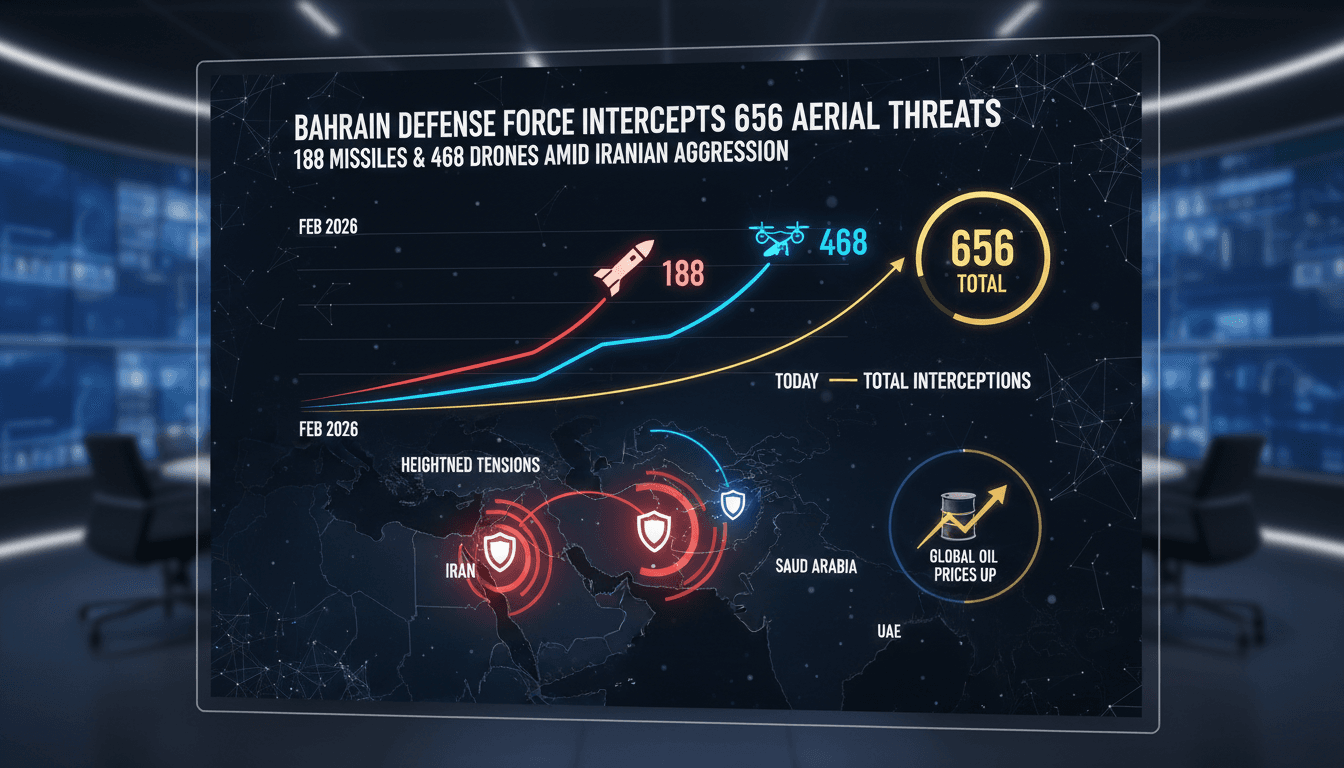
Here's what it means for you.
If you’re in the Gulf region, heightened military tensions could disrupt your daily life and economic stability.
Why it matters
The ongoing conflict poses risks to regional security, impacting trade routes and energy prices.
What happened (in 30 seconds)
- On April 6, 2026, Bahrain Defense Force reported intercepting and destroying 188 missiles and 468 drones since February 28, 2026.
- Iran initiated these attacks as part of a broader conflict with Gulf Cooperation Council states, escalating tensions in the region.
- Bahrain's air defense systems remain on high alert, continuously countering waves of Iranian projectiles aimed at civilian targets.
The context you actually need
- Iran's aggression against Bahrain is part of the 2026 Iran-Gulf conflict, which has seen increased military actions since late February.
- Bahrain's air defenses have reported a significant rise in interceptions, indicating a sustained threat to its sovereignty and civilian infrastructure.
- Regional responses have included similar interception announcements from neighboring countries, reflecting a collective security concern among Gulf states.
What's really happening
Since February 28, 2026, Bahrain has faced a barrage of missile and drone attacks from Iran, marking a significant escalation in regional hostilities. The Bahrain Defense Force has been proactive, reporting a cumulative total of 656 projectiles intercepted and destroyed as of April 6, 2026. This figure includes 188 ballistic missiles and 468 drones, underscoring the scale of the threat and the effectiveness of Bahrain's air defense systems.
The Iranian attacks are viewed as retaliatory measures amid heightened tensions and perceived provocations, which have been exacerbated by proxy conflicts and direct strikes in the region. The Bahrain Defense Force has issued periodic updates, revealing a steady increase in intercepted projectiles, with numbers climbing from 112 missiles and 186 drones on March 12 to 154 missiles and 362 drones by March 27. This trend indicates not only the intensity of the conflict but also the ongoing commitment of Bahrain's military to protect its airspace.
The implications of these attacks extend beyond immediate military concerns. They threaten regional stability, impacting oil markets and economic conditions across the Gulf. As Bahrain's air defenses remain on high alert, the potential for further escalations looms large, with neighboring countries like the UAE and Kuwait also reporting interception efforts. The economic ramifications are already being felt, with fears of supply disruptions leading to upward pressure on oil prices.
Moreover, the psychological impact on civilians cannot be understated. Residents in Bahrain and the broader Gulf region are experiencing heightened anxiety and disruptions to daily life, as air raid sirens and military alerts become more frequent. The Bahrain Defense Force has urged citizens to remain vigilant, avoid damaged areas, and rely on official sources for information, emphasizing the ongoing nature of the threat.
As the situation develops, the international community is closely monitoring the conflict, with calls for diplomatic resolutions to prevent further escalation. However, the current trajectory suggests that military engagements may continue, with both sides entrenched in their positions.
Who feels it first (and how)
- Civilians in Bahrain: Increased anxiety and disruptions to daily life due to air raid alerts and military operations.
- Businesses in the Gulf: Potential economic instability and supply chain disruptions affecting trade and commerce.
- Energy sector stakeholders: Fluctuating oil prices and market volatility as a result of regional conflict and security concerns.
What to watch next
- Further military engagements: Monitor for additional missile and drone attacks from Iran and Bahrain's interception efforts, as these will indicate the conflict's escalation.
- Economic indicators: Watch for fluctuations in oil prices, as disruptions in supply chains could impact global markets.
- Diplomatic efforts: Keep an eye on international responses and peace talks, which could influence the likelihood of de-escalation in the region.
Bahrain has intercepted 656 projectiles since February 28, 2026.
The conflict will continue to affect regional security and economic stability in the Gulf.
The potential for diplomatic resolutions or further escalations remains uncertain.
Frequently Asked Questions
- Why it matters?
- The ongoing conflict poses risks to regional security, impacting trade routes and energy prices.
- What happened (in 30 seconds)?
- On April 6, 2026, Bahrain Defense Force reported intercepting and destroying 188 missiles and 468 drones since February 28, 2026. Iran initiated these attacks as part of a broader conflict with Gulf Cooperation Council states, escalating tensions in the region. Bahrain's air defense systems remain on high alert, continuously countering waves of Iranian projectiles aimed at civilian targets.
- What's really happening?
- Since February 28, 2026, Bahrain has faced a barrage of missile and drone attacks from Iran, marking a significant escalation in regional hostilities. The Bahrain Defense Force has been proactive, reporting a cumulative total of 656 projectiles intercepted and destroyed as of April 6, 2026. This figure includes 188 ballistic missiles and 468 drones, underscoring the scale of the threat and the effectiveness of Bahrain's air defense systems. The Iranian attacks are viewed as retaliatory measures
- Who feels it first (and how)?
- Civilians in Bahrain: Increased anxiety and disruptions to daily life due to air raid alerts and military operations. Businesses in the Gulf: Potential economic instability and supply chain disruptions affecting trade and commerce. Energy sector stakeholders: Fluctuating oil prices and market volatility as a result of regional conflict and security concerns.
- What to watch next?
- Further military engagements: Monitor for additional missile and drone attacks from Iran and Bahrain's interception efforts, as these will indicate the conflict's escalation. Economic indicators: Watch for fluctuations in oil prices, as disruptions in supply chains could impact global markets. Diplomatic efforts: Keep an eye on international responses and peace talks, which could influence the likelihood of de-escalation in the region.
Arabic-language political and world news coverage for UAE readers.
"Emarat Al Youm world coverage usually presents international developments through a UAE and Arab audience lens."
— A47 Editor
"قوة دفاع البحرين" تعلن اعتراض وتدمير 188 صاروخا و468 طائرة مسيرة منذ بدء الاعتداء الإيراني "قوة دفاع البحرين" تعلن اعتراض وتدمير 188 صاروخا و468 طائرة مسيرة منذ بدء الاعتداء الإيراني
The Bahrain Defense Force announced that its air defense systems have intercepted and destroyed 188 missiles and 468 drones since the onset of Iranian aggression. This statement highlights the ongoing military tensions in the region and the active me...
Arabic-language UAE newspaper coverage focused on domestic affairs, public institutions, business, society, and regional developments.
"Al Khaleej coverage generally reflects a mainstream UAE editorial lens with strong attention to public affairs, institutions, and regional developments."
— A47 Editor
البحرين تدمر 188 صاروخاً و468 مسيرة منذ بدء الاعتداء الإيراني الغاشم
The Bahrain Defense Force announced that its air defense systems have intercepted and destroyed 188 missiles and 468 drones since the onset of the Iranian aggression. This military action underscores the ongoing tensions in the region and highlights ...
Arabic-language UAE newspaper coverage focused on domestic affairs, public institutions, business, society, and regional developments.
"Al Khaleej coverage generally reflects a mainstream UAE editorial lens with strong attention to public affairs, institutions, and regional developments."
— A47 Editor
البحرين تعترض وتدمر 453 مسيرة و188 صاروخاً منذ بدء الاعتداء الإيراني الغاشم
The Bahrain Defense Force announced that its air defense systems have intercepted and destroyed 453 drones and 188 missiles since the onset of Iranian aggression. This development highlights the ongoing tensions in the region and the active measures ...