
Japan's 30-Year JGB Auction Sees Weaker Demand with Bid-to-Cover Ratio of 3.12
Here's what it means for you.
If you're invested in global markets, particularly bonds or energy, this auction's outcome may signal shifting investment strategies.
Why it matters
The auction reflects investor sentiment amid rising geopolitical tensions, which could influence global bond markets and energy prices.
What happened (in 30 seconds)
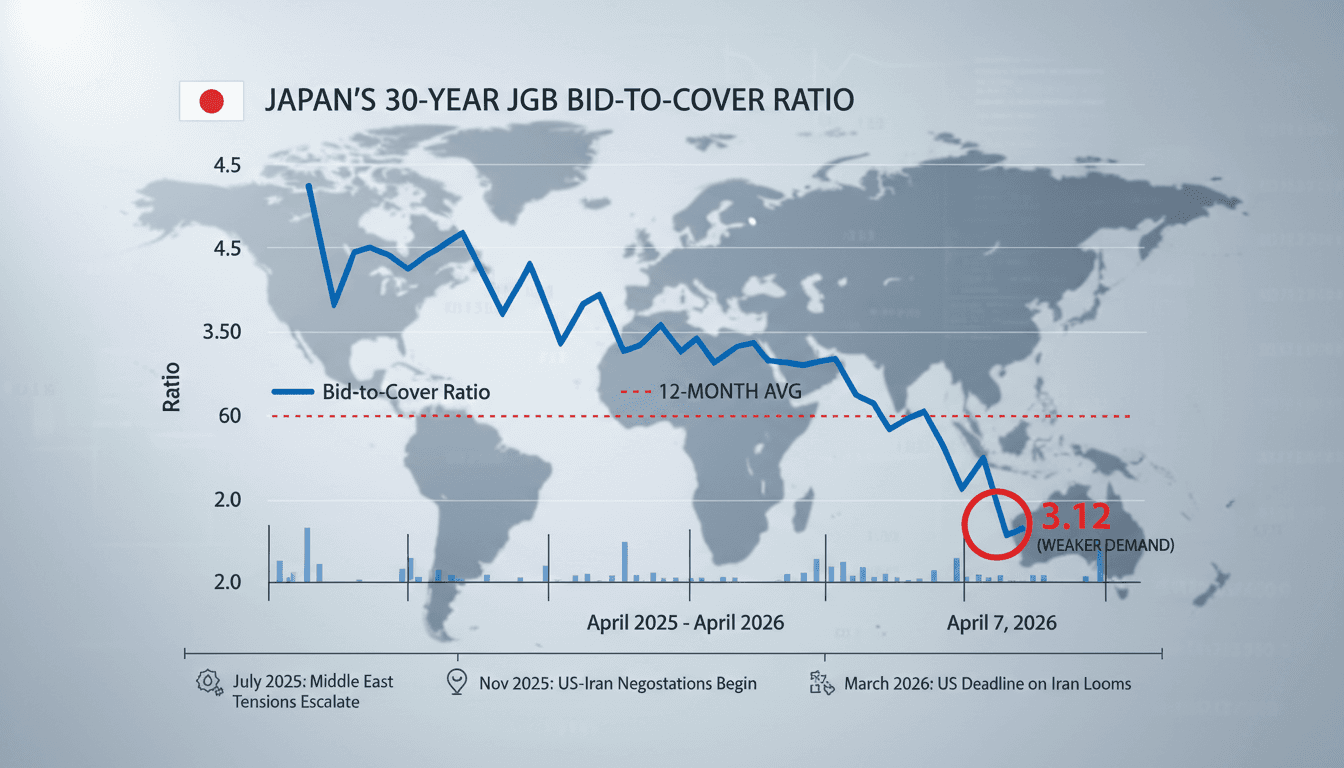
- Weaker demand: Japan's 30-year government bond auction on April 7, 2026, recorded a bid-to-cover ratio of 3.12, below the 12-month average of 3.36.
- Investor caution: The auction occurred against a backdrop of escalating Middle East tensions and a looming U.S. deadline on Iran negotiations.
- Yield response: Following the auction, Japanese bond yields edged lower as no major disruptions were reported.
The context you actually need
- Subdued demand trend: This auction follows a pattern of weaker demand in recent JGB sales, including a lackluster 10-year auction just days prior.
- Policy normalization: The Bank of Japan's gradual reduction in bond purchases is contributing to rising yields and a steepening yield curve.
- Inflation risks: Heightened inflation risks from Middle East conflicts and oil price surges are creating a cautious investment environment.
What's really happening
On March 31, 2026, Japan's Ministry of Finance announced the auction of approximately 600 billion yen in 30-year JGBs, set for issuance on April 8 and maturing on March 20, 2056. As the auction date approached, market yields began to rise, with the 30-year yield reaching 3.735%. This uptick in yields was largely attributed to investor caution following a weak 10-year bond auction on April 2, 2026, which had already indicated a trend of subdued demand.
When the auction took place on April 7, the bid-to-cover ratio of 3.12 was notably lower than both the previous auction's ratio of 3.66 and the 12-month average of 3.36. This marked the weakest demand since June 2025, indicating a significant shift in investor sentiment. The lower bid-to-cover ratio suggests that fewer investors are willing to purchase long-term bonds, likely due to concerns over rising yields and the broader economic implications of geopolitical tensions.
Post-auction, bond yields experienced a slight decline, reflecting relief that no major disruptions occurred during the auction. However, this relief is tempered by ongoing concerns about the yield curve, which continues to steepen. The Bank of Japan's policy normalization, characterized by reduced bond purchases, is further complicating the landscape for long-term bonds. As fiscal deficits persist and inflation risks mount, particularly from potential oil price surges linked to Middle East conflicts, the outlook for JGB demand remains uncertain.
Investors are increasingly wary of committing to long-term bonds in such a volatile environment. The interplay of domestic fiscal policy, global geopolitical tensions, and market sentiment is creating a complex backdrop for Japan's bond market. As these factors converge, the implications for both domestic and international investors are profound, potentially reshaping investment strategies and risk assessments.
Who feels it first (and how)
- Bond investors: Those holding long-term JGBs may see fluctuations in their portfolio values as yields rise.
- Financial institutions: Domestic banks and insurers could face challenges in managing their bond portfolios amid changing demand dynamics.
- Energy sector stakeholders: Investors in energy-linked assets may experience indirect impacts from oil price fluctuations resulting from geopolitical tensions.
What to watch next
- Yield curve movements: Monitoring the yield curve will provide insights into investor sentiment and future interest rate expectations.
- Geopolitical developments: Keep an eye on Middle East tensions, as escalations could further impact global bond markets and oil prices.
- Bank of Japan policy shifts: Any changes in the Bank of Japan's bond purchasing strategy could significantly alter market dynamics.
The bid-to-cover ratio of 3.12 indicates weaker demand for JGBs.
Continued caution among investors due to geopolitical tensions and rising yields.
The long-term impact on Japan's fiscal policy and bond market dynamics.
Frequently Asked Questions
- Why it matters?
- The auction reflects investor sentiment amid rising geopolitical tensions, which could influence global bond markets and energy prices.
- What happened (in 30 seconds)?
- Weaker demand: Japan's 30-year government bond auction on April 7, 2026, recorded a bid-to-cover ratio of 3.12, below the 12-month average of 3.36. Investor caution: The auction occurred against a backdrop of escalating Middle East tensions and a looming U.S. deadline on Iran negotiations. Yield response: Following the auction, Japanese bond yields edged lower as no major disruptions were reported.
- What's really happening?
- On March 31, 2026, Japan's Ministry of Finance announced the auction of approximately 600 billion yen in 30-year JGBs, set for issuance on April 8 and maturing on March 20, 2056. As the auction date approached, market yields began to rise, with the 30-year yield reaching 3.735%. This uptick in yields was largely attributed to investor caution following a weak 10-year bond auction on April 2, 2026, which had already indicated a trend of subdued demand. When the auction took place on April 7, the
- Who feels it first (and how)?
- Bond investors: Those holding long-term JGBs may see fluctuations in their portfolio values as yields rise. Financial institutions: Domestic banks and insurers could face challenges in managing their bond portfolios amid changing demand dynamics. Energy sector stakeholders: Investors in energy-linked assets may experience indirect impacts from oil price fluctuations resulting from geopolitical tensions.
- What to watch next?
- Yield curve movements: Monitoring the yield curve will provide insights into investor sentiment and future interest rate expectations. Geopolitical developments: Keep an eye on Middle East tensions, as escalations could further impact global bond markets and oil prices. Bank of Japan policy shifts: Any changes in the Bank of Japan's bond purchasing strategy could significantly alter market dynamics.
Markets desk coverage, trading insights, and investor updates.
"WSJ’s markets reporting provides in-depth analysis and context for investors."
— A47 Editor
Treasury Yields Mixed as Investors Brace for Iran Deadline
Treasury yields were mixed as investors awaited the 8 p.m. ET deadline for Tehran to reopen the Strait of Hormuz for oil trade, a crucial passage for global oil supplies. The uncertainty surrounding this deadline has led to fluctuations in the bond m...
Global markets, investing, and macroeconomics from a premier financial newsroom.
"Bloomberg is respected for in-depth financial reporting and data-driven analysis."
— A47 Editor
Japan 30-Year Bond Sale Sees Weaker Demand Than 12-Month Average
Japan's recent 30-year government bond auction saw its weakest demand since June, attributed to heightened uncertainty surrounding Middle East tensions, which has dampened investor appetite.