
U.S. Military Plans Global Seizure of Iran-Linked Oil Tankers Amid Ongoing Conflict
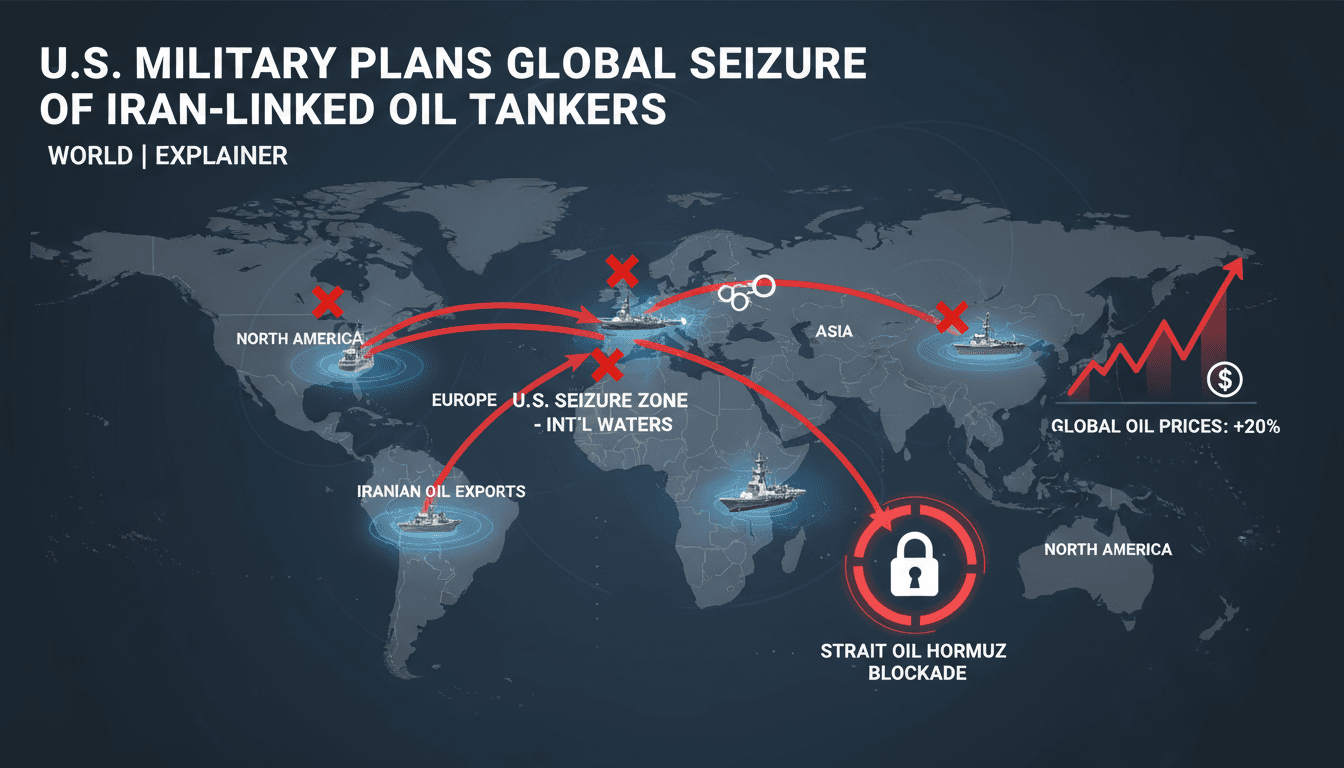
Here's what it means for you.
If you rely on oil or energy markets, prepare for potential price volatility and supply chain disruptions.
Why it matters
This escalation could significantly impact global oil prices and shipping routes, affecting economies worldwide.
What happened (in 30 seconds)
- On April 18, 2026, the U.S. military announced preparations to board and seize Iran-linked oil tankers in international waters.
- This move is part of the Trump administration's 'Economic Fury' campaign aimed at pressuring Iran amid stalled nuclear negotiations.
- As of now, 23 ships have already been turned back from Iranian ports under a naval blockade imposed by the U.S. military.
The context you actually need
- The U.S.-Iran conflict escalated after an Israeli airstrike killed Iranian leader Ayatollah Ali Khamenei in February 2026, leading to a U.S.-Iran war.
- Following failed peace talks, the U.S. imposed a naval blockade on Iranian ports to disrupt Iran's oil exports, which are crucial for its economy.
- Iran's response included threats to retaliate against U.S. actions, further complicating the geopolitical landscape in the region.
What's really happening
The U.S. military's preparations to board and seize Iran-linked oil tankers represent a significant escalation in the ongoing conflict between the U.S. and Iran. This move is part of a broader strategy known as the 'Economic Fury' campaign, which aims to exert maximum economic pressure on Iran to compel it to return to the negotiating table regarding its nuclear program. The backdrop of this situation is a complex web of geopolitical tensions that have been exacerbated by recent events, including the assassination of Ayatollah Khamenei and subsequent Iranian military actions against commercial vessels.
The U.S. has already turned back 23 ships from Iranian ports since imposing a naval blockade on April 12, 2026. This blockade is designed to choke off Iran's oil exports, which amount to approximately 1.6 million barrels per day, primarily destined for China. The blockade has led to a spike in oil prices, surpassing $100 per barrel, which has significant implications for global energy markets. The U.S. military's expansion of its operations to include global interdictions of Iran-linked vessels is a strategic move to enforce sanctions and disrupt Iran's ability to evade them through a 'shadow fleet' of commercial vessels.
The Trump administration is optimistic that these actions will lead to a favorable outcome in peace negotiations, but the situation remains volatile. Iran has vowed to retaliate against what it calls 'armed piracy,' threatening energy infrastructure in allied states. This tit-for-tat dynamic raises the stakes for all parties involved and could lead to further military confrontations in the region.
As the U.S. military gears up for these operations, the implications for global oil markets are profound. Increased military presence in international waters could lead to heightened tensions and potential disruptions in shipping routes, particularly through the strategically vital Strait of Hormuz. The UAE and other Gulf allies are closely monitoring the situation, signaling their readiness to support U.S. military efforts to secure these shipping lanes, which are essential for Gulf exports.
Who feels it first (and how)
- Oil traders: Expect immediate price fluctuations and increased volatility in oil markets.
- Shipping companies: May face higher insurance costs and rerouting of vessels due to increased military activity.
- Consumers: Could see rising fuel prices at the pump as oil prices spike.
- Businesses reliant on oil: Industries such as transportation and manufacturing may experience increased operational costs.
- Geopolitical analysts: Will closely monitor the evolving situation for implications on international relations and security.
What to watch next
- Oil price trends: Monitor fluctuations in oil prices, which could indicate market reactions to military actions and geopolitical developments.
- Shipping disruptions: Watch for reports of shipping delays or rerouting in the Strait of Hormuz, which could signal escalating tensions.
- Diplomatic negotiations: Keep an eye on any new developments in U.S.-Iran peace talks, as these could shift the current trajectory of military actions.
The U.S. military is preparing to board and seize Iran-linked oil tankers in international waters.
Oil prices will experience volatility as a result of these military actions and geopolitical tensions.
The long-term effectiveness of the 'Economic Fury' campaign in achieving a peaceful resolution with Iran.
Frequently Asked Questions
- Why it matters?
- This escalation could significantly impact global oil prices and shipping routes, affecting economies worldwide.
- What happened (in 30 seconds)?
- On April 18, 2026, the U.S. military announced preparations to board and seize Iran-linked oil tankers in international waters. This move is part of the Trump administration's 'Economic Fury' campaign aimed at pressuring Iran amid stalled nuclear negotiations. As of now, 23 ships have already been turned back from Iranian ports under a naval blockade imposed by the U.S. military.
- What's really happening?
- The U.S. military's preparations to board and seize Iran-linked oil tankers represent a significant escalation in the ongoing conflict between the U.S. and Iran. This move is part of a broader strategy known as the 'Economic Fury' campaign, which aims to exert maximum economic pressure on Iran to compel it to return to the negotiating table regarding its nuclear program. The backdrop of this situation is a complex web of geopolitical tensions that have been exacerbated by recent events, includin
- Who feels it first (and how)?
- Oil traders: Expect immediate price fluctuations and increased volatility in oil markets. Shipping companies: May face higher insurance costs and rerouting of vessels due to increased military activity. Consumers: Could see rising fuel prices at the pump as oil prices spike. Businesses reliant on oil: Industries such as transportation and manufacturing may experience increased operational costs. Geopolitical analysts: Will closely monitor the evolving situation for implications on intern
- What to watch next?
- Oil price trends: Monitor fluctuations in oil prices, which could indicate market reactions to military actions and geopolitical developments. Shipping disruptions: Watch for reports of shipping delays or rerouting in the Strait of Hormuz, which could signal escalating tensions. Diplomatic negotiations: Keep an eye on any new developments in U.S.-Iran peace talks, as these could shift the current trajectory of military actions.
Arabic-language political and world news coverage for UAE readers.
"Emarat Al Youm world coverage usually presents international developments through a UAE and Arab audience lens."
— A47 Editor
"وول ستريت جورنال": الجيش الأميركي يستعد لمصادرة ناقلات النفط المرتبطة بإيران "وول ستريت جورنال": الجيش الأميركي يستعد لمصادرة ناقلات النفط المرتبطة بإيران
The Wall Street Journal reported that U.S. military officials are preparing to seize oil tankers linked to Iran in the coming days. This move indicates a significant escalation in U.S. efforts to counter Iranian influence and activities in the region...
Arabic-language coverage of international news and geopolitics.
"RT Arabic is a Russian state-funded outlet often criticized for promoting Kremlin-aligned narratives."
— A47 Editor
الجيش الأمريكي يستعد لمداهمة سفن مرتبطة بإيران ومصادرة سفن تجارية في المياه الدولية
The U.S. military is reportedly preparing to raid oil tankers linked to Iran and seize commercial vessels in international waters, according to sources cited by The Wall Street Journal. This operation is expected to take place in the coming days, ind...
Pan-Arab news coverage spanning politics, business, sports, and regional affairs.
"Asharq Al-Awsat reflects a broad Arab editorial perspective with strong attention to regional geopolitics."
— A47 Editor
تقرير: الجيش الأميركي يستعد لمداهمة سفن مرتبطة بإيران
The U.S. military is reportedly preparing to raid oil tankers linked to Iran, as stated by officials in a report by The Wall Street Journal. This action involves the potential seizure of commercial vessels associated with Iranian interests.
Arabic-language UAE newspaper coverage focused on domestic affairs, public institutions, business, society, and regional developments.
"Al Khaleej coverage generally reflects a mainstream UAE editorial lens with strong attention to public affairs, institutions, and regional developments."
— A47 Editor
الجيش الأمريكي يوسع حصاره بمطاردة السفن الإيرانية حول العالم
The U.S. military is preparing to raid ships linked to Iran worldwide, expanding its campaign to blockade Iranian ports. This move indicates a significant escalation in U.S. efforts to exert pressure on Iran through maritime operations.