
IMO Warns Against Iranian Tolls in Strait of Hormuz Amid US-Iran Ceasefire
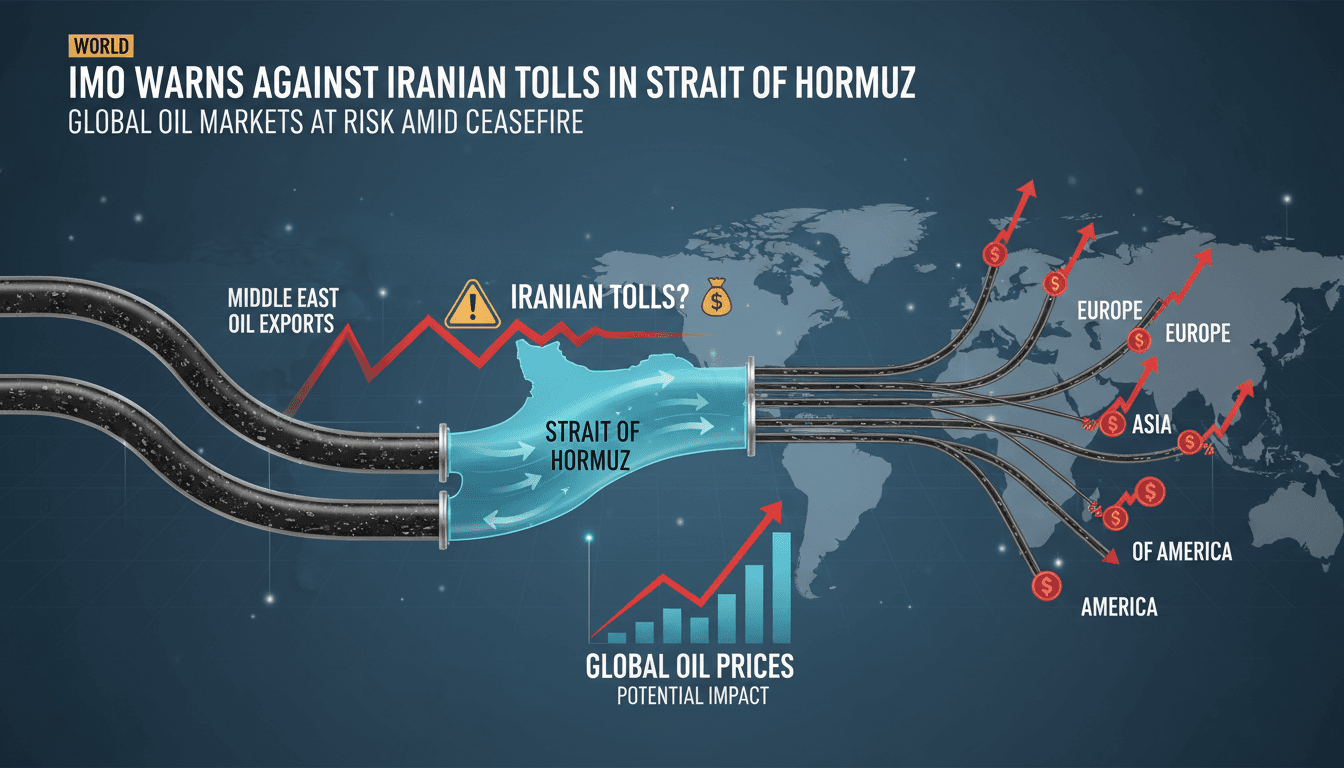
Here's what it means for you.
If you rely on global oil markets, the proposed tolls could lead to increased costs and supply chain disruptions.
Why it matters
The Strait of Hormuz is a critical chokepoint for global oil trade, and tolls could destabilize pricing and access.
What happened (in 30 seconds)
- On April 9, 2026, the International Maritime Organization warned that proposed tolls on vessels in the Strait of Hormuz would set a "dangerous precedent."
- Iran has suggested imposing fees exceeding $1 million per ship, payable in yuan or cryptocurrency, during a fragile ceasefire with the U.S.
- The Strait of Hormuz facilitates approximately 20 million barrels of oil daily, representing one-fifth of global seaborne oil trade.
The context you actually need
- The 2026 Strait of Hormuz crisis began on February 28, 2026, following U.S. and Israeli airstrikes on Iran, leading to Iranian military actions that severely disrupted oil traffic.
- Iran's toll regime, implemented in late March, was aimed at non-adversary vessels, with the goal of leveraging its strategic position in the strait.
- The ongoing U.S.-Iran ceasefire, agreed upon on April 8, 2026, is tenuous, and the toll proposals serve as a bargaining chip in broader geopolitical negotiations.
What's really happening
The Strait of Hormuz is a vital maritime corridor, with about 20 million barrels of oil passing through daily, accounting for 21-27% of global seaborne oil trade. The recent crisis, sparked by military actions and retaliations between the U.S., Israel, and Iran, has led to a significant reduction in oil tanker traffic. Iran's introduction of tolls for vessels transiting the strait has raised alarms within the international community, particularly from the International Maritime Organization (IMO), which warns that such measures could set a dangerous precedent under international law.
The tolls, exceeding $1 million per ship, are proposed to be paid in yuan or cryptocurrency, reflecting Iran's pivot towards alternative currencies amidst U.S. sanctions. This move not only challenges established norms of free passage in international waters but also signals Iran's intent to leverage its geographical advantage for economic gain. The IMO's warning underscores the potential for increased tensions and instability in global oil markets, as shipping firms may reconsider their routes or suspend operations altogether in response to these tolls.
The broader implications of this situation extend beyond immediate shipping costs. If tolls are normalized, it could encourage other nations to impose similar fees in strategic maritime chokepoints, leading to a fragmented and costly global shipping environment. Additionally, the economic fallout from these tolls could exacerbate inflationary pressures in oil-dependent economies, particularly in the Gulf region, where rising fuel prices have already been felt.
As the ceasefire remains fragile, the geopolitical landscape is further complicated by the involvement of major players like the U.S. and the European Union, who are keen on maintaining stability in oil markets. The Iranian government, meanwhile, faces internal pressures to assert its authority and economic viability, making the tolls a politically charged issue. The interplay of these factors creates a precarious situation that could have lasting repercussions for global trade and energy security.
Who feels it first (and how)
- Shipping companies: Increased operational costs and potential route changes.
- Oil-dependent economies: Higher fuel prices and inflation affecting consumers.
- Investors in energy markets: Volatility in oil prices impacting investment strategies.
What to watch next
- Compliance with international maritime law: Observing how the IMO and other nations respond to Iran's toll proposals will be crucial.
- Oil price fluctuations: Monitoring Brent crude prices for signs of instability or recovery following the ceasefire.
- Geopolitical negotiations: Any developments in U.S.-Iran relations that could affect the ceasefire and toll implementation.
The Strait of Hormuz is critical for global oil trade, with 20 million barrels transiting daily.
Shipping costs will rise if tolls are implemented, affecting global oil prices.
The long-term impact on U.S.-Iran relations and the stability of the ceasefire.
Frequently Asked Questions
- Why it matters?
- The Strait of Hormuz is a critical chokepoint for global oil trade, and tolls could destabilize pricing and access.
- What happened (in 30 seconds)?
- On April 9, 2026, the International Maritime Organization warned that proposed tolls on vessels in the Strait of Hormuz would set a "dangerous precedent." Iran has suggested imposing fees exceeding $1 million per ship, payable in yuan or cryptocurrency, during a fragile ceasefire with the U.S. The Strait of Hormuz facilitates approximately 20 million barrels of oil daily, representing one-fifth of global seaborne oil trade.
- What's really happening?
- The Strait of Hormuz is a vital maritime corridor, with about 20 million barrels of oil passing through daily, accounting for 21-27% of global seaborne oil trade. The recent crisis, sparked by military actions and retaliations between the U.S., Israel, and Iran, has led to a significant reduction in oil tanker traffic. Iran's introduction of tolls for vessels transiting the strait has raised alarms within the international community, particularly from the International Maritime Organization (IMO
- Who feels it first (and how)?
- Shipping companies: Increased operational costs and potential route changes. Oil-dependent economies: Higher fuel prices and inflation affecting consumers. Investors in energy markets: Volatility in oil prices impacting investment strategies.
- What to watch next?
- Compliance with international maritime law: Observing how the IMO and other nations respond to Iran's toll proposals will be crucial. Oil price fluctuations: Monitoring Brent crude prices for signs of instability or recovery following the ceasefire. Geopolitical negotiations: Any developments in U.S.-Iran relations that could affect the ceasefire and toll implementation.
Conservative-leaning coverage of current events.
"Fox News is a highly influential conservative news outlet known for right-leaning political commentary and coverage."
— A47 Editor
Strait of Hormuz toll would set 'dangerous precedent,' UN shipping agency warns
The U.N. shipping agency has issued a warning regarding the potential imposition of tolls on vessels passing through the Strait of Hormuz, stating that such a move would establish a 'dangerous precedent.' This warning comes amid rising tensions in th...
U.S. business news, corporate developments, and economy.
"The Wall Street Journal is respected for deep financial and economic reporting with a center-right editorial perspective."
— A47 Editor
What’s Happening in the Strait of Hormuz Since the Cease-Fire?
Following a recent ceasefire agreement between the United States and Iran, limited ship traffic has begun to navigate the Strait of Hormuz, with Iran imposing tolls of up to $2 million per vessel. This development marks a cautious reopening of this c...