
US Summons Iraqi Ambassador After Drone Strikes Targeting Diplomatic Facility in Baghdad
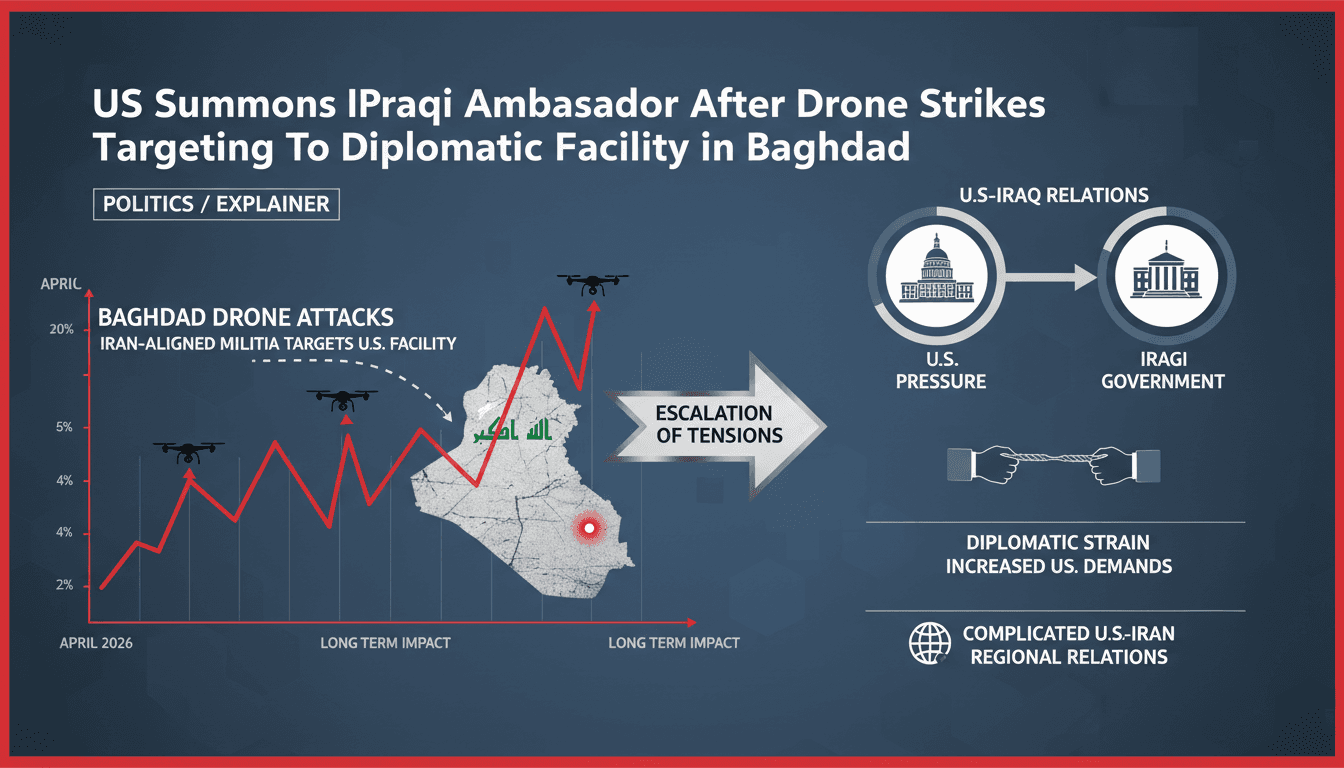
Here's what it means for you.
Increased geopolitical tensions may lead to heightened security measures affecting international travel and trade routes.
Why it matters
This incident underscores the fragility of U.S.-Iraq relations and the potential for regional instability impacting global markets.
What happened (in 30 seconds)
- On April 9, 2026, an Iran-aligned Iraqi militia launched multiple drone attacks near a U.S. diplomatic facility in Baghdad.
- The U.S. responded by summoning the Iraqi ambassador to condemn the Iraqi government's failure to prevent the attacks.
- No casualties were reported, but investigations are ongoing as regional tensions escalate.
The context you actually need
- Iran-supported militias have consistently targeted U.S. interests in Iraq, reflecting ongoing hostilities amid a broader U.S.-Iran confrontation.
- The U.S. State Department has demanded that Iraq take action against militia threats, highlighting the pressure on Iraqi authorities.
- Regional oil futures experienced minor fluctuations due to the incident, indicating market sensitivity to geopolitical events.
What's really happening
The drone attacks on April 9, 2026, represent a significant escalation in the ongoing conflict between U.S. interests and Iran-aligned militias in Iraq. These militias have increasingly targeted U.S. facilities as a form of retaliation against perceived aggressions from the U.S. and its allies, particularly Israel. The attacks are not isolated incidents; they are part of a broader trend of hostilities that have intensified since early 2026, coinciding with a fragile ceasefire agreement between the U.S. and Iran.
The U.S. Embassy in Baghdad quickly attributed the drone strikes to the militia, indicating a clear attribution of responsibility and a demand for accountability from the Iraqi government. The summoning of Iraqi Ambassador Nizar Khirullah by U.S. Deputy Secretary of State Christopher Landau underscores the seriousness of the U.S. stance. While the Iraqi security forces reportedly intercepted some drones, the failure to prevent the attacks has raised questions about the effectiveness of Iraqi security measures and the government's ability to control militia actions.
This incident highlights the complex interplay between local militias and national governments in Iraq, where Iranian influence remains significant. The Iraqi government's inability to prevent such attacks may lead to increased pressure from the U.S. for more decisive action against these militias. Furthermore, it raises concerns about the safety of U.S. personnel and facilities in the region, which could prompt a reevaluation of U.S. diplomatic presence in Iraq.
The ramifications of these tensions extend beyond immediate security concerns. They can affect global oil markets, as even minor escalations in the region can lead to fluctuations in oil prices due to fears of supply disruptions. Additionally, the incident may influence U.S. foreign policy decisions, potentially leading to a reassessment of military and diplomatic strategies in the Middle East.
Who feels it first (and how)
- U.S. diplomats and military personnel in Iraq face heightened security risks.
- Iraqi government officials may experience increased pressure from both domestic and international stakeholders to address militia threats.
- Global oil traders could see market volatility as geopolitical tensions affect supply chain perceptions.
What to watch next
- U.S. military response: Monitor for any changes in U.S. military posture in Iraq, which could indicate a shift in strategy.
- Iraqi government actions: Watch for any announcements or measures taken by the Iraqi government to curb militia activities, which will be critical for regional stability.
- Market reactions: Keep an eye on oil futures and other commodities for fluctuations in response to ongoing tensions, as these can impact global economic conditions.
Multiple drone attacks occurred near U.S. facilities in Baghdad.
Increased diplomatic pressure on Iraq to manage militia threats will continue.
The long-term impact on U.S.-Iraq relations and regional stability remains uncertain.
Frequently Asked Questions
- Why it matters?
- This incident underscores the fragility of U.S.-Iraq relations and the potential for regional instability impacting global markets.
- What happened (in 30 seconds)?
- On April 9, 2026, an Iran-aligned Iraqi militia launched multiple drone attacks near a U.S. diplomatic facility in Baghdad. The U.S. responded by summoning the Iraqi ambassador to condemn the Iraqi government's failure to prevent the attacks. No casualties were reported, but investigations are ongoing as regional tensions escalate.
- What's really happening?
- The drone attacks on April 9, 2026, represent a significant escalation in the ongoing conflict between U.S. interests and Iran-aligned militias in Iraq. These militias have increasingly targeted U.S. facilities as a form of retaliation against perceived aggressions from the U.S. and its allies, particularly Israel. The attacks are not isolated incidents; they are part of a broader trend of hostilities that have intensified since early 2026, coinciding with a fragile ceasefire agreement between t
- Who feels it first (and how)?
- U.S. diplomats and military personnel in Iraq face heightened security risks. Iraqi government officials may experience increased pressure from both domestic and international stakeholders to address militia threats. Global oil traders could see market volatility as geopolitical tensions affect supply chain perceptions.
- What to watch next?
- U.S. military response: Monitor for any changes in U.S. military posture in Iraq, which could indicate a shift in strategy. Iraqi government actions: Watch for any announcements or measures taken by the Iraqi government to curb militia activities, which will be critical for regional stability. Market reactions: Keep an eye on oil futures and other commodities for fluctuations in response to ongoing tensions, as these can impact global economic conditions.
Arabic-language coverage of international news and geopolitics.
"RT Arabic is a Russian state-funded outlet often criticized for promoting Kremlin-aligned narratives."
— A47 Editor
واشنطن تستدعي السفير العراقي بعد هجوم بمسيرة على منشأة دبلوماسية في بغداد
The U.S. State Department announced that Deputy Secretary of State Christopher Landau summoned the Iraqi ambassador following a drone attack on an American diplomatic facility in Baghdad. This incident highlights ongoing security concerns in the regi...
Pan-Arab news coverage spanning politics, business, sports, and regional affairs.
"Asharq Al-Awsat reflects a broad Arab editorial perspective with strong attention to regional geopolitics."
— A47 Editor
الخارجية الأميركية تستدعي سفير العراق بعد هجوم بمسيرة على منشأة دبلوماسية في بغداد
The U.S. Department of State has summoned Iraqi Ambassador Nizar al-Khairallah following a drone attack on a diplomatic facility in Baghdad, as stated by Deputy Secretary of State Christopher Landau. This incident underscores rising tensions in the r...
Regional coverage and analysis focused on politics, diplomacy, and business across the Middle East.
"Al-Monitor is known for analytical reporting on Middle East politics and policy developments."
— A47 Editor
US summons Iraqi ambassador over drone strike on diplomatic facility in Baghdad
U.S. Deputy Secretary of State Christopher Landau summoned the Iraqi ambassador following a drone strike on a major U.S. diplomatic facility in Baghdad. The U.S. Embassy attributed the attack to an Iraqi militia group it claims is aligned with Iran, ...