
Pakistan and Saudi Arabia formalize strategic defense pact amid regional tensions
Here's what it means for you.
If you’re involved in international trade or investment in the Gulf region, this strategic alliance could reshape market dynamics and security frameworks.
Why it matters
The Pakistan-Saudi Arabia alliance is pivotal for regional stability and economic collaboration, influencing trade routes and labor markets across the Arabian Peninsula and South Asia.
What happened (in 30 seconds)
- Diplomatic relations between Saudi Arabia and Pakistan were established in September 1947, rooted in shared Islamic identity and mutual security interests.
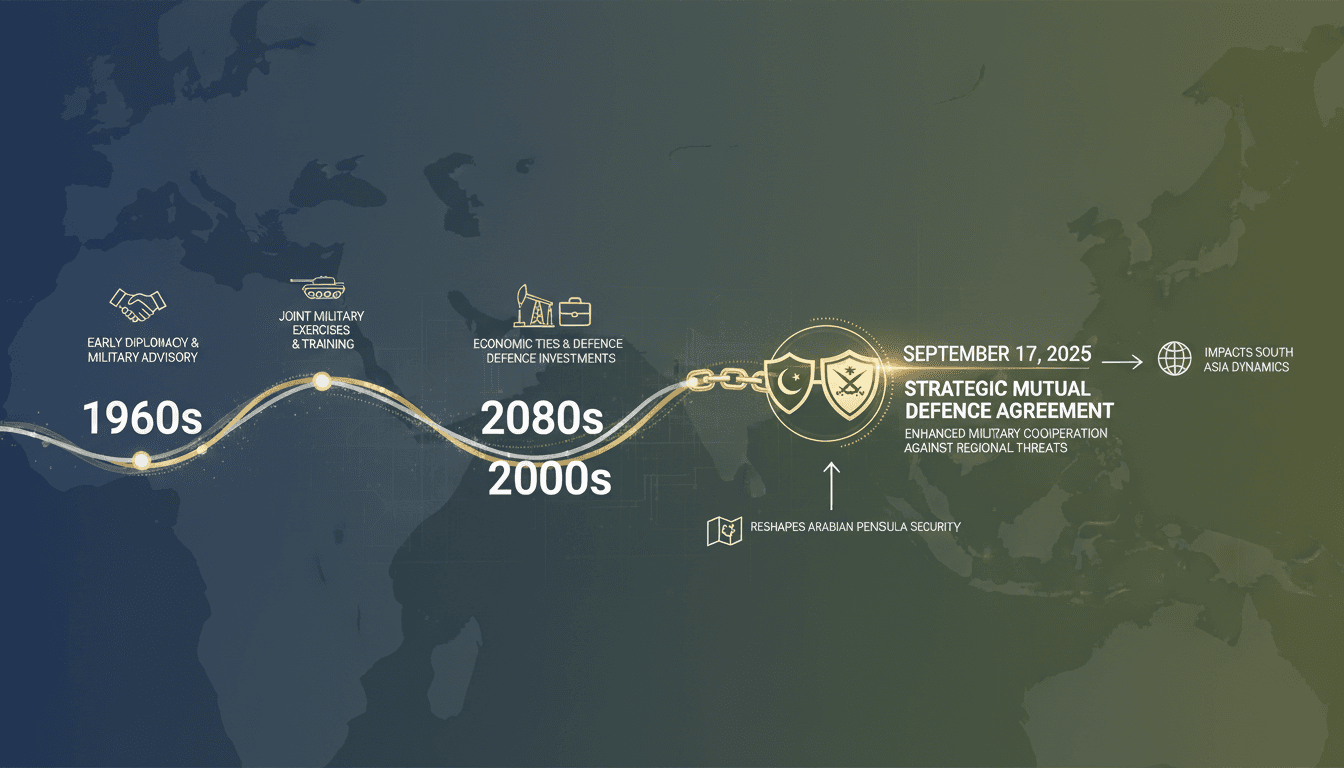
- A Strategic Mutual Defence Agreement was signed on September 17, 2025, amid rising regional threats, marking a significant evolution in their bilateral partnership.
- Pakistan is set to deploy 13,000 troops to Saudi Arabia in 2026, enhancing military cooperation and security assurances in the region.
The context you actually need
- Historical ties between Saudi Arabia and Pakistan date back to 1947, with a Treaty of Friendship formalized in 1951, establishing a foundation for military and economic collaboration.
- Geopolitical challenges have tested this relationship, including strains during the 2015 Yemen conflict, but recent developments indicate a renewed commitment to mutual defense.
- Economic interdependence is significant, with Saudi investments in Pakistan exceeding $20 billion, and a large Pakistani diaspora in Saudi Arabia contributing to both economies.
What's really happening
The Pakistan-Saudi Arabia relationship has evolved significantly since its inception in 1947, driven by a combination of shared religious identity, geopolitical interests, and economic interdependence. The recent signing of the Strategic Mutual Defence Agreement in 2025 marks a pivotal moment in this alliance, reflecting a response to increasing regional threats, particularly from Iran.
Historically, Saudi Arabia was one of the first countries to recognize Pakistan after its independence, establishing a bond that has been reinforced through various military and economic agreements over the decades. The Treaty of Friendship in 1951 formalized these ties, and subsequent military collaborations, such as the deployment of Pakistani troops to protect Saudi holy sites, have solidified their defense interdependence.
The geopolitical landscape has not been without its challenges. The 2015 Yemen conflict strained relations when Pakistan opted not to participate in the Saudi-led coalition. However, the recent agreement signals a renewed commitment to mutual defense, with both nations recognizing the need for a united front against external threats. This is particularly relevant given the rising tensions in the region, especially concerning Iran's influence.
The economic dimensions of this alliance are equally significant. Saudi Arabia has invested heavily in Pakistan, with financial support exceeding $20 billion, which includes loans and investments aimed at bolstering Pakistan's economy. The presence of approximately 2.64 million Pakistanis in Saudi Arabia further underscores the economic ties, as remittances from this diaspora play a crucial role in Pakistan's economy.
The 2025 Mutual Defence Pact is not just a military agreement; it represents a strategic alignment that could reshape the security architecture of the Gulf region. As Pakistan prepares to deploy troops in 2026, the implications for regional stability and economic collaboration are profound. This partnership could enhance security for trade routes, benefiting not only Saudi Arabia and Pakistan but also neighboring countries, including the UAE, where many Pakistani expatriates reside.
Who feels it first (and how)
- Pakistani expatriates in Saudi Arabia, who may see increased job security and opportunities due to strengthened bilateral ties.
- Investors in both countries, particularly those involved in infrastructure and energy projects, who could benefit from enhanced economic cooperation.
- Regional businesses in the Gulf, which may experience shifts in trade dynamics and labor markets as a result of the strengthened alliance.
What to watch next
- Troop deployments in 2026: The impact of Pakistani troop presence in Saudi Arabia will be crucial for regional security and could influence local economies.
- Economic investments: Monitor new Saudi investments in Pakistan, particularly in infrastructure projects, which could signal deeper economic integration.
- Regional tensions: Keep an eye on Iran's response to the strengthened Saudi-Pakistan alliance, as it could lead to shifts in regional power dynamics.
The historical ties and mutual interests that have shaped the Pakistan-Saudi Arabia relationship since 1947.
Increased military cooperation and economic investments as a result of the 2025 Mutual Defence Pact.
The long-term implications of this alliance on regional stability and how it will affect relations with Iran and other neighboring countries.
Frequently Asked Questions
- Why it matters?
- The Pakistan-Saudi Arabia alliance is pivotal for regional stability and economic collaboration, influencing trade routes and labor markets across the Arabian Peninsula and South Asia.
- What happened (in 30 seconds)?
- Diplomatic relations between Saudi Arabia and Pakistan were established in September 1947, rooted in shared Islamic identity and mutual security interests. A Strategic Mutual Defence Agreement was signed on September 17, 2025, amid rising regional threats, marking a significant evolution in their bilateral partnership. Pakistan is set to deploy 13,000 troops to Saudi Arabia in 2026, enhancing military cooperation and security assurances in the region.
- What's really happening?
- The Pakistan-Saudi Arabia relationship has evolved significantly since its inception in 1947, driven by a combination of shared religious identity, geopolitical interests, and economic interdependence. The recent signing of the Strategic Mutual Defence Agreement in 2025 marks a pivotal moment in this alliance, reflecting a response to increasing regional threats, particularly from Iran. Historically, Saudi Arabia was one of the first countries to recognize Pakistan after its independence, estab
- Who feels it first (and how)?
- Pakistani expatriates in Saudi Arabia, who may see increased job security and opportunities due to strengthened bilateral ties. Investors in both countries, particularly those involved in infrastructure and energy projects, who could benefit from enhanced economic cooperation. Regional businesses in the Gulf, which may experience shifts in trade dynamics and labor markets as a result of the strengthened alliance.
- What to watch next?
- Troop deployments in 2026: The impact of Pakistani troop presence in Saudi Arabia will be crucial for regional security and could influence local economies. Economic investments: Monitor new Saudi investments in Pakistan, particularly in infrastructure projects, which could signal deeper economic integration. Regional tensions: Keep an eye on Iran's response to the strengthened Saudi-Pakistan alliance, as it could lead to shifts in regional power dynamics.
Arabic-language reporting on global and regional news.
"BBC Arabic is part of the BBC, generally regarded for editorial standards and broad international coverage."
— A47 Editor
السعودية وباكستان، ما تاريخ العلاقة بين البلدين؟
Saudi Arabia and Pakistan are deepening their cooperation, highlighted by a financial support package from Saudi Arabia amounting to $3 billion. This development marks a significant step in the bilateral relations between the two countries, reflectin...
Regional and international reporting focused on Middle Eastern politics, diplomacy, and economics.
"Asharq Al-Awsat is a Saudi-owned international newspaper reflecting mainstream Gulf political perspectives."
— A47 Editor
Saudi Arabia Pledges $3 Billion More in Financial Support to Pakistan
Saudi Arabia has pledged an additional $3 billion in financial support to Pakistan, aimed at alleviating the country's debt pressures and stabilizing its economy amid ongoing financial challenges. This commitment follows a recent official visit by th...