
ACI Europe Warns of Jet Fuel Shortage Due to Hormuz Blockade
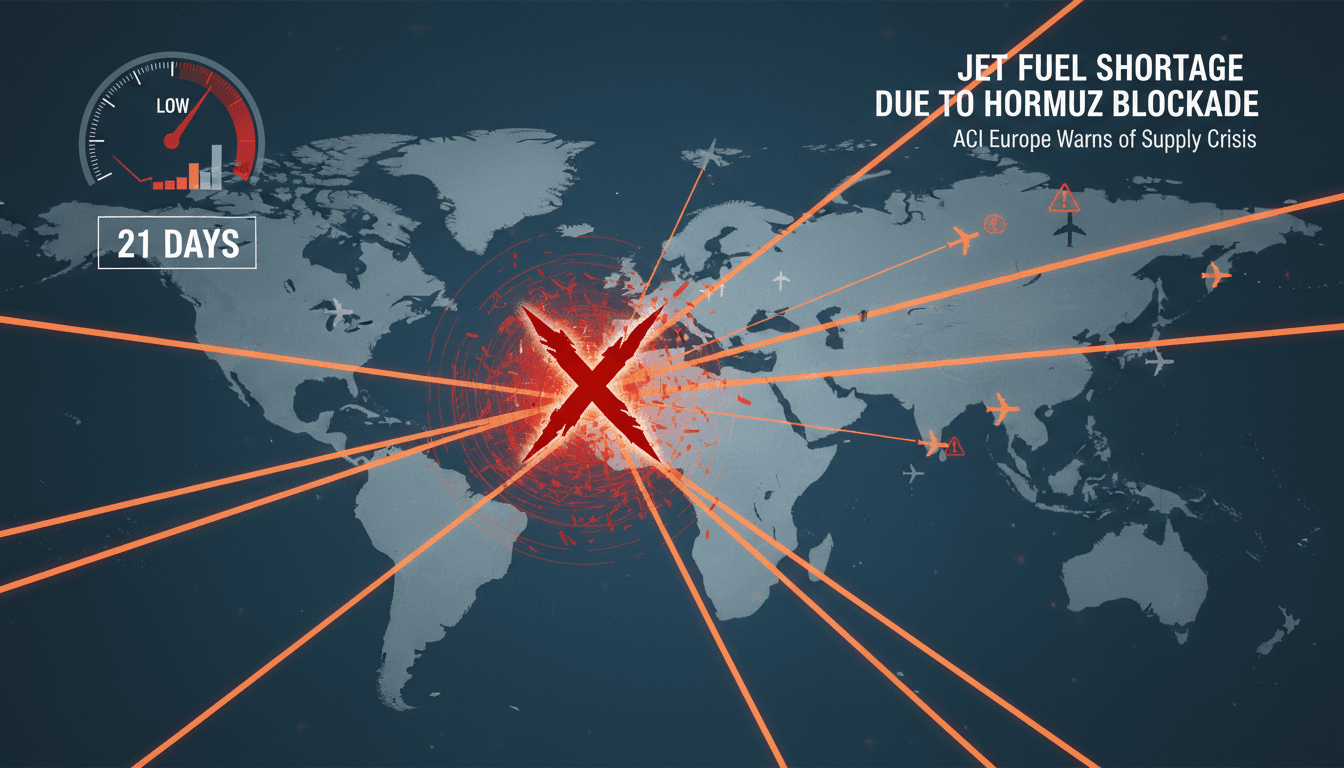
Here's what it means for you.
If you travel to or from Europe this summer, expect higher airfares and potential flight disruptions.
Why it matters
A systemic jet fuel shortage could lead to mass flight cancellations, impacting travel plans and the economy.
What happened (in 30 seconds)
- April 9, 2026: Airports Council International Europe (ACI Europe) warns of an impending jet fuel shortage due to the blockade of the Strait of Hormuz.
- February 28, 2026: Iran blocks the strait, crucial for jet fuel imports, amid escalating conflict with the US and Israel.
- April 11, 2026: Jet fuel prices double globally, with European airlines considering capacity cuts as the summer travel season approaches.
The context you actually need
- Over 40% of Europe's jet fuel shipments transit the Strait of Hormuz, making it a critical chokepoint for aviation fuel.
- Europe sources more than 60% of its jet fuel from the Middle East, heightening vulnerability compared to more diversified crude supplies.
- The ongoing US-Iran-Israel conflict has created a precarious situation, with military actions leading to the blockade and subsequent economic repercussions.
What's really happening
The blockade of the Strait of Hormuz, initiated by Iran on February 28, 2026, has triggered a significant crisis in jet fuel supply for Europe. This strategic waterway is vital for global energy transport, handling over 40% of Europe's jet fuel shipments. The blockade arose from escalating tensions linked to the 2026 US-Iran-Israel conflict, where Iranian forces retaliated against military actions by the US and Israel, including strikes in Lebanon.
As the blockade persists, ACI Europe has raised alarms about the impending fuel shortages that could materialize within three weeks if the situation does not improve. With the peak summer travel season approaching, the potential for mass flight cancellations at major airports like Heathrow, Frankfurt, and Schiphol poses a serious threat not only to travelers but also to the broader economy reliant on aviation.
The economic implications are already visible, with jet fuel prices skyrocketing to $1,650 per tonne globally—an increase of 138% in Europe alone. Airlines are feeling the pinch, with UK carriers like Ryanair considering capacity cuts of up to 10% and others canceling routes altogether. The European Commission has yet to respond publicly to ACI Europe's warnings, but the urgency is palpable as energy traders note rising refining premiums and the risk of unhedged carriers facing operational paralysis.
In Dubai, the impact is equally pronounced. The city, a key transit hub, is experiencing elevated airfares and potential flight disruptions due to the blockade's effect on 21% of global seaborne jet fuel trade. Emirates Airlines has begun evacuating tourists amid regional tensions, and the doubling of jet fuel prices is raising travel costs for outbound flights to Europe, straining the local aviation-dependent economy.
Who feels it first (and how)
- Travelers: Increased airfares and potential flight cancellations disrupt travel plans.
- Airlines: Capacity cuts and route cancellations affect profitability and operational viability.
- Cargo operators: Disruptions in air cargo operations impact supply chains and logistics.
- Economies: Regions reliant on tourism and aviation face economic downturns due to reduced travel activity.
What to watch next
- Airfare trends: Monitor changes in ticket prices as airlines adjust to fuel costs and potential shortages.
- Government responses: Watch for any policy measures from the European Commission regarding collective purchasing or state aid for airlines.
- Conflict developments: Keep an eye on the geopolitical situation in the Strait of Hormuz, as any escalation could further impact fuel supplies.
Jet fuel prices have doubled globally, significantly affecting European markets.
Airlines will implement capacity cuts and route cancellations as the summer travel season approaches.
The duration of the Strait of Hormuz blockade and its long-term implications for global fuel supply chains.
Frequently Asked Questions
- Why it matters?
- A systemic jet fuel shortage could lead to mass flight cancellations, impacting travel plans and the economy.
- What happened (in 30 seconds)?
- April 9, 2026: Airports Council International Europe (ACI Europe) warns of an impending jet fuel shortage due to the blockade of the Strait of Hormuz. February 28, 2026: Iran blocks the strait, crucial for jet fuel imports, amid escalating conflict with the US and Israel. April 11, 2026: Jet fuel prices double globally, with European airlines considering capacity cuts as the summer travel season approaches.
- What's really happening?
- The blockade of the Strait of Hormuz, initiated by Iran on February 28, 2026, has triggered a significant crisis in jet fuel supply for Europe. This strategic waterway is vital for global energy transport, handling over 40% of Europe's jet fuel shipments. The blockade arose from escalating tensions linked to the 2026 US-Iran-Israel conflict, where Iranian forces retaliated against military actions by the US and Israel, including strikes in Lebanon. As the blockade persists, ACI Europe has rais
- Who feels it first (and how)?
- Travelers: Increased airfares and potential flight cancellations disrupt travel plans. Airlines: Capacity cuts and route cancellations affect profitability and operational viability. Cargo operators: Disruptions in air cargo operations impact supply chains and logistics. Economies: Regions reliant on tourism and aviation face economic downturns due to reduced travel activity.
- What to watch next?
- Airfare trends: Monitor changes in ticket prices as airlines adjust to fuel costs and potential shortages. Government responses: Watch for any policy measures from the European Commission regarding collective purchasing or state aid for airlines. Conflict developments: Keep an eye on the geopolitical situation in the Strait of Hormuz, as any escalation could further impact fuel supplies.
Macro commentary, policy analysis, growth/inflation themes, and global outlooks.
"Contextual macro coverage that complements day-to-day market headlines."
— A47 Editor
EU airports warn of looming "systemic" jet fuel crunch on Hormuz blockade
European airports have issued warnings of an impending jet fuel shortage, attributing the crisis to ongoing disruptions in oil supplies from the Middle East, particularly through the Strait of Hormuz. This situation is expected to escalate within thr...
Corporate news, economic trends, and markets with UK and global scope.
"BBC News is widely regarded as reputable and impartial, with a public service mandate."
— A47 Editor
EU airline industry warns of fuel shortages if Strait of Hormuz stays closed
The Airports Council International (ACI) Europe has raised alarms regarding potential jet fuel shortages in the European airline industry if the Strait of Hormuz remains closed. This situation has led to increasing concerns among its members about th...