
U.S. Forces Board Sanctioned Iranian Oil Tanker in Indian Ocean
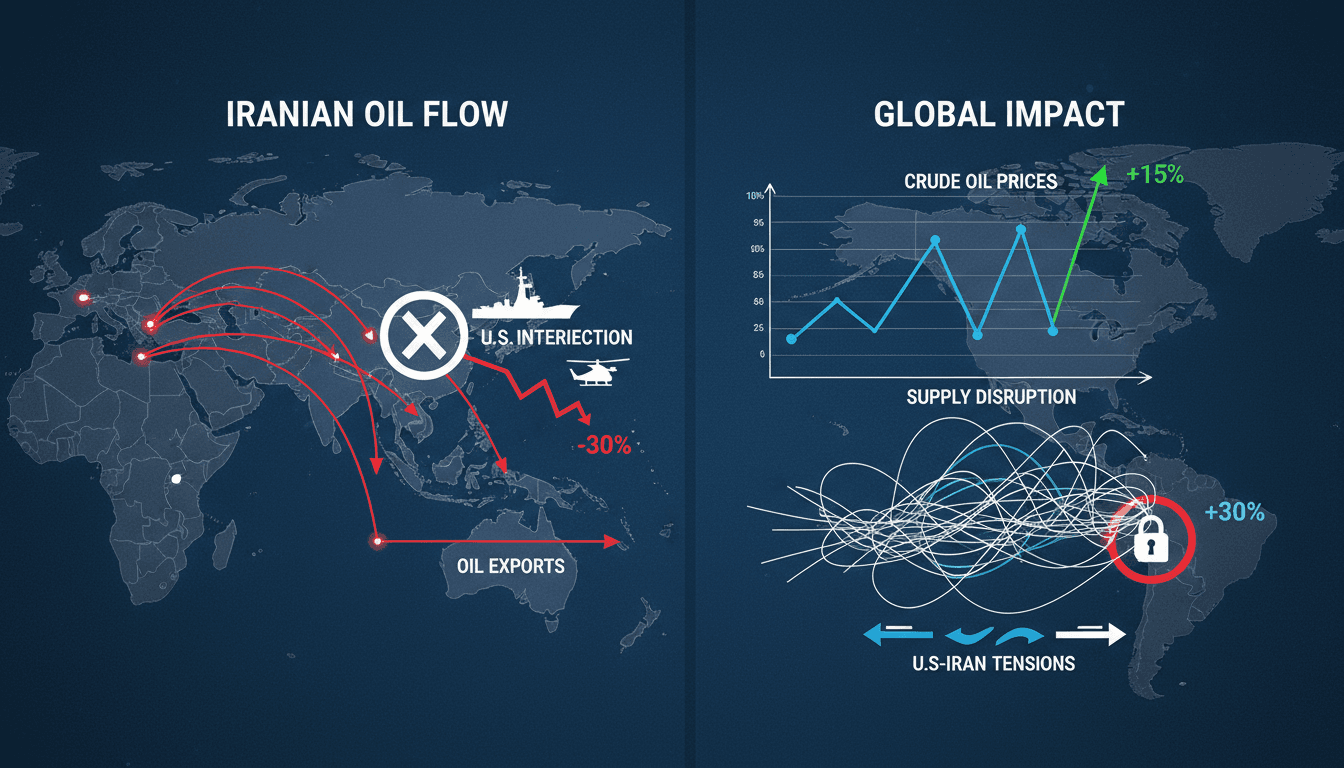
Here's what it means for you.
If you’re involved in global trade or energy markets, this operation could impact shipping costs and oil prices.
Why it matters
This operation underscores the U.S. commitment to enforcing sanctions against Iran, which could lead to increased volatility in global oil markets.
What happened (in 30 seconds)
- On April 21, 2026, U.S. forces boarded the sanctioned oil tanker M/T Tifani in the Indian Ocean.
- The tanker was carrying 2 million barrels of Iranian crude oil, previously loaded at Kharg Island.
- This action is part of a broader strategy to disrupt Iran's oil smuggling networks funding regional proxies.
The context you actually need
- The M/T Tifani is part of Iran's shadow fleet, which has been evading sanctions aimed at limiting oil exports to fund military activities.
- U.S. maritime enforcement has intensified, with recent operations targeting vessels linked to both Iran and Venezuela, indicating a global crackdown on sanction violations.
- The operation occurred amid fragile ceasefire talks between Iran and other regional actors, adding a layer of geopolitical tension to the situation.
What's really happening
The boarding of the M/T Tifani is a significant move in the ongoing U.S. strategy to enforce sanctions against Iran, particularly those aimed at curbing the funding of the Islamic Revolutionary Guard Corps (IRGC) and its proxies, such as Hezbollah and the Houthis. The U.S. Indo-Pacific Command executed the operation under the right-of-visit principle, which allows naval forces to board vessels in international waters if they suspect illegal activities.
The M/T Tifani, a very large crude carrier (VLCC), was intercepted while transporting approximately 2 million barrels of crude oil, a substantial quantity that highlights the scale of Iran's oil smuggling operations. This operation is not an isolated incident; it follows a series of interdictions targeting vessels linked to Iran and Venezuela, signaling a coordinated effort to disrupt illicit oil flows. The U.S. has been increasingly vigilant in monitoring maritime traffic in the Indian Ocean, particularly as tensions in the region escalate.
The implications of this operation extend beyond immediate enforcement actions. The U.S. has made it clear that it will not allow sanctioned vessels to find refuge in international waters, which could deter other vessels from engaging in similar activities. This creates a ripple effect in global shipping and oil markets, as companies may reassess their risk exposure to sanctions when dealing with Iranian oil.
Moreover, the operation has already influenced oil futures, which rose by 2-3% intraday due to fears of supply disruptions. This reflects the market's sensitivity to geopolitical events, particularly those involving major oil-producing nations. As the U.S. continues to ramp up its maritime enforcement, the potential for increased volatility in oil prices and shipping costs becomes more pronounced.
In the broader context, the U.S. actions are part of a strategic effort to maintain pressure on Iran amid ongoing negotiations and regional tensions. The boarding of the M/T Tifani serves as a reminder of the complexities involved in international maritime law, sanctions enforcement, and the geopolitical landscape of the Middle East.
Who feels it first (and how)
- Shipping companies: Increased scrutiny and potential delays in shipping routes could raise operational costs.
- Oil traders: Fluctuations in oil prices due to supply disruption fears will impact trading strategies.
- Regional economies: Countries reliant on oil imports may face higher prices and supply chain disruptions.
- Insurance firms: Elevated marine insurance rates for tankers operating in high-risk areas could affect profitability.
What to watch next
- Oil price trends: Monitor fluctuations in oil futures as they respond to geopolitical events and U.S. enforcement actions.
- Shipping routes: Watch for changes in tanker traffic patterns, particularly through the Strait of Hormuz, as companies adjust to increased risks.
- Iran's response: Keep an eye on Iran's diplomatic and military reactions, especially regarding ongoing ceasefire talks and potential retaliatory actions.
The U.S. will continue to enforce sanctions against Iran and its oil smuggling operations.
Increased volatility in oil prices and shipping costs as markets react to enforcement actions.
The long-term impact on U.S.-Iran relations and the effectiveness of sanctions in curbing Iran's regional influence.
Frequently Asked Questions
- Why it matters?
- This operation underscores the U.S. commitment to enforcing sanctions against Iran, which could lead to increased volatility in global oil markets.
- What happened (in 30 seconds)?
- On April 21, 2026, U.S. forces boarded the sanctioned oil tanker M/T Tifani in the Indian Ocean. The tanker was carrying 2 million barrels of Iranian crude oil, previously loaded at Kharg Island. This action is part of a broader strategy to disrupt Iran's oil smuggling networks funding regional proxies.
- What's really happening?
- The boarding of the M/T Tifani is a significant move in the ongoing U.S. strategy to enforce sanctions against Iran, particularly those aimed at curbing the funding of the Islamic Revolutionary Guard Corps (IRGC) and its proxies, such as Hezbollah and the Houthis. The U.S. Indo-Pacific Command executed the operation under the right-of-visit principle, which allows naval forces to board vessels in international waters if they suspect illegal activities. The M/T Tifani, a very large crude carrie
- Who feels it first (and how)?
- Shipping companies: Increased scrutiny and potential delays in shipping routes could raise operational costs. Oil traders: Fluctuations in oil prices due to supply disruption fears will impact trading strategies. Regional economies: Countries reliant on oil imports may face higher prices and supply chain disruptions. Insurance firms: Elevated marine insurance rates for tankers operating in high-risk areas could affect profitability.
- What to watch next?
- Oil price trends: Monitor fluctuations in oil futures as they respond to geopolitical events and U.S. enforcement actions. Shipping routes: Watch for changes in tanker traffic patterns, particularly through the Strait of Hormuz, as companies adjust to increased risks. Iran's response: Keep an eye on Iran's diplomatic and military reactions, especially regarding ongoing ceasefire talks and potential retaliatory actions.
National headlines across the United States including breaking stories and societal issues.
"NBC News is a mainstream media outlet known for comprehensive national and international news coverage with a centrist to slightly left-leaning editorial tone."
— A47 Editor
U.S. forces board sanctioned oil tanker in Indian Ocean
U.S. forces successfully boarded the sanctioned oil tanker M/T Tifani in the Indian Ocean, as confirmed by the Pentagon. This operation, classified as a 'right-of-visit, maritime' interdiction, is part of ongoing efforts to enforce sanctions against ...
Regional and international reporting focused on Middle Eastern politics, diplomacy, and economics.
"Asharq Al-Awsat is a Saudi-owned international newspaper reflecting mainstream Gulf political perspectives."
— A47 Editor
US Forces Board a Sanctioned Oil Tanker in the Indian Ocean, the Pentagon Says
U.S. forces have boarded a sanctioned oil tanker in the Indian Ocean, as confirmed by the Pentagon. This operation is part of a broader strategy to enforce economic sanctions against Iran and prevent the shipment of Iranian oil, which is seen as a vi...
Capitol Hill news, legislation, and policy insight.
"The Hill specializes in U.S. politics and policy, with a focus on Capitol Hill developments and a reputation for insider reporting."
— A47 Editor
US forces board sanctioned vessel without incident, Pentagon says
U.S. forces successfully boarded the sanctioned oil tanker M/T Tifani in the Indian Ocean, as confirmed by the Pentagon. This operation, classified as a “right-of-visit, maritime” interdiction, occurred within the U.S. Indo-Pacific Command area of re...
Corporate leadership, finance, technology, and market trends.
"Fortune covers financial trends, leadership, and innovation with a pragmatic editorial approach."
— A47 Editor
U.S. forces board an oil tanker previously sanctioned for smuggling Iranian crude oil
U.S. forces conducted a right-of-visit maritime interdiction aboard the M/T Tifani, an oil tanker previously sanctioned for smuggling Iranian crude oil. This operation highlights ongoing tensions regarding the enforcement of sanctions against Iranian...
Conservative-leaning political and national coverage.
"The Washington Times is a conservative-leaning newspaper known for its political coverage and advocacy of right-of-center viewpoints."
— A47 Editor
U.S. forces board sanctioned tanker in Indo-Pacific carrying Iranian oil, Pentagon says
The U.S. military intercepted and boarded a sanctioned cargo vessel carrying Iranian oil in the Indo-Pacific region, as confirmed by the Pentagon. This operation highlights ongoing enforcement actions against vessels violating U.S. sanctions.
Conservative-leaning political and national coverage.
"The Washington Times is a conservative-leaning newspaper known for its political coverage and advocacy of right-of-center viewpoints."
— A47 Editor
U.S. forces board a sanctioned oil tanker in the Indian Ocean, the Pentagon says
U.S. forces have successfully boarded the sanctioned oil tanker M/T Tifani in the Indian Ocean, as confirmed by the Pentagon. This operation, classified as a 'right-of-visit, maritime' interdiction, is part of ongoing efforts to enforce sanctions aga...
Pan-Arab news coverage spanning politics, business, sports, and regional affairs.
"Asharq Al-Awsat reflects a broad Arab editorial perspective with strong attention to regional geopolitics."
— A47 Editor
قوات أميركية تعتلي ناقلة خاضعة للعقوبات بمنطقة المحيطين الهندي والهادئ
U.S. forces boarded an oil tanker that is under sanctions in the Indian and Pacific Oceans without any reported clashes. This action highlights ongoing tensions in maritime operations and the enforcement of international sanctions.