
Lebanon Ceasefire Requires Separate Arrangement from US-Iran Truce
Here's what it means for you.
The ongoing conflict dynamics in Lebanon could impact global energy markets and regional security, affecting your business operations and costs.
Why it matters
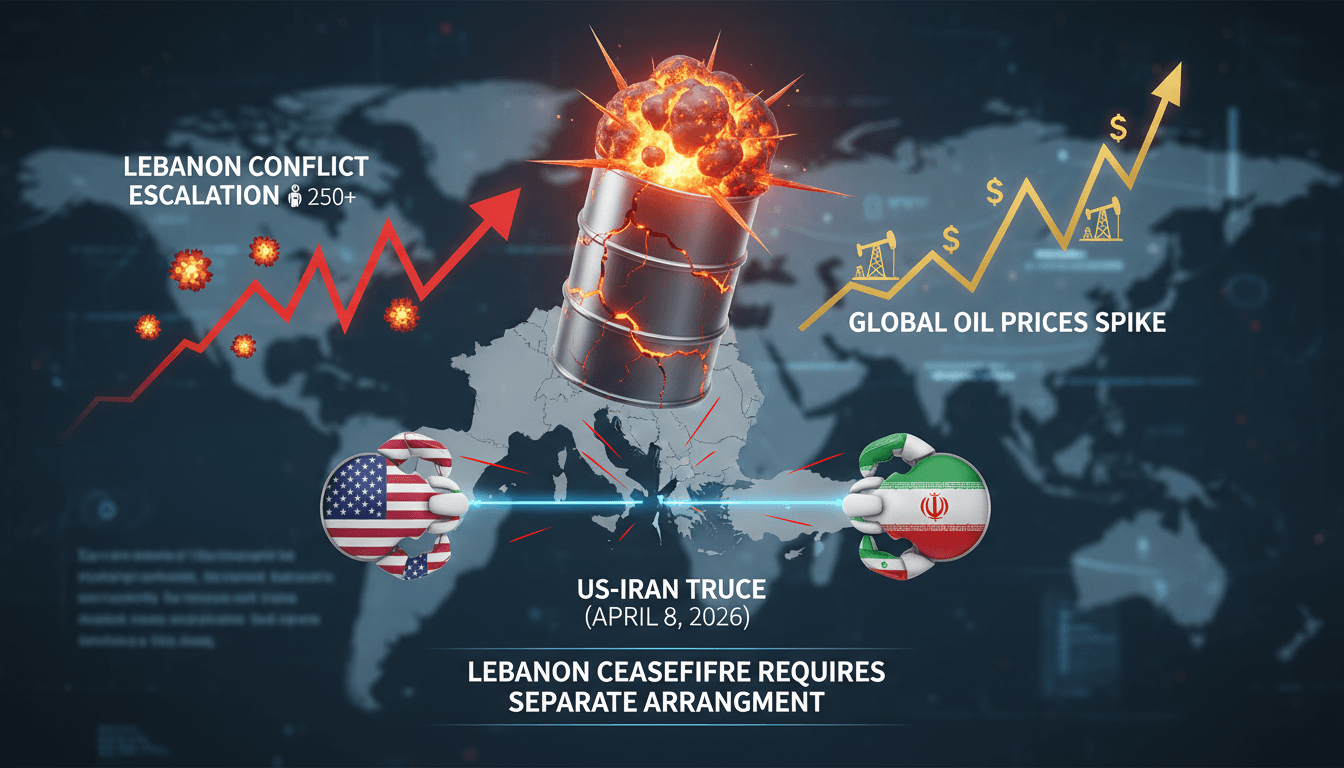
The separation of the Lebanon conflict from the US-Iran ceasefire complicates regional stability and could lead to increased volatility in oil prices.
What happened (in 30 seconds)
- On April 9, 2026, Israeli Defense Minister Israel Katz and US President Donald Trump asserted that peace in Lebanon requires a distinct arrangement from the US-Iran ceasefire.
- Israeli strikes on Hezbollah targets in Lebanon resulted in over 250 deaths, escalating tensions despite a two-week truce between the US and Iran.
- Iran threatened to unravel the ceasefire agreement, claiming violations from Israel's military actions.
The context you actually need
- The Israel-Hezbollah war has been escalating since late 2024, coinciding with direct US-Iran hostilities and Iranian attacks on Gulf states.
- The US-Iran ceasefire, mediated by Pakistan, aims to halt hostilities but explicitly excludes the Israel-Hezbollah conflict, allowing Israel to act independently.
- The situation has led to rising oil prices, with fears of Gulf security and trade disruptions affecting markets in the UAE and beyond.
What's really happening
The recent developments in Lebanon highlight a complex interplay of regional conflicts, diplomatic negotiations, and military actions. The US-Iran ceasefire, which took effect on April 8, 2026, was intended to create a temporary pause in hostilities, allowing for diplomatic discussions. However, the Israeli government, led by Defense Minister Katz, insisted that the situation in Lebanon, particularly regarding Hezbollah, must be treated as a separate issue. This insistence stems from Israel's long-standing concerns about Hezbollah's military capabilities and its ties to Iran.
The Israeli strikes on April 8, which resulted in 254 fatalities, were a direct response to perceived threats from Hezbollah. This military action occurred just hours after the US-Iran ceasefire was announced, signaling Israel's determination to maintain its operational freedom against Hezbollah, irrespective of broader diplomatic efforts. The Israeli leadership views Hezbollah as an immediate and existential threat, necessitating a proactive military stance.
Iran's reaction to the Israeli strikes was swift and severe. Iranian officials accused Israel of violating the ceasefire framework and threatened to respond, raising the stakes for all parties involved. The Iranian Foreign Minister's insistence on including Lebanon in the ceasefire discussions underscores Iran's strategic interest in maintaining influence over Hezbollah and the broader region. The potential for retaliatory actions from Iran could further destabilize the already volatile situation.
The implications of these events extend beyond the immediate conflict. The rising tensions have already led to a 5% increase in oil prices, driven by fears of disruptions in the Strait of Hormuz, a critical chokepoint for global oil shipments. This price surge could have significant ramifications for economies reliant on oil exports, particularly in the UAE, where energy costs directly impact consumers and businesses.
As the situation unfolds, the decoupling of the Lebanon conflict from the US-Iran ceasefire may lead to a prolonged period of instability in the region. The potential for further military escalations, coupled with diplomatic failures, could create a feedback loop of violence and retaliation, complicating any efforts for lasting peace.
Who feels it first (and how)
- Energy sector: Companies reliant on stable oil prices may face increased costs and volatility.
- Investors: Market fluctuations due to geopolitical tensions can impact stock prices and investment strategies.
- Residents of Dubai: Rising fuel costs and potential trade disruptions could affect daily expenses and economic stability.
What to watch next
- Iran's military response: Any retaliatory actions from Iran could escalate tensions further and impact regional stability.
- US diplomatic efforts: Monitoring the effectiveness of US mediation in the region will be crucial for understanding future conflict dynamics.
- Oil price fluctuations: Continued volatility in oil prices will signal broader economic impacts and could influence global markets.
Israeli military operations in Lebanon are ongoing and separate from the US-Iran ceasefire.
Tensions between Iran and Israel will continue to escalate, impacting regional security.
The long-term effectiveness of the US-Iran ceasefire in stabilizing the region remains uncertain.
Frequently Asked Questions
- Why it matters?
- The separation of the Lebanon conflict from the US-Iran ceasefire complicates regional stability and could lead to increased volatility in oil prices.
- What happened (in 30 seconds)?
- On April 9, 2026, Israeli Defense Minister Israel Katz and US President Donald Trump asserted that peace in Lebanon requires a distinct arrangement from the US-Iran ceasefire. Israeli strikes on Hezbollah targets in Lebanon resulted in over 250 deaths, escalating tensions despite a two-week truce between the US and Iran. Iran threatened to unravel the ceasefire agreement, claiming violations from Israel's military actions.
- What's really happening?
- The recent developments in Lebanon highlight a complex interplay of regional conflicts, diplomatic negotiations, and military actions. The US-Iran ceasefire, which took effect on April 8, 2026, was intended to create a temporary pause in hostilities, allowing for diplomatic discussions. However, the Israeli government, led by Defense Minister Katz, insisted that the situation in Lebanon, particularly regarding Hezbollah, must be treated as a separate issue. This insistence stems from Israel's lo
- Who feels it first (and how)?
- Energy sector: Companies reliant on stable oil prices may face increased costs and volatility. Investors: Market fluctuations due to geopolitical tensions can impact stock prices and investment strategies. Residents of Dubai: Rising fuel costs and potential trade disruptions could affect daily expenses and economic stability.
- What to watch next?
- Iran's military response: Any retaliatory actions from Iran could escalate tensions further and impact regional stability. US diplomatic efforts: Monitoring the effectiveness of US mediation in the region will be crucial for understanding future conflict dynamics. Oil price fluctuations: Continued volatility in oil prices will signal broader economic impacts and could influence global markets.
International coverage from The Guardian's global desks.
"The Guardian is known for its progressive editorial stance and in-depth analysis."
— A47 Editor
Netanyahu says there is no ceasefire in Lebanon as Israel launches fresh strikes
Israeli Prime Minister Benjamin Netanyahu has declared that there will be no ceasefire in Lebanon, as Israel continues its military operations against Hezbollah, resulting in over 300 casualties. This announcement follows a series of airstrikes targe...
News from the United States including domestic politics, society, and culture.
"The Guardian is known for its progressive editorial stance and in-depth analysis, often advocating for social justice, environmental issues, and liberal values."
— A47 Editor
Netanyahu says there is no ceasefire in Lebanon as Israel launches fresh strikes
Israeli Prime Minister Benjamin Netanyahu has declared that there will be no ceasefire in Lebanon, as Israel continues its military operations against Hezbollah, resulting in over 300 casualties. This announcement follows a series of airstrikes targe...
UAE-based English-language newspaper covering regional politics, economics, and global affairs.
"The National reflects Emirati policy perspectives while maintaining international editorial standards."
— A47 Editor
Lebanon peace may need 'separate arrangement' to Iran ceasefire
Lebanon is exploring the possibility of a separate arrangement to achieve peace, particularly in light of ongoing military tensions with Israel and demands from Iran for a ceasefire. This initiative comes as Lebanon seeks a temporary ceasefire to fac...
Conservative-leaning political and national coverage.
"The Washington Times is a conservative-leaning newspaper known for its political coverage and advocacy of right-of-center viewpoints."
— A47 Editor
Iran warns ceasefire violations will meet 'strong' response, as Lebanon emerges as sticking point
A senior Iranian official has issued a warning that any violations of the recent U.S.-Iran ceasefire will incur significant consequences, as tensions escalate over ongoing Israeli military actions in Lebanon. This comes amid calls from European leade...
News from the United States including domestic politics, society, and culture.
"The Guardian is known for its progressive editorial stance and in-depth analysis, often advocating for social justice, environmental issues, and liberal values."
— A47 Editor
First Thing: Ceasefire in peril as Israel assaults Lebanon and Iran blocks oil tankers
The fragile two-week ceasefire between the U.S. and Iran is at risk as Israel escalates its military operations in Lebanon, intensifying airstrikes that have resulted in significant casualties. Iran has responded by blocking oil tankers in the Strait...
International coverage from The Guardian's global desks.
"The Guardian is known for its progressive editorial stance and in-depth analysis."
— A47 Editor
First Thing: Ceasefire in peril as Israel assaults Lebanon and Iran blocks oil tankers
The fragile two-week ceasefire between the U.S. and Iran is at risk as Israel escalates its military operations in Lebanon, intensifying airstrikes that have resulted in significant casualties. Iran has responded by blocking oil tankers in the Strait...
News from the United States including domestic politics, society, and culture.
"Global News is a mainstream Canadian media outlet generally considered to have a centrist editorial stance, covering news with a focus on factual reporting and national interest."
— A47 Editor
Israel seeks direct talks with Lebanon to smooth Iran ceasefire efforts
Following the announcement of a ceasefire, Israel launched extensive airstrikes on Beirut, targeting Hezbollah positions, which has led to significant casualties and destruction. This escalation raises questions about the effectiveness of the ceasefi...
International coverage of politics, security, and social issues.
"Global News is a mainstream Canadian outlet with a centrist editorial stance, focusing on factual reporting."
— A47 Editor
Israel seeks direct talks with Lebanon to smooth Iran ceasefire efforts
Following the announcement of a ceasefire, Israel launched extensive airstrikes on Beirut, targeting Hezbollah positions, which has led to significant casualties and destruction. This escalation raises questions about the effectiveness of the ceasefi...
National headlines across the United States including breaking stories and societal issues.
"NBC News is a mainstream media outlet known for comprehensive national and international news coverage with a centrist to slightly left-leaning editorial tone."
— A47 Editor
Israeli strikes on Lebanon threaten U.S.-Iran ceasefire
Israeli military forces have intensified their airstrikes on Lebanon, marking a significant escalation in the ongoing conflict, particularly against Hezbollah. This surge in military action comes shortly after a U.S.-Iran ceasefire was declared, rais...
Business, investment, entrepreneurship, leadership, and innovation.
"Forbes is known for its coverage of business leaders, market trends, and entrepreneurial ventures with a pro-business editorial stance."
— A47 Editor
Iran Warns ‘No Backtracking’ On Ceasefire Deal—Threatens ‘Strong’ Response (Live Updates)
Iranian officials have issued a warning against any backtracking on a ceasefire deal, stating that the Strait of Hormuz will only reopen once the U.S. ceases its perceived aggression and Israel halts its attacks on Lebanon. This announcement follows ...