
Lebanese President Aoun Announces End to Proxy Conflicts Following Israel Ceasefire
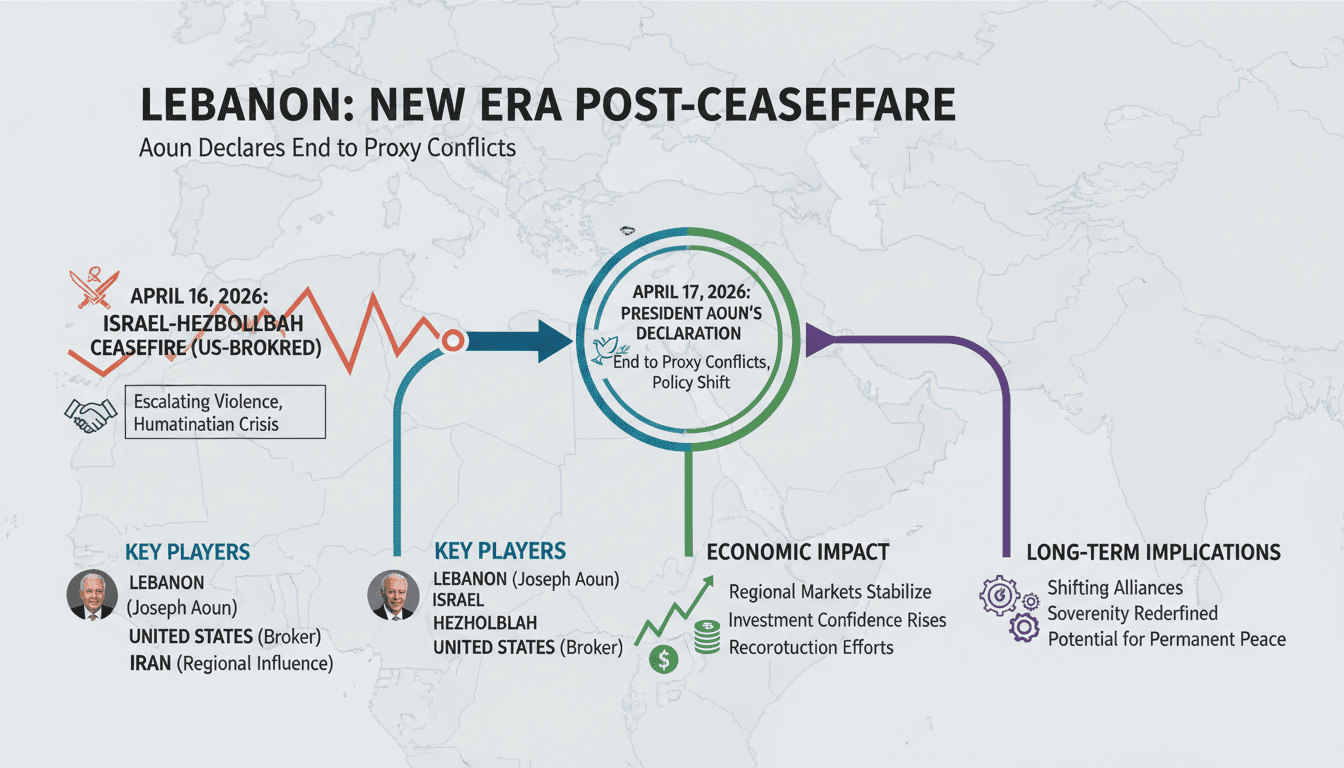
Here's what it means for you.
The recent ceasefire in Lebanon could stabilize regional markets, impacting global oil prices and expatriate communities.
Why it matters
This ceasefire marks a pivotal shift in Lebanon's geopolitical stance, potentially influencing economic conditions across the Middle East.
What happened (in 30 seconds)
- April 16, 2026: A US-brokered 10-day ceasefire between Israel and Lebanon is announced after six weeks of conflict, resulting in over 2,100 Lebanese deaths.
- April 17, 2026: Lebanese President Joseph Aoun declares Lebanon's sovereignty, stating the country will no longer be a pawn in regional conflicts.
- Current Status: Ceasefire is ongoing, with reports of mutual violations and negotiations for a permanent agreement underway.
The context you actually need
- Historical Tensions: Lebanon has been a battleground for proxy conflicts, particularly involving Hezbollah and Israel, leading to significant civilian casualties and displacement.
- Recent Escalation: The conflict escalated on March 2, 2026, when Hezbollah launched attacks on Israel, prompting a severe Israeli military response.
- International Involvement: The ceasefire was facilitated by US President Donald Trump, highlighting the role of external powers in regional stability.
What's really happening
The ceasefire between Lebanon and Israel represents a critical juncture in Middle Eastern geopolitics, particularly for Lebanon, which has long been embroiled in proxy conflicts. President Joseph Aoun's declaration of sovereignty signals a shift away from Lebanon's historical role as a battleground for external powers. This transition is not merely rhetorical; it reflects a broader strategy to reclaim national agency and pursue permanent agreements that prioritize Lebanon's territorial integrity and national rights.
The recent conflict, which resulted in over 2,100 deaths and displaced more than one million people, underscores the urgent need for stability. The ceasefire, brokered by the United States, is a response to the escalating violence that began with Hezbollah's attacks on Israel. This escalation was part of a larger regional context, influenced by the ongoing US-Iran tensions, which have historically exacerbated Lebanon's internal divisions and external conflicts.
The ceasefire allows for self-defense but requires Lebanon to prevent non-state attacks, placing significant pressure on the Lebanese government to manage Hezbollah's military capabilities. Aoun's commitment to disarmament, made during his inauguration, is now under scrutiny as Hezbollah has cautiously acknowledged the truce while rejecting disarmament without a full Israeli withdrawal from southern Lebanon.
The implications of this ceasefire extend beyond immediate military concerns. Global markets reacted positively, with stock prices rising and oil prices dropping by 9-10% due to reduced tensions and the reopening of the Strait of Hormuz. This economic relief is crucial not only for Lebanon but also for the broader region, including the UAE, which has a significant Lebanese expatriate community. The UAE government welcomed the ceasefire, viewing it as a step toward regional stability that could enhance economic ties and remittance flows.
As negotiations for a permanent agreement continue, the situation remains fluid. Reports of violations from both sides indicate that while the ceasefire is in place, the underlying tensions have not been fully resolved. The international community's role, particularly that of the United States, will be pivotal in shaping the future of Lebanon's sovereignty and its relations with Israel.
Who feels it first (and how)
- Lebanese civilians: Directly affected by the conflict and ceasefire, facing displacement and security concerns.
- Expatriate communities: Particularly in the UAE, who may experience economic relief and stability in remittances.
- Investors and businesses: Global markets reacting to changes in oil prices and regional stability, impacting investment decisions.
What to watch next
- Negotiations for a permanent agreement: The outcomes will determine Lebanon's future sovereignty and regional relations, impacting economic stability.
- Violations of the ceasefire: Ongoing reports could destabilize the situation, affecting civilian safety and international perceptions.
- Market reactions: Watch for fluctuations in oil prices and stock markets as the situation evolves, influencing global economic conditions.
The ceasefire is currently in effect, with ongoing negotiations for a permanent agreement.
Continued tensions and potential violations from both sides as they navigate the ceasefire terms.
The long-term effectiveness of the ceasefire in achieving lasting peace and stability in Lebanon.
Frequently Asked Questions
- Why it matters?
- This ceasefire marks a pivotal shift in Lebanon's geopolitical stance, potentially influencing economic conditions across the Middle East.
- What happened (in 30 seconds)?
- April 16, 2026: A US-brokered 10-day ceasefire between Israel and Lebanon is announced after six weeks of conflict, resulting in over 2,100 Lebanese deaths. April 17, 2026: Lebanese President Joseph Aoun declares Lebanon's sovereignty, stating the country will no longer be a pawn in regional conflicts. Current Status: Ceasefire is ongoing, with reports of mutual violations and negotiations for a permanent agreement underway.
- What's really happening?
- The ceasefire between Lebanon and Israel represents a critical juncture in Middle Eastern geopolitics, particularly for Lebanon, which has long been embroiled in proxy conflicts. President Joseph Aoun's declaration of sovereignty signals a shift away from Lebanon's historical role as a battleground for external powers. This transition is not merely rhetorical; it reflects a broader strategy to reclaim national agency and pursue permanent agreements that prioritize Lebanon's territorial integrity
- Who feels it first (and how)?
- Lebanese civilians: Directly affected by the conflict and ceasefire, facing displacement and security concerns. Expatriate communities: Particularly in the UAE, who may experience economic relief and stability in remittances. Investors and businesses: Global markets reacting to changes in oil prices and regional stability, impacting investment decisions.
- What to watch next?
- Negotiations for a permanent agreement: The outcomes will determine Lebanon's future sovereignty and regional relations, impacting economic stability. Violations of the ceasefire: Ongoing reports could destabilize the situation, affecting civilian safety and international perceptions. Market reactions: Watch for fluctuations in oil prices and stock markets as the situation evolves, influencing global economic conditions.
Comprehensive coverage of Middle Eastern and global issues.
"Al Jazeera is a prominent voice from the Global South, especially the Middle East, with an emphasis on underreported stories."
— A47 Editor
Lebanon president says country is no longer a pawn amid Israel ceasefire
Lebanese President Joseph Aoun announced that Lebanon is no longer a pawn in regional conflicts, emphasizing the country's sovereignty and freedom amid a newly declared ceasefire with Israel. This ceasefire, effective for ten days, follows escalating...
Global news coverage with extensive reporting on Middle Eastern conflicts and geopolitics.
"Al Jazeera is a Qatar-based broadcaster known for wide regional coverage and alternative perspectives."
— A47 Editor
Lebanon president says country is no longer a pawn amid Israel ceasefire
Lebanese President Joseph Aoun announced that Lebanon is no longer a pawn in regional conflicts, emphasizing the country's sovereignty and freedom amid a newly declared ceasefire with Israel. This ceasefire, effective for ten days, follows escalating...
Arabic-language coverage of political affairs and current events.
"Okaz political coverage typically follows mainstream Saudi framing on national and regional affairs."
— A47 Editor
عون يشكر السعودية: لبنان استعاد قراره ولن يكون ساحة للآخرين
Lebanese President Joseph Aoun addressed the nation, stating that the recent ceasefire marks the beginning of a new political phase for Lebanon, facilitated by significant efforts from the United States and Saudi Arabia. He emphasized that this devel...
Pan-Arab news coverage spanning politics, business, sports, and regional affairs.
"Asharq Al-Awsat reflects a broad Arab editorial perspective with strong attention to regional geopolitics."
— A47 Editor
عون مخاطباً اللبنانيين: لن يكون هناك أي اتفاق يمسّ الحقوق الوطنية
Lebanese President Joseph Aoun addressed the nation today, following a ceasefire with Israel, asserting that there will be no agreement that undermines national rights. This statement comes amid ongoing tensions in the region and reflects the governm...
Regional and international reporting focused on Middle Eastern politics, diplomacy, and economics.
"Asharq Al-Awsat is a Saudi-owned international newspaper reflecting mainstream Gulf political perspectives."
— A47 Editor
Aoun Says Future Deal Will Not Cede Lebanese Territory, Country No Longer ‘Arena for Anyone’s Wars’
Lebanese President Joseph Aoun stated that any future agreements with Israel will not involve ceding Lebanese territory, asserting the country's sovereignty during a televised address following a U.S.-brokered ceasefire with Hezbollah.
Arabic-language UAE newspaper coverage focused on domestic affairs, public institutions, business, society, and regional developments.
"Al Khaleej coverage generally reflects a mainstream UAE editorial lens with strong attention to public affairs, institutions, and regional developments."
— A47 Editor
عون: لبنان لم يعد ساحة للحرب والتفاوض ليس تنازلاً
Lebanese President Joseph Aoun stated on Friday that Lebanon has entered a new historical phase, emphasizing that the country is no longer a battleground and that negotiations should not be viewed as concessions. This statement marks a significant sh...
Arabic-language coverage of political affairs and current events.
"Okaz political coverage typically follows mainstream Saudi framing on national and regional affairs."
— A47 Editor
«لن نكون ساحة لأحد».. الرئيس اللبناني: استعدنا قرارنا وسنبدأ إعادة الإعمار
In a decisive speech, Lebanese President Joseph Aoun announced that Lebanon is entering a new phase focused on regaining national decision-making and rebuilding what was destroyed by war. He emphasized the rejection of any agreements that undermine L...
Regional coverage and analysis focused on politics, diplomacy, and business across the Middle East.
"Al-Monitor is known for analytical reporting on Middle East politics and policy developments."
— A47 Editor
Aoun says Lebanon seeks 'permanent agreements' with Israel after White House invite
Lebanese President Joseph Aoun announced that Lebanon is entering a new phase of negotiations with Israel, focusing on establishing permanent agreements following a U.S.-brokered ceasefire. This development comes after an invitation from the White Ho...
Arabic-language coverage of political affairs and current events.
"Okaz political coverage typically follows mainstream Saudi framing on national and regional affairs."
— A47 Editor
أكد أن المفاوضات دقيقة ومفصلية..الرئيس اللبناني: نسعى لتثبيت الهدنة وضمان انسحاب إسرائيل
Lebanese President Joseph Aoun described the ongoing negotiations with Israel as 'delicate and pivotal,' emphasizing the need for a unified national responsibility. He stated that the country's position is to establish a ceasefire, ensure Israel's wi...
Arabic-language coverage of political affairs and current events.
"Okaz political coverage typically follows mainstream Saudi framing on national and regional affairs."
— A47 Editor
الرئيس اللبناني: الانسحاب الإسرائيلي أساس لوقف «النار».. والمفاوضات سيادية
Lebanese President Joseph Aoun stated that the Israeli withdrawal is essential for establishing a ceasefire with Israel, which he believes should lead to direct negotiations between the two nations. Aoun emphasized the need for Lebanon to maintain so...