
Honor's Lightning Robot Sets New Half-Marathon Record in Beijing
Here's what it means for you.
As robotics technology advances, industries worldwide may see shifts in labor dynamics and operational efficiencies.
Why it matters
This event underscores China's ambition to dominate the global robotics landscape, potentially influencing international tech investments.
What happened (in 30 seconds)
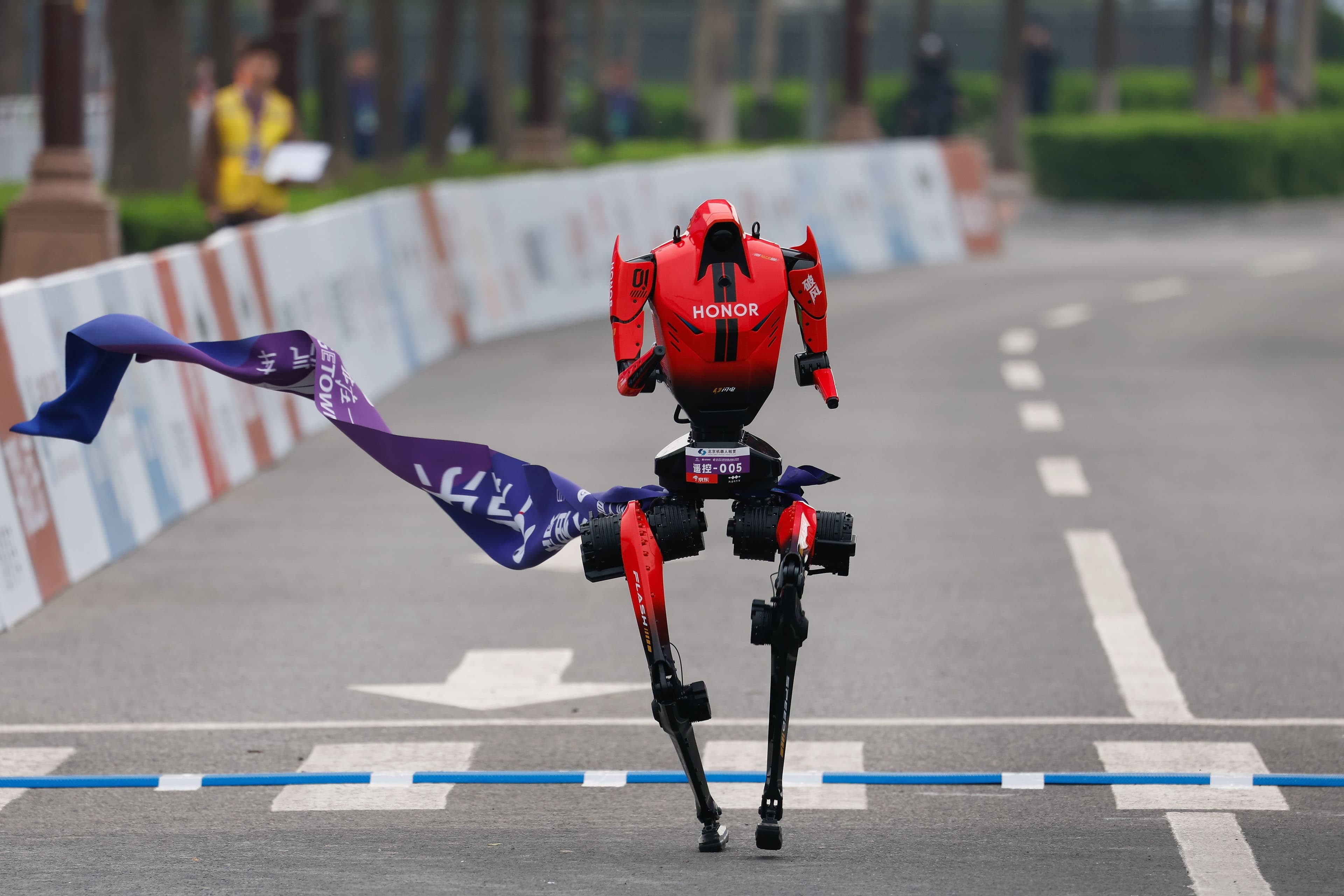
- Honor's Lightning robot completed the Beijing E-Town Humanoid Robot Half-Marathon in 50:26, breaking the human world record by nearly seven minutes.
- Over 100 humanoid robots from 76 institutions raced alongside 12,000 human runners, showcasing advancements in robotics endurance and AI navigation.
- The event reflects China's strategic focus on leading in humanoid robotics amid global competition, with significant technological innovations on display.
The context you actually need
- China's robotics strategy aims to position the country as a leader in AI and humanoid technology, reflecting a broader national initiative.
- Honor's Lightning robot utilized advanced features like liquid cooling and AI algorithms for real-time adjustments, marking a significant leap from previous robotic capabilities.
- The inaugural event in 2025 saw the fastest robot complete the half-marathon in 2 hours and 40 minutes, highlighting the rapid pace of technological advancement in just one year.
What's really happening
The completion of the half-marathon by Honor's Lightning robot in 50:26 is not just a remarkable feat of engineering; it represents a pivotal moment in the evolution of robotics and artificial intelligence. This event is a clear demonstration of how far humanoid robots have come in terms of endurance, balance, and navigation capabilities. The robot's design, featuring meter-long legs and a sophisticated liquid cooling system, allowed it to maintain high-speed bipedal locomotion without overheating, a common issue in previous robotic designs.
The implications of this achievement extend beyond the race itself. It signals a shift in how we perceive the capabilities of robots in physical tasks traditionally dominated by humans. As robots like Lightning demonstrate superior performance in endurance events, industries may begin to explore the potential for robotic applications in logistics, delivery services, and even healthcare, where physical endurance and precision are paramount.
Moreover, the event highlights China's commitment to leading the global race in robotics. With over 100 robots participating from various institutions, the competition fosters innovation and collaboration among researchers and developers. This environment not only accelerates technological advancements but also positions China as a formidable player in the global AI landscape, potentially influencing international partnerships and investments in robotics.
As humanoid robots become more capable, the implications for the workforce are significant. Industries may start to integrate these technologies into their operations, leading to increased efficiency and reduced labor costs. However, this also raises questions about job displacement and the need for reskilling workers to adapt to a changing job market. The balance between leveraging robotic capabilities and ensuring workforce stability will be a critical challenge for policymakers and business leaders alike.
In summary, the success of Honor's Lightning robot is a harbinger of a future where humanoid robots could play a vital role in various sectors, reshaping our understanding of work, productivity, and the capabilities of artificial intelligence.
Who feels it first (and how)
- Tech companies: Increased investment in robotics and AI development.
- Logistics and delivery sectors: Potential integration of humanoid robots for efficiency.
- Workers in manual labor: Possible job displacement and the need for reskilling.
- Investors: Opportunities in robotics startups and technology firms.
- Governments: Pressure to adapt policies for a changing workforce landscape.
What to watch next
- Investment trends in robotics: Monitor funding and partnerships in the robotics sector to gauge industry growth.
- Policy changes regarding automation: Watch for government responses to job displacement concerns and workforce adaptation strategies.
- Technological advancements: Keep an eye on new developments in AI and robotics that could further enhance humanoid capabilities.
Honor's Lightning robot holds the fastest autonomous humanoid completion time for a half-marathon.
Increased investment in robotics and AI technologies globally as a result of this event.
The long-term impact on job markets and workforce dynamics as robotics become more integrated into various industries.
Frequently Asked Questions
- Why it matters?
- This event underscores China's ambition to dominate the global robotics landscape, potentially influencing international tech investments.
- What happened (in 30 seconds)?
- Honor's Lightning robot completed the Beijing E-Town Humanoid Robot Half-Marathon in 50:26, breaking the human world record by nearly seven minutes. Over 100 humanoid robots from 76 institutions raced alongside 12,000 human runners, showcasing advancements in robotics endurance and AI navigation. The event reflects China's strategic focus on leading in humanoid robotics amid global competition, with significant technological innovations on display.
- What's really happening?
- The completion of the half-marathon by Honor's Lightning robot in 50:26 is not just a remarkable feat of engineering; it represents a pivotal moment in the evolution of robotics and artificial intelligence. This event is a clear demonstration of how far humanoid robots have come in terms of endurance, balance, and navigation capabilities. The robot's design, featuring meter-long legs and a sophisticated liquid cooling system, allowed it to maintain high-speed bipedal locomotion without overheati
- Who feels it first (and how)?
- Tech companies: Increased investment in robotics and AI development. Logistics and delivery sectors: Potential integration of humanoid robots for efficiency. Workers in manual labor: Possible job displacement and the need for reskilling. Investors: Opportunities in robotics startups and technology firms. Governments: Pressure to adapt policies for a changing workforce landscape.
- What to watch next?
- Investment trends in robotics: Monitor funding and partnerships in the robotics sector to gauge industry growth. Policy changes regarding automation: Watch for government responses to job displacement concerns and workforce adaptation strategies. Technological advancements: Keep an eye on new developments in AI and robotics that could further enhance humanoid capabilities.
Business and policy angles on tech and AI.
"Business desk coverage intersecting with AI trends."
— A47 Editor
A Humanoid Robot Set a Half-Marathon Record in China
A humanoid robot developed by Honor completed a half-marathon in Beijing, achieving a time of 50 minutes and 26 seconds, which surpasses the previous human world record by seven minutes. This event marks a significant milestone in robotics and artifi...
Emerging technologies, digital transformation, IT, and cultural impact of tech.
"WIRED covers the intersection of technology, culture, and politics with a progressive, forward-looking editorial stance."
— A47 Editor
A Humanoid Robot Set a Half-Marathon Record in China
A humanoid robot developed by Honor completed a half-marathon in Beijing, achieving a time of 50 minutes and 26 seconds, which surpasses the previous human world record by seven minutes. This event marks a significant milestone in robotics and artifi...
Tech business coverage, major deals, product launches, and Silicon Valley trends.
"WSJ’s tech section offers authoritative reporting on the intersection of technology and business, including exclusive industry analysis."
— A47 Editor
Chinese Robot Beats Human Best Time in Half-Marathon, After a Stumble
A Chinese robot has achieved a remarkable feat by beating the best human time in a half-marathon, despite experiencing a stumble during the race. This achievement highlights the advancements made by tech companies in addressing the malfunctions of hu...
Global political, business, and cultural coverage from WSJ international desks.
"The Wall Street Journal offers extensive international reporting with a reputation for financial insight and a center-right editorial stance."
— A47 Editor
Chinese Robot Beats Human Best Time in Half-Marathon, After a Stumble
A Chinese robot has achieved a remarkable feat by beating the best human time in a half-marathon, despite experiencing a stumble during the race. This event highlights the advancements made by tech companies in developing humanoid runners capable of ...
Regional and international reporting focused on Middle Eastern politics, diplomacy, and economics.
"Asharq Al-Awsat is a Saudi-owned international newspaper reflecting mainstream Gulf political perspectives."
— A47 Editor
Humanoid Robots Race Past Humans in Beijing Half-Marathon, Showing Rapid Advances
Humanoid robots showcased their advanced capabilities by racing past human participants during the Beijing Half-Marathon, highlighting significant technological progress in robotics. This event marked a notable moment in the integration of humanoid r...