
Macron Advocates for Lebanon's Inclusion in US-Iran Ceasefire Amid Regional Tensions
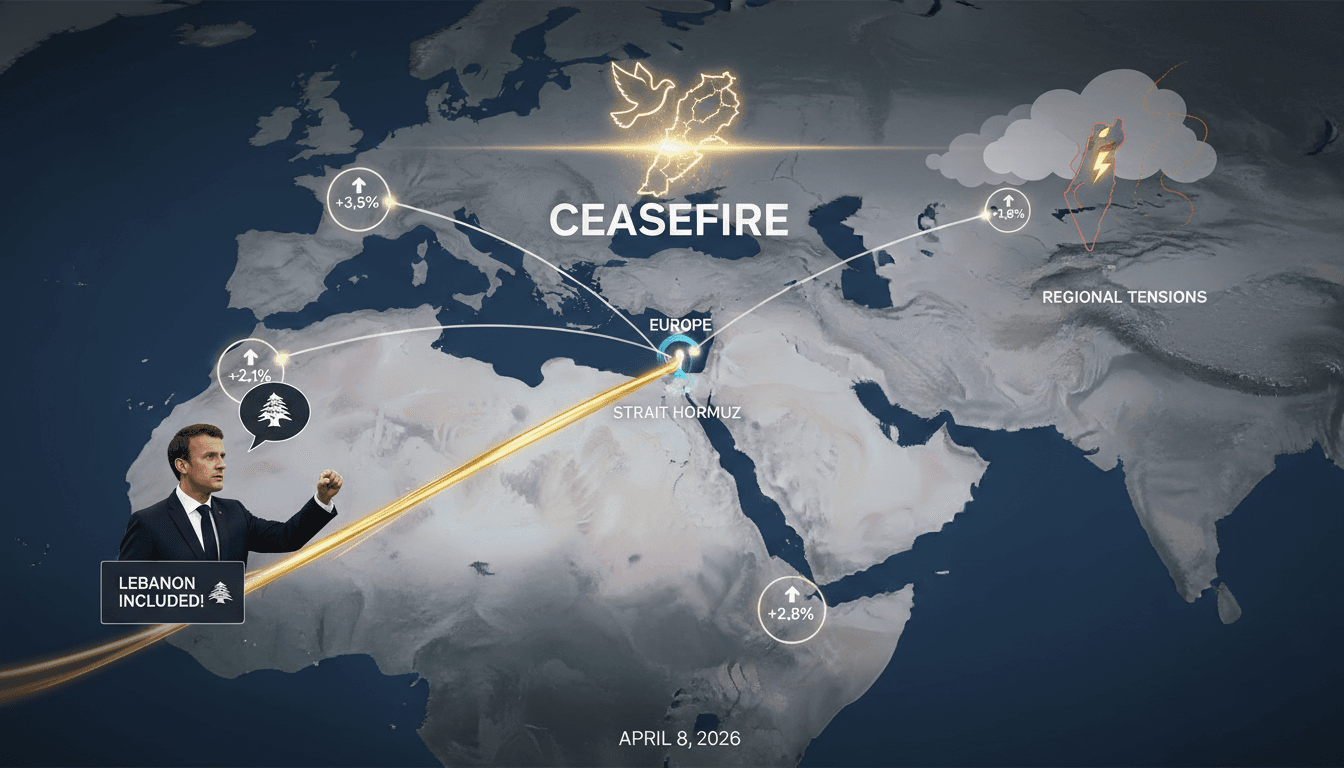
Here's what it means for you.
As oil prices drop, you may see lower fuel costs and a boost in market confidence, impacting your wallet and investments.
Why it matters
The ceasefire signals a potential shift in Middle Eastern geopolitics, which could stabilize global oil markets and influence international trade.
What happened (in 30 seconds)
- On April 7, 2026, the US and Iran announced a two-week ceasefire, easing immediate tensions.
- French President Emmanuel Macron emphasized the need for Lebanon's inclusion in the truce during discussions with both US and Iranian leaders.
- Crude oil prices plunged by 15% following the announcement, reflecting market relief and optimism.
The context you actually need
- The US-Iran conflict escalated in early 2026, with Iran blocking the Strait of Hormuz, a critical shipping route for global oil.
- European leaders, including Macron, have been advocating for broader de-escalation amid rising tensions in Lebanon due to Israeli strikes.
- The ceasefire is fragile, with ongoing concerns about its implementation and the exclusion of Lebanon, which could destabilize the region further.
What's really happening
The US-Iran ceasefire, announced just before a looming deadline for military action, marks a critical juncture in Middle Eastern diplomacy. The agreement, mediated by Pakistan, aims to halt escalating hostilities that have threatened global oil supply routes, particularly through the Strait of Hormuz, where approximately 20% of the world's oil passes.
Macron's insistence on including Lebanon in the ceasefire reflects a broader concern for regional stability. The Lebanese context is particularly sensitive, given the ongoing tensions with Hezbollah and Israeli military actions. Excluding Lebanon from the truce could lead to renewed violence, undermining the fragile peace and potentially reigniting conflict that could spill over into neighboring countries.
The immediate economic implications are significant. Following the ceasefire announcement, crude oil prices dropped by 15%, a clear indicator of market relief. This decline is expected to lower fuel costs for consumers and businesses, providing a boost to economies reliant on oil imports. For Dubai, a major trade hub, this means reduced shipping costs and enhanced trade flows, vital for its economic health.
Moreover, the ceasefire's success hinges on compliance from all parties involved. The Israeli government has expressed skepticism, particularly regarding Hezbollah's involvement, which complicates the situation. The United Nations has welcomed the ceasefire but emphasizes the need for adherence to the terms to prevent further escalation.
As the situation unfolds, the dynamics of regional power play a crucial role. Iran's willingness to engage in negotiations about its nuclear program and missile capabilities is tied to its regional influence. The ceasefire could pave the way for comprehensive talks that address these critical issues, potentially reshaping the geopolitical landscape of the Middle East.
Who feels it first (and how)
- Consumers in Dubai: Lower fuel prices will directly impact daily expenses and transportation costs.
- Investors in global markets: Positive sentiment from the ceasefire could lead to stock market rallies, affecting investment portfolios.
- Shipping companies: Eased tensions in the Strait of Hormuz will reduce shipping disruptions, benefiting logistics and trade operations.
What to watch next
- Compliance with the ceasefire: Monitoring adherence from all parties will be crucial to assess the stability of the truce.
- Lebanon's political response: How Lebanese leaders react to calls for inclusion could influence regional dynamics and conflict potential.
- Oil price fluctuations: Continued changes in crude oil prices will reflect market confidence and impact economies globally.
The ceasefire has been announced and is currently holding, albeit fragily.
Economic benefits from lower oil prices will be felt in consumer markets and trade sectors.
The long-term stability of the ceasefire and its impact on broader Middle Eastern negotiations remain uncertain.
Frequently Asked Questions
- Why it matters?
- The ceasefire signals a potential shift in Middle Eastern geopolitics, which could stabilize global oil markets and influence international trade.
- What happened (in 30 seconds)?
- On April 7, 2026, the US and Iran announced a two-week ceasefire, easing immediate tensions. French President Emmanuel Macron emphasized the need for Lebanon's inclusion in the truce during discussions with both US and Iranian leaders. Crude oil prices plunged by 15% following the announcement, reflecting market relief and optimism.
- What's really happening?
- The US-Iran ceasefire, announced just before a looming deadline for military action, marks a critical juncture in Middle Eastern diplomacy. The agreement, mediated by Pakistan, aims to halt escalating hostilities that have threatened global oil supply routes, particularly through the Strait of Hormuz, where approximately 20% of the world's oil passes. Macron's insistence on including Lebanon in the ceasefire reflects a broader concern for regional stability. The Lebanese context is particularl
- Who feels it first (and how)?
- Consumers in Dubai: Lower fuel prices will directly impact daily expenses and transportation costs. Investors in global markets: Positive sentiment from the ceasefire could lead to stock market rallies, affecting investment portfolios. Shipping companies: Eased tensions in the Strait of Hormuz will reduce shipping disruptions, benefiting logistics and trade operations.
- What to watch next?
- Compliance with the ceasefire: Monitoring adherence from all parties will be crucial to assess the stability of the truce. Lebanon's political response: How Lebanese leaders react to calls for inclusion could influence regional dynamics and conflict potential. Oil price fluctuations: Continued changes in crude oil prices will reflect market confidence and impact economies globally.
Regional coverage and analysis focused on politics, diplomacy, and business across the Middle East.
"Al-Monitor is known for analytical reporting on Middle East politics and policy developments."
— A47 Editor
France's Macron urges US, Iran to respect ceasefire in Lebanon
French President Emmanuel Macron has urged the leaders of the United States and Iran to respect a ceasefire agreement in Lebanon, as Israeli airstrikes continue to escalate, resulting in significant casualties. The ceasefire, agreed upon for two week...
Global news coverage with extensive reporting on Middle Eastern conflicts and geopolitics.
"Al Jazeera is a Qatar-based broadcaster known for wide regional coverage and alternative perspectives."
— A47 Editor
Macron welcomes US-Iran ceasefire and urges Lebanon’s inclusion
French President Emmanuel Macron has expressed his approval of the recently announced two-week ceasefire between the United States and Iran, calling it 'very good news.' This ceasefire, facilitated by Pakistan, aims to reduce escalating tensions in t...
Comprehensive coverage of Middle Eastern and global issues.
"Al Jazeera is a prominent voice from the Global South, especially the Middle East, with an emphasis on underreported stories."
— A47 Editor
Macron welcomes US-Iran ceasefire and urges Lebanon’s inclusion
French President Emmanuel Macron has expressed his approval of the recently announced two-week ceasefire between the United States and Iran, calling it 'very good news.' This ceasefire, facilitated by Pakistan, aims to reduce escalating tensions in t...
Pan-Arab news coverage spanning politics, business, sports, and regional affairs.
"Asharq Al-Awsat reflects a broad Arab editorial perspective with strong attention to regional geopolitics."
— A47 Editor
ماكرون لترمب وبزشكيان: قرار وقف النار كان الخيار الأفضل
French President Emmanuel Macron stated on Wednesday that he has communicated with both the Iranian and American presidents, informing them that their decision to accept a ceasefire is the optimal choice.