
Shell Revises Q1 2026 Gas Production Forecast Amid Middle East Conflict
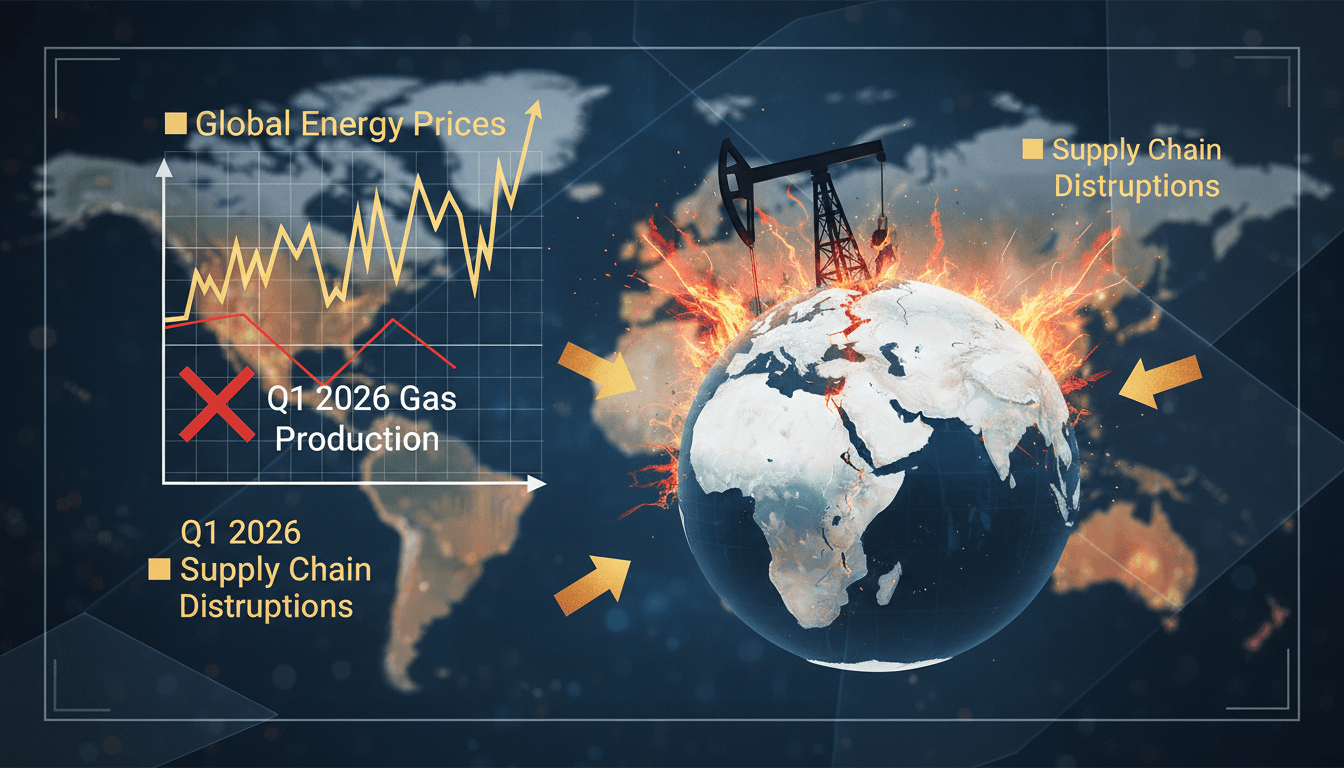
Here's what it means for you.
If you're in the energy sector or rely on fuel for your business, expect rising costs and potential supply shortages.
Why it matters
This revision signals significant instability in global energy markets, affecting prices and supply chains.
What happened (in 30 seconds)
- Shell plc announced a reduction in its first-quarter integrated gas production forecast due to disruptions from the ongoing Middle East conflict.
- Production guidance for Q1 2026 was adjusted to 880,000–920,000 barrels of oil equivalent per day, down from a previous estimate of 920,000–980,000 boe/d.
- Oil trading profits surged amid heightened market volatility, even as Shell faced operational challenges in Qatar.
The context you actually need
- Escalation of conflict: The Middle East conflict intensified in March 2026, leading to direct impacts on energy infrastructure, particularly in Qatar.
- Operational disruptions: Shell's facilities in Ras Laffan Industrial City suffered damage from missile strikes, prompting production halts and force majeure declarations on LNG contracts.
- Market volatility: The conflict has led to surging global energy prices, with analysts expressing concerns over long-term LNG supply confidence.
What's really happening
The ongoing conflict in the Middle East, particularly the war involving Iran, the United States, and Israel, has created a precarious situation for energy production and supply. In early March 2026, the situation escalated into open warfare, with targeted strikes on critical energy infrastructure across Gulf states. This included significant damage to Shell's operations in Qatar, particularly its liquefied natural gas (LNG) production and the Pearl GTL facility in Ras Laffan Industrial City.
As a result of these disruptions, Shell was forced to revise its production forecasts downward. The new guidance of 880,000–920,000 boe/d represents a notable decrease from the earlier expectations. This adjustment reflects not only the immediate impacts of the conflict but also the broader implications for global energy markets. The closure of the Strait of Hormuz, a vital shipping route for oil and gas, has further exacerbated supply chain issues, leading to increased prices and heightened market volatility.
Despite these challenges, Shell's oil trading division has reported significant profit gains, capitalizing on the price surges driven by the conflict. This duality—operational setbacks in production coupled with financial gains from trading—highlights the complex dynamics at play in the energy sector. While Shell faces immediate operational hurdles, the company's ability to navigate the trading landscape has positioned it to benefit from the volatility that the conflict has created.
The broader market implications are significant. European and Asian markets are already experiencing impending shortages, and oil majors are warning of sustained disruptions. The situation is fluid, with analysts closely monitoring the developments in the Middle East and their potential ripple effects on global energy prices and supply stability.
Who feels it first (and how)
- Energy companies: Firms like Shell and their competitors will face operational challenges and fluctuating profits.
- Consumers: Individuals and businesses relying on gas and oil will see increased prices at the pump and for heating.
- Industries: Sectors dependent on stable energy supplies, such as transportation and manufacturing, may experience slowdowns or increased costs.
- Geographies: Regions heavily reliant on imports from the Middle East, especially in Europe and Asia, will feel the impact of supply disruptions.
What to watch next
- Production updates from Shell: Continued revisions to production forecasts will indicate the ongoing impact of the conflict.
- Global energy prices: Watch for fluctuations in oil and gas prices, which will reflect market reactions to geopolitical developments.
- Infrastructure recovery efforts: Any announcements regarding repairs or improvements to damaged facilities will signal potential stabilization in supply.
Shell has revised its production guidance due to conflict-related disruptions.
Global energy prices will continue to rise as supply disruptions persist.
The long-term effects of the conflict on LNG supply chains and market stability remain uncertain.
Frequently Asked Questions
- Why it matters?
- This revision signals significant instability in global energy markets, affecting prices and supply chains.
- What happened (in 30 seconds)?
- Shell plc announced a reduction in its first-quarter integrated gas production forecast due to disruptions from the ongoing Middle East conflict. Production guidance for Q1 2026 was adjusted to 880,000–920,000 barrels of oil equivalent per day, down from a previous estimate of 920,000–980,000 boe/d. Oil trading profits surged amid heightened market volatility, even as Shell faced operational challenges in Qatar.
- What's really happening?
- The ongoing conflict in the Middle East, particularly the war involving Iran, the United States, and Israel, has created a precarious situation for energy production and supply. In early March 2026, the situation escalated into open warfare, with targeted strikes on critical energy infrastructure across Gulf states. This included significant damage to Shell's operations in Qatar, particularly its liquefied natural gas (LNG) production and the Pearl GTL facility in Ras Laffan Industrial City. As
- Who feels it first (and how)?
- Energy companies: Firms like Shell and their competitors will face operational challenges and fluctuating profits. Consumers: Individuals and businesses relying on gas and oil will see increased prices at the pump and for heating. Industries: Sectors dependent on stable energy supplies, such as transportation and manufacturing, may experience slowdowns or increased costs. Geographies: Regions heavily reliant on imports from the Middle East, especially in Europe and Asia, will feel the impact of
- What to watch next?
- Production updates from Shell: Continued revisions to production forecasts will indicate the ongoing impact of the conflict. Global energy prices: Watch for fluctuations in oil and gas prices, which will reflect market reactions to geopolitical developments. Infrastructure recovery efforts: Any announcements regarding repairs or improvements to damaged facilities will signal potential stabilization in supply.
UK and international business news, economics, and corporate coverage.
"The Guardian’s business section covers finance and markets with a progressive editorial tone."
— A47 Editor
Shell oil trading profits soar amid Iran war but Qatar strikes hit gas output
Shell is poised to report significantly higher profits from its oil trading operations in the first quarter of 2026, driven by market volatility stemming from the ongoing conflict in Iran. The company's renewable energy division is also expected to s...
Markets desk coverage, trading insights, and investor updates.
"WSJ’s markets reporting provides in-depth analysis and context for investors."
— A47 Editor
Shell Sees Hit to Gas Production, Boost From Trading Amid Middle East War
Shell has reported a decline in gas production due to lost volumes from Qatar amid ongoing conflicts in the Middle East, while anticipating a boost in oil trading operations compared to the previous quarter.
U.S. business news, corporate developments, and economy.
"The Wall Street Journal is respected for deep financial and economic reporting with a center-right editorial perspective."
— A47 Editor
Shell Sees Hit to Gas Production, Boost From Trading Amid Middle East War
Shell has reported a decline in gas production due to lost volumes from Qatar amid ongoing conflicts in the Middle East, while anticipating a boost in oil trading operations compared to the previous quarter.
Top international stories selected by The Guardian editors.
"The Guardian is known for its progressive editorial stance and in-depth analysis."
— A47 Editor
Shell oil trading profits soar amid Iran war but Qatar strikes hit gas output
Shell is poised to report significantly higher profits from its commodity trading desks in the first quarter of 2026, driven by market volatility stemming from the ongoing conflict in Iran. The company's earnings are expected to range between $200 mi...