
CIA Plans to Integrate AI Assistants into Analysis Platforms
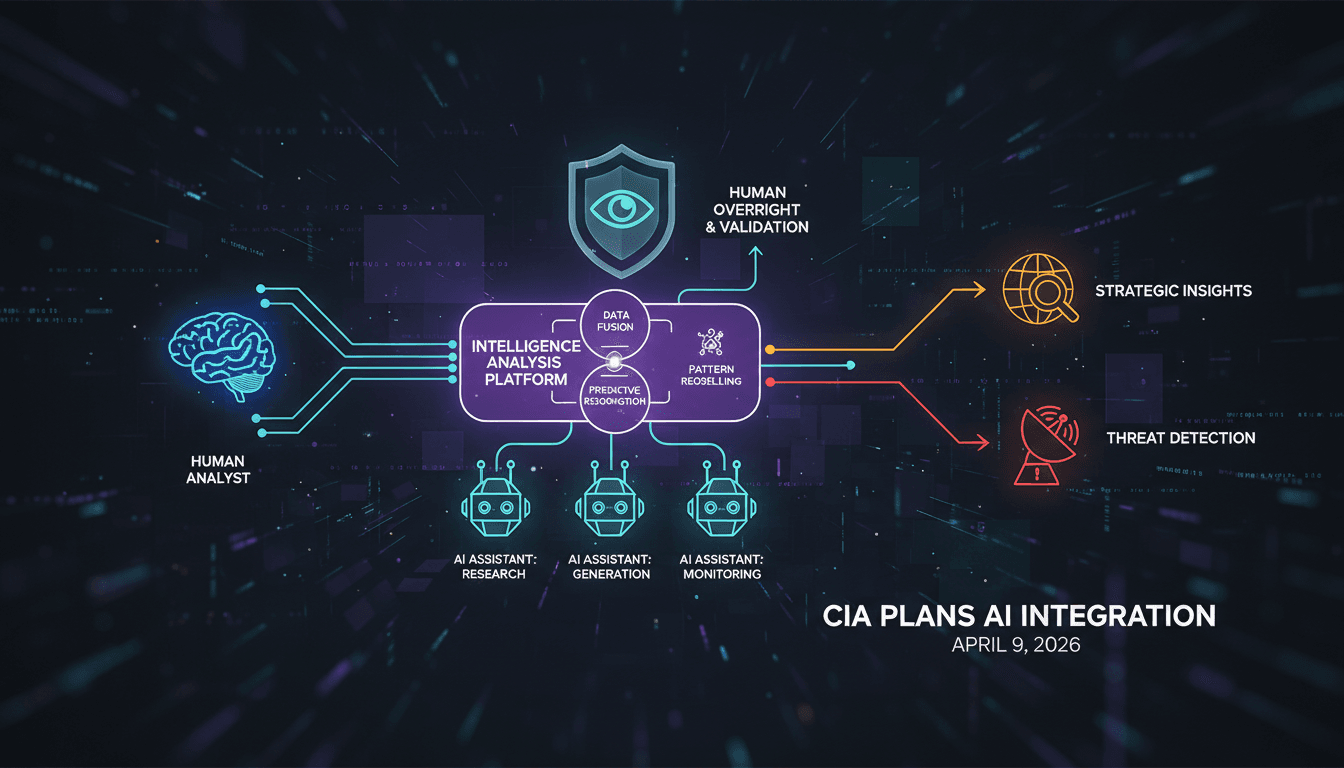
Here's what it means for you.
As AI tools reshape intelligence analysis, professionals in security and data sectors may need to adapt to new collaborative workflows.
Why it matters
This initiative signals a significant shift in how intelligence is gathered and analyzed, potentially impacting national security and global power dynamics.
What happened (in 30 seconds)
- On April 9, 2026, CIA Deputy Director Michael Ellis announced plans to integrate AI 'co-workers' into all agency analysis platforms.
- The CIA has tested 300 AI projects over the past year, focusing on enhancing data processing and analysis capabilities.
- Human oversight will remain critical in decision-making, ensuring that AI tools assist rather than replace analysts.
The context you actually need
- Adversarial pressure: The CIA's AI push is a direct response to rapid technological advancements by adversaries, particularly China.
- Broader federal initiatives: This move aligns with White House directives advocating for federal AI adoption across various agencies.
- Vendor diversification: The CIA is exploring multiple AI vendors to mitigate risks associated with dependency on a single source.
What's really happening
The CIA's announcement marks a pivotal moment in the integration of artificial intelligence within national security frameworks. By embedding generative AI tools into their analysis platforms, the agency aims to enhance the efficiency and accuracy of intelligence assessments. These AI 'co-workers' are designed to assist analysts in drafting reports, verifying findings, and identifying trends, thereby streamlining the analytical process.
This initiative stems from the CIA's recognition of the need to keep pace with adversaries, particularly as countries like China have made significant strides in AI technology. The agency's testing of 300 AI projects over the past year reflects a commitment to leveraging cutting-edge tools to bolster its analytical capabilities. The focus on generative AI indicates a shift towards more sophisticated data processing techniques, allowing for quicker and more nuanced insights.
However, the CIA emphasizes that human oversight will remain paramount. While AI can enhance productivity, critical decisions will still be made by trained analysts. This hybrid model aims to combine the strengths of human intuition and contextual understanding with the speed and efficiency of AI. The CIA's approach seeks to mitigate risks associated with over-reliance on technology, ensuring that human judgment remains central to intelligence operations.
The announcement also highlights the agency's efforts to diversify its partnerships with AI vendors. By avoiding dependency on a single provider, the CIA aims to foster innovation and resilience in its technological capabilities. This diversification strategy is essential in a rapidly evolving landscape where AI tools are becoming increasingly integral to intelligence work.
The implications of this integration extend beyond the CIA itself. As the agency adopts AI tools, it may influence how other sectors, including private intelligence firms and security consultancies, approach AI integration. The potential for collaboration between human analysts and AI systems could set new standards for efficiency and effectiveness in intelligence gathering and analysis.
Who feels it first (and how)
- Intelligence analysts: They will experience changes in their workflows as AI tools assist in drafting and verifying reports.
- AI vendors: Companies providing AI technology may see increased demand from government agencies looking to enhance their capabilities.
- National security professionals: Those in security sectors will need to adapt to new AI-driven analysis methods and potential shifts in intelligence-sharing practices.
What to watch next
- Implementation timeline: Monitor how quickly the CIA rolls out AI tools across its platforms and the effectiveness of these integrations.
- Vendor partnerships: Watch for announcements regarding partnerships with AI vendors, which could indicate shifts in the competitive landscape.
- Global reactions: Observe how other nations, particularly adversaries like China, respond to the CIA's AI advancements and whether they accelerate their own AI initiatives.
The CIA has tested 300 AI projects over the past year.
The integration of AI tools will lead to more efficient intelligence analysis and reporting.
The long-term impact on the job roles of intelligence analysts and the balance of human versus AI decision-making remains to be seen.
Frequently Asked Questions
- Why it matters?
- This initiative signals a significant shift in how intelligence is gathered and analyzed, potentially impacting national security and global power dynamics.
- What happened (in 30 seconds)?
- On April 9, 2026, CIA Deputy Director Michael Ellis announced plans to integrate AI 'co-workers' into all agency analysis platforms. The CIA has tested 300 AI projects over the past year, focusing on enhancing data processing and analysis capabilities. Human oversight will remain critical in decision-making, ensuring that AI tools assist rather than replace analysts.
- What's really happening?
- The CIA's announcement marks a pivotal moment in the integration of artificial intelligence within national security frameworks. By embedding generative AI tools into their analysis platforms, the agency aims to enhance the efficiency and accuracy of intelligence assessments. These AI 'co-workers' are designed to assist analysts in drafting reports, verifying findings, and identifying trends, thereby streamlining the analytical process. This initiative stems from the CIA's recognition of the ne
- Who feels it first (and how)?
- Intelligence analysts: They will experience changes in their workflows as AI tools assist in drafting and verifying reports. AI vendors: Companies providing AI technology may see increased demand from government agencies looking to enhance their capabilities. National security professionals: Those in security sectors will need to adapt to new AI-driven analysis methods and potential shifts in intelligence-sharing practices.
- What to watch next?
- Implementation timeline: Monitor how quickly the CIA rolls out AI tools across its platforms and the effectiveness of these integrations. Vendor partnerships: Watch for announcements regarding partnerships with AI vendors, which could indicate shifts in the competitive landscape. Global reactions: Observe how other nations, particularly adversaries like China, respond to the CIA's AI advancements and whether they accelerate their own AI initiatives.
Daily AI news: models, tools, and policy.
"Independent outlet tracking the fast pace of AI."
— A47 Editor
CIA plans to integrate AI assistants into all analysis platforms
The CIA has announced the successful creation of its first fully autonomous intelligence report using artificial intelligence, as stated by Deputy Director Michael Ellis. This initiative is part of a broader plan to integrate AI assistants into all o...
Real-time updates, analysis, and reports on the blockchain and cryptocurrency sectors.
"Crypto News delivers real-time updates, analysis, and reports on the blockchain and cryptocurrency sectors."
— A47 Editor
CIA adopts AI “co-workers” to help analysts spot spies and predict hostile moves
The CIA has announced plans to integrate specialized artificial intelligence into its primary analytics tools, aimed at enhancing the agency's ability to track foreign spies and predict hostile actions from abroad. This initiative was revealed by CIA...
Covers blockchain, cryptocurrency news, project analysis, and market insights.
"Cointelegraph is a leading crypto-focused media outlet known for timely news, analysis, and educational content related to blockchain and digital assets."
— A47 Editor
CIA to integrate AI ‘co-workers’ to process intelligence, catch spies
The CIA has initiated the integration of artificial intelligence (AI) into its operations, having already tested AI across 300 projects aimed at processing large data sets, aiding in language translation, and generating reports. This move signifies a...