
U.S. Central Command Enforces Total Maritime Trade Blockade on Iran
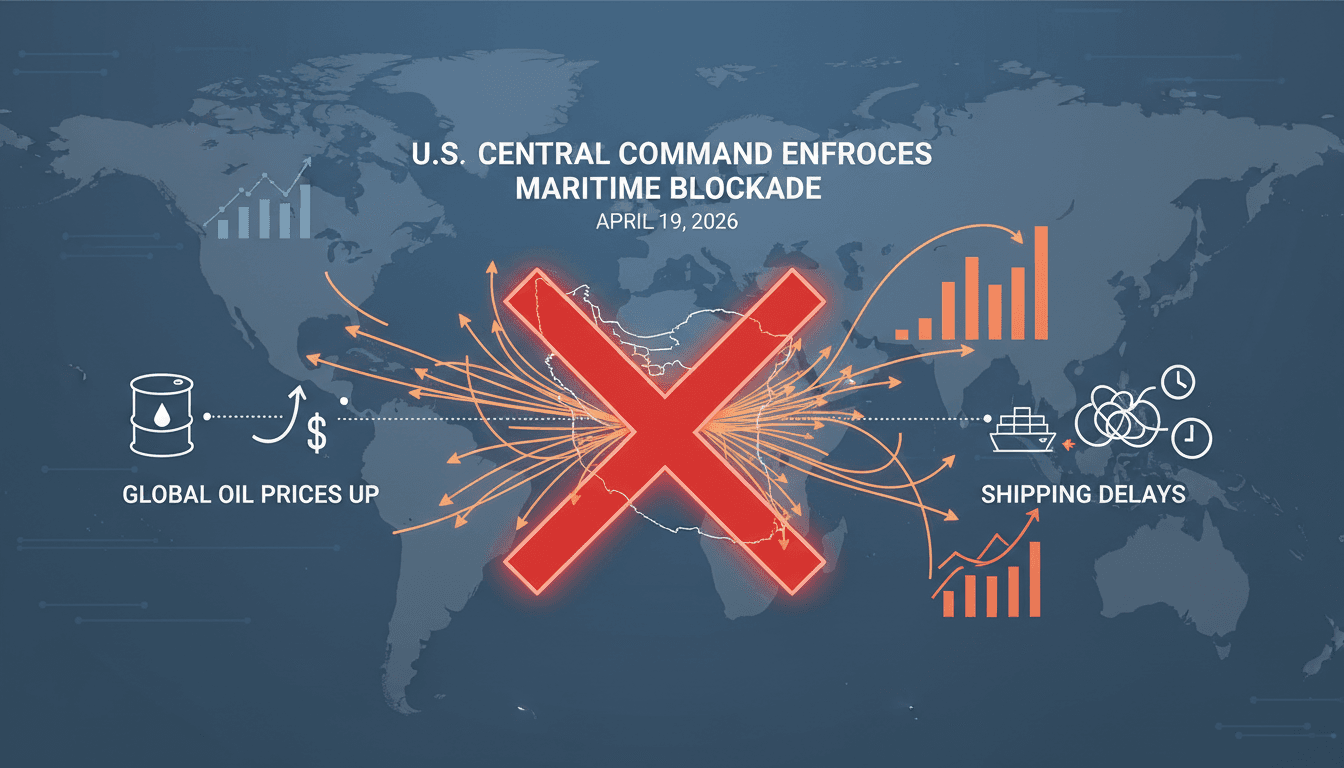
Here's what it means for you.
If you rely on global oil markets or maritime trade, the U.S. blockade on Iranian ports could lead to increased costs and shipping delays.
Why it matters
This blockade disrupts a critical maritime route, affecting global oil prices and trade dynamics.
What happened (in 30 seconds)
- On April 19, 2026, U.S. Central Command announced a complete halt to maritime trade with Iran due to a naval blockade.
- The USS Pinckney is actively patrolling Iranian waters, enforcing this blockade against all vessels.
- Iran has closed the Strait of Hormuz, a vital passage for global oil trade, following failed negotiations with the U.S.
The context you actually need
- The U.S. blockade began on April 13, 2026, targeting all vessels entering or exiting Iranian ports to exert economic pressure amid rising tensions.
- The Strait of Hormuz is crucial, with approximately 20% of the world's oil trade passing through it, making any disruption significant for global markets.
- Iran's Revolutionary Guard Corps has threatened to target ships approaching the strait, escalating the risk of military confrontation.
What's really happening
The U.S. Central Command's enforcement of a naval blockade against Iranian ports marks a significant escalation in ongoing tensions between the U.S. and Iran. This blockade, initiated on April 13, 2026, was a direct response to failed diplomatic negotiations in Islamabad, where the U.S. sought to address Iran's regional activities and nuclear ambitions. The blockade aims to exert economic pressure on Iran, which has been increasingly assertive in the Persian Gulf, particularly through its control of the Strait of Hormuz.
The blockade has already forced 23 ships to return to Iranian ports, highlighting the immediate impact on maritime trade. The U.S. military's presence in the region, particularly through the USS Pinckney, serves as a deterrent against Iranian aggression but also raises the stakes for potential military encounters. Iran's initial decision to briefly reopen the Strait of Hormuz on April 18, only to close it again the following day, underscores the volatility of the situation. The Revolutionary Guard's threats to target vessels approaching the strait signal a willingness to escalate military responses, which could further destabilize the region.
The economic implications of this blockade are profound. With the Strait of Hormuz being a critical chokepoint for oil shipments, any disruption can lead to significant fluctuations in global oil prices. The reported production losses exceeding $50 billion indicate the financial stakes involved, not just for Iran but for global markets reliant on stable oil supplies. Countries that depend on oil imports, including many in Europe and Asia, may face increased costs, which could ripple through their economies.
Moreover, Dubai, as a key maritime hub, is particularly vulnerable to these developments. The Jebel Ali port, which handles a significant volume of regional trade, could experience delays and increased shipping costs due to the blockade. While non-Iranian traffic remains operational under U.S. policy, the overall uncertainty in the region could deter investment and disrupt supply chains.
In summary, the U.S. blockade on Iranian ports is not just a military maneuver; it is a strategic economic action that could reshape trade dynamics and oil markets globally. The interplay of military presence, economic sanctions, and regional geopolitics creates a complex environment that will require careful navigation by businesses and governments alike.
Who feels it first (and how)
- Oil companies: Increased costs and potential supply chain disruptions.
- Shipping firms: Delays and rerouting of vessels, impacting logistics.
- Consumers: Higher fuel prices and costs for goods reliant on oil.
- Regional businesses in Dubai: Potential trade slowdowns affecting local economies.
What to watch next
- Oil price fluctuations: Monitor how global oil prices react to ongoing tensions and blockade enforcement, as this will directly impact costs for consumers and businesses.
- Military engagements: Watch for any incidents involving U.S. or Iranian naval forces, as these could escalate tensions further and affect maritime security.
- Diplomatic negotiations: Keep an eye on any renewed efforts for dialogue between the U.S. and Iran, as successful negotiations could alter the current blockade situation.
The U.S. has enforced a naval blockade on Iranian ports, halting maritime trade.
Global oil prices will experience volatility due to the blockade and regional tensions.
The long-term impact on U.S.-Iran relations and potential for military escalation remains uncertain.
Frequently Asked Questions
- Why it matters?
- This blockade disrupts a critical maritime route, affecting global oil prices and trade dynamics.
- What happened (in 30 seconds)?
- On April 19, 2026, U.S. Central Command announced a complete halt to maritime trade with Iran due to a naval blockade. The USS Pinckney is actively patrolling Iranian waters, enforcing this blockade against all vessels. Iran has closed the Strait of Hormuz, a vital passage for global oil trade, following failed negotiations with the U.S.
- What's really happening?
- The U.S. Central Command's enforcement of a naval blockade against Iranian ports marks a significant escalation in ongoing tensions between the U.S. and Iran. This blockade, initiated on April 13, 2026, was a direct response to failed diplomatic negotiations in Islamabad, where the U.S. sought to address Iran's regional activities and nuclear ambitions. The blockade aims to exert economic pressure on Iran, which has been increasingly assertive in the Persian Gulf, particularly through its contro
- Who feels it first (and how)?
- Oil companies: Increased costs and potential supply chain disruptions. Shipping firms: Delays and rerouting of vessels, impacting logistics. Consumers: Higher fuel prices and costs for goods reliant on oil. Regional businesses in Dubai: Potential trade slowdowns affecting local economies.
- What to watch next?
- Oil price fluctuations: Monitor how global oil prices react to ongoing tensions and blockade enforcement, as this will directly impact costs for consumers and businesses. Military engagements: Watch for any incidents involving U.S. or Iranian naval forces, as these could escalate tensions further and affect maritime security. Diplomatic negotiations: Keep an eye on any renewed efforts for dialogue between the U.S. and Iran, as successful negotiations could alter the current blockade situatio
Arabic-language political and world news coverage for UAE readers.
"Emarat Al Youm world coverage usually presents international developments through a UAE and Arab audience lens."
— A47 Editor
الجيش الأميركي: التجارة من وإلى إيران عبر البحر توقفت تماما الجيش الأميركي: التجارة من وإلى إيران عبر البحر توقفت تماما
The U.S. military announced on Saturday that its blockade on Iranian ports has completely halted maritime trade to and from Iran. This development indicates a significant escalation in the ongoing tensions between the U.S. and Iran, impacting the flo...
Arabic-language UAE newspaper coverage focused on domestic affairs, public institutions, business, society, and regional developments.
"Al Khaleej coverage generally reflects a mainstream UAE editorial lens with strong attention to public affairs, institutions, and regional developments."
— A47 Editor
الجيش الأمريكي: التجارة من وإلى إيران عبر البحر توقفت تماماً
The U.S. military has announced that its blockade on Iranian ports has completely halted maritime trade to and from Iran. U.S. Central Command (CENTCOM) stated on the platform X that the guided missile destroyer USS Pinckney is patrolling the territo...
Arabic-language coverage of political affairs and current events.
"Okaz political coverage typically follows mainstream Saudi framing on national and regional affairs."
— A47 Editor
واشنطن تعلن شلّ التجارة مع إيران.. والحرس الثوري يهدد بـ«هرمز»
The U.S. military announced that the imposed blockade on Iranian ports has resulted in a complete halt of maritime trade to and from Iran. The U.S. Central Command reported that the guided missile destroyer USS Pinckney is actively patrolling the reg...