
Senate Democrats Push Fifth War Powers Resolution to Limit Military Action in Iran
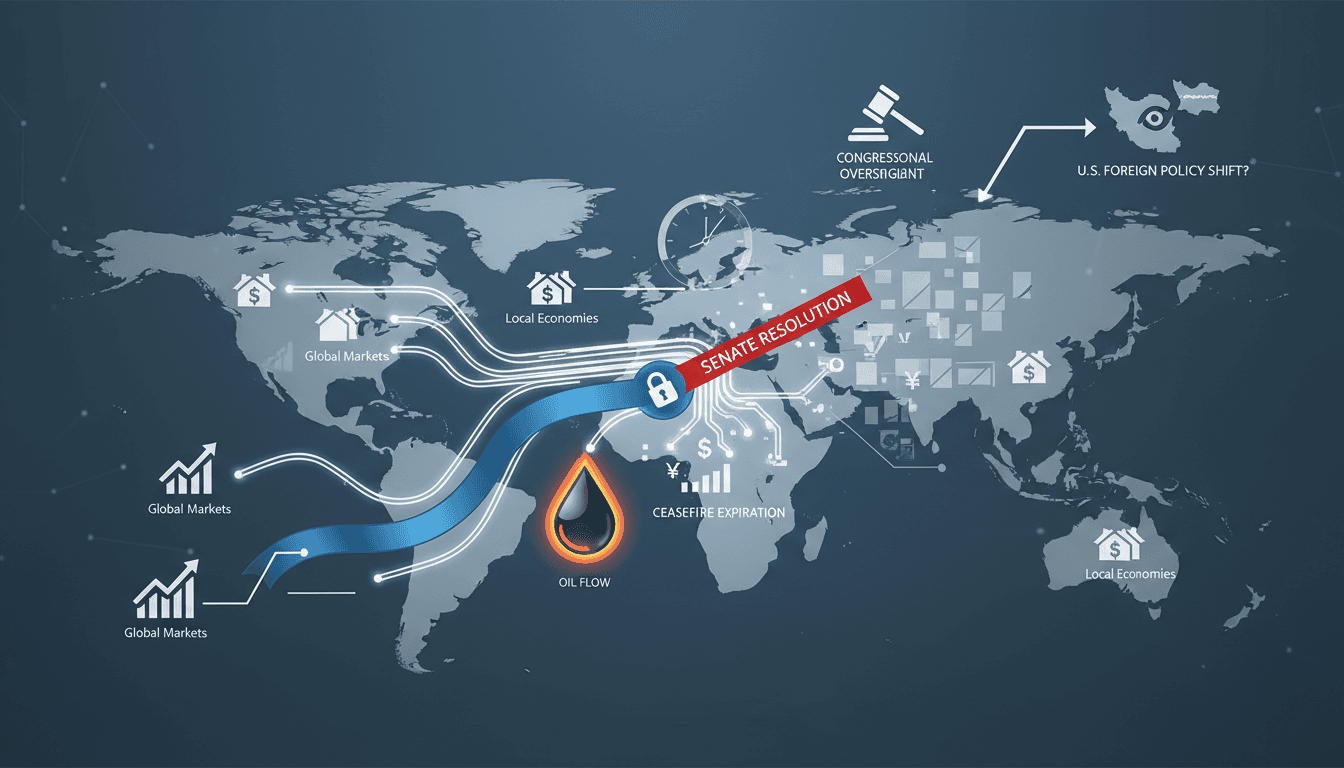
Here's what it means for you.
The ongoing military actions and political maneuvers in Washington could significantly impact global oil prices and economic stability.
Why it matters
The resolution reflects a critical moment in U.S. foreign policy that could reshape military engagement and economic conditions worldwide.
What happened (in 30 seconds)
- Senate Democrats, led by Tammy Baldwin, forced a vote on the fifth war powers resolution to limit President Trump's military actions in Iran.
- The vote comes just before a two-week ceasefire deadline on April 22, following a joint U.S.-Israel military operation that began in late February.
- Four previous resolutions failed to pass, highlighting a contentious political landscape regarding military authority and foreign intervention.
The context you actually need
- The U.S. and Israel initiated military action against Iran on February 28, 2026, without congressional authorization, leading to a blockade of Iranian ports.
- The 1973 War Powers Resolution mandates congressional approval for military actions beyond 60 days, which has prompted repeated attempts by Democrats to rein in executive power.
- A ceasefire mediated by Pakistan took effect on April 8, complicating the timeline for military engagement and congressional oversight.
What's really happening
The recent vote on the war powers resolution is a culmination of escalating tensions between the U.S., Israel, and Iran, marked by a significant military operation that began in late February 2026. The joint assault, which included a blockade of the Strait of Hormuz, has raised alarms about unauthorized military actions and their implications for global stability. The War Powers Resolution of 1973 is designed to prevent prolonged military engagements without congressional approval, and the Democrats' push for this fifth resolution reflects a growing concern over executive overreach.
The backdrop of this political maneuvering is a complex geopolitical landscape. The blockade has removed approximately 20 million barrels of oil per day from global markets, contributing to rising oil prices that have exceeded $100 per barrel. This spike in oil prices has direct implications for economies worldwide, particularly in oil-dependent regions like Dubai, where tourism and local businesses are already feeling the strain of reduced economic activity.
The failure of the previous four resolutions, which were rejected by narrow margins, underscores the deep partisan divide in Congress regarding military intervention. However, the looming ceasefire deadline adds urgency to the situation, as Democrats seek to assert their influence over military policy. President Trump’s threats to escalate military actions if a deal is not reached further complicate the scenario, creating a precarious balance between diplomacy and military action.
As the situation unfolds, the implications extend beyond the immediate military context. The economic fallout from the blockade and rising oil prices is already being felt in Dubai, where occupancy rates in hotels have plummeted below 40%, leading to layoffs among migrant workers and increased inflation. The UAE government has responded with a $270 million aid package to support businesses and families affected by the trade disruptions and the erosion of Dubai's status as a safe haven.
This intricate interplay of military, economic, and political factors illustrates the challenges facing lawmakers and the potential consequences for global markets and local economies.
Who feels it first (and how)
- Oil-dependent economies: Countries reliant on oil exports are facing economic instability due to rising prices and supply disruptions.
- Tourism sectors in Dubai: With hotel occupancy rates dropping, businesses are struggling, leading to layoffs and financial strain on families.
- U.S. military and defense contractors: Changes in military engagement could impact defense budgets and contracts.
What to watch next
- Ceasefire negotiations: The outcome of ongoing diplomatic efforts could determine the future of U.S. military involvement in the region and its economic implications.
- Oil price fluctuations: Continued volatility in oil markets will affect global economic conditions and could lead to further economic relief measures in affected regions.
- Congressional responses: Watch for potential shifts in Republican positions on military engagement as the political landscape evolves post-vote.
The U.S. and Israel have initiated military actions against Iran without congressional approval.
Continued political maneuvering in Congress will lead to further votes on war powers resolutions.
The long-term effects of the blockade on global oil markets and regional economies remain uncertain.
Frequently Asked Questions
- Why it matters?
- The resolution reflects a critical moment in U.S. foreign policy that could reshape military engagement and economic conditions worldwide.
- What happened (in 30 seconds)?
- Senate Democrats, led by Tammy Baldwin, forced a vote on the fifth war powers resolution to limit President Trump's military actions in Iran. The vote comes just before a two-week ceasefire deadline on April 22, following a joint U.S.-Israel military operation that began in late February. Four previous resolutions failed to pass, highlighting a contentious political landscape regarding military authority and foreign intervention.
- What's really happening?
- The recent vote on the war powers resolution is a culmination of escalating tensions between the U.S., Israel, and Iran, marked by a significant military operation that began in late February 2026. The joint assault, which included a blockade of the Strait of Hormuz, has raised alarms about unauthorized military actions and their implications for global stability. The War Powers Resolution of 1973 is designed to prevent prolonged military engagements without congressional approval, and the Democ
- Who feels it first (and how)?
- Oil-dependent economies: Countries reliant on oil exports are facing economic instability due to rising prices and supply disruptions. Tourism sectors in Dubai: With hotel occupancy rates dropping, businesses are struggling, leading to layoffs and financial strain on families. U.S. military and defense contractors: Changes in military engagement could impact defense budgets and contracts.
- What to watch next?
- Ceasefire negotiations: The outcome of ongoing diplomatic efforts could determine the future of U.S. military involvement in the region and its economic implications. Oil price fluctuations: Continued volatility in oil markets will affect global economic conditions and could lead to further economic relief measures in affected regions. Congressional responses: Watch for potential shifts in Republican positions on military engagement as the political landscape evolves post-vote.
News from the United States including domestic politics, society, and culture.
"The Guardian is known for its progressive editorial stance and in-depth analysis, often advocating for social justice, environmental issues, and liberal values."
— A47 Editor
Senate Democrats to force fifth war powers resolution as ceasefire deadline looms – live
Senate Democrats are set to introduce a fifth war powers resolution as the two-week ceasefire deadline approaches, following the failure of four previous resolutions in recent weeks. This move comes amid ongoing tensions and the need for legislative ...
International coverage from The Guardian's global desks.
"The Guardian is known for its progressive editorial stance and in-depth analysis."
— A47 Editor
Senate Democrats to force fifth war powers resolution vote on Tuesday – live
Senate Democrats are set to introduce a fifth war powers resolution as the two-week ceasefire deadline approaches, following the failure of four previous resolutions in recent weeks. This move comes amid ongoing tensions and the need for legislative ...
News from the United States including domestic politics, society, and culture.
"Global News is a mainstream Canadian media outlet generally considered to have a centrist editorial stance, covering news with a focus on factual reporting and national interest."
— A47 Editor
FBI Director Kash Patel files $250M defamation lawsuit against The Atlantic
FBI Director Kash Patel has filed a $250 million defamation lawsuit against The Atlantic, following a report that alleged he has a drinking problem and unexplained absences that could threaten national security. The article, authored by Sarah Fitzpat...
U.S. business news, corporate developments, and economy.
"The Wall Street Journal is respected for deep financial and economic reporting with a center-right editorial perspective."
— A47 Editor
FBI Director Kash Patel Sues the Atlantic for Defamation
FBI Director Kash Patel has filed a lawsuit against The Atlantic, seeking $250 million in damages, claiming that a recent article published by the outlet contained malicious and inaccurate allegations regarding his drinking habits and absenteeism.
Business, investment, entrepreneurship, leadership, and innovation.
"Forbes is known for its coverage of business leaders, market trends, and entrepreneurial ventures with a pro-business editorial stance."
— A47 Editor
Kash Patel Sues The Atlantic For $250M Over Drinking, Absentee Allegations
Kash Patel has initiated a lawsuit against The Atlantic for $250 million, following allegations concerning his drinking habits and absenteeism. The lawsuit comes in response to a published story that Patel claims is defamatory and damaging to his rep...