
U.S.-Iran Ceasefire Violations Escalate Amid Regional Attacks
Here's what it means for you.
If you’re in the Gulf region, heightened military activity could impact your safety and economic stability.
Why it matters
The fragile ceasefire has immediate implications for global oil markets and regional security dynamics.
What happened (in 30 seconds)
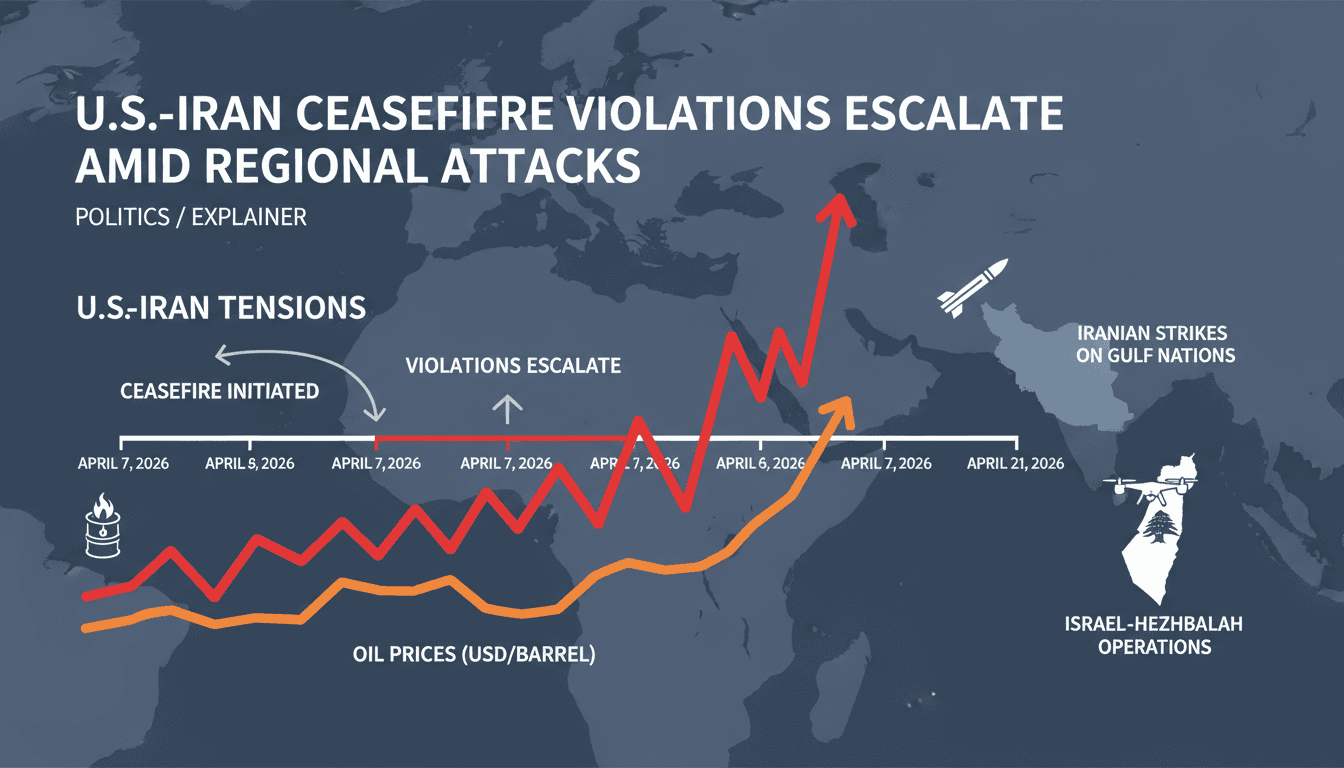
- Ceasefire violations: On the first day of a two-week ceasefire, Iranian attacks targeted Gulf nations while Israel struck Hezbollah in Lebanon.
- U.S. military readiness: U.S. officials downplayed the violations but affirmed military readiness to enforce compliance with the ceasefire terms.
- Economic impact: Oil prices dropped below $100 per barrel, providing some economic relief amid ongoing tensions.
The context you actually need
- Escalating conflict: The ceasefire followed a period of intense U.S. threats and military actions against Iran, including nearly 900 airstrikes on February 28, 2026.
- Mediation efforts: Pakistani mediation was crucial in establishing the ceasefire, which aimed to alleviate disruptions in the Strait of Hormuz affecting global oil transit.
- Regional dynamics: The ongoing conflict has seen increased military posturing from both Iran and Israel, with Gulf states caught in the crossfire.
What's really happening
The ceasefire agreement reached on April 7, 2026, was intended to halt hostilities between the United States and Iran, allowing for the reopening of the strategically vital Strait of Hormuz. However, this fragile truce faced immediate challenges as Iranian missile and drone attacks struck Gulf nations, including Kuwait, Bahrain, and the UAE, while Israel conducted its most extensive strikes against Hezbollah in Lebanon since the previous month.
The Iranian Navy's threats to destroy vessels entering the Strait of Hormuz further complicated the situation, prompting U.S. officials to assert military readiness to counter any aggression. Defense Secretary Pete Hegseth characterized the attacks as "teething issues" of the ceasefire, while Press Secretary Karoline Leavitt emphasized the need for Iran to dismantle its enriched uranium stockpiles.
The backdrop to this escalation includes President Trump's aggressive rhetoric and military strategy, which involved significant airstrikes on Iranian nuclear facilities and defenses. The U.S. administration's approach has been marked by a willingness to use military force to enforce compliance with peace terms, which has heightened tensions in the region.
The immediate aftermath of the ceasefire saw a significant spike in military operations, with reports indicating that over 254 individuals were killed in Israeli strikes across Lebanon on April 8 alone. This level of violence underscores the precarious nature of the ceasefire and the potential for further escalation.
For residents in the Gulf, including those in Dubai, the situation is particularly concerning. Although no immediate casualties were reported from the intercepted Iranian attacks, the heightened security measures and military readiness signal a volatile environment. The economic implications are also noteworthy, as oil prices fell below $95 per barrel, providing some relief for energy-dependent households, but analysts caution that this is a temporary respite amid ongoing geopolitical instability.
Who feels it first (and how)
- Gulf residents: Increased military activity raises safety concerns and could disrupt daily life.
- Energy sector workers: Fluctuating oil prices impact job security and economic stability.
- Investors: Market volatility may affect investment strategies and risk assessments.
What to watch next
- Military engagements: Monitor U.S. and Israeli military actions in response to Iranian provocations, as these could escalate tensions further.
- Oil price fluctuations: Keep an eye on oil prices, as sustained conflict could drive prices up, affecting global markets and local economies.
- Diplomatic efforts: Watch for any new mediation attempts or peace talks, particularly involving Pakistan, as these could influence the ceasefire's longevity.
The ceasefire is currently fragile, with ongoing military actions from both sides.
Continued military readiness from the U.S. and Israel in response to Iranian aggression.
The long-term viability of the ceasefire and its impact on regional stability.
Frequently Asked Questions
- Why it matters?
- The fragile ceasefire has immediate implications for global oil markets and regional security dynamics.
- What happened (in 30 seconds)?
- Ceasefire violations: On the first day of a two-week ceasefire, Iranian attacks targeted Gulf nations while Israel struck Hezbollah in Lebanon. U.S. military readiness: U.S. officials downplayed the violations but affirmed military readiness to enforce compliance with the ceasefire terms. Economic impact: Oil prices dropped below $100 per barrel, providing some economic relief amid ongoing tensions.
- What's really happening?
- The ceasefire agreement reached on April 7, 2026, was intended to halt hostilities between the United States and Iran, allowing for the reopening of the strategically vital Strait of Hormuz. However, this fragile truce faced immediate challenges as Iranian missile and drone attacks struck Gulf nations, including Kuwait, Bahrain, and the UAE, while Israel conducted its most extensive strikes against Hezbollah in Lebanon since the previous month. The Iranian Navy's threats to destroy vessels ent
- Who feels it first (and how)?
- Gulf residents: Increased military activity raises safety concerns and could disrupt daily life. Energy sector workers: Fluctuating oil prices impact job security and economic stability. Investors: Market volatility may affect investment strategies and risk assessments.
- What to watch next?
- Military engagements: Monitor U.S. and Israeli military actions in response to Iranian provocations, as these could escalate tensions further. Oil price fluctuations: Keep an eye on oil prices, as sustained conflict could drive prices up, affecting global markets and local economies. Diplomatic efforts: Watch for any new mediation attempts or peace talks, particularly involving Pakistan, as these could influence the ceasefire's longevity.
U.S. national news with a West Coast perspective.
"The Los Angeles Times is a major West Coast newspaper offering in-depth reporting with a liberal editorial tone and strong regional focus."
— A47 Editor
Iran ceasefire deal frays as attacks continue; Trump's peace terms remain unclear
The United States and Iran have reached a provisional two-week ceasefire, announced by Defense Secretary Pete Hegseth, amidst ongoing military tensions. The ceasefire follows a series of threats from President Trump, who had demanded Iran's complianc...
International news with cultural insight.
"The Los Angeles Times is a major West Coast newspaper offering in-depth reporting with a liberal editorial tone and strong regional focus."
— A47 Editor
Iran ceasefire deal frays as attacks continue; Trump's peace terms remain unclear
The United States and Iran have reached a provisional two-week ceasefire, announced by Defense Secretary Pete Hegseth, amidst ongoing military tensions. The ceasefire follows a series of threats from President Trump, who had demanded Iran's complianc...
Arabic-language coverage of political affairs and current events.
"Okaz political coverage typically follows mainstream Saudi framing on national and regional affairs."
— A47 Editor
البنتاغون يعلن «نصراً كاسحاً» على إيران.. ويحذّر: قواتنا باقية وجاهزة لأي تصعيد
U.S. Secretary of Defense Pete Hegseth announced a significant military victory over Iran, stating that American forces will remain in the region to ensure compliance with a temporary peace agreement. This declaration followed President Donald Trump'...
Conservative-leaning political and national coverage.
"The Washington Times is a conservative-leaning newspaper known for its political coverage and advocacy of right-of-center viewpoints."
— A47 Editor
Defense Secretary Pete Hegseth: U.S. forces prepared to restart strikes if ceasefire with Iran fails
Defense Secretary Pete Hegseth and Joint Chiefs Chairman Gen. Dan Caine announced that U.S. forces are prepared to resume military strikes against Iran if the newly established ceasefire is violated. This readiness reflects ongoing tensions and the p...